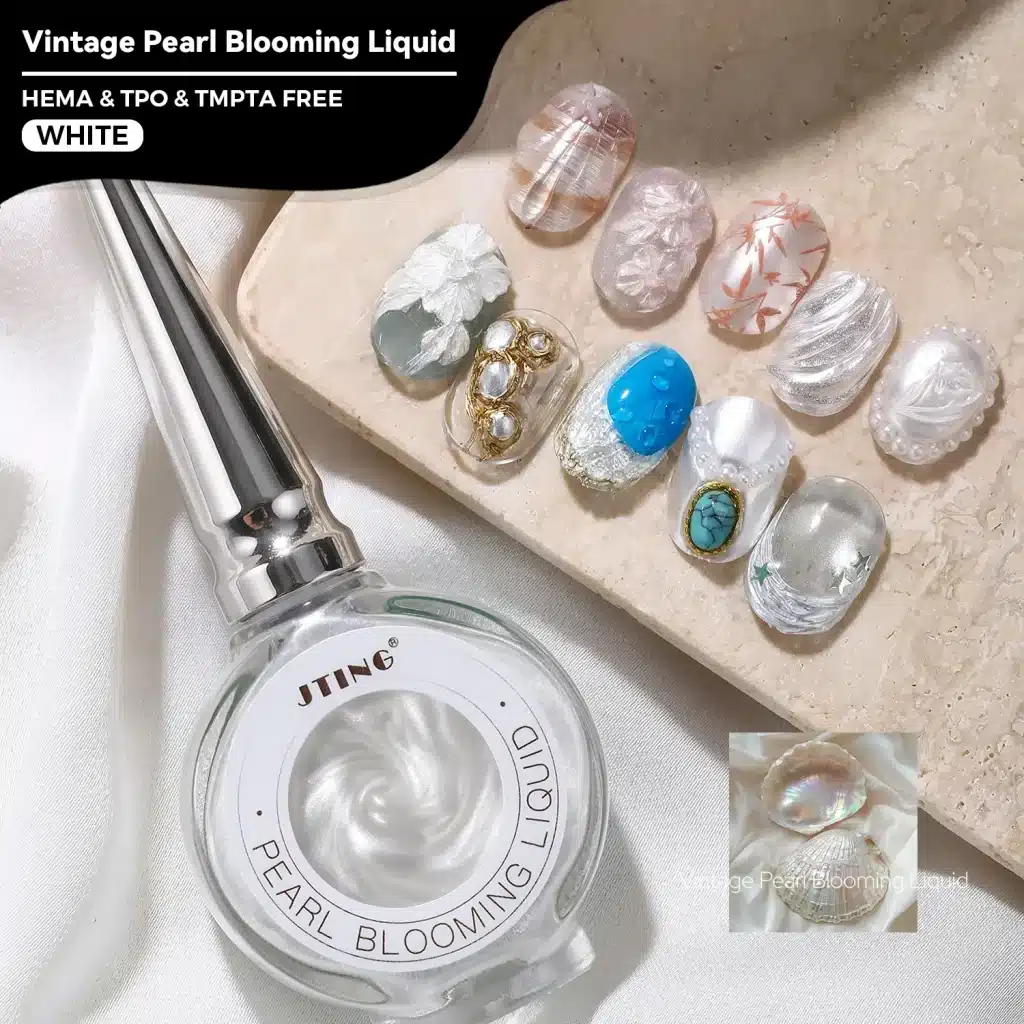
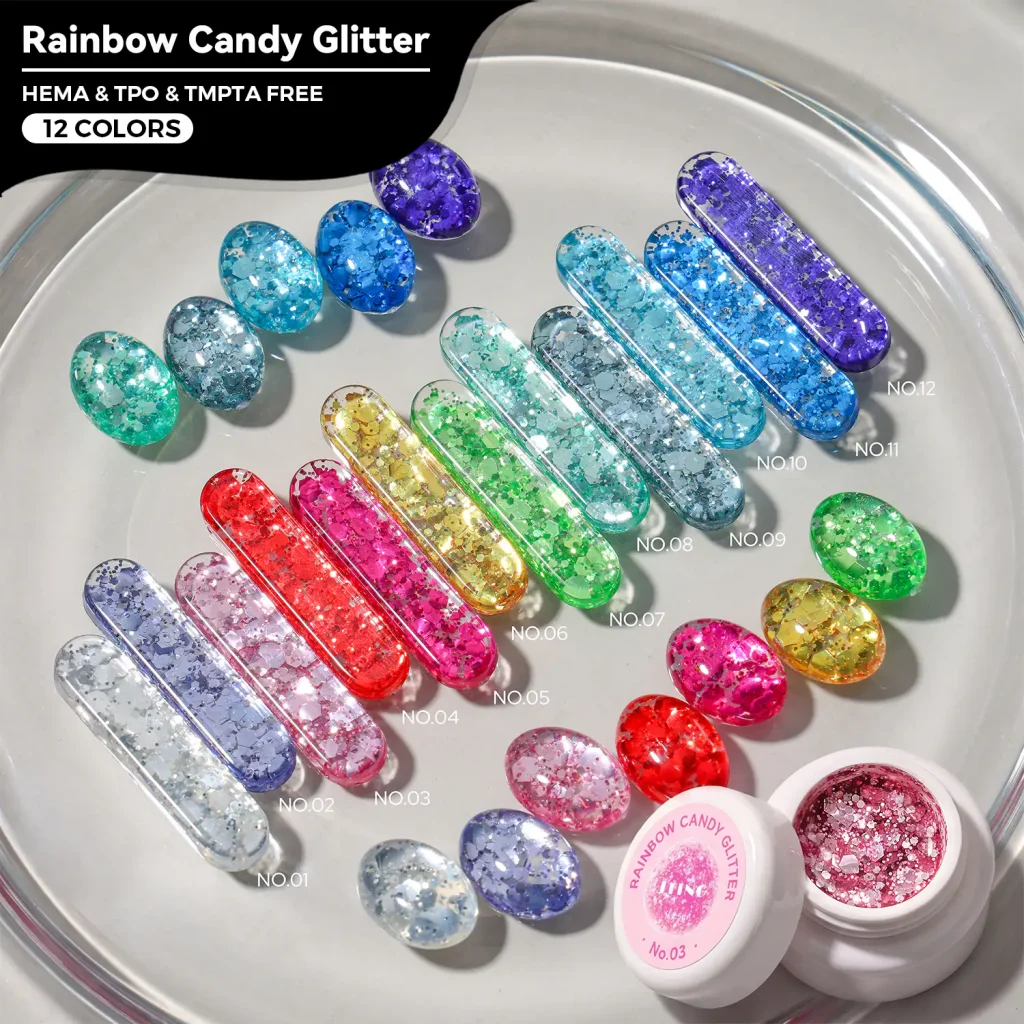
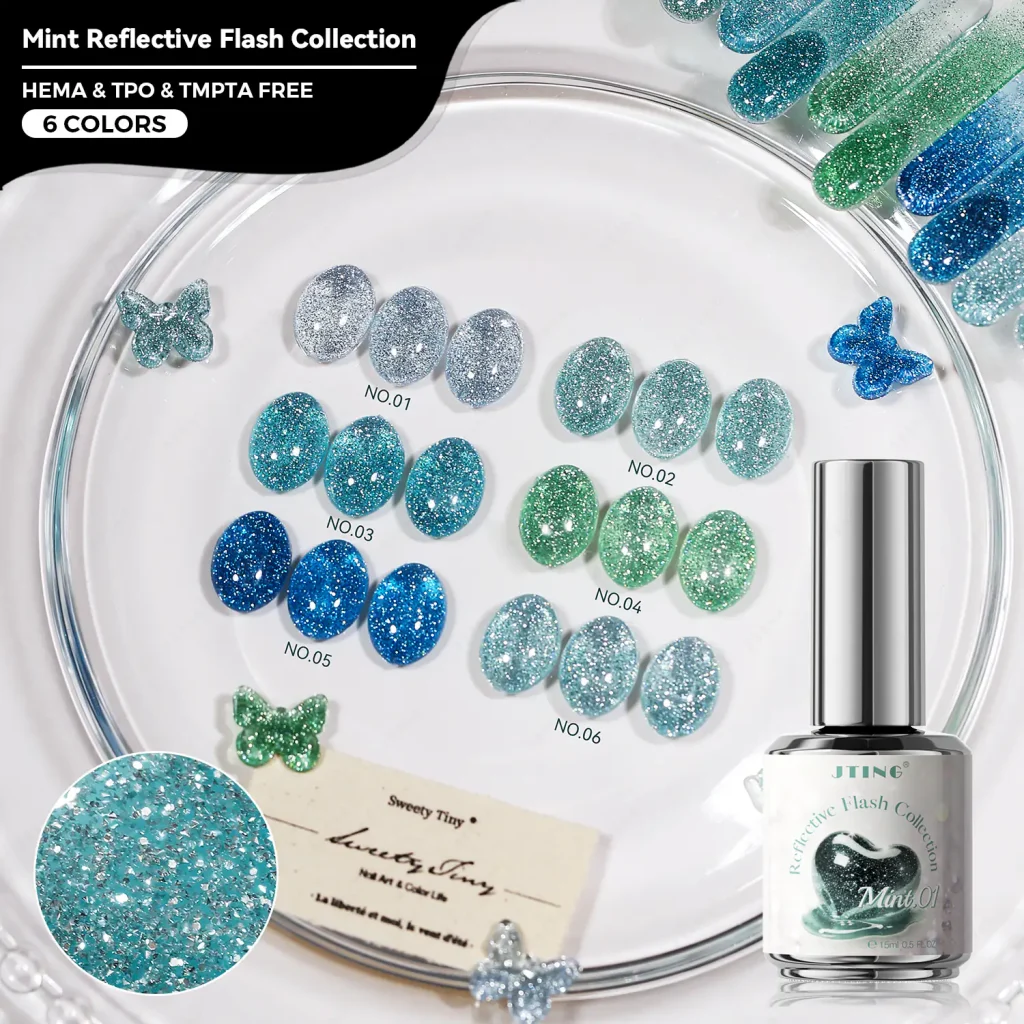
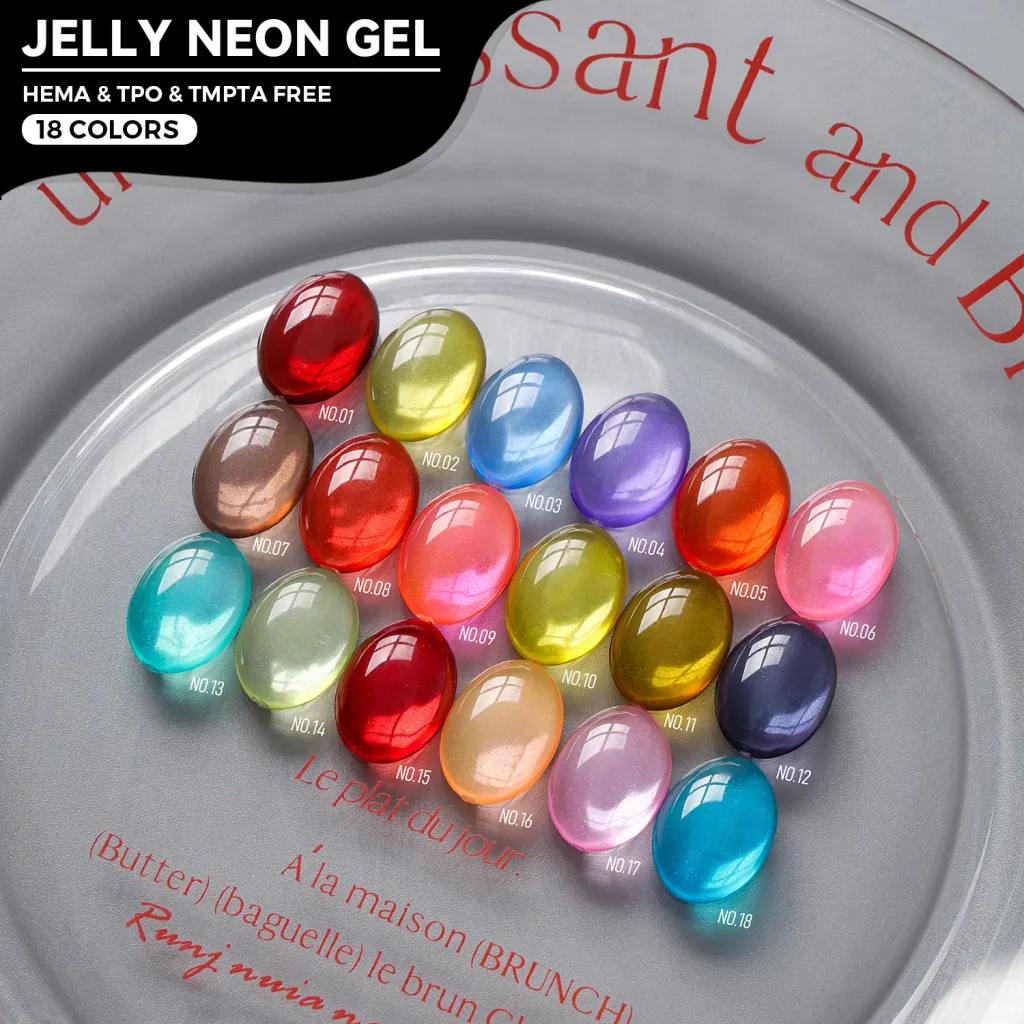
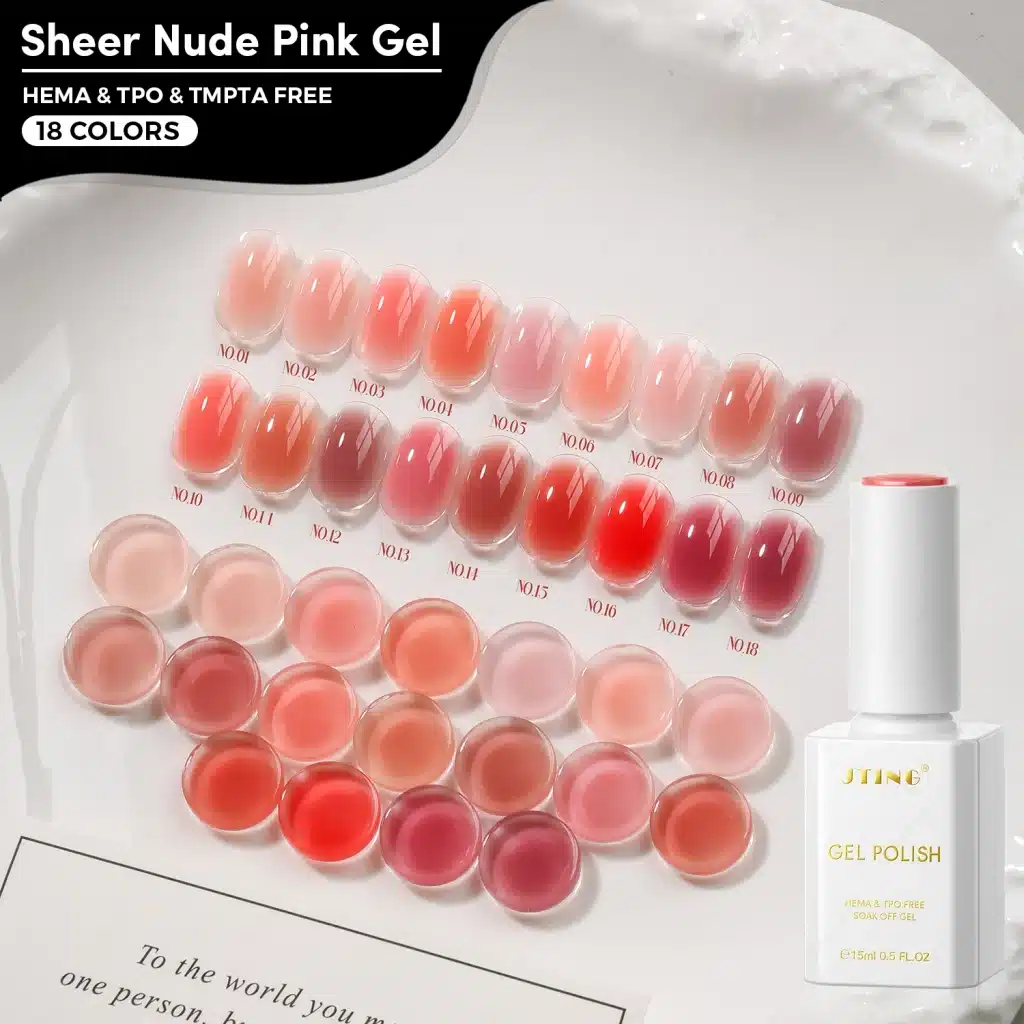
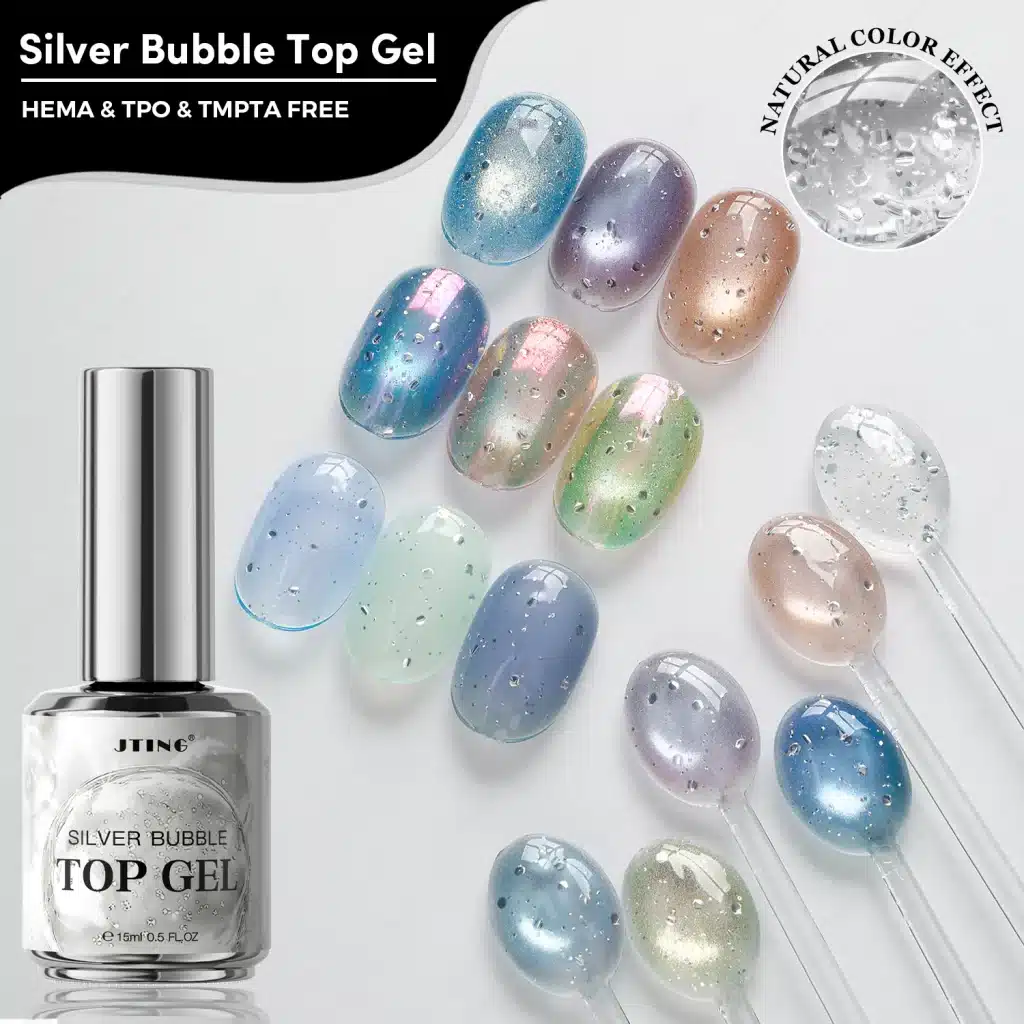
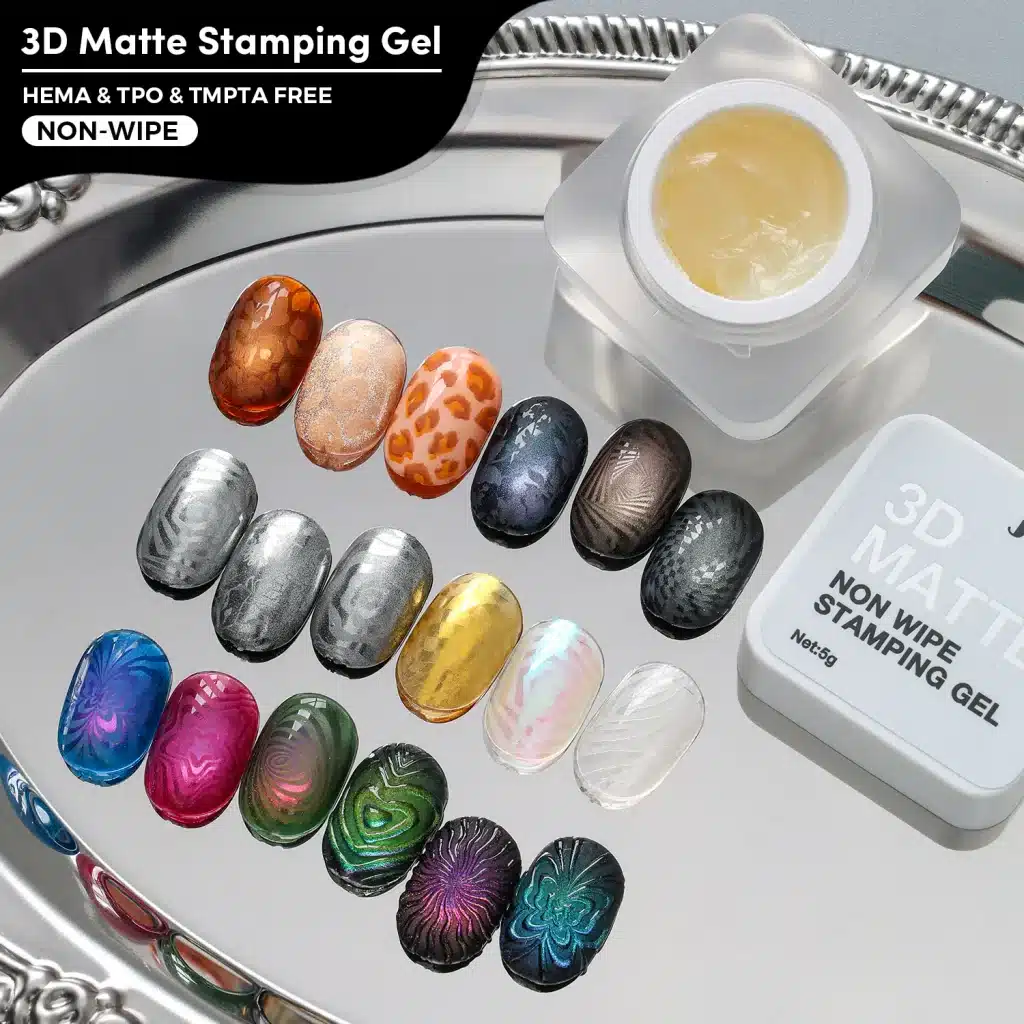
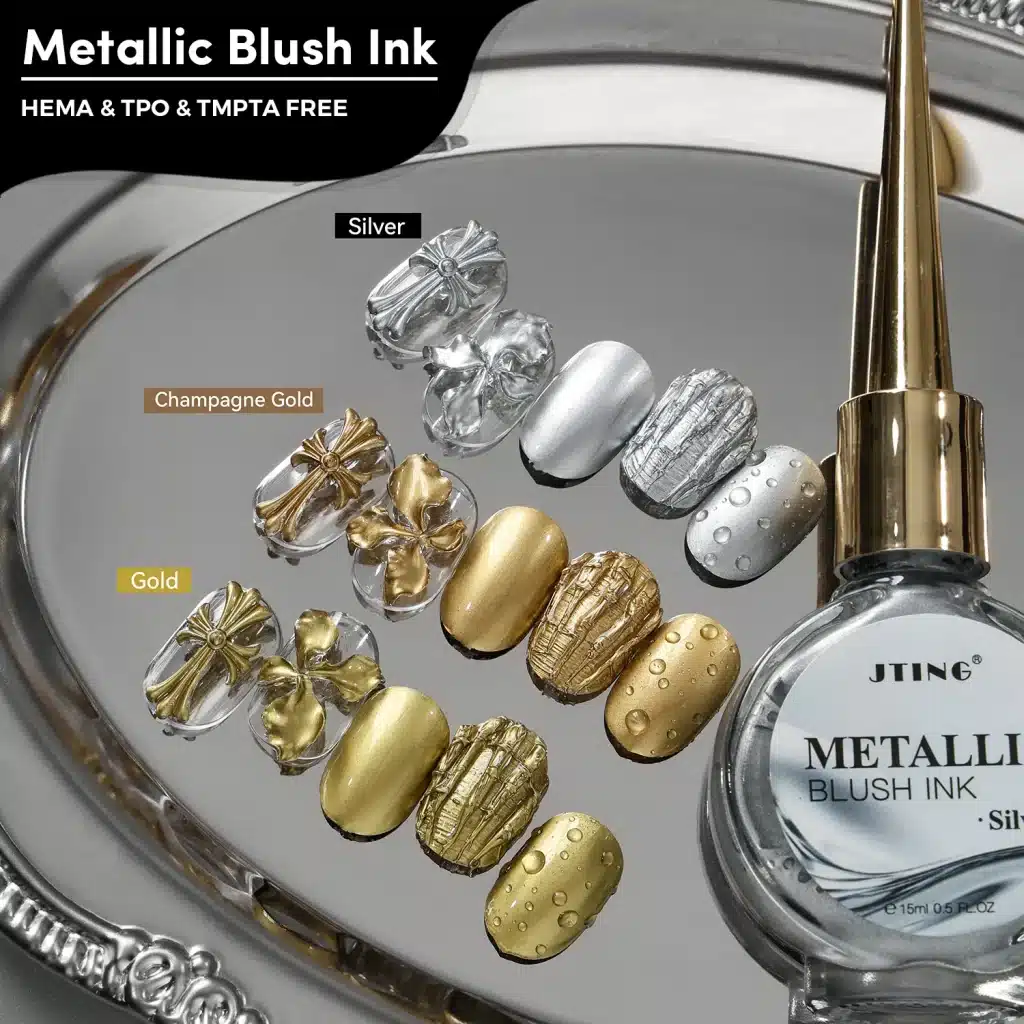
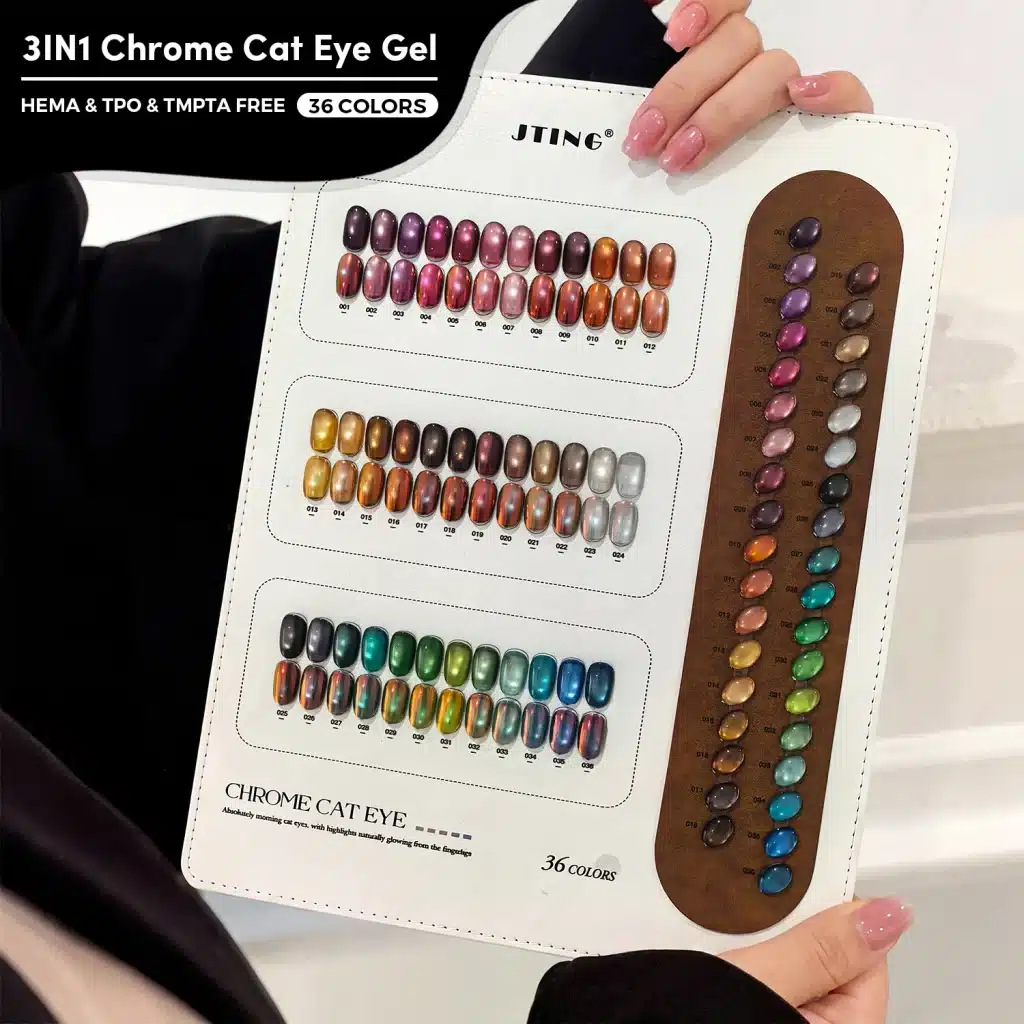
The margin on cat eye gel polish is exceptional. Nail brand founders know this. So do manufacturers — and that’s precisely the problem. Because the category is profitable, the market is flooded with suppliers who have mastered the art of staging a compelling sample video. The cat eye line looks sharp, the magnetic effect pops under studio lighting, and the color is rich and dimensional.
You place a purchase order. Six weeks later, a pallet arrives. Three months after that, your stockroom is full of bottles where the magnetic powder has completely settled to the bottom, your salon clients are reporting wrinkles and lifting, and your nail tech community is sending you side-by-side comparison photos showing a muddy grey smear where a razor-sharp holographic line should be.
That is not a minor inconvenience. That is a dead inventory crisis, a damaged brand reputation, and a cash flow problem — simultaneously. Cat eye gel is one of the most technically demanding products in the entire nail category. Its performance depends on the precise interaction between magnetic pigments, rheological chemistry, base colorant quality, and photoinitiator engineering. Every one of those variables is a potential failure point.
If you are in the process of sourcing a manufacturing partner for your cat eye collection, this guide will tell you exactly what to interrogate before you sign anything.
Control 1: Advanced Magnetic Powder Suspension Technology
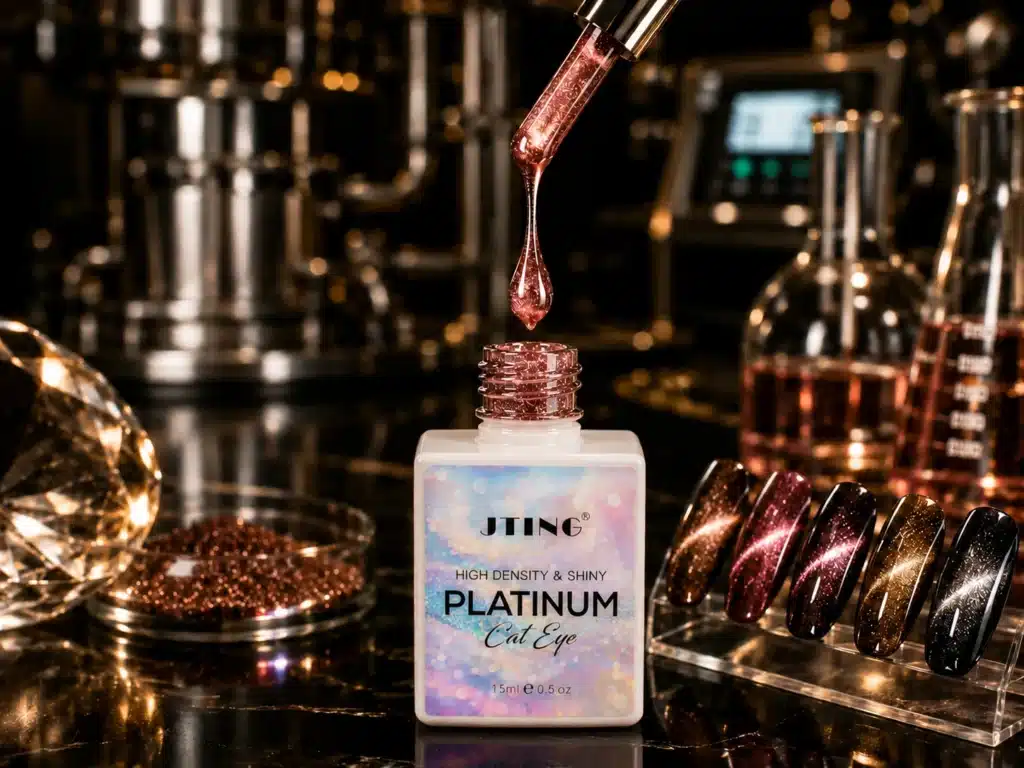
This is where most suppliers fail, and where the financial consequences are the most brutal. Magnetic particles are heavy. Significantly heavier than the gel base that surrounds them. Left to their own physics, they will sink — and in a standard gel formulation, they will continue sinking until they form a compacted mass at the bottom of the bottle that no amount of shaking will fully redisperse.
A premium manufacturer solves this with advanced rheological engineering. Specifically, they incorporate anti-settling agents — thixotropic additives that create a structured, gel-like network within the formula at rest, suspending the magnetic particles in place. The moment the product is agitated or applied, that network temporarily breaks down, allowing the formula to flow normally. Then it re-establishes, holding the pigment in suspension.
When evaluating a supplier, ask them directly: what suspension system do you use? Ask for stability data. Request samples that have been aged for a minimum of six months at both room temperature and accelerated conditions (typically 45°C for eight weeks). If they cannot produce this data, or if they tell you to “just shake the bottle,” walk away. That answer tells you everything.
Control 2: High-Density Premium Magnetic Pigments
Not all magnetic powders are equivalent. The difference between a commodity magnetic pigment and a premium high-density powder is visible to the naked eye in less than three seconds under a magnet.
Cheap magnetic powders — typically sourced from undifferentiated bulk suppliers — have lower iron particle density and irregular particle morphology. The result: when you pass a magnet over the nail, the particles respond sluggishly, migrate incompletely, and form a diffuse, dispersed band that reads as grey or muted under most lighting conditions. The effect looks flat. It does not photograph well. It will not satisfy a discerning nail technician.
Premium magnetic pigments, formulated with precisely engineered iron particle density and uniform morphology, respond to the magnet with an almost violent immediacy. The particles migrate fully and rapidly, forming a clean, sharp, three-dimensional line with genuine depth and dimensional contrast — the kind of effect that reads clearly both in person and in content.
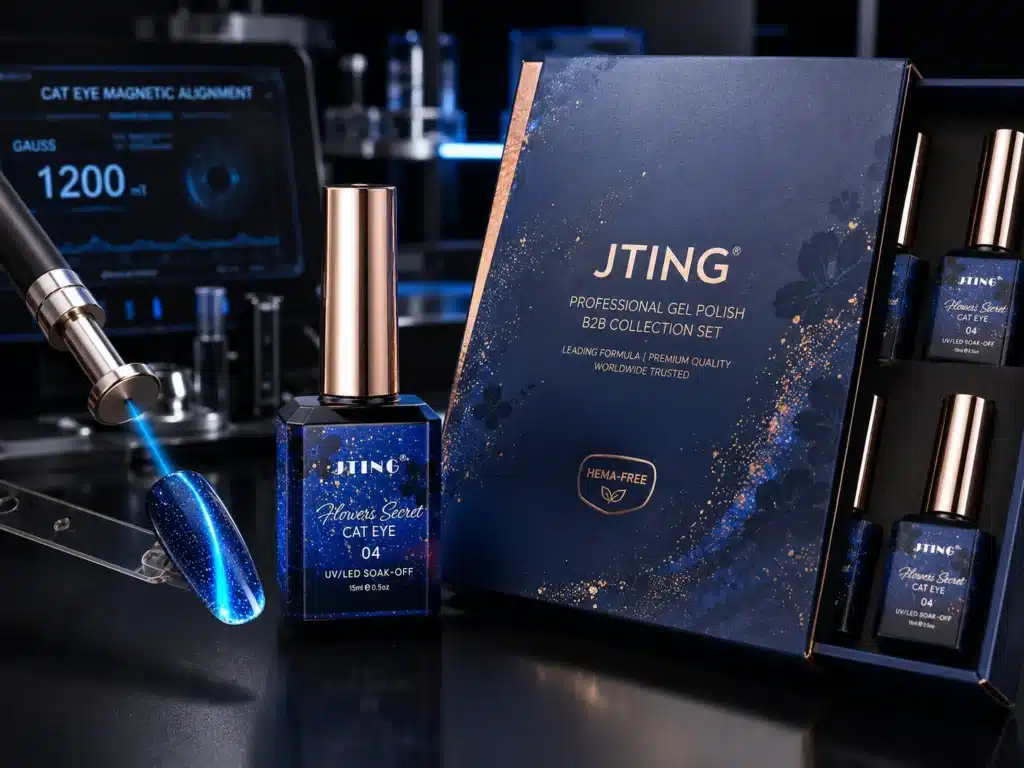
When requesting samples from a prospective supplier, test them in your actual working conditions: your studio lighting, your standard magnet, your typical application thickness. The gap between high-grade and low-grade powder becomes immediately obvious. If their samples impress you but the production batches disappoint, that is a pigment substitution issue — a separate quality control problem covered below.
Control 3: Translucent and Clean Base Formulation
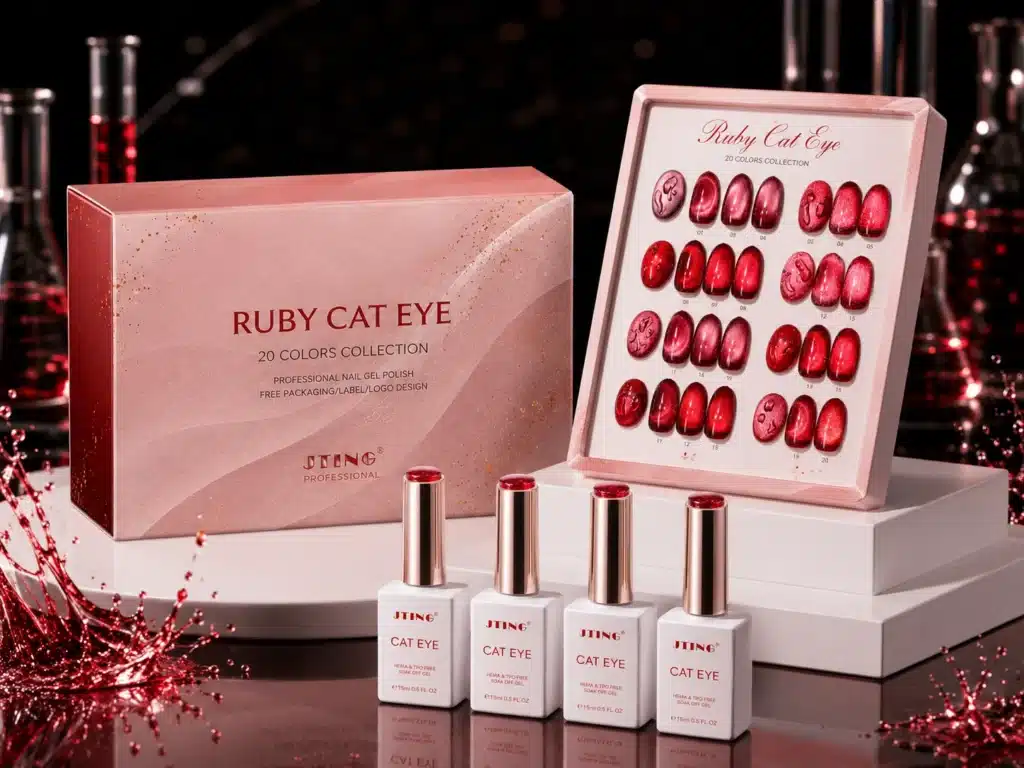
The magnetic effect is essentially optical. The metallic, reflective band created by migrating magnetic particles is only visible because the surrounding gel base is translucent enough to allow light to penetrate, reflect off the metallic particles, and return to the eye cleanly.
When a manufacturer uses low-quality colorants — synthetic dyes with poor transparency, cheap pigment pastes, or mislabeled concentrations — the base becomes optically dense. Light cannot penetrate fully. The magnetic line loses contrast. The effect looks muddied, cloudy, and two-dimensional. Deep jewel-toned cat eyes (navy, forest green, burgundy) are particularly vulnerable to this problem, because achieving rich color saturation in a genuinely translucent base requires sophisticated pigment selection and a formulator who understands the trade-off.
A credible manufacturer will be able to show you spectrophotometric data on base transmittance across their cat eye color range. They should also be willing to discuss exactly which colorant systems they use and why. If the conversation stays at the sample-and-price-quote level and they deflect technical questions, that formulation is either purchased from an external source they do not fully understand, or they are concealing ingredient quality compromises.
Control 4: Curing Stability and Photoinitiator Balance
This is the most technically complex control point, and the one most likely to surface in the form of catastrophic product failures after launch. Metallic particles — including magnetic iron pigments — absorb and scatter UV and LED radiation. In practical terms, this means that in a cat eye formulation, the photoinitiators (the chemical compounds that trigger polymerization under light) are working against a partially blocked light environment.
In a poorly calibrated formula, the surface layer cures first and forms a skin, while the underlying layers remain incompletely polymerized. The result: wrinkling, dimpling, severe service lifting, and in some cases, uncured material sitting directly against the nail plate — a skin sensitization risk.
Solving this requires a formulator who understands deep-cure photoinitiator chemistry: the selection and balancing of initiators with different absorption spectra, the use of co-initiators to extend reactivity into the wavelengths not blocked by metallic particles, and calibrated cure-time protocols that account for the specific pigment load in each color.
This is also where the choice to formulate HEMA-Free and TPO-Free becomes genuinely consequential. Triphenylphosphine oxide (TPO) is a highly efficient photoinitiator that has become a common shortcut in formulations requiring deep cure — but it carries significant sensitization risks and is facing increasing regulatory scrutiny in professional markets. Removing it without sacrificing cure stability requires real formulation expertise.
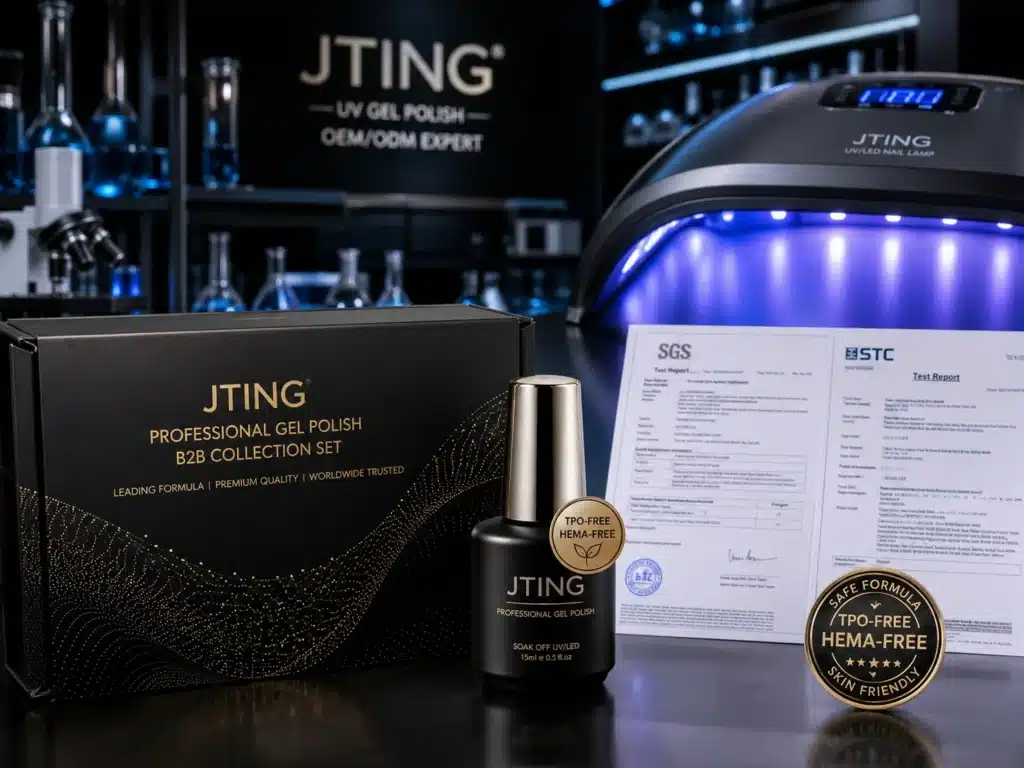
Any supplier making that commitment should be able to demonstrate their cure verification data, not simply make the claim on a specification sheet. Ask to see FTIR (Fourier Transform Infrared Spectroscopy) data confirming degree of cure. Ask for lamp compatibility testing across the major professional LED units your target market uses. If they cannot provide it, the cure stability claim is unverified.
Control 5: Strict Batch-to-Batch Consistency QC
Everything above becomes irrelevant if it cannot be reproduced at scale, across every production run, for the life of your product line. This is where small, undercapitalized labs consistently break down. They may produce excellent samples. They may even produce an excellent first production batch. But without standardized raw material sourcing, documented manufacturing protocols, and rigorous in-process quality control, the second and third batches will drift. The magnetic pull velocity changes. The color shifts slightly. The curing window narrows.
For cat eye products specifically, a credible manufacturer should have documented QC protocols that include:
| QC Protocol | The JTING NAIL Standard |
|---|---|
| Magnetic Pull Velocity Testing | Measuring how quickly and completely the pigment migrates under a standardized magnet at a standardized distance. This is quantifiable and has a defined acceptance specification. |
| Spectrophotometric Color Matching | Every production batch is measured against the master standard, with a strictly defined Delta-E tolerance that governs pass/fail. |
| Cure Profile Verification | Standardized cure time and lamp intensity testing is conducted for each individual batch, not just the initial formulation. |
| Accelerated Stability Sampling | Representative units from each production vat are placed immediately into aging conditions to ensure long-term shelf life. |
| Raw Material Traceability | Every magnetic powder and photoinitiator lot is tracked to its source, with incoming QC verification before it enters production. |
Ask any prospective supplier for their Certificate of Analysis format and the QC checkpoints it covers. A supplier with a serious manufacturing infrastructure will hand you that document without hesitation.
What a Flawless Cat Eye Collection Actually Proves
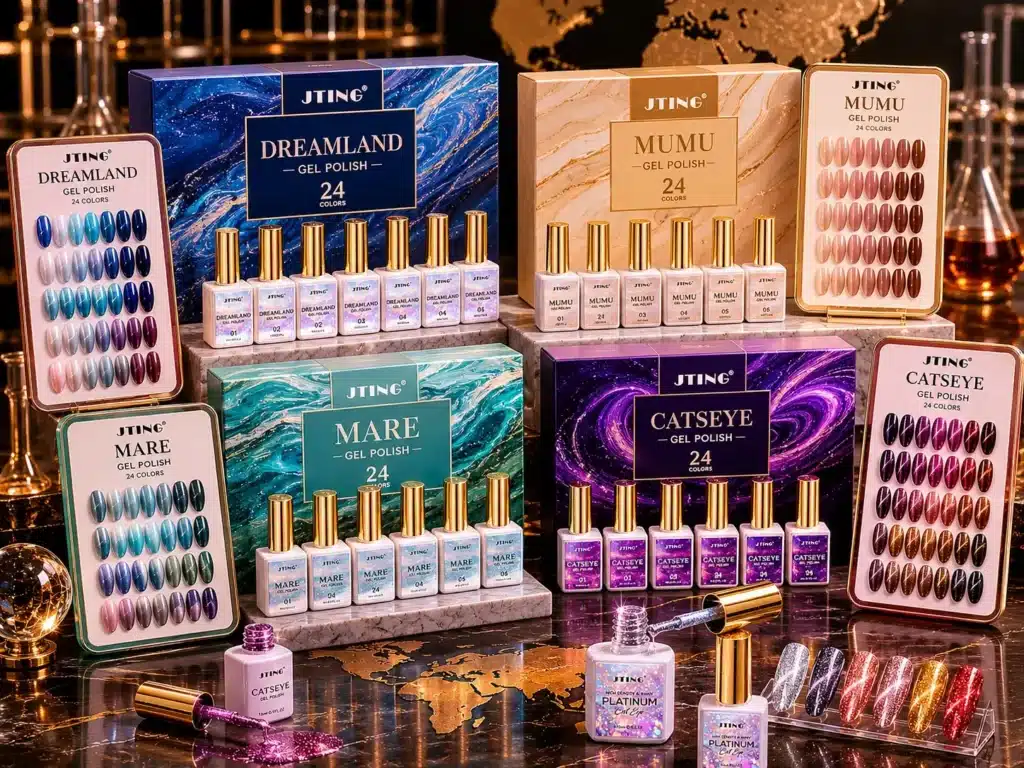
The ability to produce a genuinely premium, batch-consistent, safety-compliant cat eye line is not a marketing claim. It is a direct reflection of a manufacturer’s underlying R&D capability, raw material relationships, and quality management infrastructure. It is one of the hardest product categories to execute well — which is exactly why it is such an effective filter when evaluating a manufacturing partner.
At JTING NAIL, our cat eye formulations are developed in-house in our advanced laboratory, engineered without HEMA or TPO, and validated through the full battery of stability and cure verification testing described above. Our premium Catseye collection represents years of iterative formulation work, not reformulated commodity bases with commodity pigments. Every production batch is tested against our documented QC standards before it ships.
If you are building a cat eye collection that needs to perform under professional conditions, hold up to client scrutiny, and photograph brilliantly for the content your brand depends on — the conversation starts with the chemistry, not the catalog.
We would welcome a technical consultation. Bring your questions about formulation, your color concepts, and your compliance requirements. That is where serious partnerships begin.