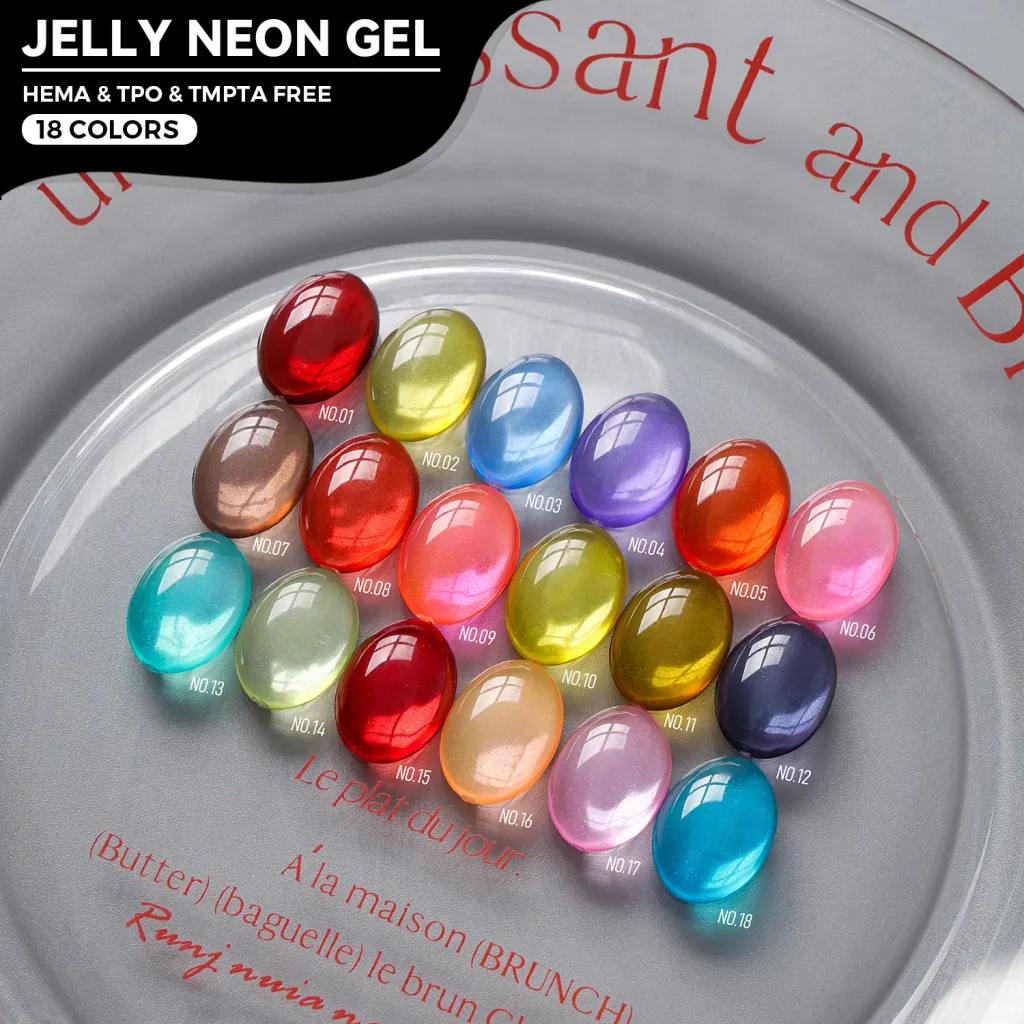
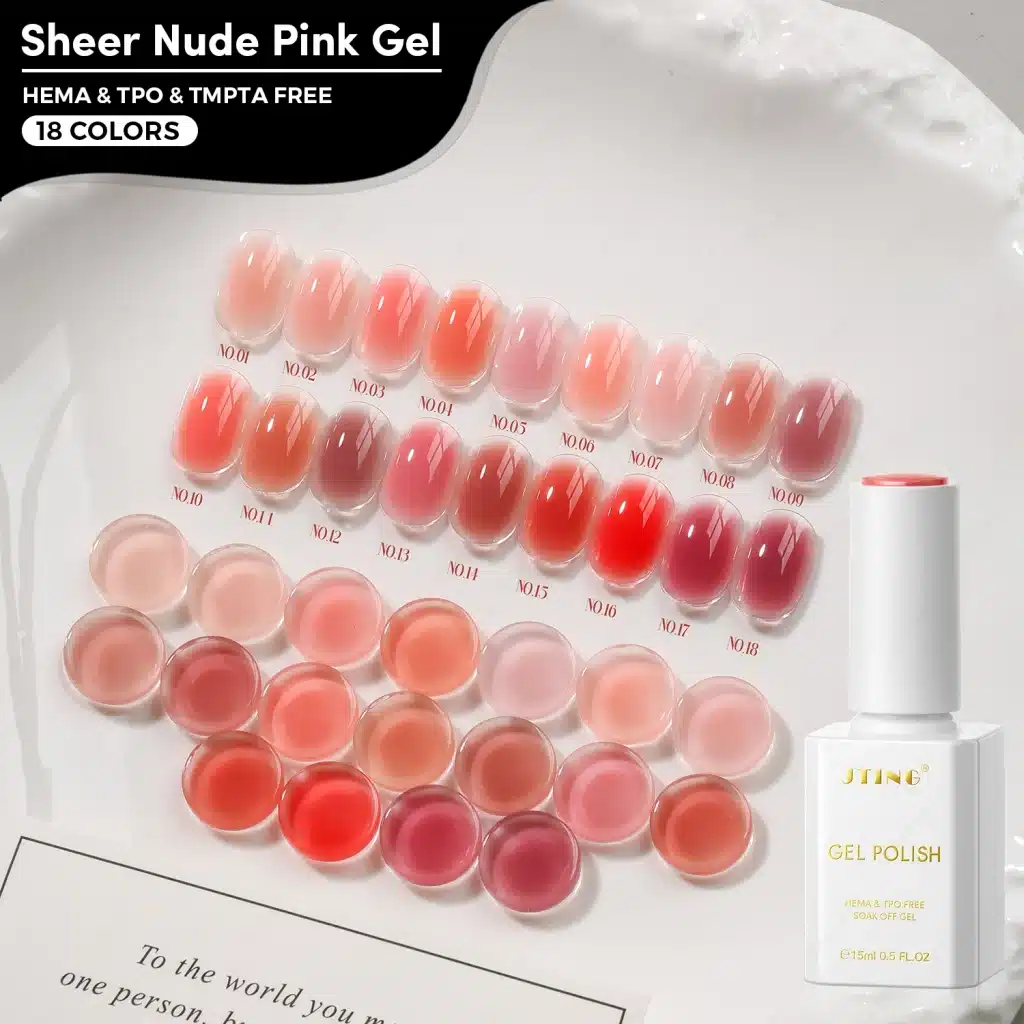
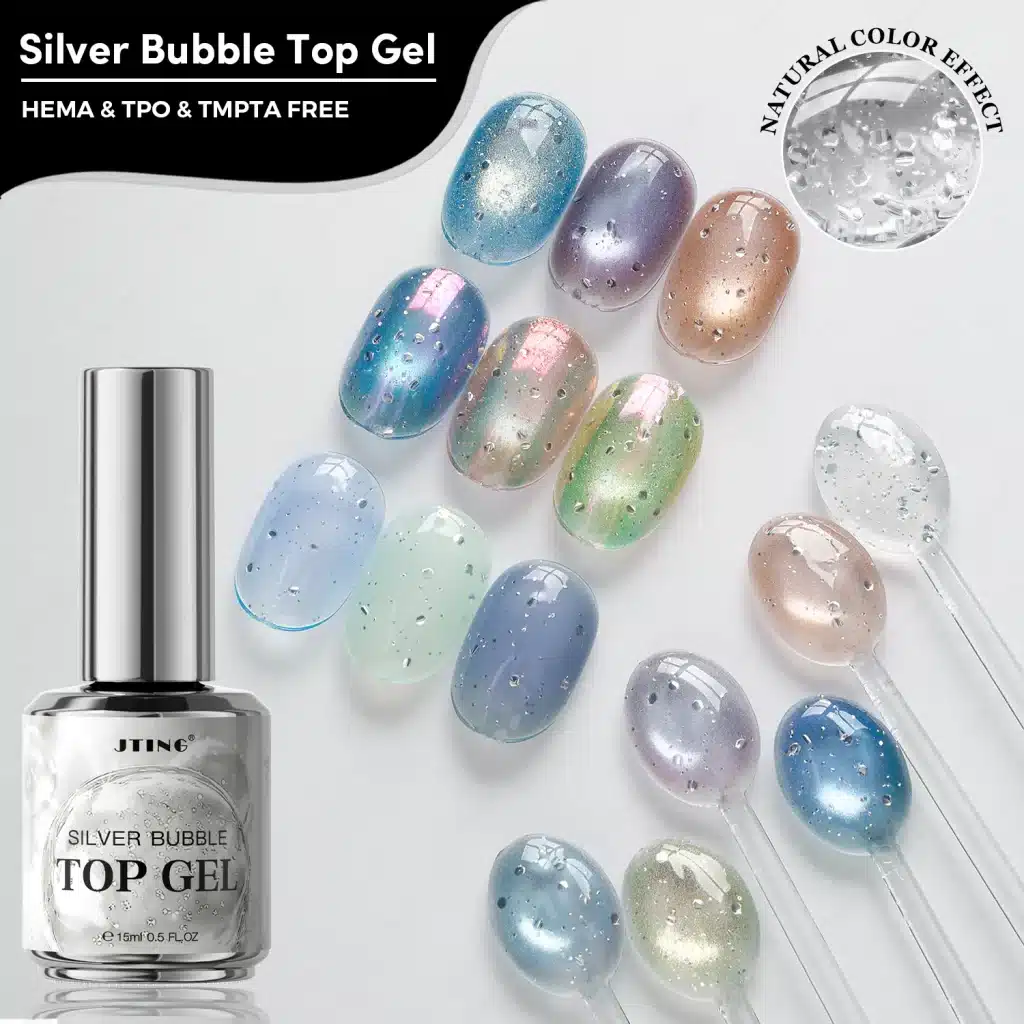
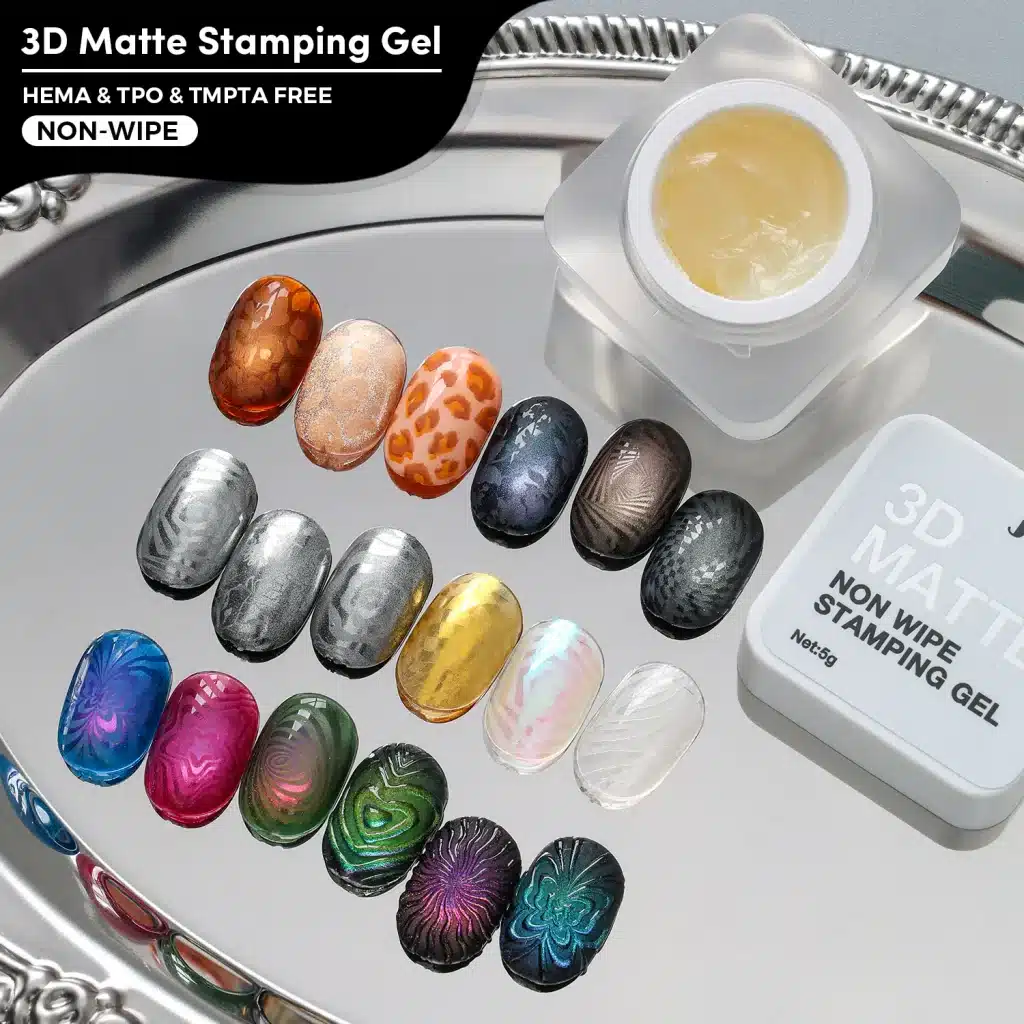
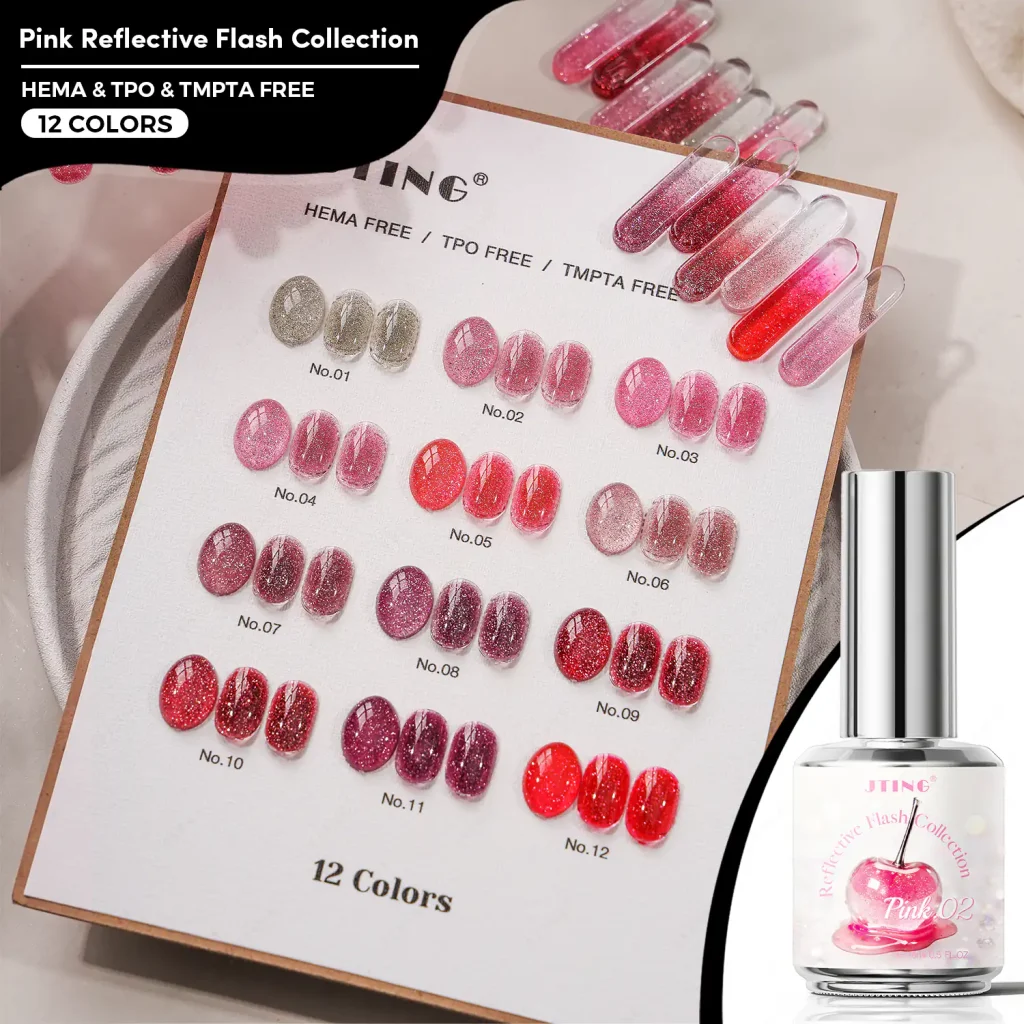
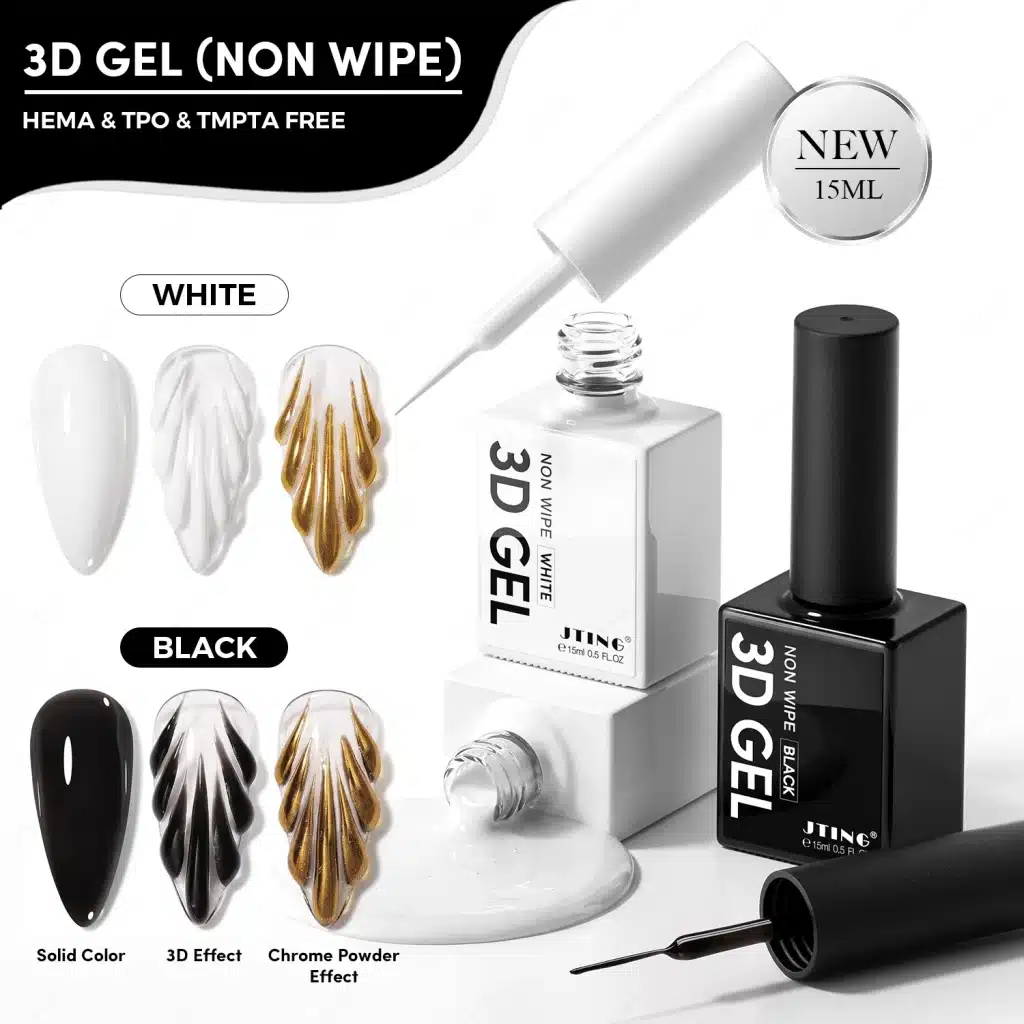
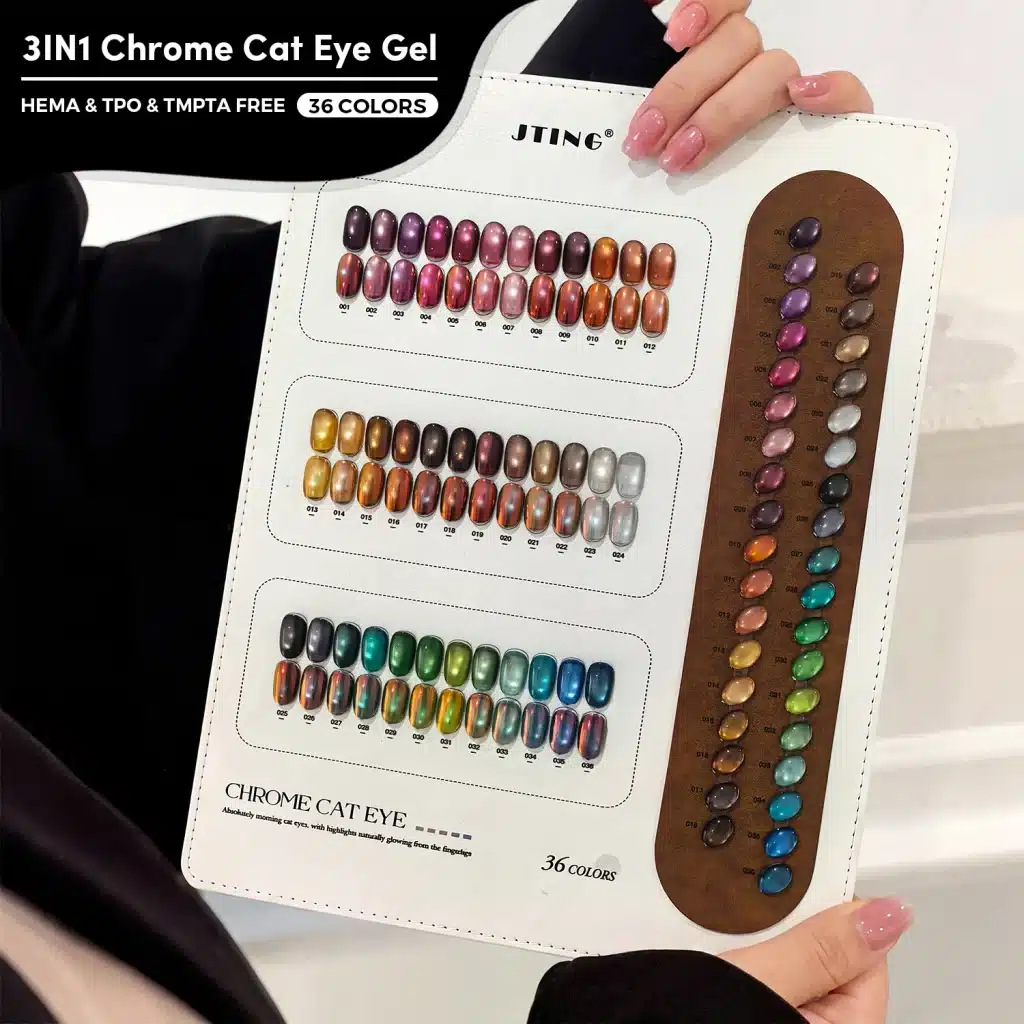
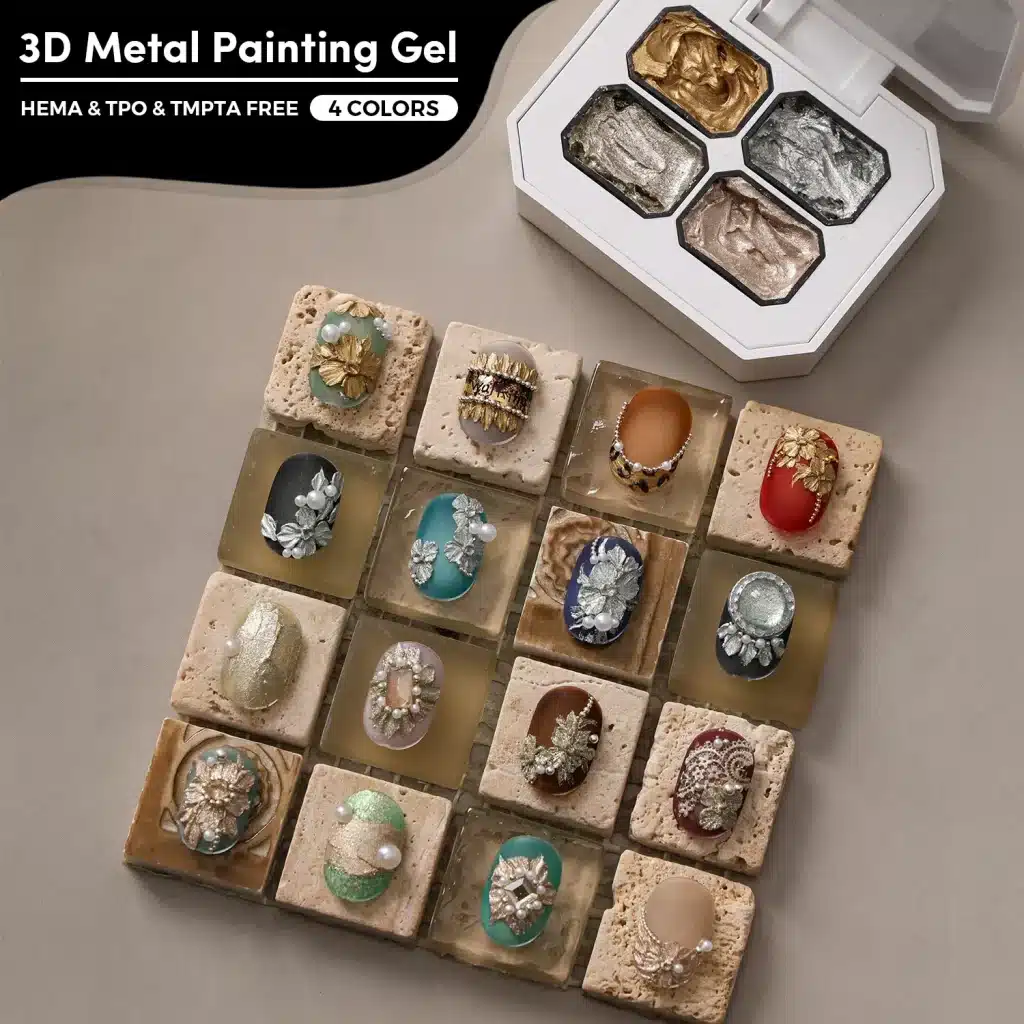
Most salon owners treat color as inventory. The sharp ones treat it as infrastructure.
There’s a reason the highest-grossing locations in any multi-site nail brand are rarely the ones with the biggest square footage or the most aggressive social media spend. They win on something quieter — and far harder to copy. Their color offering works as a system consistent across every touchpoint, refreshed before clients get bored, available when the rush hits, and exclusive enough that a competitor can’t simply walk into the same distributor and undercut them. Strip that away, and what you have is a commodity service competing on price. Nobody profits there except the clients.
The uncomfortable truth about the nail industry’s color supply chain is that most of it was designed for a different era. Large-batch production cycles, seasonal releases that move glacially, minimum order quantities that punish agility — these are the structural realities that quietly hemorrhage margin for salon operators who haven’t yet gone looking for an alternative. This piece is for the ones who are ready to look.
1. From Color Chaos to Cross-Location Precision:The Consistency Standard That Earns Trust
For a single-location boutique salon, a slight batch variance might be forgiven. For a 10-store brand operating across multiple cities or countries, it’s a reputational landmine. When the Dusty Rose No. 12 a client loved in your flagship location shows up as a noticeably different shade at your airport branch, that’s not a minor inconvenience — that’s a trust breach. She won’t complain loudly. She’ll quietly stop referring people.
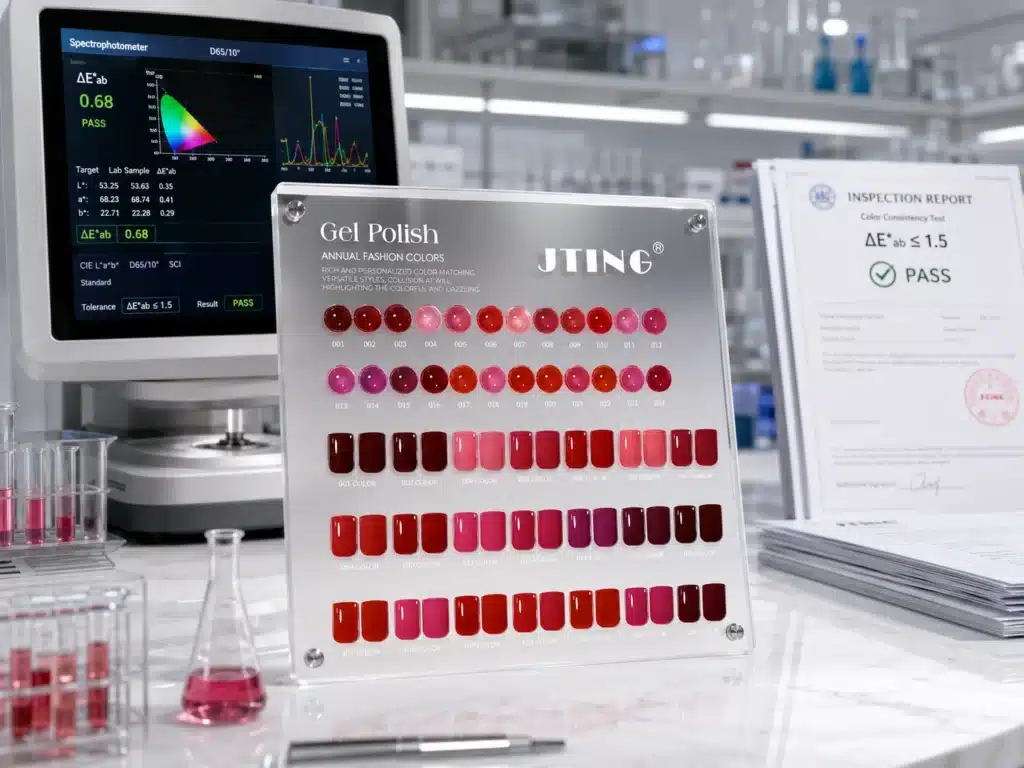
Batch-to-batch consistency is the unglamorous foundation that every serious color supply chain conversation must start with. The technical benchmark here is Delta E — specifically, a Delta E value below 1.5, which represents the threshold at which color variance becomes perceptible to the trained human eye under standard lighting conditions. A manufacturing partner worth its weight operates at that threshold or below, for every production run, without exception.
What this requires in practice is a quality control infrastructure most operators never see: spectrophotometer testing at batch level, standardized light booth evaluation protocols, and the issuance of formal Color Variance Inspection Reports that travel with every shipment. Beyond documentation, it means maintaining physical master color reference chips — production-matched, stored under controlled conditions — so that six months or two years down the line, reorders are benchmarked against a fixed standard, not against memory. For wholesale buyers managing thousands of SKUs across distributed retail or salon networks, this is the kind of verifiable, data-backed commitment that converts a supplier relationship into a long-term operational asset.
2. Why the Stale Color Card Is Silently Killing Your Retention Numbers
Consistency keeps your current clients. Freshness is what brings the high-value ones back — and stops them from drifting toward whoever just dropped something new. The fastest-growing and most profitable nail client segment skews younger, more trend-literate, and significantly more impatient with brands that cycle through the same forty shades year after year. When a client sits down and the color display hasn’t changed since her last three visits, she notices. She doesn’t say anything. She starts browsing other options before she even leaves.
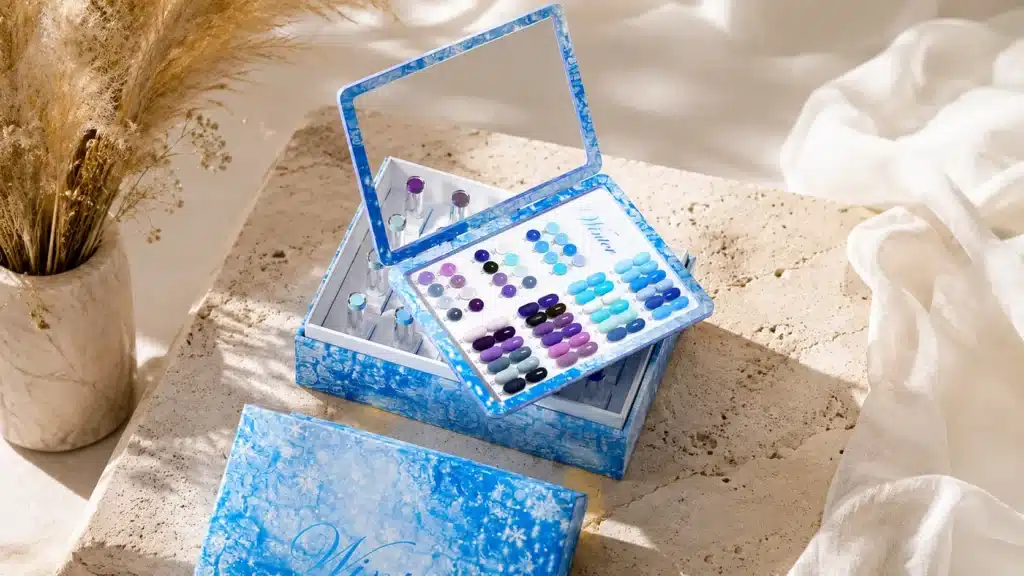
This is where the fast-response color service stops being a nice-to-have and becomes a measurable retention mechanism. A capable supply chain partner should be developing between 60 and 100 new shade directions per season, with the pipeline structured to put saleable samples in your hands within six weeks of trend confirmation, and production-ready large orders delivered within eight to ten weeks. That’s not an aspirational timeline — it’s the operational baseline that keeps a salon color program competitive in markets where clients are exposed to global trend cycles in real time.
The low-risk entry point for salon operators is the new-color trial kit model — free or heavily subsidized sampling sets that let a salon test a new color story with clients before committing to full inventory. It’s small-batch agility working exactly as it should — the salon captures the upside of novelty without absorbing the downside of an expensive wrong bet. Done right, it’s a client acquisition mechanism disguised as a procurement conversation.
3. The Restock Problem Nobody Wants to Admit
There is a specific kind of operational pain that hits somewhere between peak season arriving and the reorder arriving late. You’ve already posted the looks. Clients are booking specifically for the colors they saw. And your supplier — locked into their own batch cycle — can’t move fast enough.
The traditional large-brand model is built around infrequent, large-volume production runs. It’s efficient for the manufacturer and catastrophic for the salon that needs 200 bottles of a specific shade in a three-week window before a holiday rush. The choice becomes painful: over-order early and sit on dead inventory, or under-order and turn away bookings.
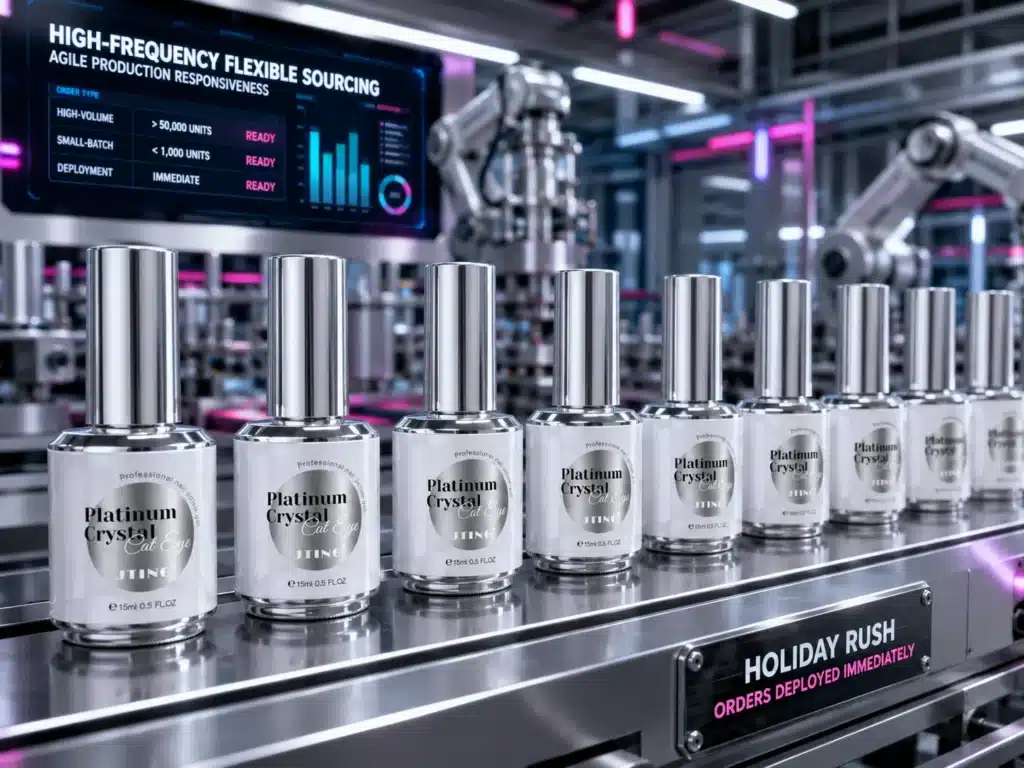
Flexible sourcing — genuinely agile, high-frequency, small-batch manufacturing — is the structural answer. It shifts the power dynamic. Instead of planning your inventory around a supplier’s production schedule, you’re planning around your actual client demand signals. The practical implications are significant: smaller committed quantities per order, more frequent reorder windows, and a supply chain responsive enough to surge on a top-performing shade without requiring six-month lead time negotiations. High-season profitability stops being a function of how well you guessed eight months ago and starts being a function of how quickly you can read what’s moving. This is where mid-sized salon operators and regional wholesale buyers often discover the most immediate margin opportunity. The per-unit economics of flexible sourcing may look slightly less favorable on paper. The avoided stockout losses and eliminated overstock write-downs more than compensate.
4. The Only Color Your Competitor Can't Stock
Let’s be direct about what the premium salon market is actually selling. It’s not nail polish. It’s an experience that cannot be replicated across the street — or across town. The moment a client realizes that the signature shade she associates with your brand is available at three other local salons, the premium positioning begins to erode. Not dramatically. Steadily. And the erosion is very hard to reverse.
Bespoke color formulation is the strategic answer to what might be called exclusivity anxiety — the slow-burning concern that a brand’s differentiation is shallower than it looks. A manufacturing partner with serious formulation capabilities can take a salon’s brand identity, its aesthetic language, its specific market positioning, and translate it into a collection of proprietary shades that exist nowhere else. Not in another salon’s color menu. Not in a distributor’s catalog. Nowhere.

The commercial logic here goes well beyond novelty. When a salon names a shade after itself — when that color becomes associated with a specific experience, a specific environment, a specific kind of client — it creates a reference point that competitors cannot source their way into. High-end salon operators who have moved into bespoke formulation consistently report it as one of the most effective pricing floor mechanisms available to them. Clients pay a premium for what they understand to be exclusive access. The supply chain, in this context, is directly funding brand equity. The standard for this service should include a minimum order commitment that makes commercial sense for a serious operator, full formulation exclusivity agreements, and the ability to scale production as a signature color gains traction in a market.
Color as Your Salon's Most Undervalued Commercial Asset
Taken together, the four pillars covered here — batch consistency, fast-response development, seasonal agility, and bespoke exclusivity — represent a reframing of what color procurement actually is. It is not a commodity purchase. It is the primary mechanism through which a nail salon builds defensible margin, client loyalty, and brand identity that compounds over time.
The supply chain partner that delivers across all four dimensions isn’t a vendor. It’s a growth infrastructure decision. For salon groups and wholesale buyers who are done competing on price and ready to build something that holds its value — the conversation starts with color, and it starts with who’s making it.