Gel polish pricing in the B2B market spans an enormous range — and that gap rarely reflects arbitrary markups. It reflects fundamental differences in what you are actually buying. For brand owners sourcing private label gel polish, understanding what drives cost is not just a procurement exercise. It is a brand protection decision.
1. Raw Material Chemistry and Pigment Density
The formula is everything. Cheap gel polishes are built on generic oligomer resins and photoinitiators that cure inconsistently, yellow under UV exposure, and frequently cause client sensitization over time. That last point is not a minor inconvenience — repeated exposure to low-grade HEMA (hydroxyethyl methacrylate) is a known trigger for occupational contact dermatitis, and it is increasingly drawing regulatory scrutiny across European markets.
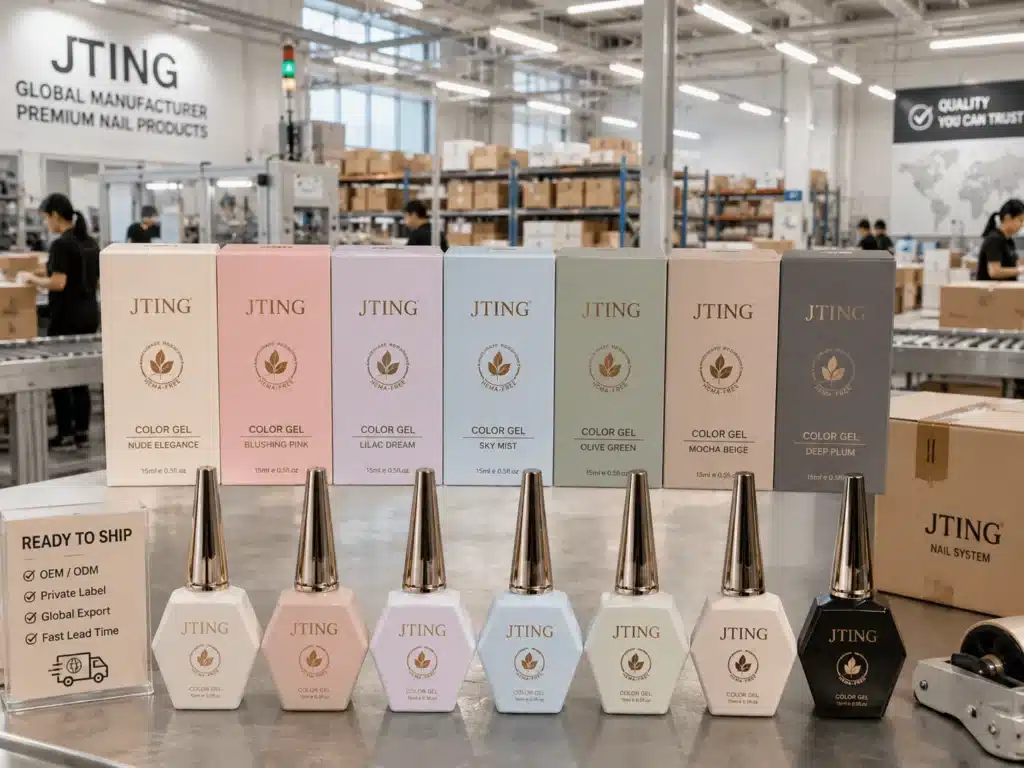
Premium formulations use pharmaceutical-grade, HEMA-free resin systems paired with TPO-free photoinitiator packages. Beyond chemistry, pigment loading matters significantly. High-density pigment dispersion delivers full opacity in two coats, consistent color payoff across production batches, and resistance to fading. Low-cost alternatives cut pigment ratios, which is invisible on a spec sheet but immediately visible on a client’s nails.
The raw material delta between a low-cost formula and a professional-grade one can represent 40–60% of the total unit cost. That is the premium brands are paying — and passing on as performance.
2. Packaging Quality and Custom Components
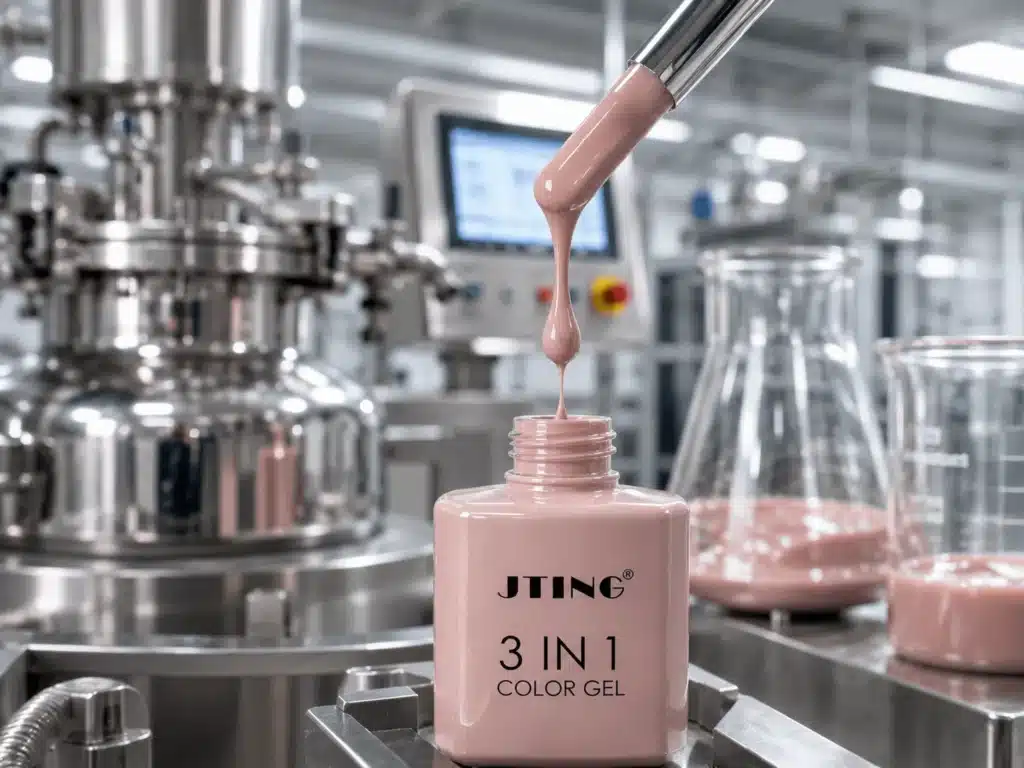
A bottle is not just a container. It is the primary point of brand communication at the retail and salon level, and it protects formula integrity throughout its shelf life. These are not vanity expenses. They are the physical embodiment of what your brand promises.
| Component | Low-Cost Generic Option | JTING Premium Standard |
|---|---|---|
| Bottle Material | Standard amber or clear glass bottles offering minimal UV protection. | Custom opaque, UV-blocking glass or high-barrier PETG to prevent photoinitiator degradation. |
| Brush Quality | Generic, uneven bristles that cause streaks. | DuPont-grade synthetic fiber brushes, precision-cut for optimal fan and gel load. |
| Brand Customization | Stock molds with basic stickers. | Custom mold tooling for branded bottle silhouettes, logo-engraved caps, and specialty applicator designs. |
3. Compliance and Manufacturing Standards
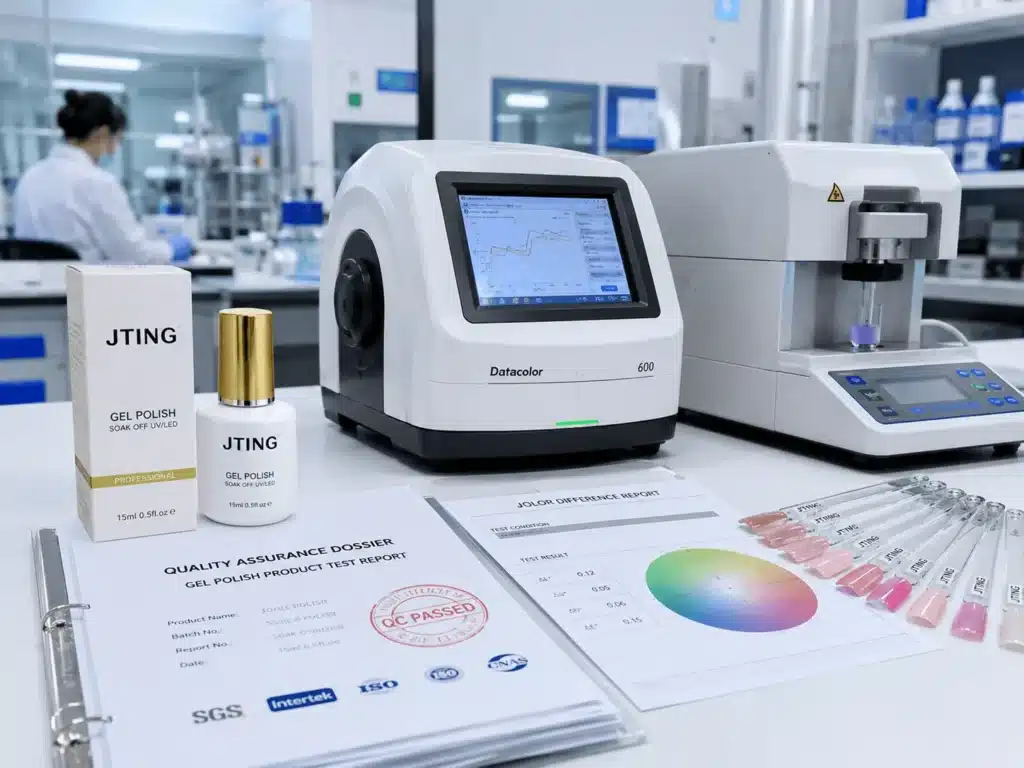
This is where hidden costs become hidden risks. Regulatory compliance — EU CPNP notification, US FDA cosmetic registration, ISO 22716 Good Manufacturing Practice certification — requires continuous investment in documentation, third-party lab testing, and quality management infrastructure. Manufacturers that absorb these costs build them into pricing. Manufacturers that do not are asking you to carry the liability.
For brands distributing in the EU, CPNP-compliant safety assessments are a legal requirement, not an option. For US-market brands, FDA facility registration and proper labeling compliance protect against import holds and market withdrawal. Any manufacturer offering gel polish at pricing that cannot accommodate these costs is almost certainly cutting them.
Batch stability testing, heavy metal panels, patch-test protocols — legitimate manufacturing is systematically expensive. That cost is a baseline, not a premium.
4. The Right Metric for Sourcing Decisions
Price per bottle is the wrong number to optimize. The correct metrics are cost per complaint, cost per reformulation, and cost of brand equity lost to poor performance. Brands that compete on cheap input pricing cede the professional market to those who invest in formulation and compliance integrity.
If you are building a private label gel polish line with long-term market positioning, the conversation should start with what your end client demands — and work backward to specification, not price.
JTING NAIL works with salon brand owners to develop OEM and ODM gel polish lines built to EU and US compliance standards, with formulation transparency and full documentation support. If you are ready to build on a foundation that holds, reach out for a project consultation and quote.