Global trade data reveals a clear picture: North America and Europe dominate the import volume for professional gel nail cosmetics. However, successfully exporting to these lucrative markets requires much more than just a shipping label. The largest importing countries also enforce the strictest chemical safety regulations in the world.
If your supplier does not understand the difference between FDA requirements and EU cosmetic directives, your shipment will be seized at customs. As a supply chain specialist at JTING NAIL, I manage global distribution for premium salon brands daily. In this guide, we analyze the top importing regions and the specific formulation and compliance standards you must meet to sell there.
1. The United States: The High-Volume, Extreme-Wear Market
The US is the largest single importer of gel nail products. The American salon model relies heavily on speed and durability. Clients expect manicures that survive heavy daily wear for up to a month. From a formulation perspective, this market demands aggressive adhesion and maximum scratch resistance.
JTING NAIL Laboratory Advice: To succeed in the US market, your top coat must utilize aliphatic urethane acrylates. This specific chemistry creates a non-porous, mirror-like shield that prevents the micro-scratches and UV yellowing common in cheaper formulations, ensuring the manicure survives the harsh demands of American consumers.
2. The European Union and UK: The Compliance-Driven Markets
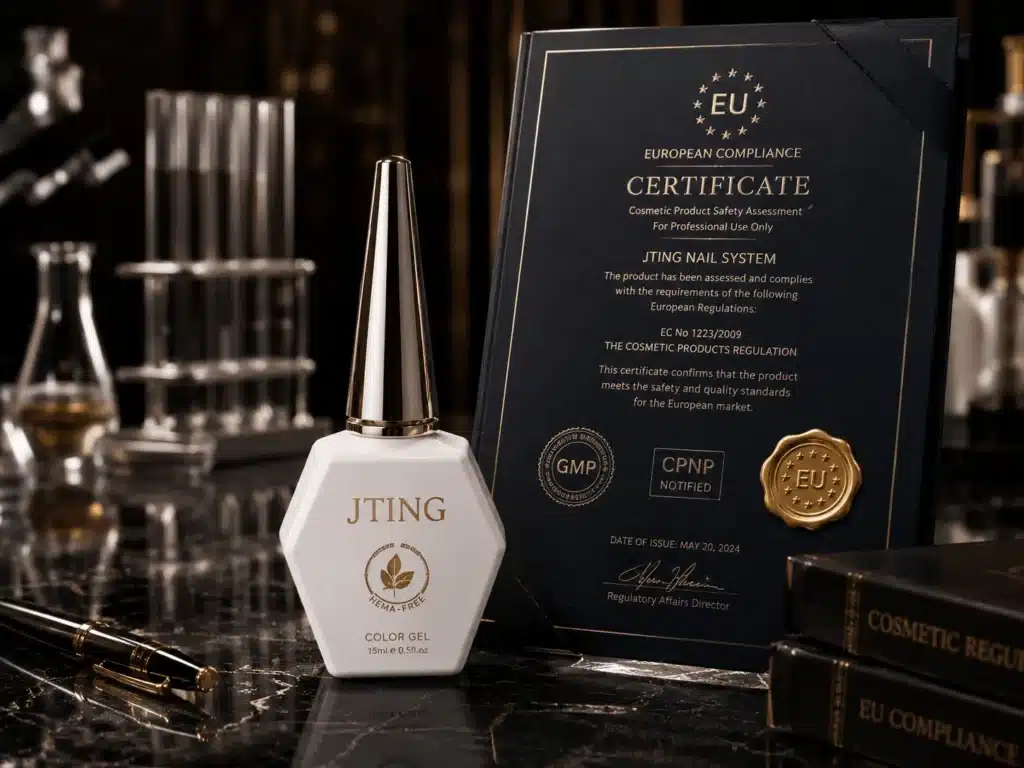
Europe represents a massive import block, but it is heavily guarded by CPNP (Cosmetic Products Notification Portal) regulations. The EU leads the world in chemical safety, recently enacting strict bans on certain photoinitiators and heavily regulating sensitizing monomers.
If you are importing into the EU or the UK, standard generic formulas will fail customs inspections. The market absolutely requires formulations that are strictly HEMA-free, Di-HEMA free, and TPO-free. Your manufacturer must provide accurate INCI ingredient lists and independent toxicity reports.
3. Emerging Markets and Climate-Specific Formulation
Regions like Southeast Asia, Australia, and the Middle East are rapidly increasing their import volumes. However, extreme heat and high humidity present unique chemical challenges. A base coat designed for a cold European winter will experience severe lifting in tropical humidity.
Manufacturers exporting to these regions must adjust the cross-linking monomers to block moisture penetration from the natural nail plate.
4. Standard Export Suppliers vs. JTING NAIL
Exporting cosmetics requires precise legal and chemical alignment.
| Evaluation Metric | Standard Export Supplier | JTING NAIL Manufacturer |
|---|---|---|
| European Compliance | Uses banned ingredients (like TPO) and provides fake MSDS documents. | 100% CPNP compliant, offering fully HEMA-free and TPO-free formulations with authentic lab reports. |
| Climate Customization | Ships the exact same formula to Russia and Florida. | Adjusts viscosity and adhesion chemistry based on the specific climate of your import destination. |
| Customs Clearance Support | Disappears after the container is loaded. | Provides complete, accurate technical dossiers (TDS, SDS, COA) to ensure zero delays at the border. |
Conclusion: Partner With Global Export Experts
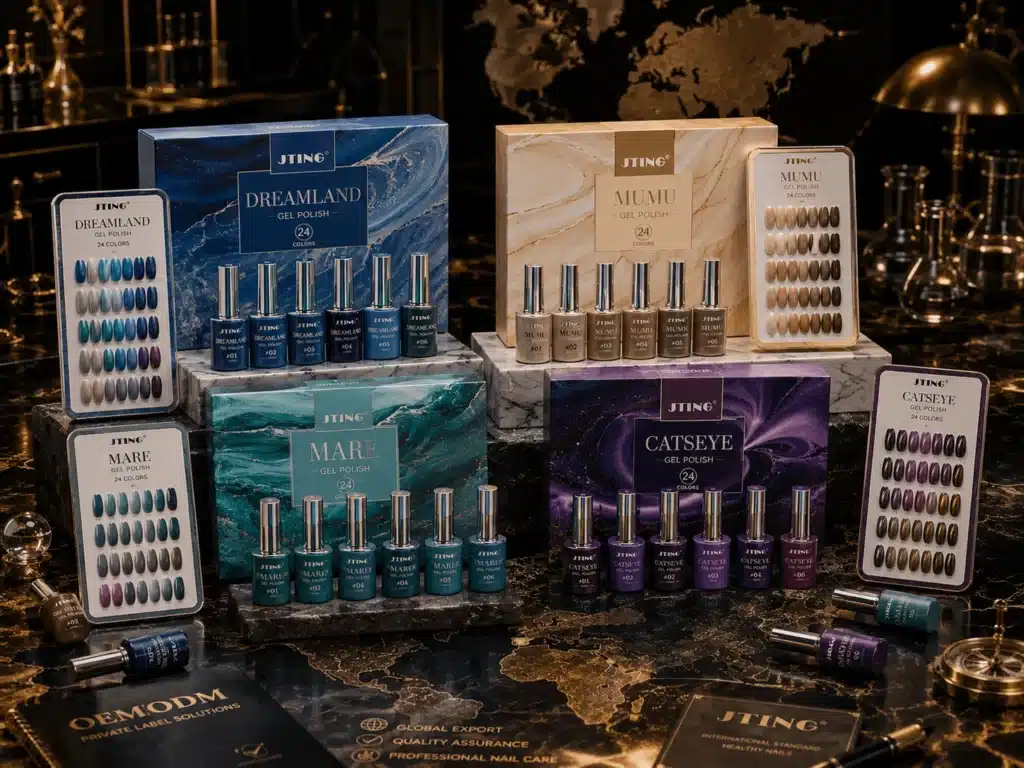
Entering the world’s largest gel polish markets requires a manufacturer who acts as a compliance partner, not just a liquid filler. A single customs rejection due to illegal ingredients can bankrupt a growing brand.
At JTING NAIL, we engineer our formulas to exceed the strictest global safety standards. Whether you are targeting the extreme-wear demands of the US or the strict regulatory environment of the EU, we have the chemical expertise and export experience to get your products to market safely.
Contact our international trade team today to discuss your regional requirements.