JTING 3IN1 Chrome Cat Eye Gel brings base, color and top coat functions into a 15 ml magnetic gel polish, with 36 shades for professional collections. Its standard application uses two thin coats: cure the first, shape the magnetic highlight in the uncured second coat, then cure to a glossy, no-wipe finish. No separate base or top coat is required for this method.
For brands, wholesalers and salon suppliers, the collection offers a combined application system and an autumn–winter palette to assess alongside existing stock. A buying decision needs to account for the colors your customers request, the magnetic finish they expect and the method their technicians will use. Chrome powder pairings add another option, with their own materials and application requirements.
This guide covers the differences between plain color, magnetic cat-eye and chrome powder finishes, followed by practical guidance on samples, salon use, private label packaging and wholesale orders. Whether you are considering a focused shade selection or the wider range, you can use these comparisons to identify suitable samples, prepare a quotation request and plan how the collection will be supplied and reordered.
1. Understand the 3IN1 Cat Eye System
The “3IN1” in this product name refers to three functions: base, color and top coat. They are combined in one formula, applied in two thin layers. For salons accustomed to a separate base, magnetic color and finishing product, the difference is in the products required for the service; nail preparation and curing remain part of the method.
JTING’s standard method starts with nail preparation, followed by a thin first coat and an LED cure. The second thin coat is shaped with a magnet while uncured. Once the desired highlight has formed, this coat is cured to the finished surface, without a separate top coat or wiping step.
What Changes in the Application
| Part of the Service | How It Works with This Product |
|---|---|
| Nail preparation | Still required before the first coat. |
| Separate base coat | Not required for the standard method. |
| Color application | Two thin coats, with the first cured before the second is applied. |
| Magnetic shaping | Performed on the uncured second coat. |
| Final finish | Cure the second coat; no separate top coat or wiping step is required. |
In this context, “one-step cat eye gel” describes the combined product system. The two thin coats have separate roles: the first is cured before the second is applied, and the magnetic highlight is shaped in the second. Follow that sequence rather than replacing it with a single heavy coat.
For buyers supplying complete nail systems, assess the intended service as well as the color. Nail extension, structural support and added decoration have their own material requirements. If you plan to use the gel with an enhancement system or a decorative finish, include that combination in the sample discussion with JTING. Start with the standard cat-eye application, then evaluate the additional service you want to offer.
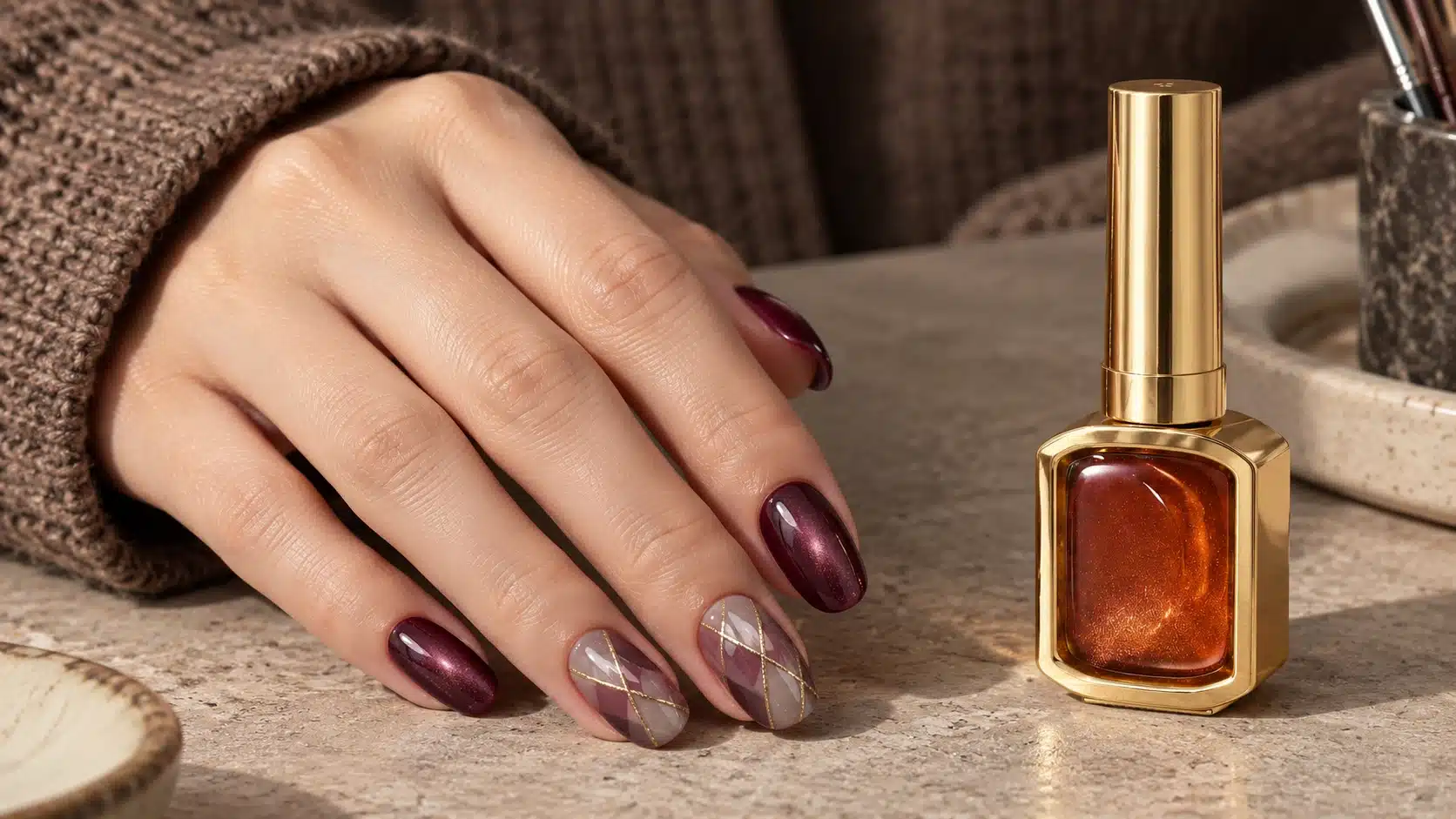
Gold 15 ml bottle with burgundy magnetic and gold-lined plaid nail designs.
2. Position One-Step Cat Eye Gel within Your Existing Product Range
If your business already sells cat-eye gel polish, compare this collection on two points: the combined base, color and top coat system, and the shades it adds to your range. It may suit an account looking for a cat-eye service without separate base and top coat products, or a brand seeking deeper seasonal colors in a coordinated collection.
Compare it with the products your customers use today. Look at the actual application instructions, the available shades, the finished appearance and the supporting materials. Two ranges can share the words “cat eye” while requiring different steps. They can also look similar in a photograph yet produce different highlights when applied and viewed in person.
Select for Your Sales Channel
For an established nail brand, a focused selection can introduce the 3IN1 method without duplicating every shade in an existing catalog. A wholesaler may need a broader choice so different accounts can order their preferred colors. A salon supplier may place more emphasis on a small demonstration selection that technicians can learn and explain with confidence. These are different assortment decisions, even when the underlying product is the same.
Consider how the collection fits beside your other cat-eye gel products. Keep the application instructions attached to the correct range, especially if neighboring products require a base or top coat. Similar bottle displays or adjacent shade cards should not leave customers guessing which method applies.
During sample selection, compare the proposed colors with the shades your accounts already buy. Look for useful differences in tone and magnetic reflection, then ask the technicians who will use the product to try the combined method. This helps distinguish demand for a new color from demand for a different application system; either may influence the opening order.
Include demonstration needs in that order discussion. A salon supplier may need a few clearly labeled application samples for staff training, while a distributor serving several accounts may need a broader shade reference. Confirm which sample and display materials can accompany the selected products.
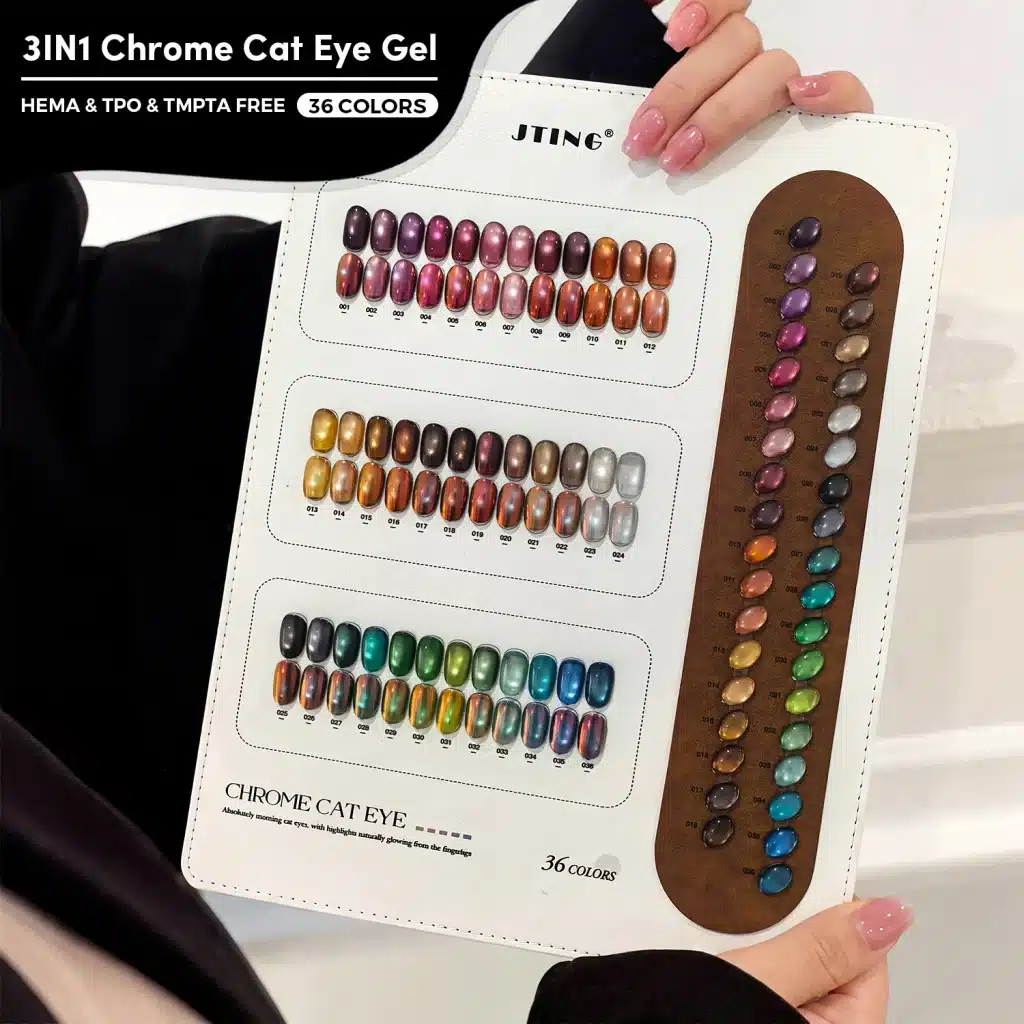
3. Choose Your Assortment from the 36-Color Range
A 36-color range gives buyers room to build different selections. It does not, by itself, mean that every order must contain 36 bottles or that every shade should receive the same quantity. Start by reviewing the complete color selection, then choose the breadth and depth appropriate for your accounts, storage capacity and launch plans.
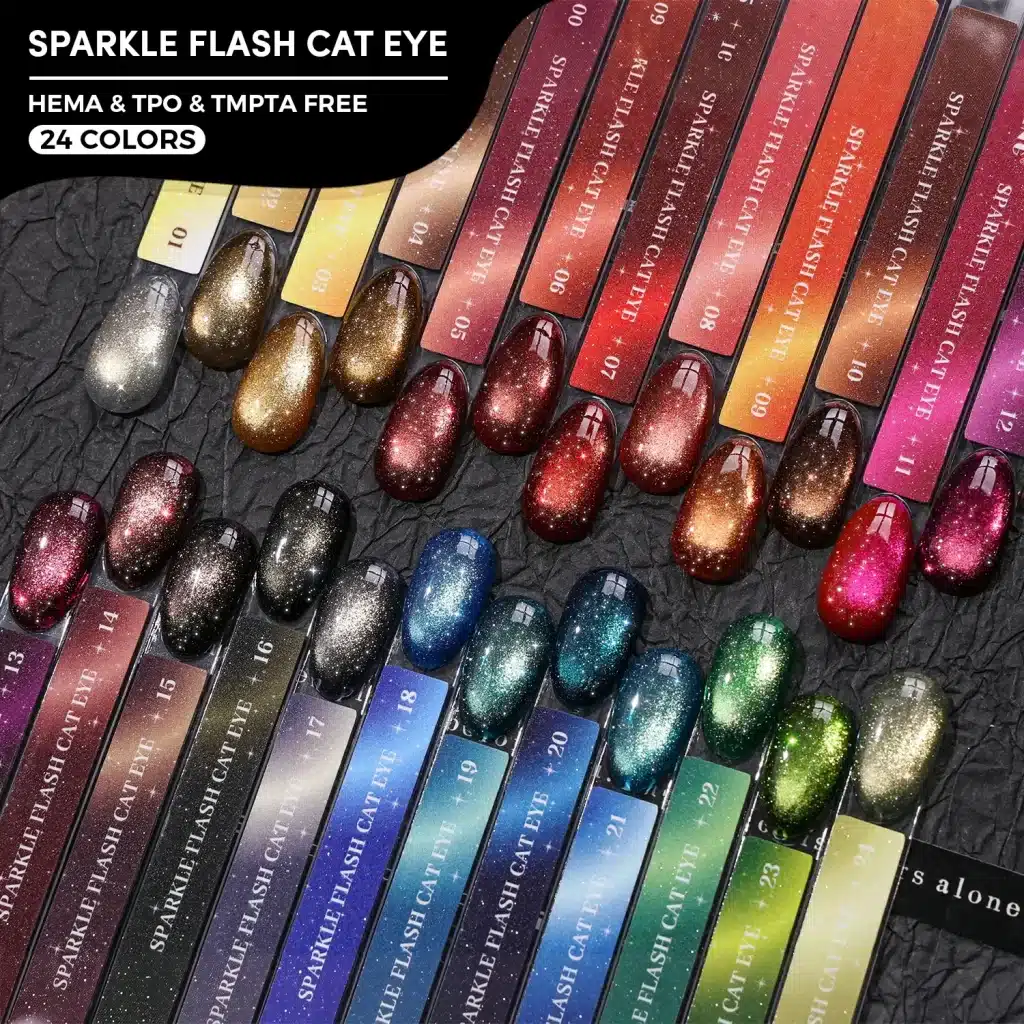
The collection includes berry, burgundy and purple shades; amber, caramel and brown tones; silver, grey and taupe neutrals; and green, teal and blue colors. Comparing these color families helps you identify close alternatives and gaps in the selection. Use the current shade numbers when requesting samples or prices, and confirm the order configuration with JTING.
Swipe to view all columns.
| Color Direction | Possible Role in Your Range | What to Check in Samples |
|---|---|---|
| Berry, burgundy and purple | Deeper color choices for autumn–winter services and coordinated nail art. | How neighboring shades differ in base color and magnetic reflection. |
| Amber, caramel and brown | A warm-toned selection that can sit beside nude and earthy colors. | Whether the finished shade and highlight remain distinct under normal salon light. |
| Silver, grey and taupe | Neutral and cooler options for customers who want a less colorful finish. | The balance between the underlying tone and the visible magnetic sheen. |
| Green, teal and blue | Color accents that broaden a collection beyond warm seasonal shades. | Whether each selected color adds a useful difference from the others. |
Choose the Number of Shades and Bottles per Shade
Decide how many colors you want to offer, then work out the bottle quantity for each one. A broad display selection and the stock needed to fulfill orders are different requirements. Existing sales records, account requests and sample feedback can help you allocate quantities, especially where you are adding unfamiliar colors alongside shades similar to those your customers already buy.
A narrow first selection can still be varied. Compare a warm tone, a deeper berry shade, a neutral and a cooler accent, then add close alternatives where your customers have a reason to choose between them. For a broader order, check that the near-neighbor shades are distinguishable enough for your sales team and buyers to identify reliably.
Record each selected shade by product number, with its quantity and approved sample reference. Descriptions such as “the brown cat eye” or “the silver one” become ambiguous as the range grows. The same shade number should appear on the order, the sample label, the shade chart you supply to customers and any later replenishment request.
Before finalizing the selection, also decide which shades need display samples and which will be held as sellable stock. Demonstration bottles, retained reference samples and customer orders serve different purposes; allowing for each makes the opening stock plan more realistic.
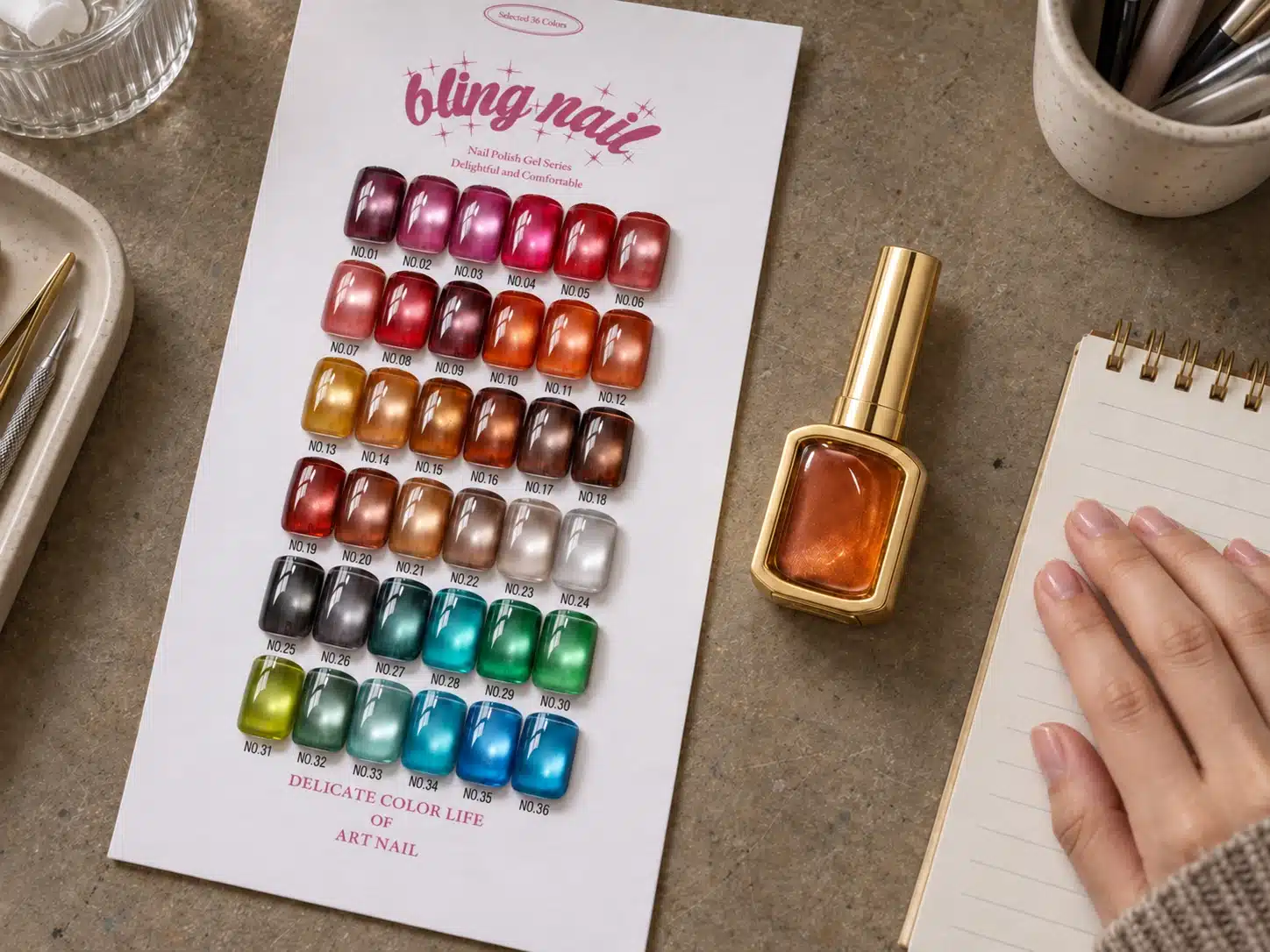
Compare the color range, then confirm shade numbers against JTING’s current chart and approved samples.
4. Compare Color, Magnetic Highlights and Viewing Angles
A magnetic gel polish has more than one visual characteristic. The underlying color, the position of the highlight and the reflection seen as the nail moves all contribute to the finished result. A shade that looks light under a concentrated reflection may look deeper when viewed from another angle. For procurement, one brightly lit photograph is therefore only part of the comparison.
Review an unmagnetized color sample alongside the magnetic application when you need to understand that difference. Keep the product number, nail-tip background, coat application and lighting consistent. This gives the buyer a useful comparison of two application choices rather than a comparison between different photographic conditions.
Make the Sample Comparison Repeatable
Start with a straightforward magnetic result before reviewing more elaborate nail art. Use the same magnet and working method for the colors being compared, and record how the highlight was shaped. A narrow highlight on one tip and a broadly dispersed reflection on another can make two similar shades appear farther apart than they actually are.
Look at the samples under ordinary working light and turn them slowly to assess the base tone and reflection. For remote selection, request a short, steady video showing this movement. A view under normal salon lighting is useful alongside a close-up photograph, particularly when choosing between neighboring shades with similar base colors.
The approved physical sample should remain the reference for the order. Screen settings, camera exposure and viewing conditions all affect how an image appears. If a customer is choosing between two close colors, identifying the product numbers and sending the relevant samples is more helpful than trying to resolve the difference through enlarged screenshots.
Compare decorated examples with a plain cat-eye sample of the same shade. Fine lines, foil, charms or chrome powder can change the overall impression or cover part of the magnetic finish. Seeing both makes it easier to judge the gel color and decide which additional materials belong in your proposed collection.
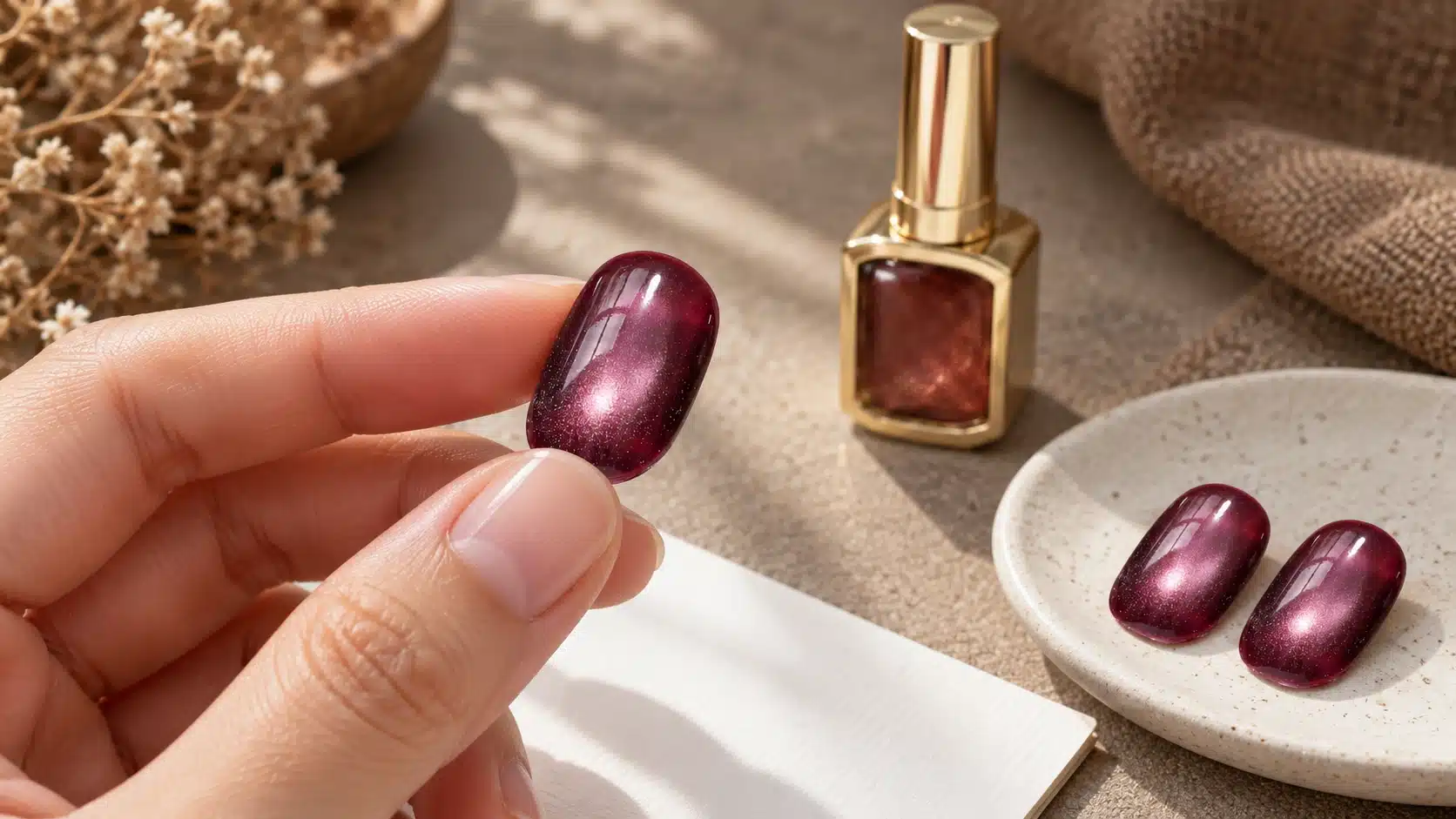
A burgundy magnetic sample viewed under natural light.
5. Apply 3IN1 Chrome Cat Eye Gel Step by Step
The standard method is the starting point for sample approval and customer training. It uses two thin coats, with magnetic shaping on the second coat before curing. Follow this sequence when demonstrating how to apply the cat-eye gel polish; changing several parts of the method at once makes the result harder to assess.
Prepare the Nails
Complete nail preparation before applying the gel. Keep the application on the nail and away from surrounding skin. The combined formula removes the separate base-coat step from this method; it does not remove the need for careful preparation.
Apply and Cure the First Thin Coat
Apply the first thin coat directly, without a separate base coat, and cure under LED for 60 seconds. Keep the layer controlled rather than attempting to achieve the entire color and magnetic result in one heavy application.
Apply the Second Coat and Shape the Highlight
Apply a second thin coat. While it is still uncured, hold the magnet close to the nail for approximately 5–8 seconds to shape the cat-eye effect. Position the magnet without touching the wet surface, and check the highlight before proceeding.
Cure the Finished Effect
Once satisfied with the magnetic result, cure under LED for 60 seconds. For this standard application, the gel finishes glossy and no-wipe, with no additional top coat required.
Check the highlight from the intended viewing angle before curing the second coat. Magnetic shaping belongs at this uncured stage; the first coat has already been cured. Following the same sequence during sample trials and salon demonstrations makes the results easier to compare.
The two 60-second curing stages describe the gel application, not the total manicure time. Preparation, brush handling, shaping the magnetic highlight and any additional nail art also take time. A buyer comparing salon workflows should observe the complete service rather than calculate the appointment length from curing times alone.
Share your lamp and magnet details with JTING when arranging samples, and confirm the equipment and curing instructions for your setup. The times above refer to the LED method. Evaluate the gel-only application first, then assess chrome powder or other decorative additions using the method agreed for that combination.
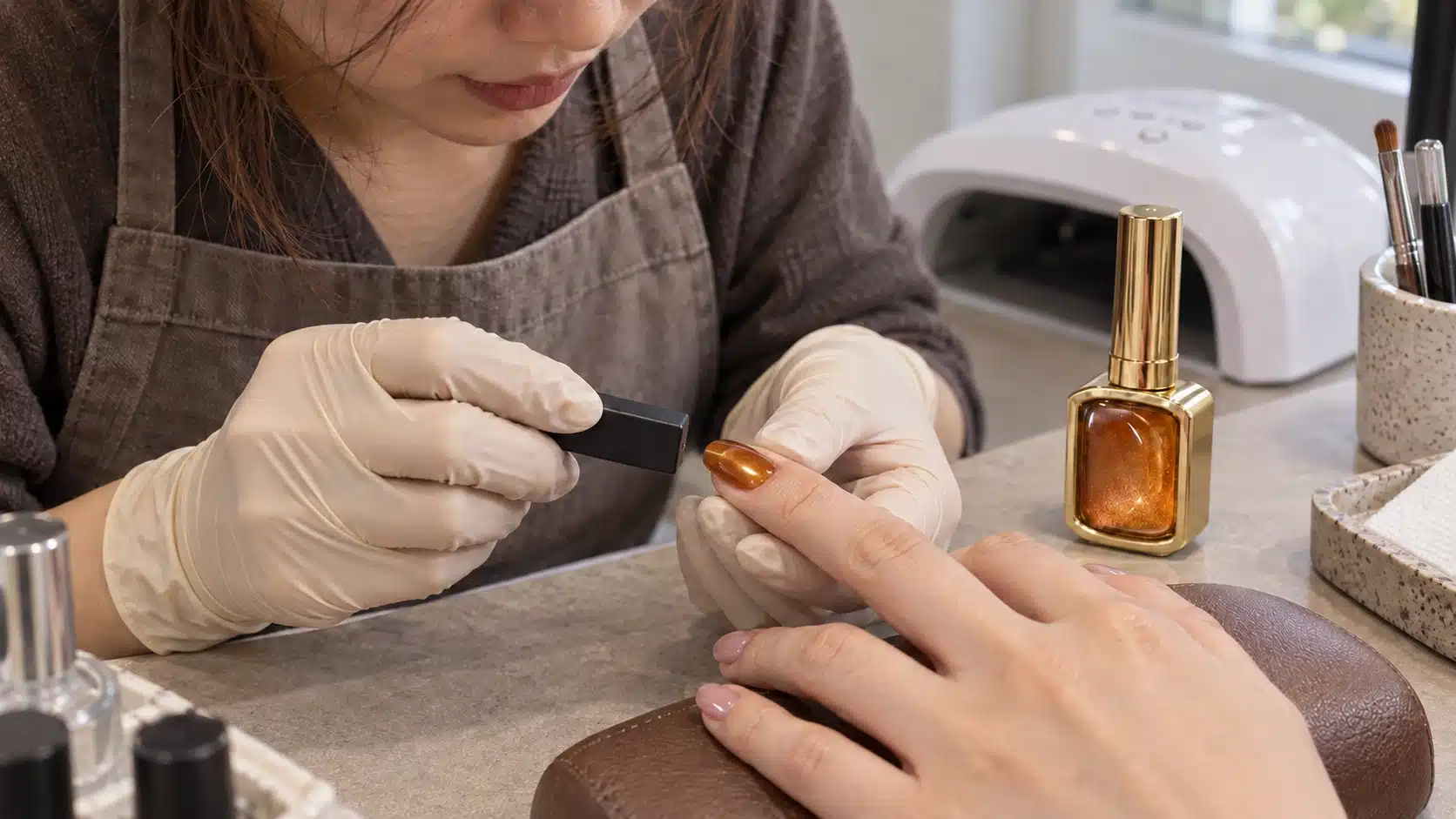
Shape the magnetic highlight before curing the second coat.
6. Troubleshoot Magnetic Definition and the Finished Surface
When a cat-eye polish is not working as expected, begin with the application conditions. A faint highlight, uneven surface or different-looking shade does not tell you its cause on its own. Record what happened, compare the result with the standard method, and change one variable at a time during the next sample trial.
Swipe to view all columns.
| What You Observe | What to Check First | What to Record for Follow-Up |
|---|---|---|
| The magnetic highlight is weak or unclear | Whether the second coat was uncured when the magnet was used; the magnet, position and shaping time. | Shade number, magnet used, application sequence and a short video. |
| The finish appears uneven | Coat control, brush application and whether the wet surface was disturbed. | Views of the surface before curing and of the finished sample. |
| The color looks different from the approved tip | Shade identity, tip background, coat application, magnetic pattern and lighting. | Both samples together under the same viewing conditions. |
| The finished surface does not match the reference | The complete application method, lamp used and any added products. | Product and equipment details, curing sequence and the observed difference. |
| A chrome powder combination gives an inconsistent result | The powder and complete application and finishing method used. | The specific combination, kept separate from the standard cat-eye evaluation. |
For magnetic definition, compare the coat sequence, magnet position and shaping time with the standard application. The magnet should be used while the second coat is uncured. If the highlight remains unclear, record the result before changing the equipment or application so JTING has a useful starting point for reviewing the issue.
The gel has a smooth, self-leveling texture. During a surface check, observe how the thin coat sits before curing and whether the brush or magnet has left a visible mark. A photograph at that stage, alongside the finished sample, can help identify when an uneven area appeared.
For a curing or finished-surface concern, ask JTING to review the shade, equipment and application details before changing the curing time or adding another product. A repeat trial should address the specific issue while keeping the other conditions consistent.
Include the bottle identification, shade number, coat sequence, magnet, lamp and observed result in the follow-up. Retaining the sample allows your technician and JTING to discuss the same finish, whether the next step is an application adjustment, a closer product review or a further comparison.
7. Explore Chrome Powder Pairings with the Cat Eye Colors
JTING 3IN1 Chrome Cat Eye Gel can be considered for magnetic finishes and designs incorporating additional chrome powder. These options involve different materials: the gel provides the color and magnetic effect, while the powder is an added product used for the corresponding decorated finish.
When comparing cat eye versus chrome, look at both the appearance and the application. The cat-eye highlight is shaped in uncured gel with a magnet. A chrome powder design adds a powder application and its associated finishing steps. If you want to offer cat-eye nails with chrome, review a completed sample of the combination and the materials required to reproduce it.
Approve the Complete Combination
Choose the powder you intend to supply or recommend, then confirm the full application and finishing method for that pairing with JTING. The standard gel-only method requires no additional top coat, but that instruction should not automatically be extended to every chrome powder combination. Compatibility and the final finish need to be reviewed together.
Compare a plain magnetic sample with the powder-decorated version to judge what the additional material contributes. If the combined finish is the reason for your purchase, include that complete application in sample approval. This also gives your team a reference when discussing the service with salon customers.
List the gel bottles, powder, applicators and other required products separately in the quotation request. Confirm which items will be supplied and which you or your customers will source separately. This makes the cost and contents of the proposed combination clear before the order is placed.
JTING’s chrome nails guide provides broader background for discussing chrome effects. For this collection, keep the final recommendation specific to the powder and method actually reviewed. If a pairing has not yet been evaluated, the standard cat-eye application can be introduced first, with the additional option offered after sample approval.
Retain the material list with the approved sample. If an account later uses a different powder or finishing product, the original sample will still identify the combination that was reviewed. That reference is useful when investigating a different appearance or deciding whether a new pairing needs evaluation.
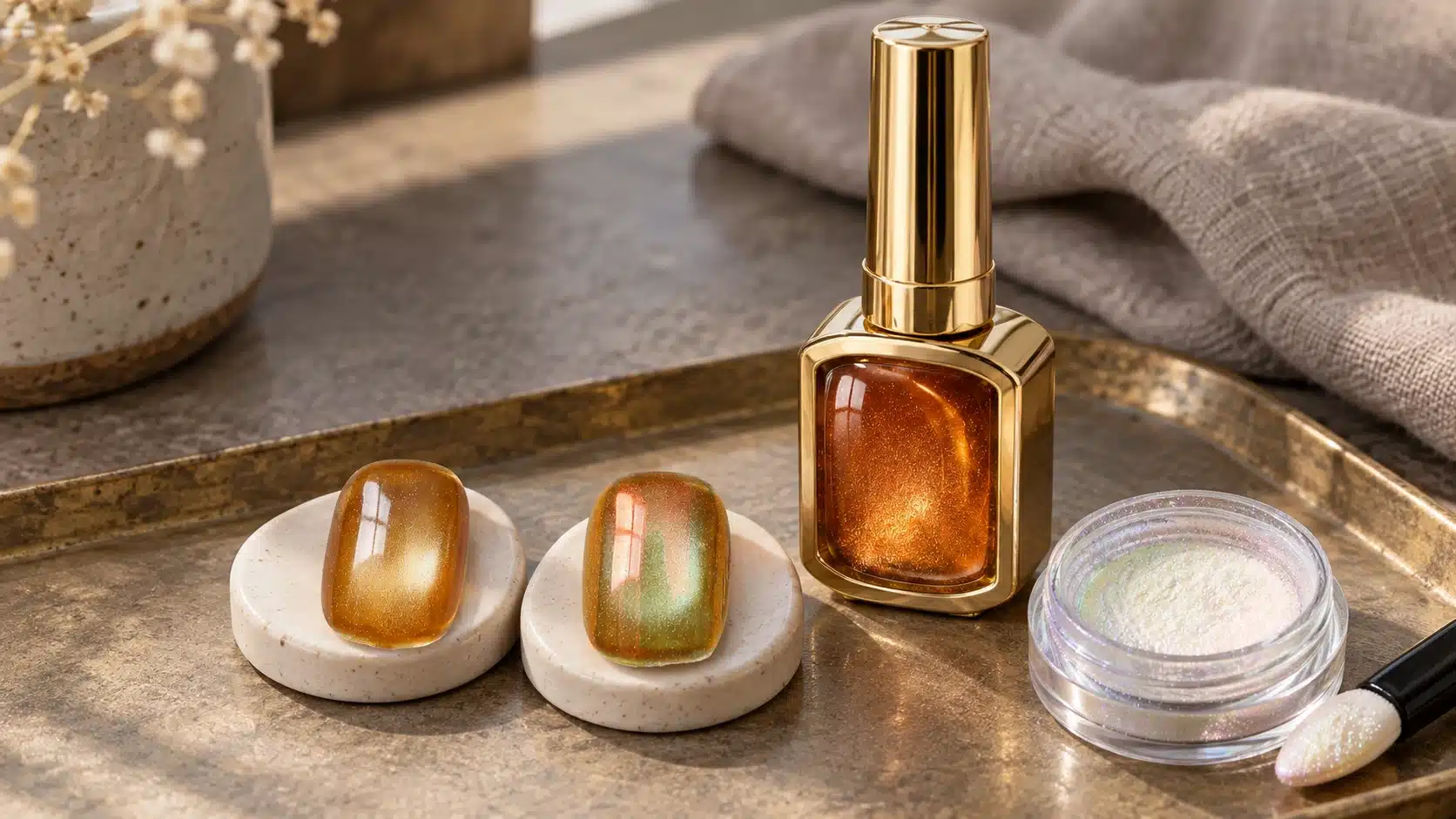
Chrome powder is an additional material; confirm the complete pairing and finishing method.
8. Build Autumn–Winter Nail Collections around the Shades
The range’s deeper reds, warm amber tones, muted neutrals and green–blue colors offer several directions for an autumn–winter selection. A buyer supplying salons can compare them as everyday magnetic finishes and as the color base for more detailed seasonal nail art.
For a warm-toned direction, compare amber cat-eye nails with caramel and brown shades, then choose the differences that matter to your accounts. For a darker selection, burgundy and plum cat-eye colors can provide alternatives to brighter reds and pinks. Silver, grey and taupe offer another direction, while green and teal can add a stronger color accent. Confirm each choice against actual shade numbers rather than relying on descriptive names alone.
Compare Everyday Magnetic Finishes and Decorated Designs
Burgundy cat-eye nails can be coordinated with plaid and fine gold-line designs, as shown in the product examples. A salon can assess the plain magnetic finish as one service and the decorated version as another, allowing for the additional line work and materials. The cat-eye gel supplies the underlying color and magnetic effect.
Plain magnetic tips help buyers choose the colors; decorated examples help technicians assess the complete design. Reviewing both also makes it easier to plan an order for customers with different levels of nail-art experience, without making a complex design the only way to demonstrate a shade.
For holiday cat-eye nails, consider whether an account wants a complete decorated look or colors it can use with materials already in the salon. A burgundy magnetic manicure, a plaid design and a powder-decorated finish can involve different supplies and working time. Include the relevant finished samples and additional material requirements when comparing those options.
A wholesaler can use the same sample collection to serve accounts with different preferences. One account may want restrained neutral magnetic finishes; another may ask for jewel-toned designs with extra decoration. Keep the shade references consistent across both, then vary the suggested selection and demonstration materials according to the account’s needs.
For an account choosing a particular design, request the shade numbers and a list of any extra materials before finalizing its selection. This gives you a more precise order than a photograph alone and helps establish which parts of the service your business will supply.
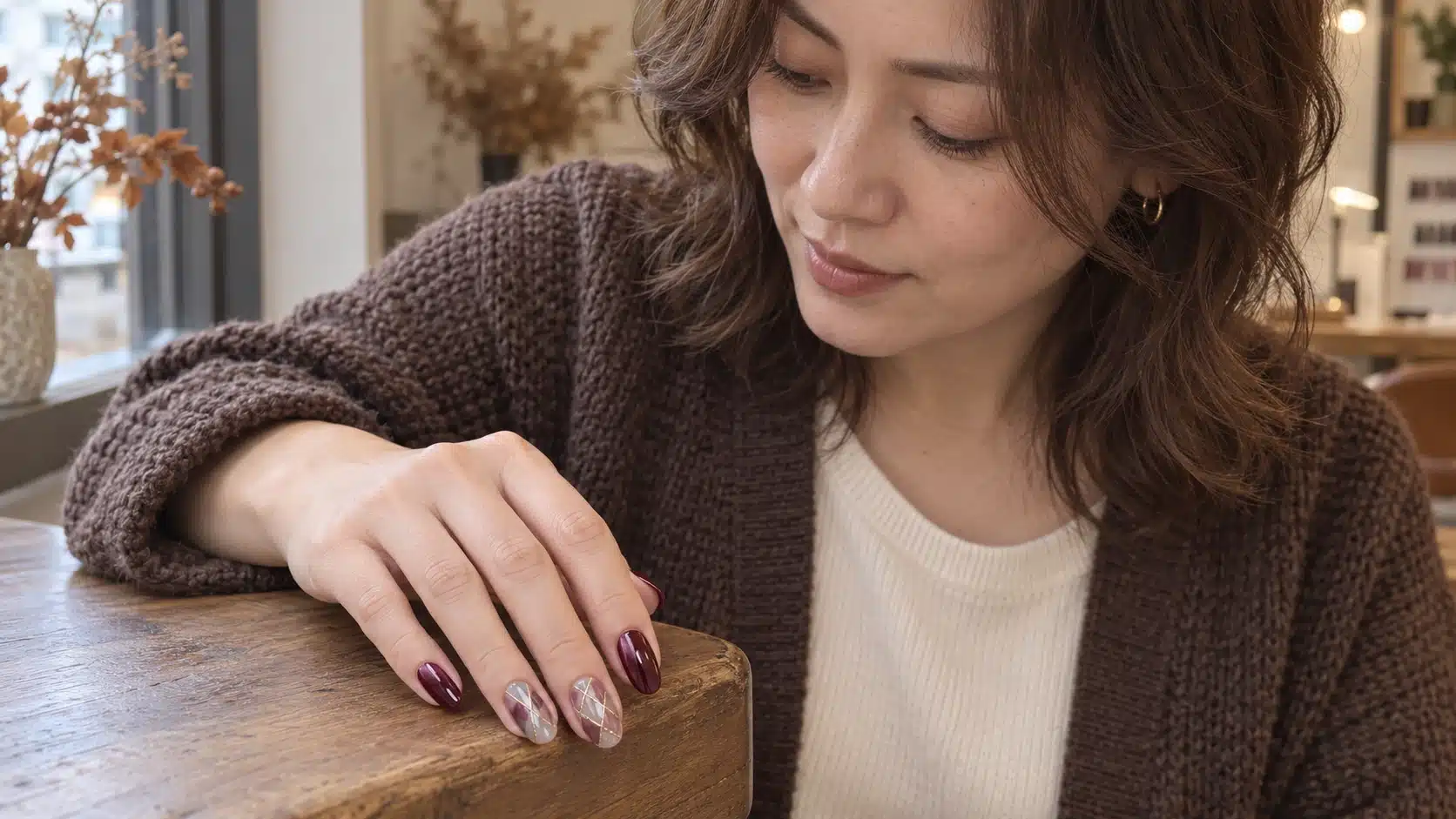
Burgundy magnetic color coordinated with taupe plaid and fine gold lines.
9. Evaluate Samples before Approving a Wholesale Order
A useful sample review assesses appearance and working performance together. It should answer whether the colors suit your range, whether the intended users can follow the method, and whether the final product and packaging match the order you plan to place. Select samples that represent the shades and applications most important to your business.
Use your intended professional setting and equipment, with the standard two-coat method as the first trial. Keep the shade, lamp, magnet and application sequence on the same record. If more than one technician takes part, give them the same instructions before comparing their observations.
Swipe to view all columns.
| Review Area | What the Buyer Should Assess | Useful Reference to Keep |
|---|---|---|
| Color and reflection | Base tone, magnetic highlight and differences between selected shades. | Labeled finished tips and a short video under consistent light. |
| Application | Brush handling, thin-coat control, leveling and magnetic shaping. | Technician notes tied to the method and equipment used. |
| Finished surface | The glossy, no-wipe finish after the standard cure sequence. | A retained sample and the observations made during evaluation. |
| Additional designs | The complete method for any powder or decorative combination you intend to offer. | A separate material list and approved finished example. |
| Bottle and presentation | The 15 ml bottle, shade identification, label and agreed packaging. | The approved presentation sample and written order details. |
Resolve Differences before Expanding the Order
If reviewers disagree, compare their application conditions before deciding that the product result is inconsistent. Differences in magnetic shaping or lighting can change the appearance, while different added materials create a separate compatibility question. A repeat trial under matching conditions helps identify what needs further discussion.
Assess color and surface appearance at application, then record any follow-up observations from salon use separately. Note the method, equipment and added materials so later feedback can be matched to the original trial. Discuss the evaluation you need with JTING, especially if the collection will be introduced to several accounts with different working setups.
Agree which sample represents the approved order and what still needs confirmation. That may include a particular shade, a label detail or an additional decorative method. Keep those open questions visible in the purchase discussion so approval of one part is not mistaken for approval of everything.
Retain a labeled reference after the order is placed, with the approval date and agreed application method. It will be useful when reviewing the first delivery, answering a customer’s shade question or comparing a later replenishment. Make sure the sample can be matched to the shade and packaging specified in the order.
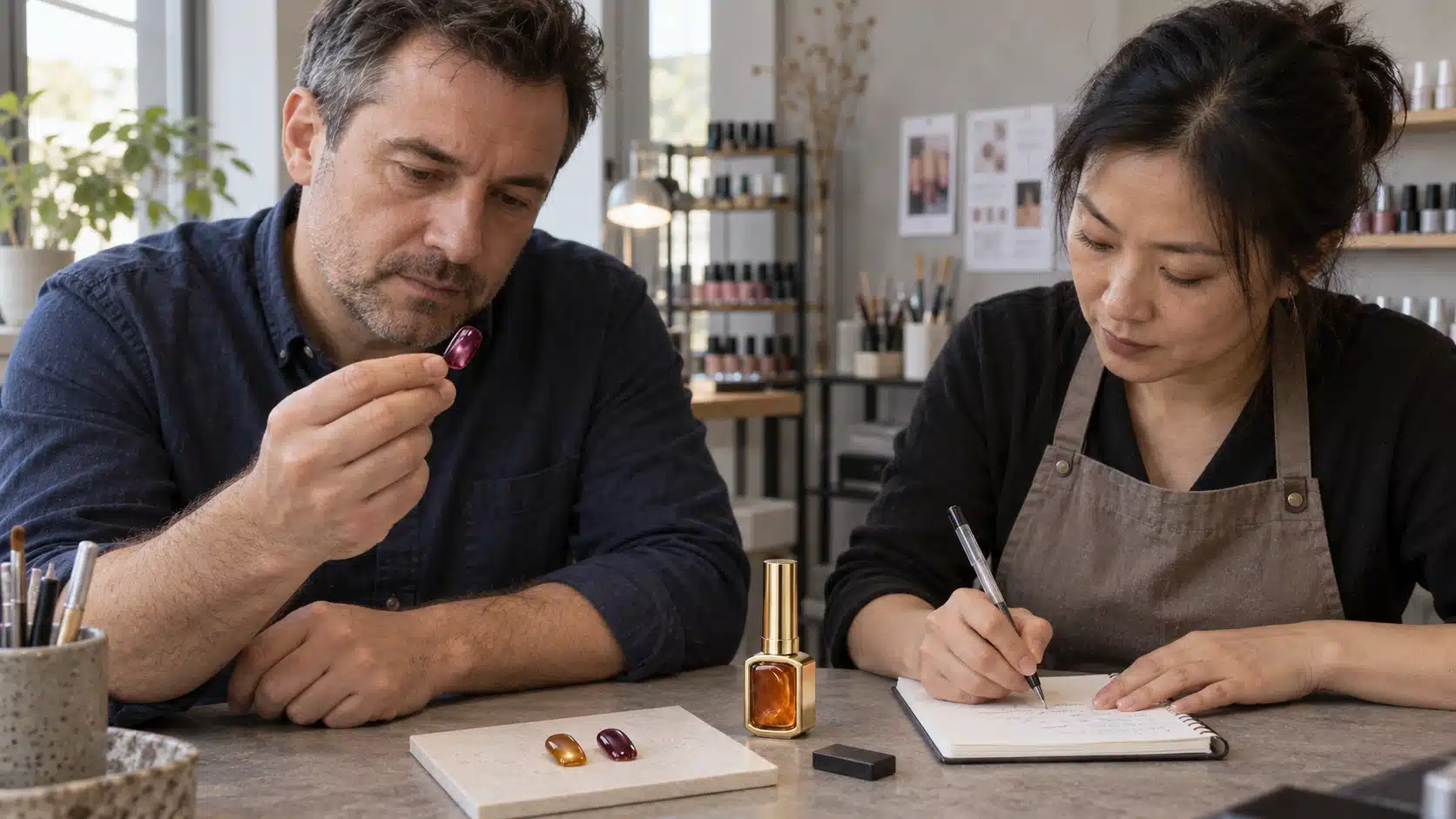
Review the selected shades and application with the samples intended for your order.
10. Assess Product Use and Salon Workflow
For a salon buyer, the combined system changes the products needed for the standard service: the same gel performs the base, color and top coat functions. To assess its value for your business, compare the complete service with your current method, including preparation, two color coats, magnetic shaping and curing.
Compare it with the complete service your customers currently offer. Use a similar nail length, design and finish, and record the work from preparation through completion. Comparing a plain cat-eye manicure with a decorated set would mix the effect of the product system with the extra time and materials used for nail art.
Measure the Whole Service
Record the products used, consumption over a defined number of comparable services, technician working time, lamp time and any rework. To estimate how many services a 15 ml bottle will support, measure consumption across applications with similar nail lengths and designs. This gives the salon a basis for comparing product use as well as the purchase price per bottle.
Calculate the gel cost per service from the amount used and your purchase cost per unit of gel, then add the preparation products and disposable items included in that service. Include chrome powder or other decoration only where it is used. This allows you to compare material costs for a plain magnetic manicure and a decorated design using your own purchase prices.
Record early training observations separately from routine use. A technician learning how to position the magnet may take longer during the first trial. The sample stage should show whether the method is understandable and repeatable, while later observations can help you assess its place in a normal appointment schedule.
For a distributor or salon supplier, these observations help assess which accounts the product suits. An account introducing cat-eye services may place more weight on application training, while an experienced salon may focus on the colors, finish and product consumption. Supply the method and samples needed for each account to evaluate its own working time and service pricing.
Removal and stock handling also affect the complete service and inventory plan. Request product-specific removal and storage guidance from JTING when arranging samples, so your team can assess those requirements alongside application and finished appearance.
11. Support Salon Customers with Clear Application Guidance
For buyers supplying professional cat-eye gel polish, application support is part of preparing a collection for salon use. Technicians need the coat sequence, magnetic-shaping stage and curing instructions alongside the shade reference. For this product, the key points are two thin coats, magnetic shaping before the second cure, and a no-wipe finish without a separate top coat.
A short demonstration video can show the actions that are difficult to convey in a static photograph: controlling the layer, holding the magnet clear of the wet gel, checking the highlight and moving on to curing. Pair it with written instructions so customers can check the sequence quickly during training or ordering.
Keep the Method with the Correct Product
When a salon buys several gel systems from you, make the product name and application method easy to match. A shared instruction card for all magnetic gels can cause confusion if one range requires separate base and top coat products and another does not. The label, training material and demonstration should identify the same collection.
Keep chrome powder combinations separate from the standard gel-only instructions. Name the additional materials and use the complete method approved for the combination. This helps a technician understand why a decorated result may involve steps that are absent from the standard cat-eye service.
JTING supports product photography, videos and shade charts. When preparing an order for nail salons and spas, ask which materials are available for your selected shades and what additional demonstrations can be arranged. Include any language or format requirements in that discussion so the scope can be confirmed with the order.
For an application question, send JTING the shade number, equipment details, coat sequence and a photo or video showing the result. Your technician can then discuss the specific concern with the team and confirm the next trial or application guidance needed.
Where instructions are translated, have the technical meaning checked as well as the language. Terms such as “one-step,” “no-wipe” and “no separate top coat” describe different parts of the method. Preserving those distinctions across languages helps customers use the product as intended.
12. Develop a Branded 3IN1 Chrome Cat Eye Collection
The product uses a gold 15 ml bottle with an amber display panel. JTING supports adapting the logo, label and packaging for your brand. You can start with the existing presentation and request your brand information, or discuss a different design and the samples needed to evaluate it.
For a private label gel nail polish collection, review the brand artwork alongside the product name, shade identifier and application information. The bottle should be easy to identify during salon use and when ordering a replacement. Check the presentation at its actual size, including any outer packaging you intend to supply.
Approve the Bottle, Label and Packaging Together
Specify whether your request concerns the existing bottle presentation or a different bottle and brush configuration. For the existing format, review the placement and readability of the brand name, product name and shade reference. If you need a different configuration, ask JTING to include the matching requirements and samples in the project proposal.
For custom labels and stickers, assess the actual label dimensions, artwork and finish. Confirm how the shade code will be applied and how the product will remain identifiable when bottles are stored closely together. An attractive front label is only part of a usable salon or wholesale presentation.
If you need custom outer packaging, specify the contents, pack quantity and purpose. An individual bottle box, a multi-color presentation and a shipping arrangement answer different needs. Confirm what is included in the quotation and approve the physical packaging sample alongside the printable artwork.
Confirm Product Information and Market Documentation
JTING 3IN1 Chrome Cat Eye Gel is HEMA-, TPO- and TMPTA-free. When preparing your branded label, request the ingredient information and product documents needed for your destination market. JTING can discuss documentation support according to the product and market requirements.
Share those requirements before artwork approval so the label and documents refer to the product you are ordering. If you request a change to the formula or color, include the revised sample and its product information in the approval process. Confirm the final formula, shade selection and packaging together before production.
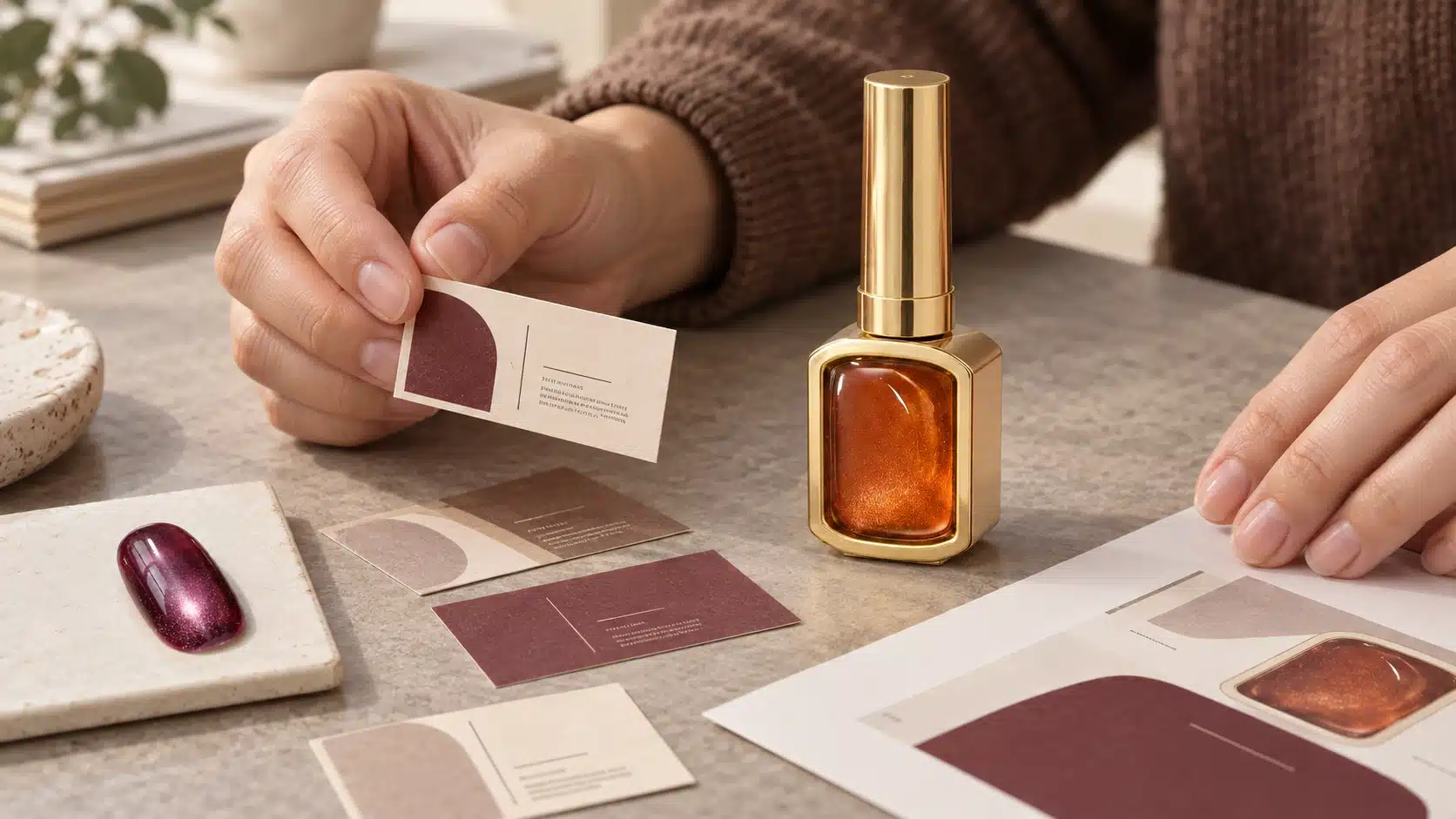
Concept label layouts shown beside the existing gold bottle.
13. Plan Your Seasonal Launch around Samples, Packaging and Delivery
For an autumn–winter collection, work backward from the date your customers need sellable stock. That may be earlier than the public launch date if a distributor needs time to supply accounts or a salon group needs to train staff. Give JTING the required arrival date and destination, then discuss the stages that must be completed to meet the project’s schedule.
An order using the existing JTING presentation and a private label project have different preparation requirements. Artwork, printed packaging and other requested changes need to be included in the schedule. Ask for the production and delivery plan against the final shade selection, quantities and packaging specification.
Swipe to view all columns.
| Stage | Decision to Complete | What It Affects |
|---|---|---|
| Product and shade review | Approve the selected colors and intended application methods. | The product list, demonstration samples and opening quantities. |
| Brand presentation | Confirm bottle presentation, labels and any outer packaging. | Artwork approval, packaging samples and the quoted configuration. |
| Order confirmation | Agree quantities, supplied items, documentation and commercial terms. | The final quotation and production arrangement. |
| Customer preparation | Prepare shade references, application guidance and account information. | Staff training and the readiness of sales channels. |
| Dispatch and receipt | Confirm shipping arrangements and the time needed to receive and check stock. | The date the collection can be supplied to customers. |
Allow for sample and artwork revisions in the schedule. Identify the person who will approve the shades and the person responsible for the packaging, and share any outstanding questions with JTING. Finalizing the shade list before completing shade labels and charts reduces the need to revise those materials later.
Arrange application guidance and shade references alongside the order once the relevant details are approved. Match them to the products and accessories being supplied, so staff can prepare for the actual collection that will arrive.
If the required date is difficult to meet, ask JTING to review the available options for the first order. Changes to shade quantities, packaging or branding should be reflected in the revised quotation and schedule. Confirm the agreed configuration before making delivery arrangements for your own accounts.
14. Plan Shade Quantities, Order Contents and Replenishment
When comparing wholesale gel nail polish quotations, first establish exactly what is being purchased. For this collection, specify the 15 ml product, selected shade numbers and bottle quantities by shade. A price for one bottle cannot be compared directly with a price that includes a presentation box, additional materials or a different packing arrangement.
Choose the required shades from the 36-color range and request the corresponding bottle and packing quantities. Confirm whether the quotation covers individual bottles or an agreed multi-color configuration. List any magnets, powder, decorated tips or shade books you also need so their availability and price can be confirmed separately.
| Order Detail | What to Confirm |
|---|---|
| Product and quantity | 3IN1 Chrome Cat Eye Gel, 15 ml, with quantities for each selected shade. |
| Branding | Existing JTING presentation or the agreed private label requirements. |
| Packaging | Individual and grouped packaging, pack quantities and the items included. |
| Optional materials | Whether magnets, powders, shade references or other requested items are supplied. |
| Samples and documentation | The samples and product or market documents required for the project. |
| Delivery | Destination, shipping arrangement, quoted terms and project-specific timing. |
| Later orders | How selected shades and the agreed presentation can be reordered. |
Make Replenishment Part of the First Discussion
For importers and wholesalers, replenishment may involve individual shades selling at different speeds across several accounts. Ask about the MOQ and packaging requirements for both the opening order and later shade-specific orders. Provide the proposed quantities and branding requirements so JTING can confirm the terms for each configuration.
Plan the first order using available evidence from your own business. Existing customer requests, sample choices and comparable shade sales can inform quantities, while colors new to your accounts may need a more cautious allocation. Distinguish stock for demonstrations from bottles intended for sale so your opening availability is clear.
Also ask how to handle a later artwork change, an expanded shade selection or a different packaging request. These changes can affect the next quotation even when the gel product remains the same. Retain the approved product and presentation references so a reorder can be described precisely.
Once the collection is selling, review stock by shade rather than by total bottles alone. Healthy overall sales can hide a shortage in one color and excess stock in another. A shade-level view supports more useful replenishment conversations and keeps the collection aligned with actual demand.
15. Check the First Bulk Delivery against Approved Samples
The first delivery is the point at which the approved samples, order details and received goods can be compared together. Agree the inspection and reporting arrangements with JTING before dispatch, then keep the relevant reference samples and documents available for the receiving team.
Start with identity and quantity. Check that the product name, shade numbers, bottle counts and packaging correspond to the order. Confirm the presence of any separately agreed items. Keep the records by shade where possible, because a total carton count may not reveal an incorrect color mix.
Check Presentation and Product Appearance Separately
Check the bottles and closures for visible damage or leakage, and compare the labels and packing with the approved presentation. Verify the shade identifiers and custom artwork against the order. If you find a discrepancy, photograph it before repacking and record the affected quantities.
For the product comparison, use the approved application method and viewing conditions. Identify the shade and any available lot or batch information, and compare it with the retained reference. The underlying color, magnetic effect and finished appearance should be assessed under matching conditions rather than against a single differently lit catalog image.
If a result differs, repeat the comparison in a controlled way and document the observation. Separate packaging concerns from product-performance concerns so each can be reviewed with the right information. Keep affected goods identifiable while the question is being resolved, and agree the next action with the supplier before changing how they are presented or supplied to customers.
Agree the number of units to inspect, the acceptance criteria and the reporting process with JTING before shipment. For shade and effect checks, specify the reference sample and comparison method. Having those details agreed in advance gives both teams the same basis for reviewing a delivery question.
A well-kept first-delivery record also makes later orders easier to assess. It preserves what was received and accepted, rather than relying on an old photograph or a reviewer’s memory when the next shipment arrives.
16. Use Salon Feedback to Improve Support and Reorder Planning
After launch, identify which feedback affects the next shade order and which needs technical or packaging follow-up. Requests for more brown shades can inform stock allocation; questions about magnetic definition need the application details; a difficult-to-read shade label calls for a packaging review. Record the product number with each concern so it can be addressed precisely.
For shade preference, connect comments to actual product numbers and orders. A color that attracts attention in a demonstration may not be the one a salon replenishes most often. Review repeat purchases, stock availability and customer requests together before increasing quantities.
Use Specific Questions in Follow-Up
Ask which shades customers are using, which application they are offering and where they need support. If the feedback concerns the magnetic result, request the method and equipment details. If it concerns chrome powder, identify the complete combination. If it concerns the bottle or label, ask for the relevant photographs and product references.
If several accounts raise the same application question, share their observations with JTING and ask for guidance on that step. For example, a demonstration of magnet positioning on the uncured second coat can help technicians compare their method with the intended sequence. Use the confirmed guidance in subsequent customer training.
A wholesaler may need a different shade mix for the next order, while a salon group may need more of a smaller selection and additional training materials. Distinguish repeat demand from a request for one specific design when adjusting quantities. This helps you retain the colors accounts reorder while deciding which new shades to sample.
Review sales by shade as the season changes. Accounts may continue ordering neutrals, amber tones or deeper colors even when their design preferences shift. Compare repeat orders with the stock remaining before deciding what to replenish, reduce or replace in the next selection.
Before placing the next order, confirm whether the product selection, quantities, label or packaging have changed. Keep the most recent approvals with the reorder request. This gives JTING a precise specification and gives your team a reliable reference when the next delivery is checked.
17. Questions Buyers Ask about 3IN1 Chrome Cat Eye Gel
What Does 3IN1 Mean for This Cat Eye Gel?
It means base, color and top coat functions are combined in the gel. The standard method still includes nail preparation, two thin coats, magnetic shaping on the uncured second coat and curing. It does not mean a single coat or an application without a lamp.
Does It Need a Separate Base Coat, Top Coat or Wiping Step?
Not for the standard gel-only method. Apply the first thin coat directly after preparation, cure it, then apply and magnetize the second coat before curing. The finished surface is glossy and no-wipe. Additional decorative combinations should be reviewed separately.
When Should I Use the Cat Eye Magnet?
Use the magnet on the uncured second thin coat, holding it close to the nail for approximately 5–8 seconds without touching the wet surface. Once the effect is satisfactory, cure under LED for 60 seconds. The first coat is cured before the second is applied.
Can the Gel Be Used without a Magnet?
The gel can be applied as an unmagnetized color finish. The magnet is used to shape the cat-eye highlight. Review an actual sample of the application you intend to offer so buyers can distinguish the plain color appearance from the magnetic result.
Does the Gel Alone Create the Chrome Powder Effects Shown?
No. Those examples use an additional chrome powder material. Confirm the powder, complete application method and finishing requirements for the combination. The standard no-top-coat instruction does not automatically apply to every powder pairing.
How Many Shades Are Available, and How Do I Order Them?
The range has 36 colors in 15 ml bottles. Send JTING the shade numbers and quantities you require to confirm the supply and packing arrangement. If you want a complete 36-color selection, specify that in the inquiry and ask for the corresponding quotation.
Are Magnets, Chrome Powder and Shade Books Included?
Check the contents listed in your quotation. If you need magnets, chrome powder or shade books, include them in your inquiry so JTING can confirm availability, quantities and pricing. Accessories shown in product photographs are not automatically included with the bottles.
Can I Sell the Collection under My Own Brand?
JTING supports logo, label and packaging customization. Start with the selected shades and existing 15 ml bottle presentation, then discuss your artwork and packaging needs. Changes to the bottle, formula or other specifications require separate project confirmation.
Is This Product HEMA-, TPO- and TMPTA-Free?
Yes. JTING 3IN1 Chrome Cat Eye Gel is free of HEMA, TPO and TMPTA. Share your destination market with JTING to discuss ingredient information and the product documentation required for your order.
What Are the MOQ and Lead Time?
JTING will confirm the MOQ and lead time for your selected shades, quantities, branding and packaging. Include the destination and required arrival date in your quotation request so production and delivery requirements can be discussed together.
What Should I Confirm before Training My Salon Customers?
Confirm the standard application, suitable equipment and the product-specific removal and storage guidance. Review any chrome powder or decorative combinations separately. Use instructions and demonstrations that identify the correct product, shade and method.
What Information Does JTING Need for a Quote?
Provide the product name, selected shade numbers, quantities by shade, destination and sales channel. Add your branding and packaging requirements, any requested accessories, documentation needs and target arrival date. Include the samples or application questions you need resolved.
18. Discuss Your 3IN1 Chrome Cat Eye Gel Collection with JTING
To discuss JTING 3IN1 Chrome Cat Eye Gel, start with the colors and applications your customers need. Share your selected shade numbers, estimated bottles per shade, sales channel and destination. State whether you want the existing JTING presentation or a private label collection, and identify any labels, outer packaging or additional materials you would like included.
If you are still choosing the assortment, explain the role the product will have in your range and the sample comparisons you need to make. Mention whether the launch will focus on the standard magnetic service, chrome powder pairings or both. This helps keep sample preparation and the quotation aligned with the collection you intend to supply.
Contact JTING with your brief and required arrival date to discuss samples, the supply configuration and the next steps for your order.