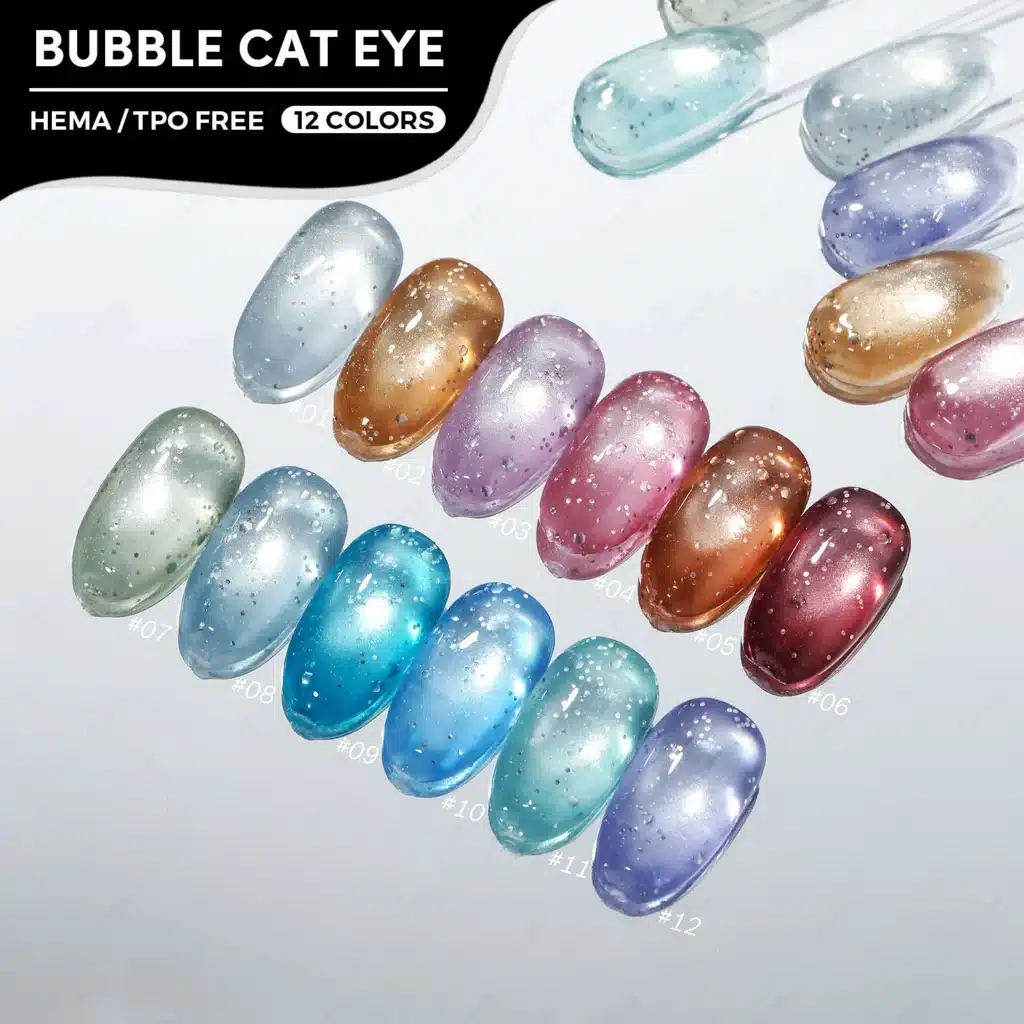
Putting your name on a bottle is only one part of launching a private label gel nail polish collection. The more important decisions happen around it: which products belong in the range, how much stock to commit to, what the quotation actually includes and how to approve a product that customers can use with confidence.
A first collection and an established brand's next release share the same practical challenge. Formula, shade selection, packaging, documentation and delivery need to work together. A low minimum order is not particularly useful if the matching box needs a much larger run, and a beautiful sample is not a complete production specification.
This guide takes you from an initial product idea through samples, bulk production and launch preparation. It is written for nail brands, salon suppliers, distributors and professional businesses that want a clear purchasing process, not simply a larger catalog. Use it to prepare better questions, compare offers fairly and decide what needs to be confirmed before each commitment.
1. Quick Answer: What Do You Need to Launch a Private Label Gel Nail Polish Line?
You need a defined customer and target market, a workable product range, a budget that includes more than the bottles, approved samples and packaging, the appropriate product documentation, and a plan for delivery and repeat orders. You do not necessarily need an exclusive formula, a custom bottle mold or hundreds of shades to begin.
- Define the brief: identify where the products will be sold, who will apply them and what your collection should do well.
- Choose the development route: compare existing formulas with custom colors, packaging changes and more extensive development.
- Confirm the commercial scope: establish minimum quantities, included services, costs and responsibilities.
- Evaluate and approve: review the actual gel, its application system and the final packaging configuration.
- Prepare production and launch: agree on specifications, documentation, delivery checks and customer-facing materials.
Some work can run in parallel. A designer can explore a visual direction while technicians assess formula samples. Final printing, however, should wait for confirmed product information and packaging dimensions. Sequence matters because an inexpensive early revision can become an expensive change after components have been produced.
If you already know the finish or collection you want, start with that requirement rather than choosing a cooperation label first. JTING's private label and OEM/ODM development options can be discussed around an existing range, a new brand or a specific product brief. The right starting point is the smallest complete specification that can deliver your intended customer experience.
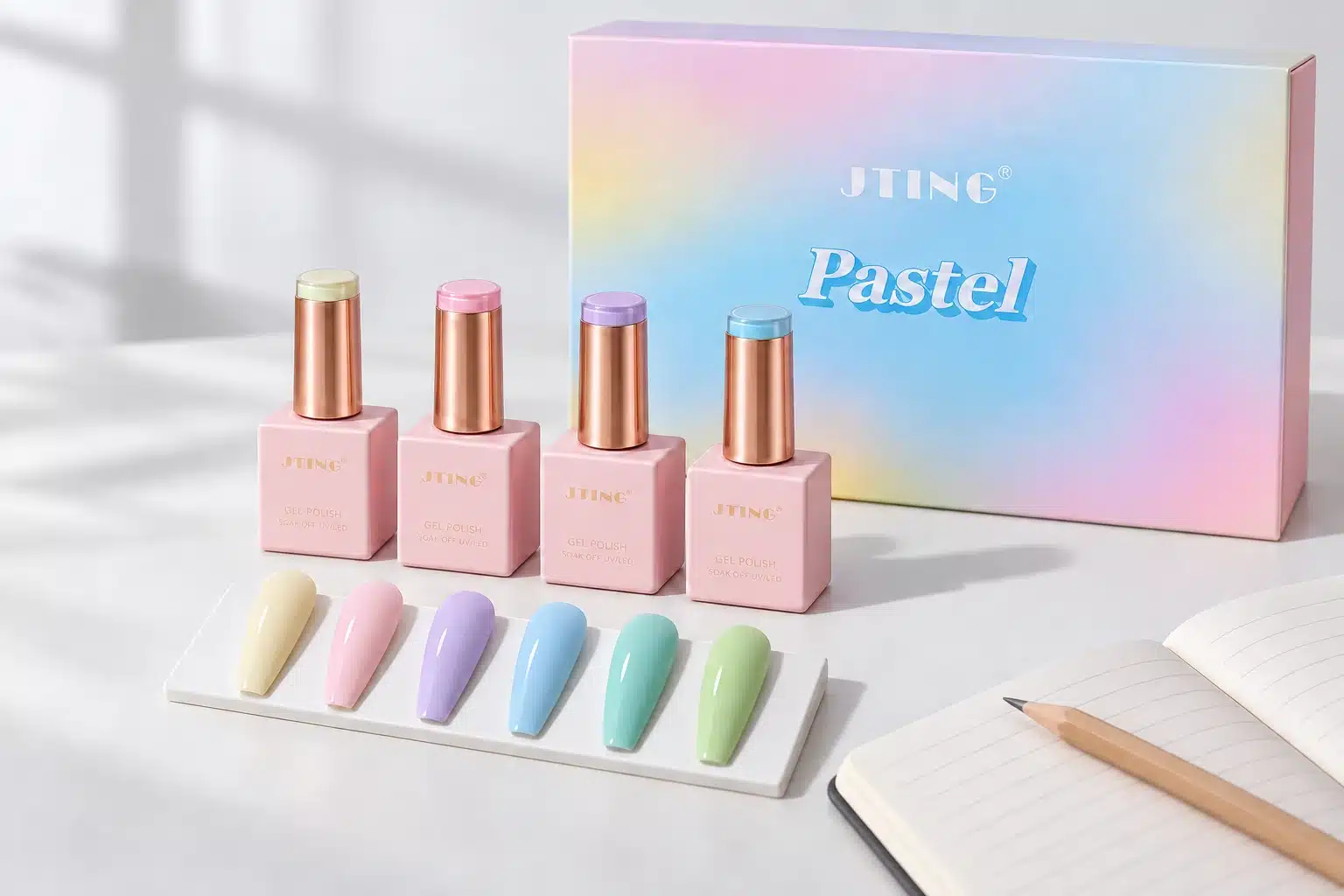
2. What Is Private Label Gel Nail Polish?
Private label gel nail polish is gel nail polish supplied for sale under the buyer's own brand. Depending on the agreement, the project may use an existing formula and shade selection, adapted packaging, custom colors or a more extensively developed product. Branding and product development are related, but they are not the same thing.
The physical product also has a clear boundary. Gel nail polish is intended to cure using the product's specified light-curing system. It is not interchangeable with conventional air-drying nail lacquer merely because both are offered through private label manufacturing. The intended use, compatible lamp requirements, application and removal instructions should all belong to the product you are actually purchasing.
Brand Ownership Is Not Automatically Formula Ownership
Your logo identifies the commercial brand. It does not, by itself, establish ownership of the underlying formula or prevent a manufacturer from supplying a related product to another business. Where exclusivity matters, ask what is exclusive: the shade, packaging design, formula, territory or distribution arrangement. Define the scope before treating it as a competitive advantage.
Private label nail products can support several business goals. A salon may want a recognizable professional collection; a distributor may want a range that complements its existing assortment; an established brand may want a new finish without rebuilding its entire supply chain. The development process should reflect that goal. A narrow collection with clear instructions and dependable replenishment can be a more useful starting point than an ambitious range with unresolved product details.
3. Private Label vs. White Label vs. OEM and ODM
These terms help start a conversation, but suppliers do not always use them in identical ways. One company may describe an existing formula with a new label as private label; another may use the same term for custom product development. Ask for a written scope rather than assuming the name defines the service.
| Common Term | Typical Starting Point | What to Clarify |
|---|---|---|
| White label | An established product offered with the buyer's branding | Available shades, packaging choices and whether other brands can buy the same product |
| Private label | A product supplied under the buyer's brand, with an agreed level of customization | Exactly which product and packaging elements can change |
| OEM | Manufacturing against agreed buyer specifications | Who supplies or develops the specification, and who controls revisions |
| ODM | A supplier-developed product platform adapted for the buyer | Development responsibilities, available modifications and any ownership restrictions |
Compare routes using the same questions: What needs development? What can be sampled immediately? Which components must be ordered specially? What happens if the sample requires adjustment? A route with fewer custom elements may simplify initial approval, but it still requires suitability checks and accurate labeling.
For example, choosing an established opaque color formula with a coordinated shade range is a different project from developing a particular viscosity, a new effect and a new package simultaneously. Both can support a private label business. The second creates more variables to evaluate and more dependencies in the schedule.
A useful quotation therefore describes the deliverables in plain language: selected formula, shade references, container configuration, decoration method, sample stages and documentation responsibilities. That description is more valuable than a promise of a complete solution without a defined scope.
4. Define Your Customers, Sales Channels and Target Market
Before comparing bottles, identify the person who will use the product and the business that will buy it. They may not be the same. A distributor purchases an assortment for resale, while a nail technician needs clear application behavior and reliable shades during services. Your launch needs to work for both purchasing and use.
Build Around the Intended Service or Sale
A professional salon collection may emphasize familiar working behavior, clear shade identification and compatible supporting products. An online collection needs accurate images, understandable product descriptions and packaging that suits individual fulfillment. A wholesale assortment needs consistent product information that resellers can use without inventing their own technical claims.
Write a short positioning statement before asking for samples: who the range serves, the application or design need, the intended price position and the first sales market. This helps separate essential requirements from attractive extras. A salon-focused neutral collection and a seasonal nail art launch should not receive the same product brief simply because both use gel.
If you are developing a collection under your own brand, explore JTING's private label solutions for nail brands as a starting point for discussing your product range, brand presentation and launch requirements.
Choose a First Market Before Finalizing Labels
Language, product information and market preparation need to be considered before the artwork is locked. Expanding to another market later may require additional review rather than simply shipping the same cartons elsewhere. Ask who is responsible for that review and what product information they will need.
For an established business, add the constraints of your existing range: current bottle format, customer expectations, naming system and distribution channels. A new product should have a reason to exist alongside what you already sell. Decide whether it fills a missing service need, improves the product experience or provides a genuinely different visual effect.
5. Choose Your First Product Range
A product range should help a customer complete something useful. Start with the services, finishes or designs you want to support, then identify the products needed to deliver them. This is more reliable than ordering one item from every category because it appears in a manufacturer's catalog.
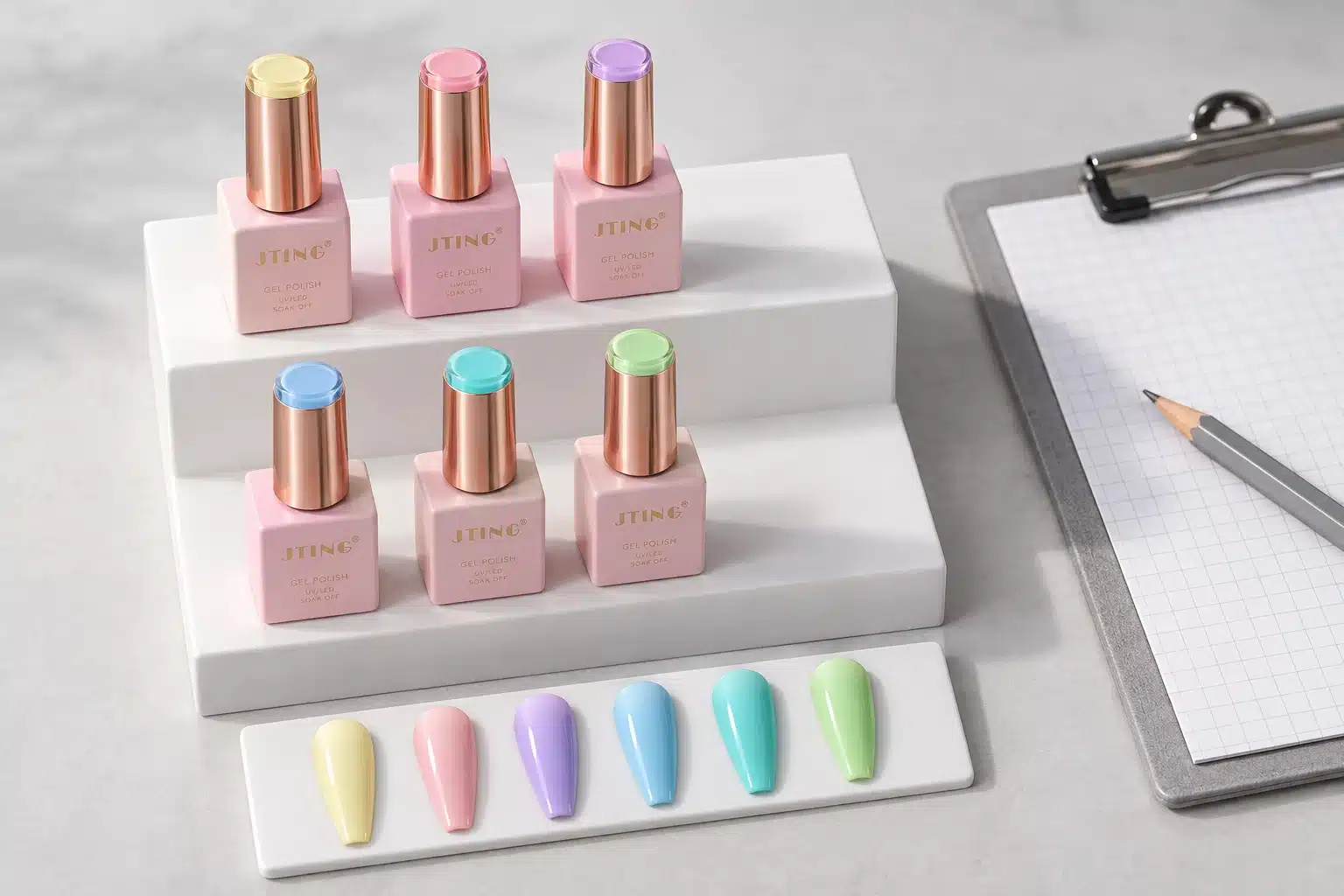
For a color-led launch, evaluate the gel nail polish color collections together with the recommended supporting system. Separate opaque colors, sheer shades and special effects in your planning. They create different expectations for coverage, layering and presentation, even when they share a bottle style.
Give Each Product a Commercial Role
- Core products: shades or supporting gels that match recurring customer needs.
- Signature products: colors, textures or effects that make the collection recognizable.
- Supporting products: items that help customers achieve the intended application and finish.
These roles are planning tools, not a fixed ratio. A specialist nail art brand may have a different balance from a salon color range. If you include a base, builder or top coat, evaluate its role and instructions rather than assuming products are compatible because they have the same branding. The gel top coat selection guide explains why finish, working method and underlying system all matter.
Also decide what you will not launch yet. Adding several gel types increases the number of samples, instructions and customer questions you need to manage. Keeping an expansion list lets you retain promising ideas without making every one of them a condition for the first shipment.
6. How Many Shades and SKUs Should You Start With?
There is no universal starting number. The right assortment depends on your customer base, sales channel, sampling results and available cash. A larger range offers more choice, but also divides purchasing funds and creates more individual products to photograph, describe, store and replenish.
A SKU is a separately managed saleable item. The same shade in two bottle sizes can create two SKUs; a boxed set can have its own SKU in addition to the individual bottles. Count these variations before estimating how simple the first order will be.
Separate Breadth from Depth
Breadth is the number of different items; depth is the quantity held of each. A useful planning exercise is to compare two hypothetical allocations: 12 shades at 40 bottles each and 24 shades at 20 bottles each both total 480 bottles. Neither is automatically better. The wider range doubles the shade-level decisions, while the narrower range places more stock behind each choice. These are arithmetic examples, not order recommendations or confirmed MOQ packages.
Review shades side by side under consistent conditions. Similar pinks may serve different customers, but two shades that appear distinct in edited supplier photographs may be hard to distinguish in practice. Check depth, undertone, opacity and finish before deciding that each deserves a separate place.
A compact launch can use a coherent color story; an expansion can target gaps identified from existing sales and feedback. For sheer collections, the jelly gel nail polish guide can help clarify the difference between intentional translucency and the opacity customers expect from solid colors.
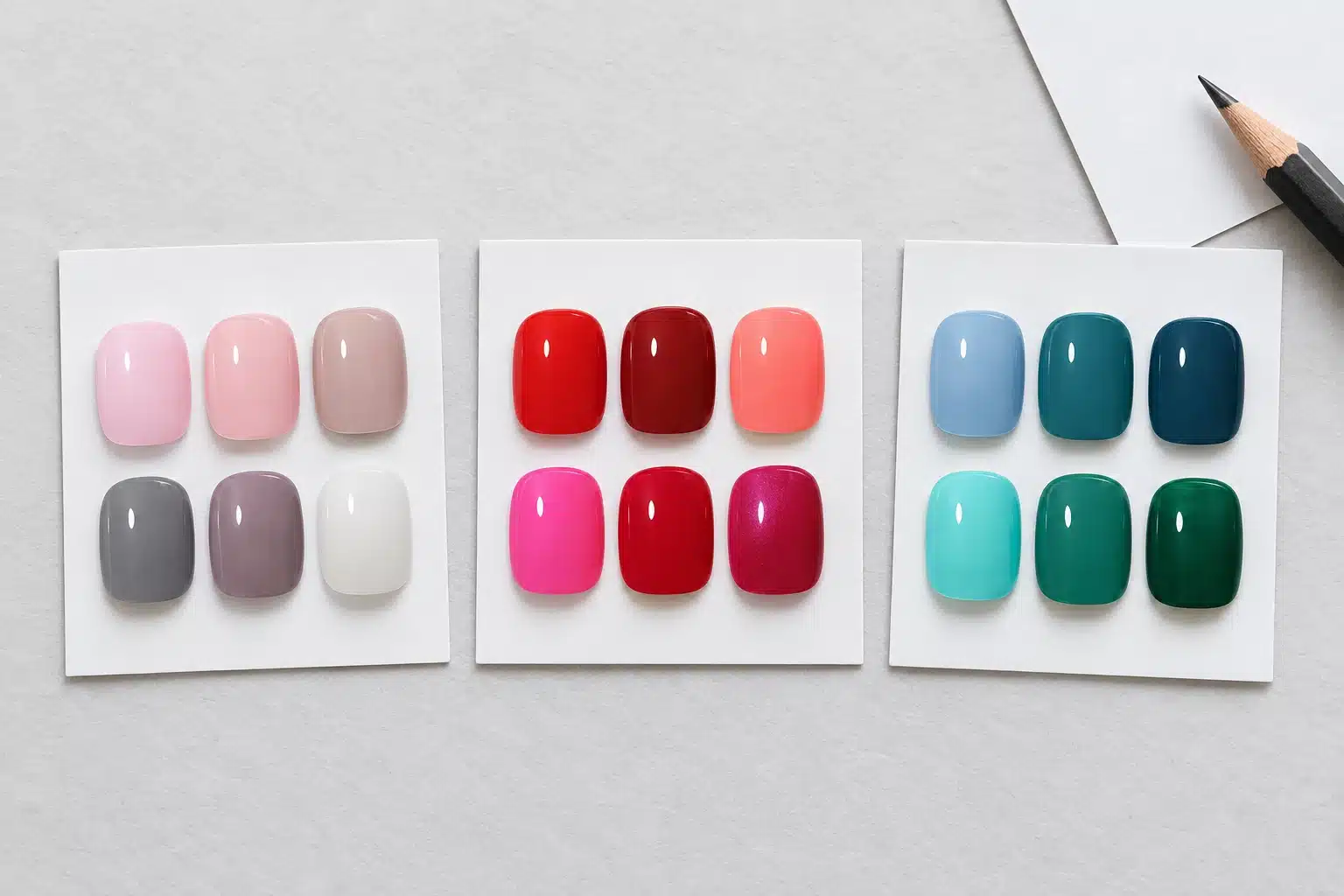
7. How Does MOQ Work for Private Label Gel Nail Polish?
MOQ means minimum order quantity, but the unit behind the minimum is just as important as the number. Ask whether it applies per shade, per formula, per container style, per decoration design or across the complete order. A total quantity can meet one condition while missing another.
| MOQ Level | What It Refers To | Question to Ask |
|---|---|---|
| Shade or product | Units of one specific product version | Can different shades be combined, and what remains the minimum per shade? |
| Formula development | A particular base formula or custom development request | Does a formula change create a different quantity or development requirement? |
| Bottle and cap | A component style, color or custom manufacturing run | Is this an existing option or a specially produced component? |
| Decoration and packaging | A print design, finishing process or box structure | What are the setup requirements and any separate minimum quantities? |
| Complete order | The total commercial order | Which product-level minimums must still be met within the total? |
JTING supports private label gel nail polish orders starting from 10 pieces per shade. House-brand mixed-color orders can start from 100 pieces. These are different ordering routes. MOQ may vary by product type, packaging style, formula request and customization level; the starting quantities are not a blanket promise for every custom formula or packaging process.
When discussing a low MOQ private label gel nail polish project, send the intended shade count and units per shade together. Include the required bottle and packaging direction. Asking only for the lowest MOQ can produce an answer that does not describe the collection you actually want.
If packaging quantities exceed the first filling order, ask how any unused components would be owned, stored, paid for and used later. Do not assume the supplier will hold them without an agreement. Unused packaging is still a financial commitment, even when it is not yet filled with gel.
8. What Can You Customize at Different Order Quantities?
Customization is not an all-or-nothing decision. A collection can look coherent and distinct without changing every physical component. Separate the elements that deliver meaningful customer value from changes that add development work without improving the product experience.
Start with Available Product and Packaging Options
One route is to choose suitable existing formulas, select a focused shade range and adapt an available label or package to your brand. This can reduce the number of new elements requiring development. It still calls for sample evaluation, correct product information and confirmation of the actual packaging configuration.
Add Customization Where It Matters
A specific undertone, finish or brush preference may contribute more to your customer experience than a unique bottle mold. Ask the supplier to separate optional custom work from the base offer. This makes it easier to compare a first launch with a later expansion rather than committing to every feature at once.
Custom colors, changes to working properties and specially produced packaging should each have their own review. A color request may need several sample rounds; a custom cap may depend on a component production schedule. The quantity, development cost and timing should be confirmed for each requested change rather than inferred from the starting MOQ.
JTING can discuss existing product options, custom colors, formula directions and packaging development. For buyers exploring OEM/ODM gel collections, the useful question is not simply whether customization is possible. It is which version of the project can meet the intended performance, presentation and commercial requirements at the chosen order size.
Keep a first-release specification and a future-development list. That distinction lets you launch a resolved collection without abandoning the longer-term ideas that could make the brand more distinctive.
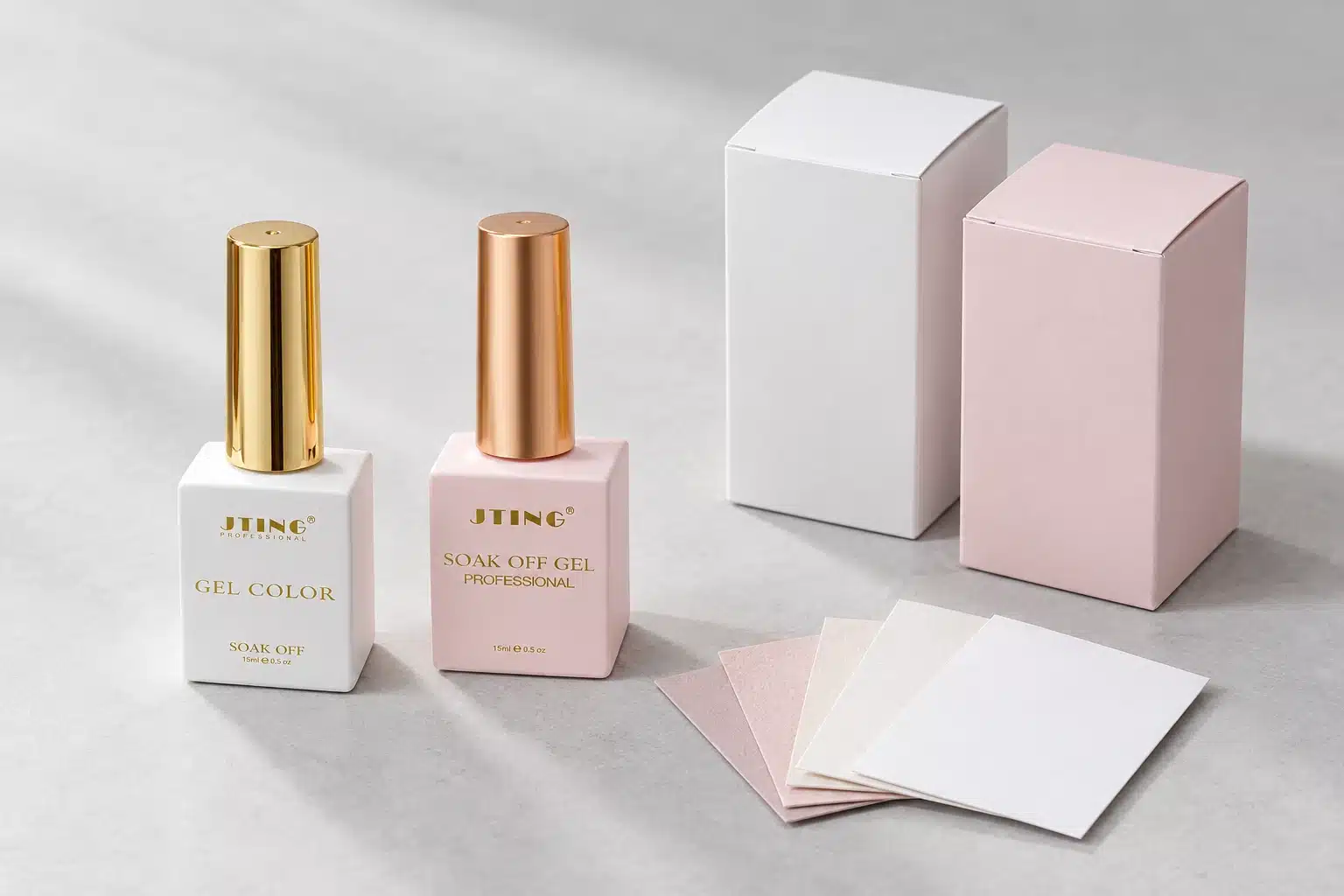
9. How Much Does a Private Label Gel Nail Polish Line Cost?
There is no meaningful universal launch price without an order specification. The cost of private label gel nail polish depends on the product, number of shades, quantities, packaging, development work and destination. A per-bottle quote answers only part of the budgeting question.
Split your budget into initial project costs and costs that recur with each order. Then separate what the manufacturer includes from what you will purchase elsewhere. A supplier may provide a finished product quotation while testing, market preparation, transport or sales content remain separate responsibilities.
| Cost Area | Possible Items | Budget Check |
|---|---|---|
| Product | Gel, shade or effect, filling and agreed container configuration | Compare the same volume, specification and quantity |
| Development and samples | Color matching, formula adjustment, sample preparation and delivery | Confirm revision rounds and whether any fees are credited later |
| Packaging | Labels, bottle decoration, caps, boxes, inserts and shipping cartons | Identify setup charges and unused component commitments |
| Testing and market preparation | Relevant assessments, documentation review, labeling and specialist support | Confirm the scope for the actual product and destination |
| Transport and receipt | Freight, insurance where arranged, clearance, applicable charges and local delivery | Establish who pays each cost and which charges remain estimates |
| Commercial launch | Photography, swatches, product descriptions, training, fulfillment and promotion | Keep launch funds separate from the inventory purchase |
Request a line-item quotation before treating an attractive unit price as the full cost. Ask whether the quoted package includes a brush, label application, individual box and export carton. Also confirm what is excluded. The same bottle count can represent very different deliveries.
A smaller first order can limit inventory exposure but spread one-time expenses over fewer units. A larger order may improve a quoted unit price while tying up more cash. Evaluate both the cost per saleable unit and the total amount committed; neither figure replaces the other.
10. How to Compare Supplier Quotations Fairly
Use one request document for every supplier you compare. When one quote assumes an existing bottle and another assumes a decorated custom bottle, the price difference says little about formula value. Ask for revisions until the commercial and product assumptions are visible.
| Comparison Item | What to Record | Why It Changes the Decision |
|---|---|---|
| Product identity | Formula reference, shade or effect, net quantity and sample version | Similar names can describe different products |
| Order structure | Number of shades, units per shade and total units | The same total can involve different production work |
| Package | Bottle, cap, brush, label, decoration and box specification | Missing components create later costs |
| Development | Sample stages, revision scope and charges | An initial sample does not always include full customization |
| Documents and checks | Deliverables, responsible parties and any external fees | A broad claim of compliance is not a document list |
| Commercial terms | Currency, validity period, payment stages, delivery basis and exclusions | Different cost boundaries make headline prices misleading |
| Repeat orders | Reorder MOQ, packaging availability and change notification | The first-order offer may not describe ongoing supply |
Keep an unresolved-items column alongside the prices. A missing answer is not automatically a failure, but it is not confirmation either. For example, record an unconfirmed packaging quantity as a pending requirement instead of entering zero cost.
Separate sample feedback from commercial comparison. A supplier with a complete quotation can still send a product that does not fit the service you intend to offer. Equally, an appealing sample does not remove the need to resolve delivery or packaging terms. Approve both the product and the transaction.
Choose the offer that best matches the agreed specification and your business constraints. Do not convert a low price into a conclusion about poor quality, or a high price into proof of better performance, without reviewing the product and what the offer actually includes.
11. Plan Your Landed Cost, Pricing and Working Capital
Landed cost is a practical way to understand the cost of bringing inventory to the place where you can sell it. Define the included items consistently with your accountant and logistics partners. Depending on the shipment, you may need to consider freight, insurance, clearance, applicable duties or nonrecoverable taxes, and local delivery as well as the goods themselves.
Planning cost per saleable unit = relevant inventory and inbound costs divided by saleable units received. Keep launch development expenses visible separately, even if you allocate them across units for an internal pricing exercise. Avoid counting the same cost twice.
A Hypothetical Budget Example
Suppose a fictional order contains 600 bottles, with goods costing $2,400 and combined inbound costs of $600. The planning cost is $3,000 divided by 600, or $5 per bottle before selling costs. If you reserve 30 bottles for non-saleable training and photography use, the same $3,000 spread across 570 bottles intended for sale becomes about $5.26. These figures illustrate the calculation only; they are not JTING prices, tax estimates or a recommended order.
At a hypothetical net selling price of $12, a $5 product and inbound cost leaves $7 before channel fees, fulfillment, marketing, returns and overhead. It does not represent $7 of net profit. Model wholesale and direct sales separately if they have different prices and cost structures.
Working capital also matters. You may need to fund samples, packaging and production before collecting sales revenue, and place a reorder before the first shipment is fully sold. Build a cash schedule around the agreed payment dates, expected delivery and realistic sell-through assumptions. A profitable-looking unit calculation can still create a cash shortage if all funds are committed to the first shipment.
12. How to Choose a Private Label Gel Nail Polish Manufacturer
Look for a manufacturer that can explain how your product will move from requirements to an approved specification and repeat supply. A large catalog is helpful for discovery, but it does not establish that a particular formula, package or development request fits your business.
Ask for Evidence Connected to Your Project
Useful discussions cover sample identification, how revisions are tracked, what quality records can be provided for the order, and how packaging changes are communicated. Ask which parts of production and sourcing the business handles, and whether specialist partners are involved. The goal is to understand responsibility, not to collect a list of impressive terms.
Request documents appropriate to the product and market, and check the issuing entity, scope and relevance. A factory management certificate is not the same as a product assessment. A report for one formula does not establish the performance of every item in a catalog.
Communication during sampling offers useful evidence. Does the supplier answer a specific shade or application question? Are they clear about unresolved requirements? Can they explain whether a requested change affects timing or cost? These exchanges help you assess how the relationship may function when an order needs attention.
JTING's manufacturing and supply services provide a starting point for discussing product development, packaging and supply support. Evaluate the proposed arrangement against your own project brief rather than choosing solely on a company-size statistic.
Buyers searching for a local manufacturer should also distinguish manufacturing location from a sales address or warehouse. If you source internationally, make logistics, document responsibilities and communication arrangements explicit. Do not assume a nearby office means the formula is produced in that country.
13. Turn Your Product Idea into a Clear Development Brief
A strong brief translates preferences into decisions the supplier can act on. Descriptions such as luxurious, professional or high quality express an ambition, but do not define the product. Explain what the user should experience and which characteristics matter most.
Include the intended application, finish and coverage, then describe the reference materials you can provide. A physical shade sample can communicate color more reliably than a screenshot affected by lighting and display settings. Reference products should be used to discuss characteristics, not as a request to copy another brand's identity or protected artwork.
- Business: first market, sales channel, customer and planned launch window.
- Range: product types, proposed shade count and quantity per item.
- Performance: desired opacity, brush control, viscosity, finish and removal approach.
- Application system: intended supporting products and available lamp information for evaluation.
- Packaging: preferred capacity, bottle direction, labeling and box requirements.
- Project constraints: budget boundaries, documentation needs and nonnegotiable requirements.
Prioritize the brief. If application control matters more than a particular bottle finish, say so. Otherwise, teams can spend time polishing a secondary detail while the most important product requirement remains unresolved.
Keep the brief versioned as the project develops. When a customer reference changes from sheer to opaque, confirm whether the same formula route is still suitable. Record the reason for each change so the latest sample is not compared against an outdated expectation. Good documentation makes feedback more useful; it is not a substitute for seeing and evaluating the actual product.
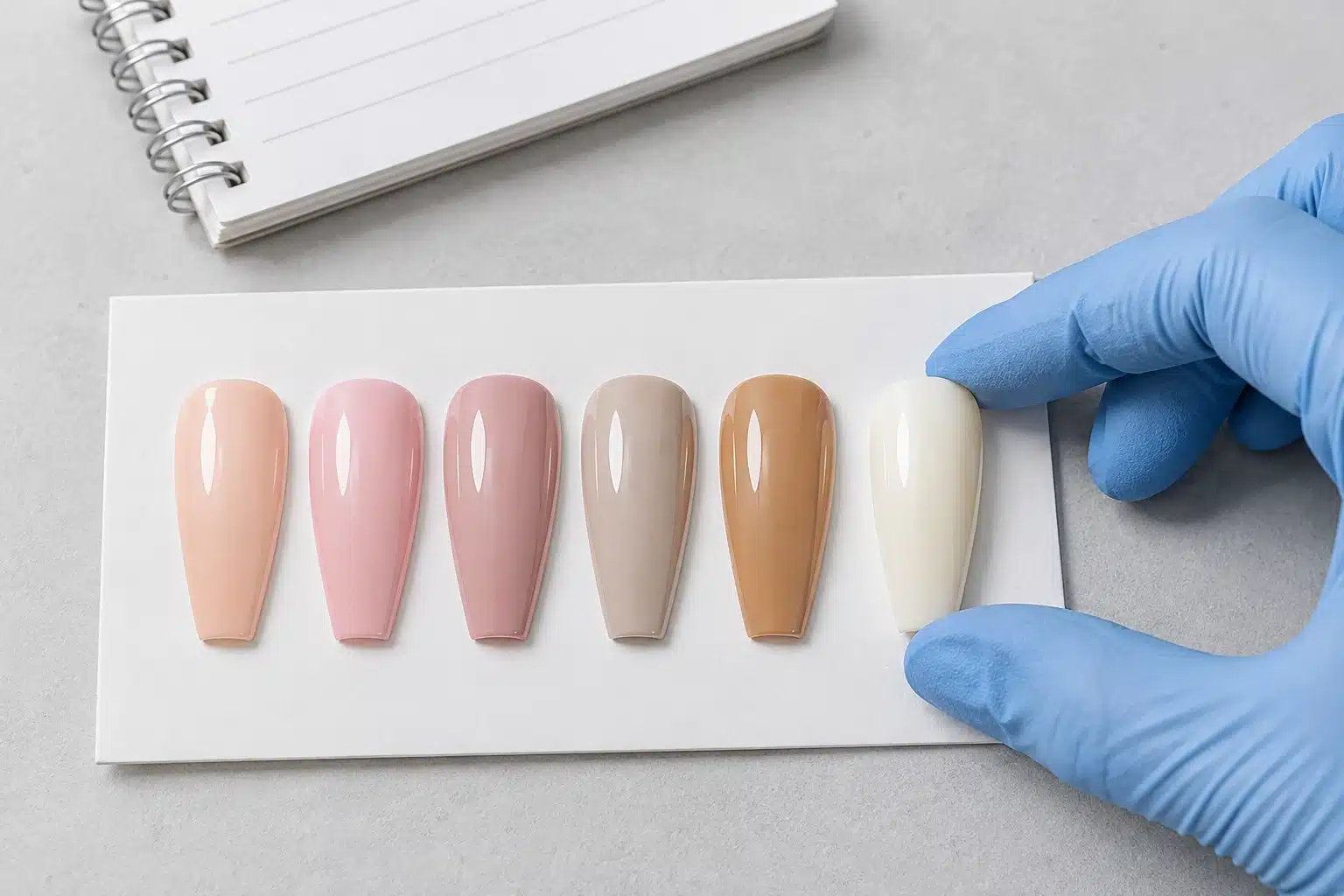
14. Stock Formulas, Custom Colors or Exclusive Development?
Choose the development route according to the difference your customer will notice. An established formula with well-selected shades may satisfy the brief. More extensive development becomes useful when the required application behavior or visual result cannot be achieved within the available options.
Existing Formulas
An existing formula provides a starting point that can be evaluated against your intended use. Confirm its product identity, available shades, packaging options and application instructions. Existing does not mean universally suitable, immediately available in every quantity or automatically approved for every destination.
Custom Colors and Effects
For custom gel nail polish colors, agree on the reference, opacity, finish and comparison method. A color seen in the bottle can differ from its appearance in the specified applied layers. A shimmer or magnetic effect also changes with lighting and application. Review the finished effect, not only a static color impression.
More Extensive Formula Development
Requests involving viscosity, working behavior, removal or specific formula attributes may need further development and evaluation. Changing one characteristic can affect other aspects of the product. A development conversation should therefore identify priorities and an evaluation plan rather than promise every requested characteristic independently.
JTING can discuss custom colors and formula directions, including HEMA-free, TPO-free and other attributes where applicable to the selected product and project. These are not blanket claims for every formula. The gel nail polish ingredients guide provides background on formulation terminology.
If exclusivity is important, discuss its precise subject, duration, territory and conditions with the supplier and your legal adviser. Paying for development does not, by itself, establish ownership or exclusive supply. Record the agreed rights separately from the technical acceptance of the sample.
15. Choose Bottles, Caps and Brushes as a Complete System
Packaging is part of how the gel is handled, dispensed and presented. A bottle that photographs well still needs a suitable closure and brush configuration. Review the assembled package with the intended formula rather than approving the parts solely from separate catalog images.
For custom gel nail polish bottles and caps, compare the stated capacity, shape, stability, closure, decoration area and practical handling. Ask how the selected package will be evaluated for the product, including light protection and compatibility where relevant. Do not infer these properties from a dark color or premium-looking finish alone.
The Brush Changes the Application Experience
Brush shape, width, bristle length and flexibility influence how an applicator controls the product. The interaction matters: a brush that feels comfortable with one consistency may not behave the same way with another. Evaluate pickup, spreading, edge control and the amount left on the stem using the intended gel.
JTING offers 100+ bottle and cap options and 50+ brush options. Existing brush styles have their own specifications; project-specific changes can be discussed when needed. Brush selection and customization should be coordinated with the bottle and cap, not treated as a guarantee that every component is interchangeable.
Request an assembled sample before approving the final configuration. Check closure alignment, brush reach, label positioning and handling during a normal application workflow. Ask how the production order will identify that configuration so a later component substitution does not happen unnoticed.
JTING can supply empty bottles with caps separately; their ordering terms are confirmed by style and process. Brushes are supplied with applicable product orders. Keep these arrangements distinct from the MOQ for filled private label gel nail polish.
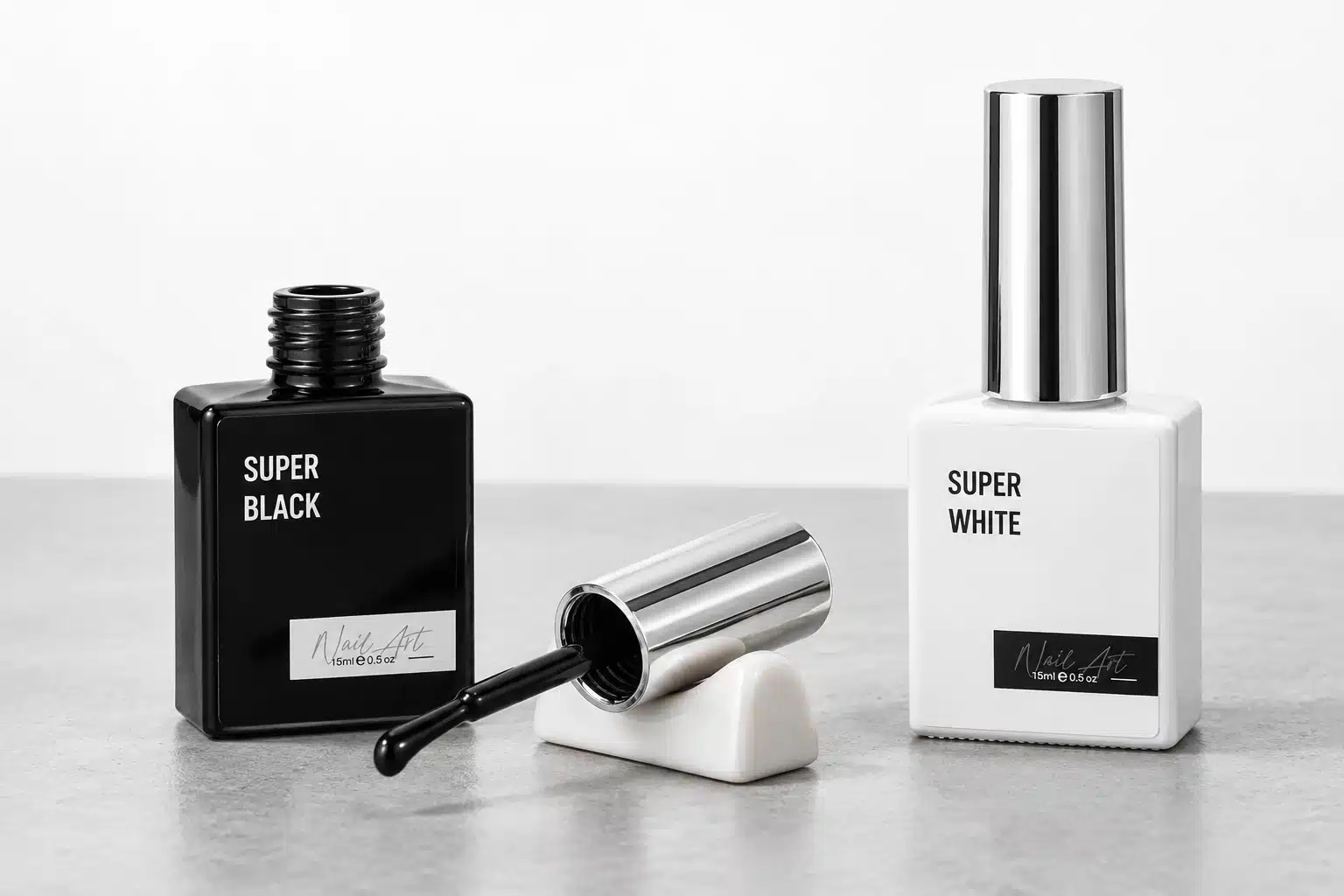
16. Develop Labels, Boxes and Collection Presentation
A coordinated collection should be easy to recognize and easy to identify correctly. Start with a product naming system and shade identifiers, then design the visual presentation around the required information. An elegant label is not successful if customers cannot distinguish a base coat from a color or read the relevant instructions.
Prepare a product information sheet before final artwork. Confirm the product name, net quantity, ingredients and other required labeling information with the responsible people for the destination market. Use one approved source for the bottle, box, product page and distributor materials so a revision does not leave conflicting versions in circulation.
Review the Physical Print, Not Only the Screen
Test the layout at actual size and on the selected package. Consider contrast on curved surfaces, small text, label seams, decoration alignment and shade identification on storage shelves. A bright color on a backlit screen may not reproduce identically on a printed label or coated bottle.
JTING's label and sticker customization can start from existing designs adapted with the customer's branding and product information, with design changes discussed as required. Labels accompany product, OEM or ODM orders; they are not offered as standalone printed-label purchases.
For custom gel nail polish boxes, define the purpose first: individual retail presentation, a coordinated set, professional storage or shipping protection. Check the fit with the actual bottle and any insert, then review how the package opens and how individual shades remain identifiable.
Keep ownership of artwork files, permitted use of customer assets and any external design rights clear. Use original or properly licensed material. A supplier's packaging sample can demonstrate a structure or finish without authorizing you to copy another customer's branding.
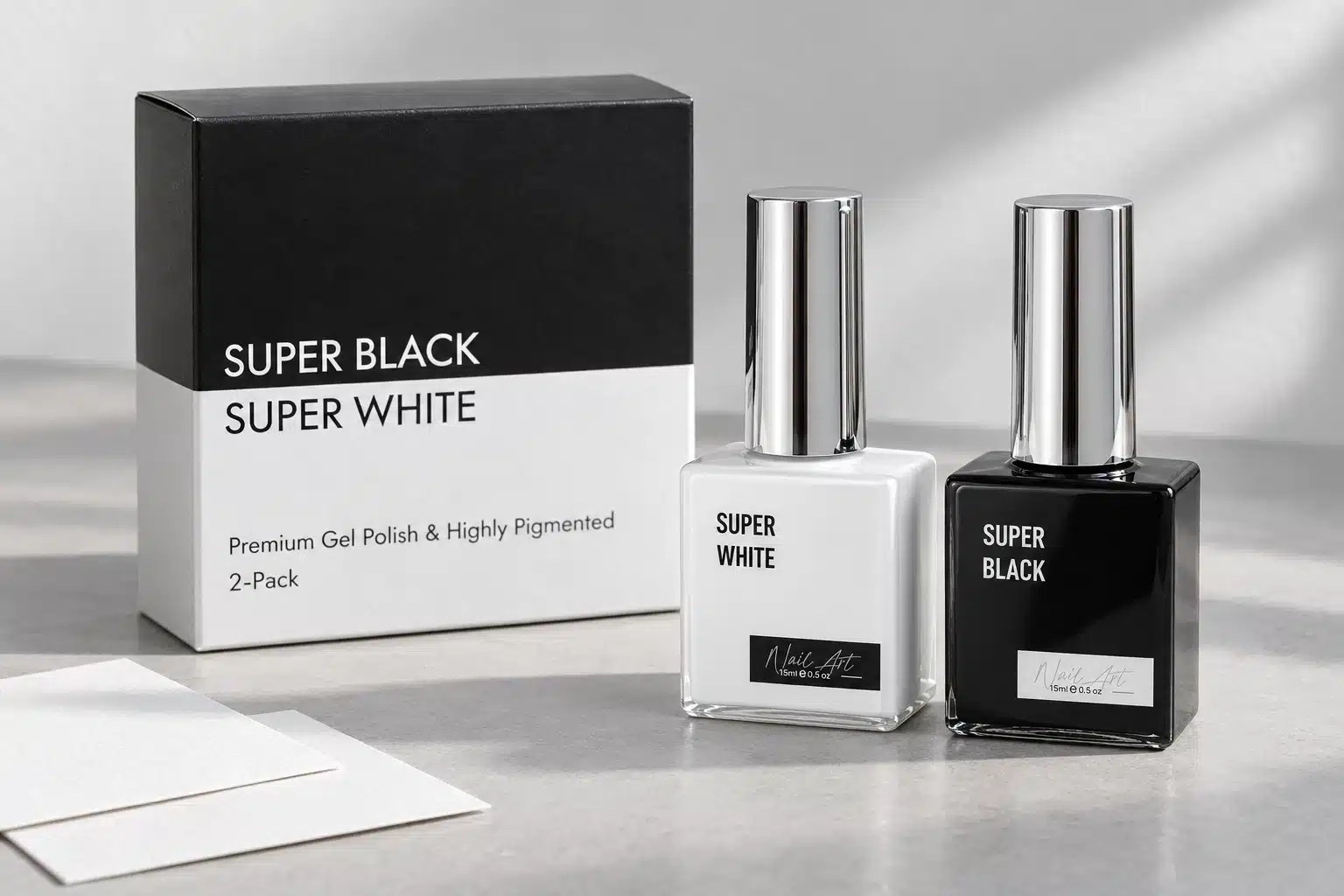
17. Confirm Documentation, Labeling and Product Claims
A document should answer a specific question about a particular product, process or market. An SDS addresses safety information and handling; a COA describes specified batch results; a management-system certificate concerns its stated organization and scope. They are not interchangeable evidence, and none should be treated as a universal permission to sell.
Before final packaging approval, ask your qualified market adviser what the selected product and intended use require. Identify who obtains the information, who reviews it, who completes any necessary submissions and who maintains the records. This section is a planning overview, not a complete legal checklist or a substitute for market-specific advice.
Confirm the Destination-Specific Responsibilities
For the EU, plan for an appropriate responsible person, product safety assessment and report, product information file, compliant labeling and CPNP notification before market placement, as applicable under the cosmetics framework. CPNP is a notification system, not a product approval certificate. Confirm that the records cover the actual product and branding being placed on the market.
For the United States, review the applicable MoCRA requirements, including facility registration, product listing, safety substantiation and adverse-event responsibilities. Applicability and exemptions need case-specific review. FDA facility registration or cosmetic product listing is not FDA approval of a cosmetic. Do not use it as an endorsement on packaging or sales material.
Match Claims to Evidence
Terms such as HEMA-free, vegan, low odor or a particular wear duration need product-specific support and suitable wording. Do not turn the absence of one ingredient into a promise that a product cannot cause a reaction. Avoid adding medical or therapeutic claims to a cosmetic product description without the appropriate review.
JTING's documentation and compliance support can include relevant product information and supporting documents depending on the product and destination. Confirm the exact scope early, including what must come from an external assessor or your own business. A request for every available certificate is less useful than a clear list of the records your project actually needs.
18. How to Request Samples That Answer the Right Questions
Request samples for a defined decision. An initial selection sample helps you assess a product direction; a custom shade sample addresses a color brief; a packaging sample checks the physical presentation. A production-ready approval may need all of these elements brought together.
Tell the supplier who will evaluate the samples, what comparisons matter and what information should accompany them. Request clear product identifiers, the application instructions and the recommended system details. Anonymous jars make later feedback difficult to interpret, especially when several shades or revisions look similar.
Separate Product Evaluation from Packaging Approval
An early formula sample may arrive in a temporary container. It can support a product decision without proving that the final brush, label or box is ready. Record which aspects the sample represents and which remain open. Equally, an empty decorated bottle does not confirm the behavior of the gel it will eventually contain.
Confirm sample charges, delivery costs, revision scope and whether any credit against a future order has been agreed. Do not assume that samples are free, that every revision is included or that paid samples create an obligation to place a bulk order. A written summary prevents avoidable disagreements.
For JTING, standard samples typically take 7-10 business days, while custom color or exclusive formula development typically takes 2-4 weeks. The actual plan depends on the product, quantity, development requirements and revisions. Confirm dispatch and transit separately; the sample preparation estimate is not the date it will arrive on your desk.
Set an evaluation window before ordering. Samples are most useful when the people, equipment and approval criteria are ready, rather than when they sit unopened while the launch schedule continues moving.
19. How to Evaluate Gel Nail Polish Samples
Use the same evaluation conditions when comparing samples. Record the sample reference, application steps, supporting products, specified lamp, operator and observations. Without that context, a difference in outcome can be mistaken for a formula difference when the application conditions also changed.
| Evaluation Area | Record | Avoid Concluding |
|---|---|---|
| Shade and finish | Applied color, undertone, opacity and effect under consistent lighting | That a screen image is a final color standard |
| Brush control | Pickup, spreading, edge control and compatibility with the actual brush | That one preferred viscosity suits every service |
| Leveling and coverage | Appearance using the instructed layer thickness and technique | That thicker application is an acceptable cure for poor coverage |
| Curing system | Specified lamp and instructions, plus any questions requiring supplier clarification | That a surface feeling hard proves complete cure |
| Wear and removal | Professionally observed results under the product's intended conditions | That one successful application proves a universal wear claim |
| Package | Closure, brush configuration, handling and readability | That an empty mockup verifies filled-product compatibility |
Begin appearance and handling comparisons on suitable artificial tips. Any use assessment should follow the product instructions and appropriate professional precautions. Avoid uncured gel contacting skin, and do not use improvised skin testing to assess safety. Consumer photographs and informal wear trials are not substitutes for the safety work required for market placement.
Give specific feedback. Instead of saying a red is wrong, explain whether it is too blue, too dark, too translucent or different from the approved reference at the instructed application thickness. Keep observations separate from proposed solutions so the manufacturer can assess how to achieve the requested result.
Compare the revised sample against both the target and the previous version. Changing a shade or working property may improve one attribute while introducing a new difference elsewhere. Close the feedback loop before approving the product, not after the first production order has been filled.
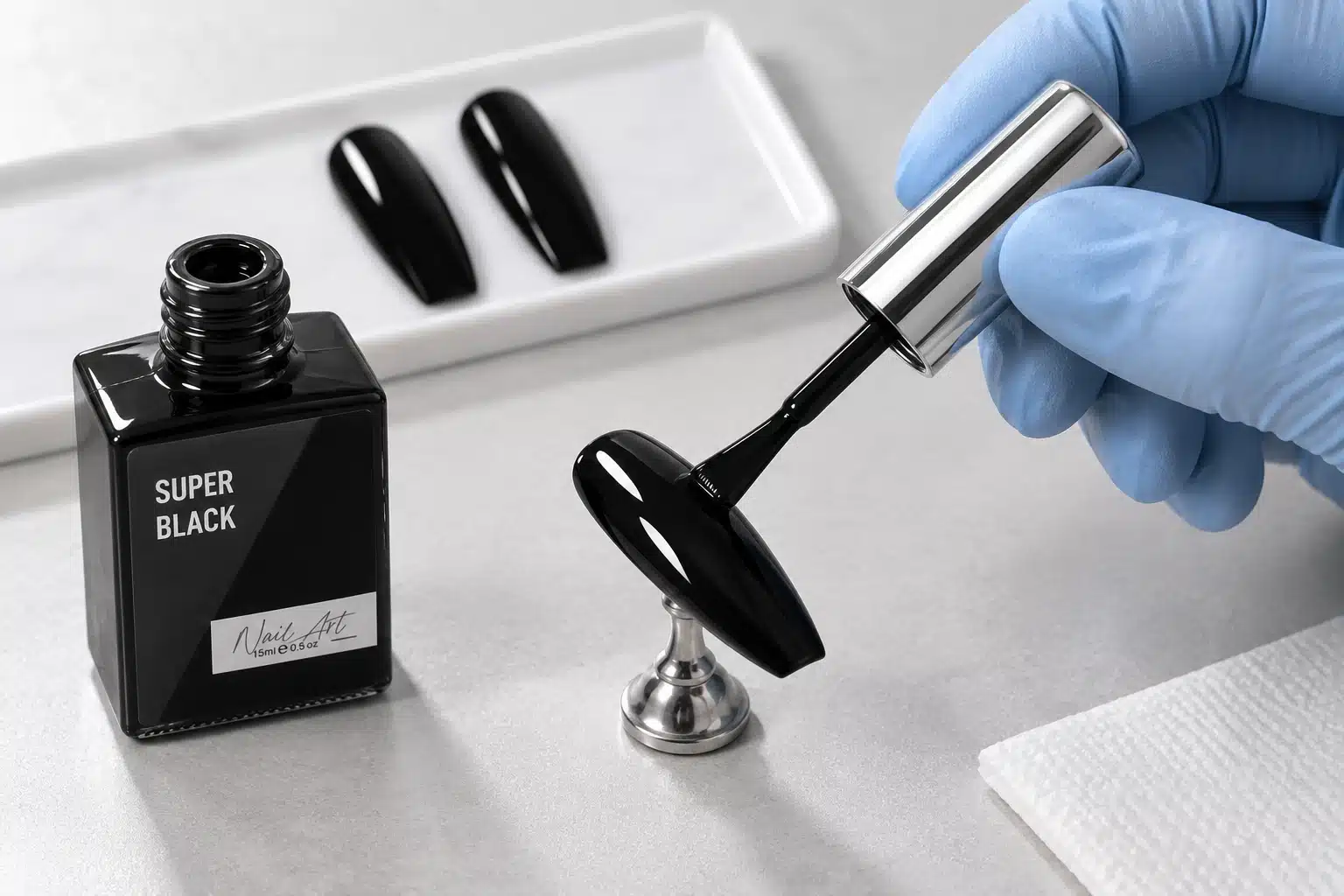
20. Approve the Product and Packaging Before Production
Approval should identify what has been accepted, not merely state that a sample looks good. Give each product version a clear reference and connect it to the relevant shade, formula direction and application information. Agree how approved samples and documents will be retained for comparison.
Confirm Four Separate Elements
- Product: the accepted sample reference, shade, finish, net quantity and agreed performance requirements.
- Components: the bottle, cap, brush and any product-specific accessories.
- Artwork: the final label and box files, product information and print specifications.
- Order: the quantities, configuration, deliverables and commercial terms.
A retained reference sample, sometimes called a golden sample, is useful only when both parties know exactly what it represents. It does not automatically define acceptable variation. Discuss relevant tolerances or acceptance criteria and the method of comparison rather than making an impractical promise of zero variation in every characteristic.
If a later change affects the approved product, identify the checks that need repeating. A new brush can change application feel; a label edit can change market information; a new shade can need its own evaluation. Decide who can authorize changes, and do not leave approval scattered across conflicting emails, artwork files and messages.
Before releasing production, issue a short confirmation tying the order to the current versions. If the formula is approved but the box is not, say so explicitly. Partial approval can support continued preparation, but it should not be mistaken for permission to produce every part of the final retail package.
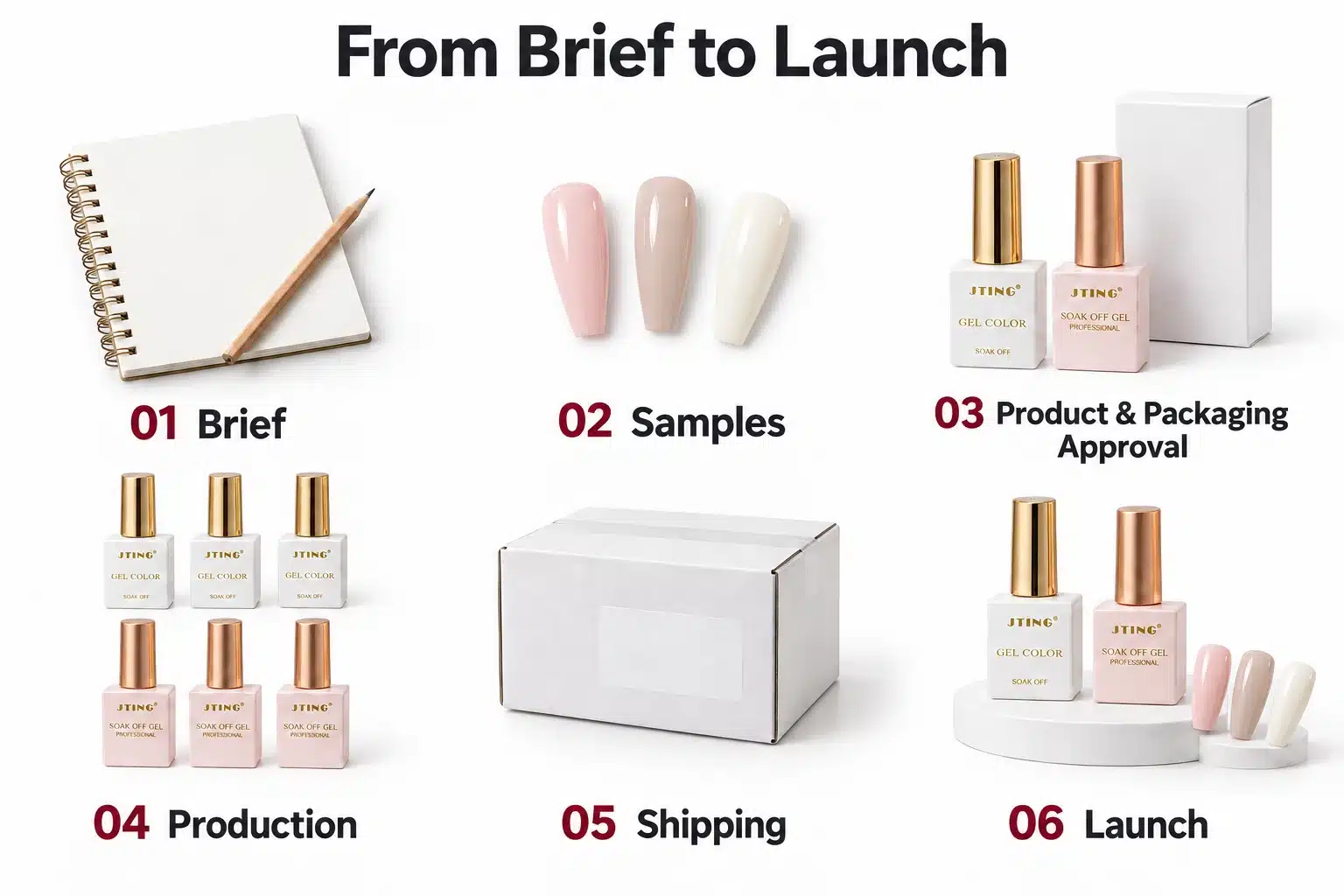
21. Build a Realistic Development and Production Timeline
A launch date is the result of several connected stages. Ask what each lead-time estimate starts from and what it ends with. A period measured after final sample approval is different from the time needed to turn an initial idea into stock ready for sale.
| Stage | JTING Typical Timing | What to Confirm |
|---|---|---|
| Standard samples | 7-10 business days | Product selection, quantity, preparation start and sample transit |
| Custom color or exclusive formula development | 2-4 weeks | Development scope, feedback rounds and further evaluation needs |
| Bulk production after sample and packaging approval | 15-20 days | Order scale, component readiness, final specification and production schedule |
| Shipping and launch preparation | Confirmed separately | Transport route, customs, receiving, product content and market readiness |
These are typical stage estimates, not a guaranteed end-to-end launch promise. Product complexity, formula development, shade count, packaging, revisions, order size and document requirements can change the schedule. Clarify whether quoted days are working or calendar days for each stage rather than silently converting one into the other.
Work backward from the date inventory must be available. Include receiving checks, photography if it depends on finished stock, and the time needed to prepare distributor or retail information. Then allow realistic review time for your team. Delayed feedback can affect the launch even when the factory completes its own work on schedule.
Use milestones rather than a single distant deadline: brief agreed, first samples received, revisions accepted, artwork approved, production released, shipment ready and stock received. If a milestone moves, review the dependent work immediately. Changing the scope and keeping the original date without discussion is a common source of avoidable pressure.
22. What Should Be Confirmed in the Purchase Order?
The purchase order should connect the commercial agreement to the exact product being made. Use product references and approved versions that both parties recognize. A description such as custom red gel in a luxury bottle leaves too much open if several reds and bottle configurations have been discussed.
Record quantities by SKU, the agreed fill quantity, package configuration, artwork references and required documents. Specify the commercial currency, payment stages, delivery basis and any agreed inspection arrangements. If several files form part of the order, identify their names or versions so a superseded design is not used accidentally.
Agree How Exceptions Will Be Handled
Discuss component substitutions, changes requested after approval, quantity discrepancies, delays and the process for raising a quality concern. State who reviews an issue, what information is needed and how any remedy will be agreed. These questions are easier to resolve before production than during a dispute.
Where custom tooling, excess packaging or exclusive arrangements are involved, clarify ownership, storage, reuse and any applicable limitations. Do not assume the cost of a mold automatically establishes unrestricted rights to it, or that a custom shade name creates exclusive supply. Have material contract terms reviewed by an appropriate adviser.
A concise confirmation can be very practical: the final product list, accepted sample references, packaging files, agreed terms and outstanding conditions in one place. It should reflect the actual agreement, not replace it with a generic checklist. Ask the supplier to confirm discrepancies before work begins, particularly if the quotation, invoice and technical specification were prepared at different stages.
23. Check Bulk Order Consistency Before Shipment
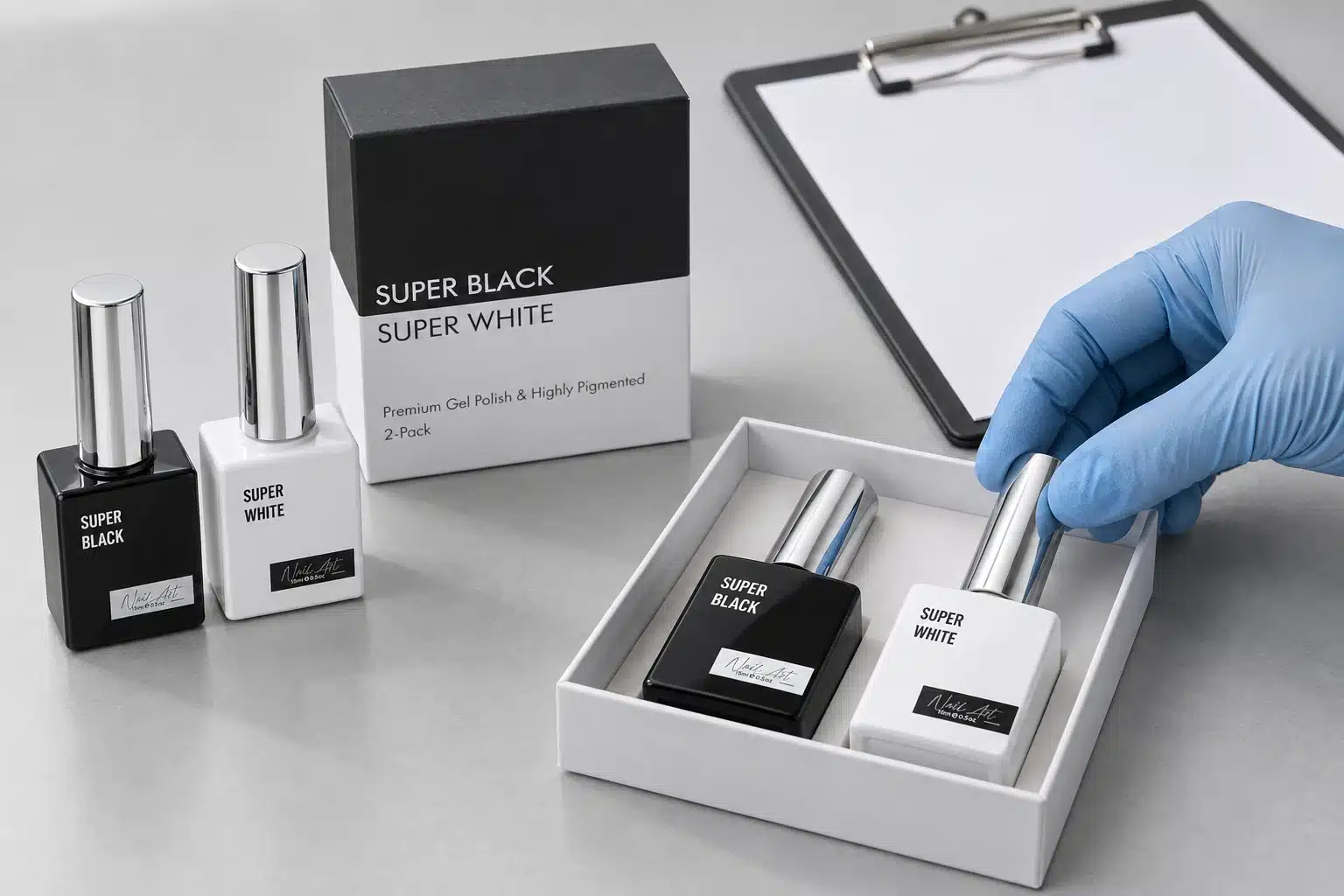
Bulk order checks should compare production against the accepted specification and reference samples. A general statement that the shipment has passed inspection is less useful than knowing what was checked, how the items were selected and what records relate to the specific order.
Agree on an inspection plan suited to the order, including the checks, acceptance criteria and responsibilities. A sample-based inspection does not mean every bottle has been individually tested. If you require a particular sampling plan, laboratory assessment or third-party inspection, arrange its scope and timing before shipment readiness.
Review Product, Package and Order Accuracy
Product review may include the agreed shade comparison and specified performance or batch checks. Package review can cover the bottle and brush configuration, closure condition, print version and product identification. Order review connects the number of units, shade distribution, set assembly and carton markings to the purchase order.
Request representative information in a form you can interpret. Photographs may help confirm packaging appearance but cannot prove chemical safety, accurate fill quantity or curing performance. A batch document should identify the relevant product or lot and the tests or checks it actually reports; a generic document is not equivalent.
If a discrepancy appears, record it and agree the next step before authorizing dispatch where your agreed process allows. Ask whether it concerns an isolated component, a shade group or a wider part of the order. A clear record supports investigation and prevents the same issue being rediscovered only after inventory reaches your customers.
Keep the accepted evidence with the order record. Repeat purchasing becomes easier when the previous approved configuration and any resolved exceptions can be retrieved, rather than reconstructed from old photographs and informal conversations.
24. Plan Shipping, Receiving and Storage
Confirm transport arrangements using the actual product information and the carrier's requirements. Do not assume every gel nail polish product has the same transport classification or can travel by the same service. Provide the relevant safety information to the qualified logistics provider and confirm route, packaging, restrictions and documentation for the shipment.
Make the delivery boundary explicit. Ask which party arranges freight, insurance where required, clearance and local delivery, and who is responsible for particular charges. A quoted delivery term should identify the agreed place and scope; a vague promise of shipping included is not a complete logistics plan.
Prepare the Receiving Check Before Arrival
Arrange a count by carton and SKU, compare it with the packing list and note visible damage or leakage promptly. Keep photographs of the packaging and affected items with order and lot references. Follow the agreed reporting procedure, and separate questionable stock while the issue is reviewed rather than mixing it into saleable inventory.
Confirm storage conditions from the product instructions and safety information. Gel products need to be protected from unintended light exposure, and temperature limits should come from the selected product's guidance rather than a generic online rule. Include the storage requirements in warehouse and distributor instructions.
Maintain traceability from incoming stock to the customers or channels receiving it. Record lots, dates and any applicable shelf-life information so stock rotation and problem investigation remain practical. A neat warehouse is useful, but it is the link between product identity, stock records and distribution that helps you act when a specific batch needs attention.
25. Prepare Product Content and Training Before Launch
Inventory does not become a launch-ready collection simply because it has arrived. Customers and resellers need to understand the product, its appearance and its intended use. Prepare the information alongside development so you are not writing technical instructions from memory after receiving the shipment.
Create one product information record for each saleable item. Include the shade name or identifier, product type, net quantity, finish, intended use, agreed application instructions and the approved statements you can make. Use that record to keep product pages, labels, training materials and distributor descriptions consistent.
Show the Actual Shade and Application
Photograph samples under consistent lighting and identify whether the image shows a sheer layer, an opaque application or a special effect. If a design requires another product or accessory, make that clear. A gold chrome result should not imply that a clear top coat creates the metallic effect by itself.
Provide usable instructions for the selected system, including preparation, layer sequence, curing requirements, finishing and removal as applicable. Do not borrow lamp times from a different product. A short, accurate demonstration is more useful than a polished video that omits the conditions needed to reproduce the result.
JTING can support product photography, videos and color-chart development as part of the project discussion. Confirm the deliverables, usage rights and whether the images represent final approved products. Generated lifestyle or concept images should not substitute for evidence of the actual shade, package or technical performance.
Prepare a response process for after-sales questions. Separate application guidance, order problems and possible safety concerns so they reach the appropriate person. Keep customer feedback linked to the product and batch where available; that information can improve both support and future product decisions.
26. Plan Reorders, Shade Continuity and Range Expansion
The first order tests more than demand for individual colors. It also reveals how well your shade names, images, application instructions and packaging work in the chosen channel. Review those signals before assuming every slow-moving product needs replacing or every initial bestseller needs a large reorder.
Track Individual Shades, Not Only Total Sales
Record saleable stock, units sold, returns and relevant customer questions by SKU. A set may sell well while several individual shades remain weak; a core nude may require more frequent replenishment than a visually striking seasonal effect. Bundle performance can hide these differences if you only review collection-level revenue.
A simple reorder planning method is expected demand during the confirmed replenishment lead time plus a chosen safety allowance, compared with inventory available and already on order. Use your own demand history and supplier timing rather than an arbitrary stock multiplier. A new line may need conservative scenarios until it has reliable sales data.
Confirm What Stays the Same
For each repeat order, identify the accepted product and packaging versions. Confirm availability, quantity requirements and whether any component or formulation changes are proposed. An unchanged product name is not enough to confirm an unchanged specification.
Before expanding, decide whether the new item fills a distinct need. You may need more stock of a core shade, better education for an existing effect or a clearer product image rather than another color. Expansion works best when it follows customer feedback and a resolved replenishment process.
Keep future packaging updates planned. If a redesign is approaching, review existing decorated components and finished stock before approving new materials. The cost of obsolete packaging can undermine the savings of a large component purchase made earlier.
27. Your Private Label Gel Nail Polish Launch Checklist
Use this checklist as a project review, not as proof of product approval or legal compliance. Mark an item complete only when the relevant evidence or agreement exists. For a team project, assign each outstanding item to a person and give it a review date.
Product and Commercial Plan
Samples and Packaging
Documentation and Production
Delivery and Launch
If several items remain unresolved, distinguish what prevents production from what prevents sale. A planned photo shoot may run alongside production, while unresolved product information can prevent final artwork approval. Making these dependencies visible is more useful than treating every open task as equally urgent.
28. Frequently Asked Questions
Can I Start a Private Label Gel Nail Polish Brand with a Small Order?
Yes, a smaller initial order may be possible when the product and packaging requirements fit the available options. JTING supports private label orders starting from 10 pieces per shade, subject to product type, packaging, formula request and customization level. Confirm the complete order structure, including any separate packaging requirements, before treating the starting MOQ as your total launch commitment.
Is Private Label Gel Nail Polish the Same as White Label Gel Polish?
The terms overlap, and suppliers use them differently. White label often describes an existing product offered with new branding, while private label may cover a wider range of customization. Ask which formula, shade, bottle, label and packaging elements can change. The written specification and agreed responsibilities are more useful than the label attached to the service.
Do I Need My Own Formula to Launch a Nail Brand?
No. An existing formula can be a practical starting point if it fits the intended service, market and customer expectations. You can differentiate through shade selection, presentation, education and product experience. Consider custom development when there is a clear requirement that existing options do not meet, and confirm ownership or exclusivity separately from the development work.
Can Different Colors Be Combined to Meet the MOQ?
That depends on the order route and the minimum for each item. Ask for the per-shade requirement and any total-order condition together. JTING's house-brand mixed-color orders can start from 100 pieces, while private label orders start from 10 pieces per shade with project-specific conditions. The two starting points should not be combined into a single assumed ordering rule.
How Much Does It Cost to Start a Gel Nail Polish Line?
The total depends on the product range, quantities, formula and packaging work, samples, market preparation, freight and launch activity. Request a line-item quotation and build a budget beyond the factory unit price. A sample order, a first commercial order and a fully developed branded range are different financial commitments, so a single universal startup figure would be misleading.
Are Private Label Gel Nail Polish Samples Free?
Do not assume so. Confirm sample preparation charges, custom development fees, revisions and shipping before ordering. If the supplier offers a credit against a later bulk order, ask for the conditions in writing. The purpose of the sample is to support a product decision; its cost and any later credit should be clear independently of the final purchasing decision.
How Long Does Private Label Gel Nail Polish Production Take?
For JTING, standard samples typically take 7-10 business days, custom color or exclusive formula development typically takes 2-4 weeks, and bulk production typically takes 15-20 days after sample and packaging approval. These are stage estimates, not a guaranteed full launch timeline. Confirm revisions, component readiness, documentation, shipping and your own approval time separately.
Can I Use My Own Logo and Packaging Design?
Yes, JTING can discuss labels, logos, bottles, caps, brushes and packaging boxes for the project. You can start from available options or request suitable changes. Confirm technical fit, artwork dimensions, print effects and product information before production. Make sure you have the rights to any logos, illustrations or other design assets you provide.
Can I Request HEMA-Free or TPO-Free Gel Nail Polish?
JTING can discuss these formula directions for applicable products and projects. Confirm the exact formula, supporting information and destination-market requirements instead of applying the claim to an entire catalog. A free-from statement does not establish that a product is suitable for every person or application, and it should not replace the relevant safety review or product instructions.
Will My Custom Color or Formula Be Exclusive?
Not automatically. Define whether exclusivity concerns a shade, formula, package, territory or sales arrangement, and agree its duration and conditions. Custom development and exclusive rights are separate issues. Have important commercial and ownership terms reviewed appropriately before you describe the product as exclusive to your brand.
Which Documents Should I Request from a Manufacturer?
Start with the product and destination market. Useful information may include ingredient details, safety information, relevant batch documentation and supporting manufacturing or assessment records. Ask your qualified adviser which documents and submissions are required for your role. An SDS, a factory certificate and a product safety assessment address different questions and should not be treated as substitutes.
How Can I Check Whether Bulk Products Match My Samples?
Identify the approved sample and specification before production, agree the comparison method and relevant acceptance criteria, and arrange appropriate checks before shipment. Keep packaging versions and batch or order references connected. Photographs can help review appearance but do not prove every technical characteristic. If a particular test or independent inspection matters, agree it in advance.
Can I Reorder Only My Best-Selling Shades?
Discuss single-shade replenishment and the applicable MOQ when planning the first order. A reorder should also confirm the current formula and packaging versions, component availability and lead time. Track demand by SKU so replenishment reflects what customers actually buy rather than automatically repeating the original quantities of every color.
What Should I Send with My First Private Label Inquiry?
Send your target market, intended customers, product types, approximate shade count and quantities, preferred packaging, budget direction and planned launch window. Add reference images or physical samples where useful, and identify any essential formula or documentation requirements. You do not need every decision finalized, but distinguish confirmed requirements from ideas you want help evaluating.
Build a Collection You Can Approve, Launch and Reorder
A useful private label collection is more than a set of branded bottles. It connects a clear customer need with products you have evaluated, packaging you have approved and a supply arrangement you understand. The strongest first order is not necessarily the largest or the most customized. It is the one whose important decisions have been resolved before the commitment is made.
Whether you are starting a new line or extending an established range, discuss your private label gel nail polish collection with JTING. Share your target market, product direction, estimated shades and quantities, packaging preferences and launch timing so the conversation can begin with a practical product and sample plan.