High-tier nail salons are currently caught between two competing pressures. On one side, client demand has shifted decisively toward intricate, high-texture finishes such as liquid metal chrome, organic water ripple effects, and multi-dimensional cat eye layering. On the other side, salon operators face an unforgiving constraint: chair time. Traditional 3D texture work requires manual bead placement, auxiliary extension gels, fine liner mapping, and repeated flash-curing intervals to build up dimensional height by hand. Every additional manual step compounds labor cost and directly throttles daily client throughput, particularly during peak booking hours. This is the operational tension that JTING Water Ripple Top Coat is engineered to resolve. Rather than positioning itself as another decorative seasonal trend, this formulation should be understood by salon owners and distributors as a workflow optimization tool, one that transfers the burden of pattern-building away from manual artistry and onto engineered fluid behavior. What follows is a technical breakdown of how that transfer works, and why it matters for margin, staffing, and sourcing decisions.
1. The Physics of Non-Wipe Thixotropy: Engineering the 3D Non-Collapse Architecture
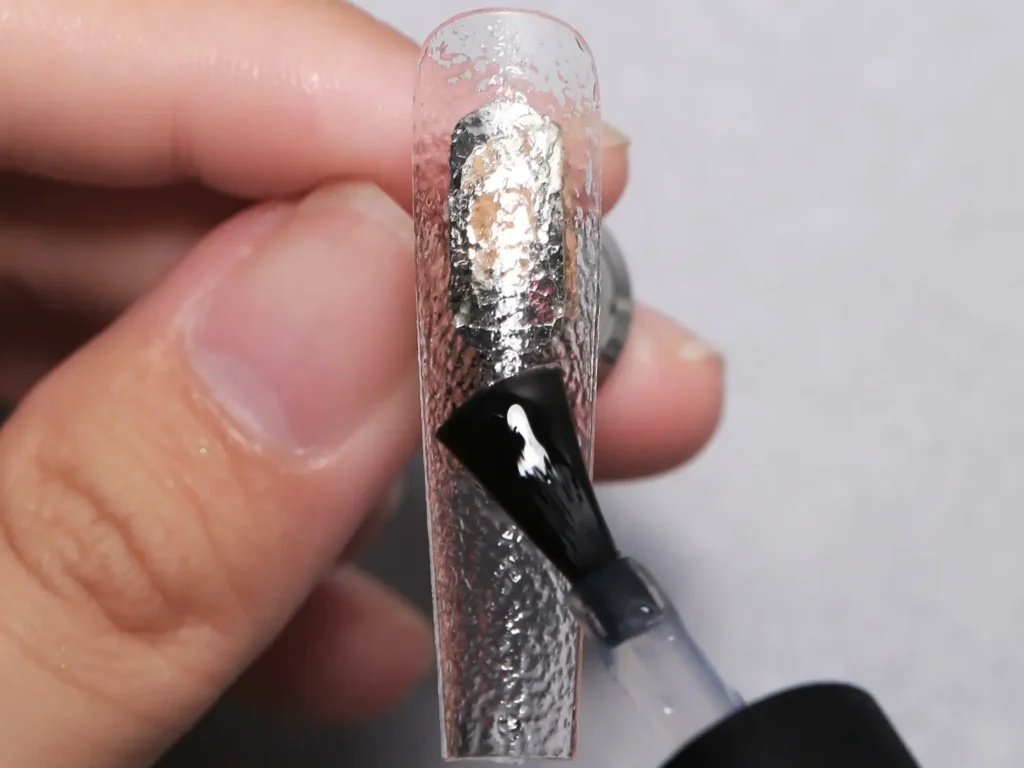
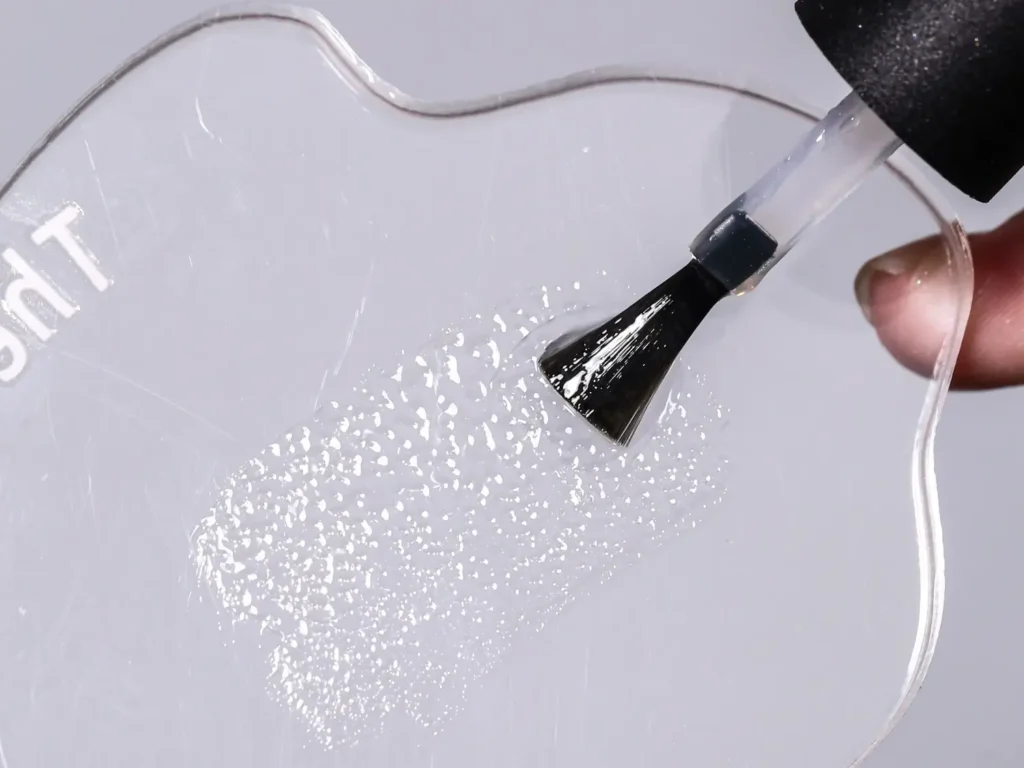
JTING Water Ripple Top Coat is formulated as a high-viscosity, non-wipe system, meaning the resin matrix is engineered to resist flow once it leaves the brush. This is a thixotropic behavior: the fluid thins under the shear force of brush application, allowing it to spread and separate into organic ridges, but immediately regains structural viscosity once shear stress is removed. The result is that peaks and valleys formed at the moment of application are mechanically locked in place rather than dispersing under gravity. This matters most at the sidewalls and cuticle line, where lower-viscosity gels typically sag or pool, softening the intended texture before curing even begins. The polymer chain network within the formula is dense enough to hold dimensional height against gravitational pull, which is what allows the ripple pattern to read as sharp and three-dimensional rather than shallow or smeared.
The non-wipe surface characteristic is not simply a texture consideration; it is a functional prerequisite for the second stage of the workflow, chrome powder application. A tacky, non-inhibited surface layer is what allows mirror or chrome pigment particles to adhere evenly across the ridge topology without catching, dragging, or leaving dull patches where the powder fails to bond. If an inhibition layer were present, as it can be in standard wipe-type top coats, the pigment would sit unevenly across the peaks and valleys, producing a flat or streaky metallic finish instead of the intended full-mirror reflection. In short, the non-collapse architecture and the non-wipe surface chemistry work together, one preserves the physical structure, the other guarantees clean pigment transfer across that structure.
2. One-Stroke Automation vs. Manual Mapping: Redefining Salon Labor Metrics
The conventional method for producing organic 3D ripple textures involves several discrete manual stages: applying a base layer, hand-placing beads or ridges with a dotting tool or fine liner, adjusting spacing and height by eye, and curing in partial stages to prevent the structure from collapsing before it sets. Each of these stages demands technician judgment, and inconsistent results are common, particularly among junior staff who have not yet developed the manual precision that mapping work requires. Extended across a full ten-finger set, and multiplied across a daily client schedule, that difference in per-nail time is what allows a salon to reclaim meaningful chair capacity without adding staff. Just as importantly, because the pattern-forming step no longer depends on manual skill, junior technicians can produce results that would previously have required a senior artist, which lowers the training threshold and reduces quality variance across a multi-technician salon floor.
(📊 Salon Efficiency & Operation Comparison Matrix)
| Operational Metric | Traditional 3D Resin/Builder Gel | JTING Automated Ripple System |
|---|---|---|
| Execution Time |
8-12 Minutes Per Nail
Requires slow manual mapping, constant visual calibration, and flash curing.
|
3-5 Minutes Per Nail
Seamless one-stroke application. Waves separate organically with zero extra tools.
|
| Skill Threshold |
Advanced Artists Only
Demands elite hand dexterity and steady brush control to avoid flattening or running.
|
Zero-Threshold Entry
Apprentice-level technicians achieve consistent pro-grade results via matched chemical tension.
|
3. The Temporal Factor: Managing the Self-Leveling Window for Maximum Texture Crispness
The same high-viscosity chemistry that enables the ripple pattern to form also carries a built-in time constraint that salon staff need to understand and respect. Structural gels of this type are formulated with natural self-leveling kinetics, a property intentionally included so the product can also flow into an even, workable film when needed. In this formula, however, that self-leveling behavior operates gradually while the gel remains uncured and exposed to ambient air. If the applied ripple pattern is left unlamped for too long, surface tension will slowly relax and the sharp ridges will begin to blur, soften, and eventually flatten into a shallower texture than intended.
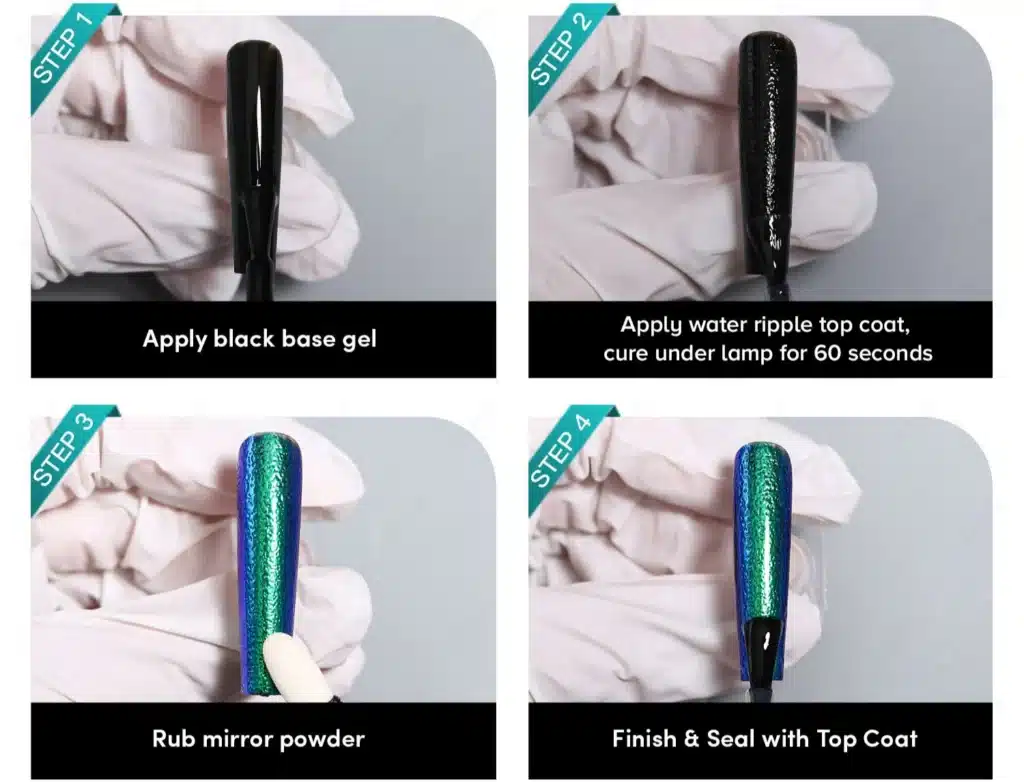
Operationally, this means immediate curing is not a suggestion but a fixed procedural requirement. Based on standard application guidance, the top coat should be cured under lamp within roughly sixty seconds of application in order to lock the ridge structure at maximum crispness, before ambient self-leveling has a chance to soften the pattern. Salons integrating this product into a menu should treat the application-to-cure interval as a controlled step in the service protocol, not a flexible window, since even a short delay directly and visibly degrades the final texture quality. For multi-technician salons, this is worth building into staff training explicitly: the product rewards a fast, decisive application-to-lamp sequence far more than a slow, deliberative one.
4. Multi-Layer Styling Scenarios: Designing High-Margin Metamorphic Nail Art
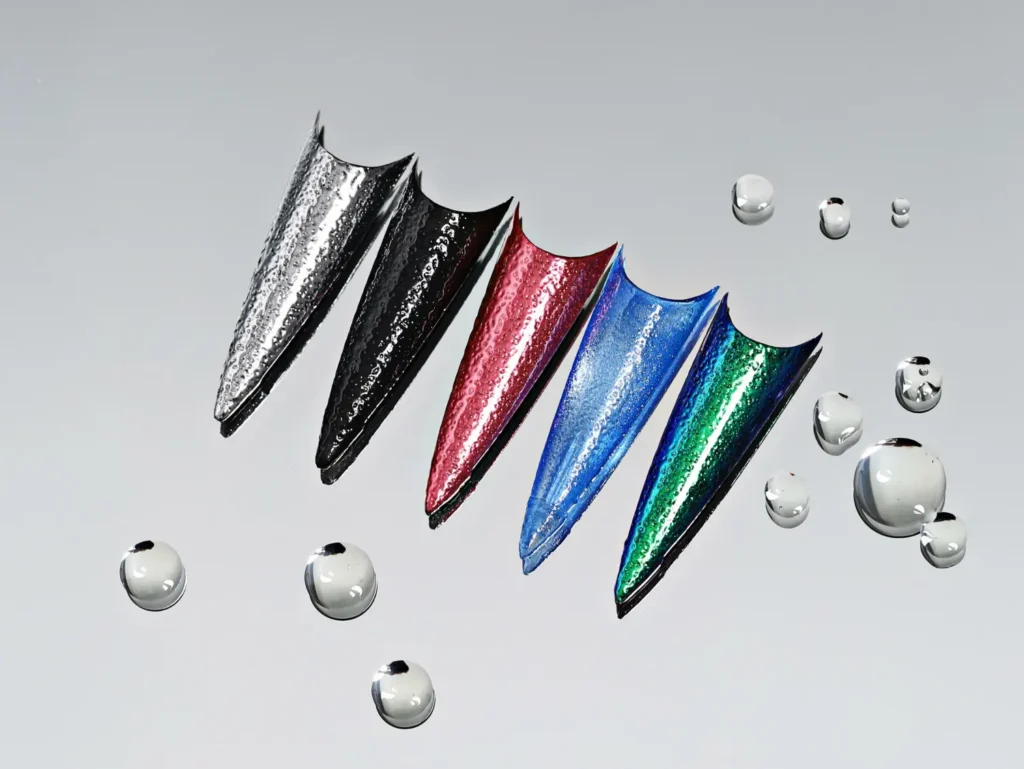
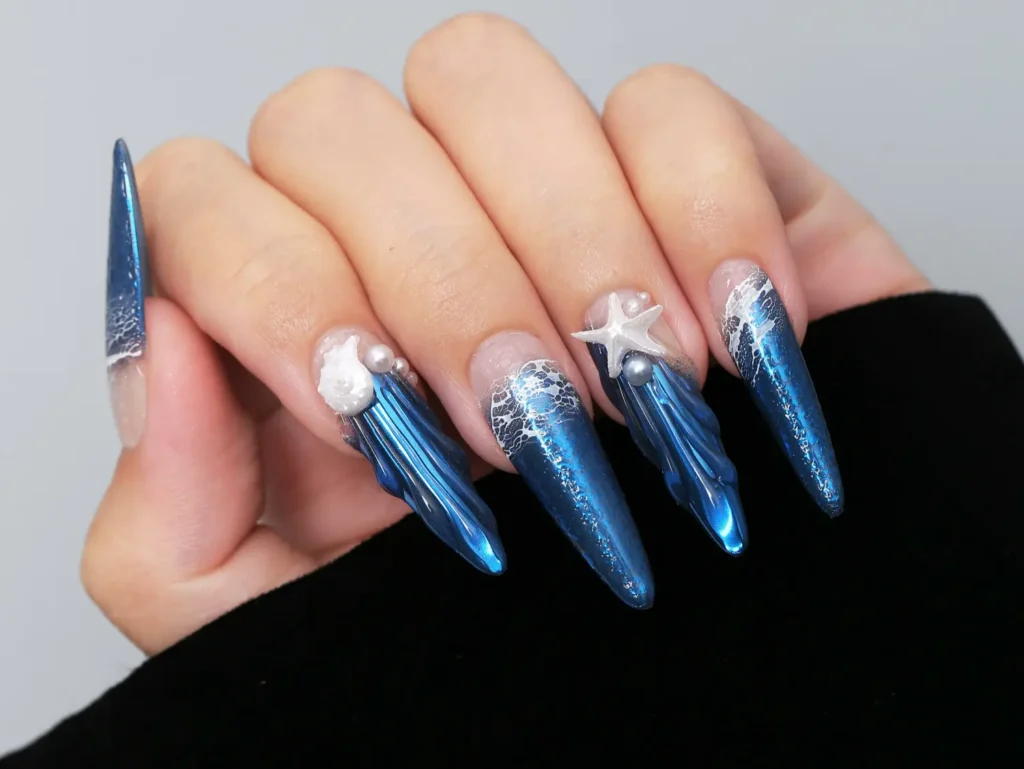
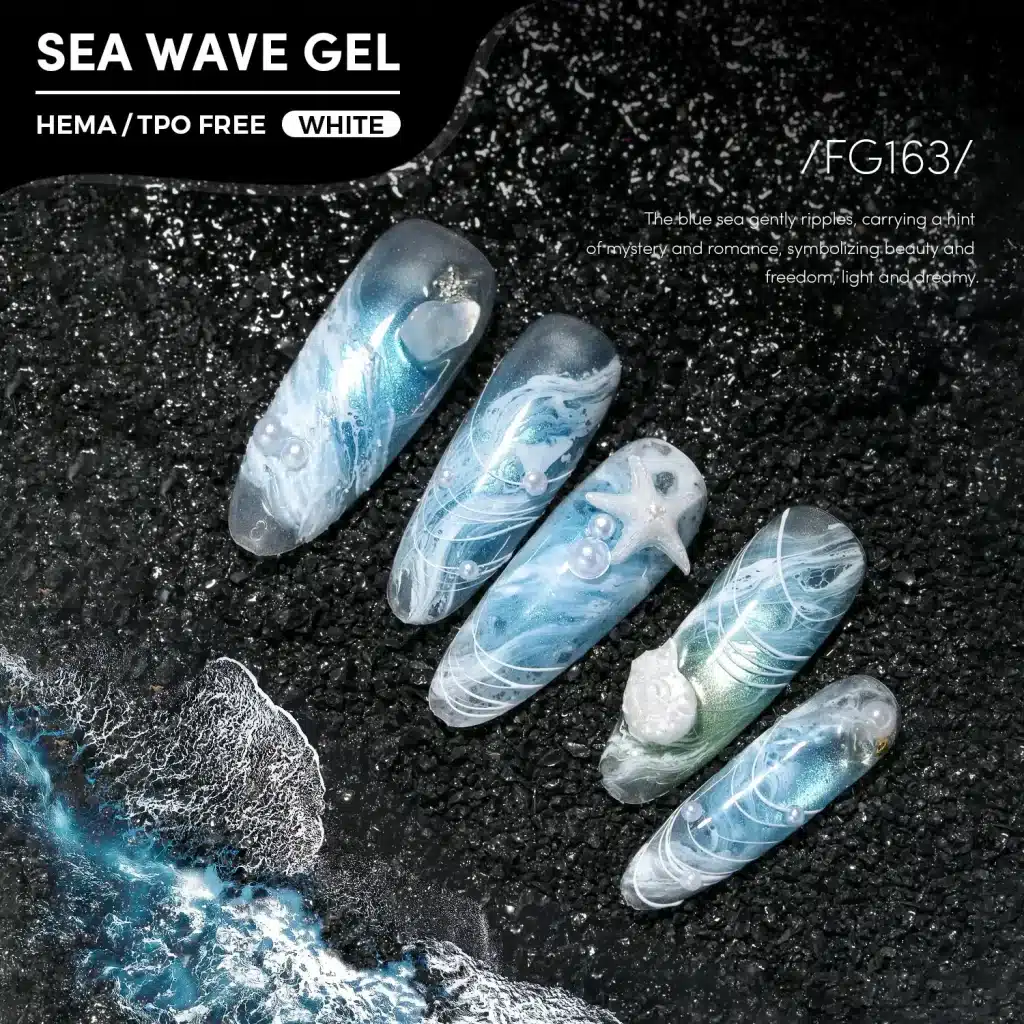
Once cured, the undulating ridge topology created by the ripple top coat becomes the functional canvas for chrome and mirror powder application. Because the surface is no longer flat, each micro-ridge and valley reflects light at a slightly different angle when rubbed with mirror pigment, producing a shifting, liquid-metal visual effect that a flat cured surface cannot replicate. This same principle extends to layering over solid color bases or multi-dimensional cat eye gels: the ripple top coat’s texture adds a physical dimension on top of whatever optical effect the base color already provides, which is what allows the two technologies to compound into a more complex finished look rather than simply sitting on top of one another.
From a commercial standpoint, this compounding effect is what supports premium pricing. As a conceptual application scheme, a bridal set built on a pearlescent solid base, finished with ripple top coat and silver chrome, produces a metamorphic finish well suited for photography under varied lighting, a relevant consideration for editorial or studio bookings where lighting conditions are not fully controlled. For standard salon menus, offering the ripple-and-chrome combination as a fixed add-on service allows a fast upsell path: the technique adds meaningful visual complexity without adding meaningful technician time, given the one-stroke and non-wipe properties already discussed in earlier sections. Distributors and salon owners evaluating this product for menu integration should weigh it primarily as a margin lever, since the visual complexity delivered per minute of technician time is where the commercial advantage actually sits.
5. Sourcing Risk Mitigation: Chemical Compliance and Safe Workplace Toxicology
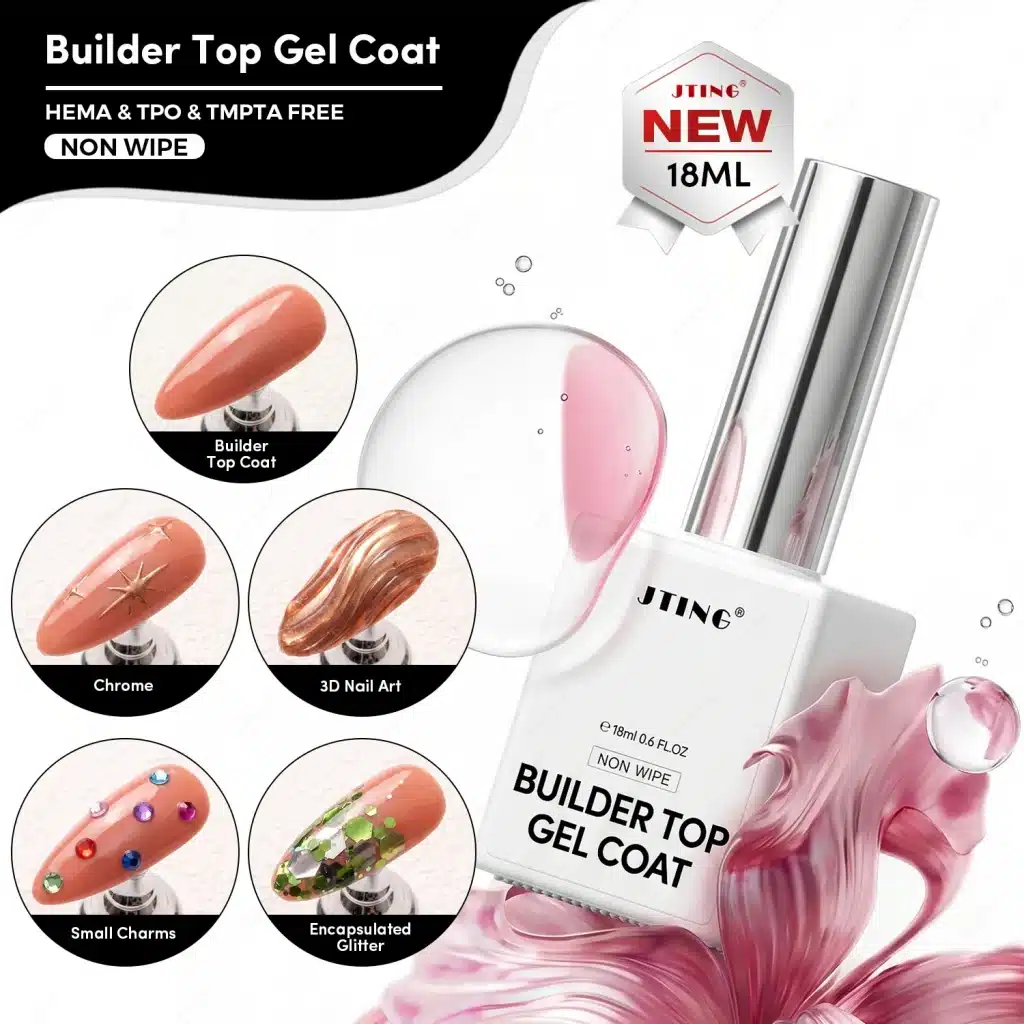
For multi-unit salons and cosmetic distributors, sourcing decisions increasingly hinge on chemical compliance as much as on performance. JTING Water Ripple Top Coat is formulated as a Triple-Free system, free of HEMA, TPO, and TMPTA. These three compounds are among the most common drivers of occupational skin sensitization in nail technicians, and cumulative low-level exposure across a technician’s working life is a recognized contributor to contact dermatitis in the professional nail sector. Removing all three from the formulation reduces the sensitization burden placed on salon staff who apply the product repeatedly across full working shifts, which is a meaningful occupational health consideration for salons managing staff retention and liability exposure over time.
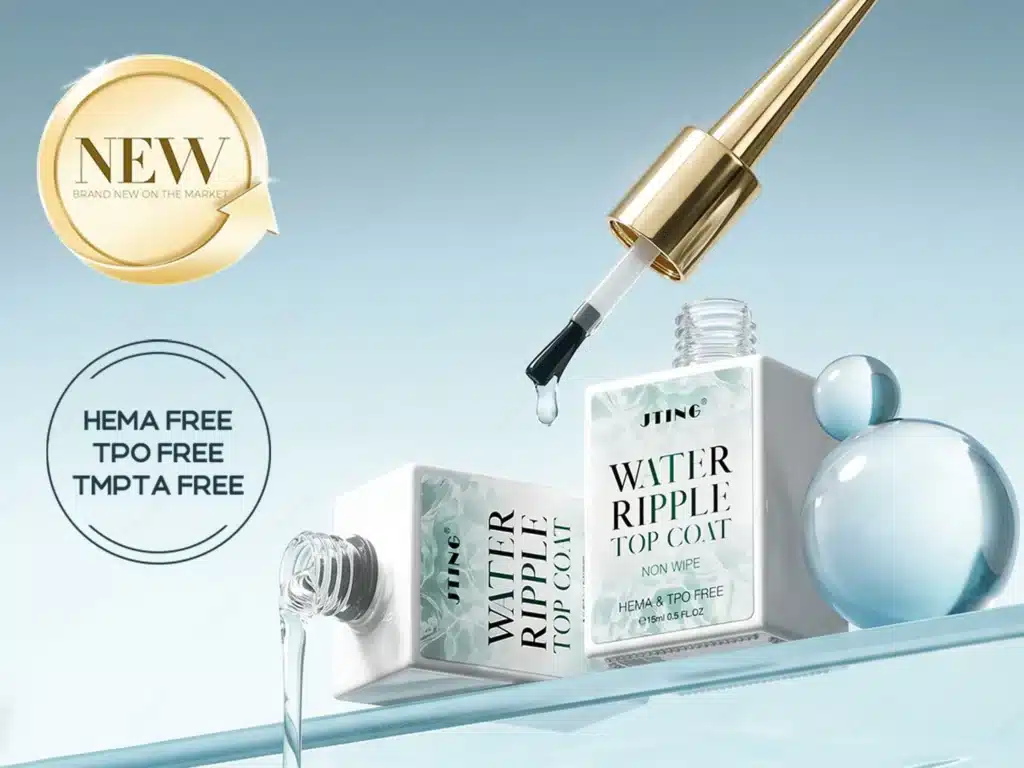
This clean formulation profile also has a direct commercial benefit for import and distribution. Products backed by CPNP notification, ISO and CGMP-certified manufacturing, SGS third-party testing, and available MSDS documentation present a substantially lower-friction compliance file for customs and regulatory review, particularly for brands managing rollouts across the EU, where GPSR obligations require verifiable product safety documentation at the point of market entry. For a distributor evaluating multiple suppliers, a documented Triple-Free formula with this certification profile shortens the diligence cycle considerably compared to sourcing an equivalent product without third-party verification, since fewer follow-up questions arise during import review. For salon groups making multi-unit purchasing decisions, this combination of occupational safety and streamlined compliance is frequently the deciding factor once performance parity between competing top coats has already been established.