A well-chosen fall gel nail polish range gives salon customers coordinated everyday colors and clear options for more detailed services. For brands and distributors, the buying decisions are which shades to carry, how to demonstrate each effect and how much stock to commit to the launch.
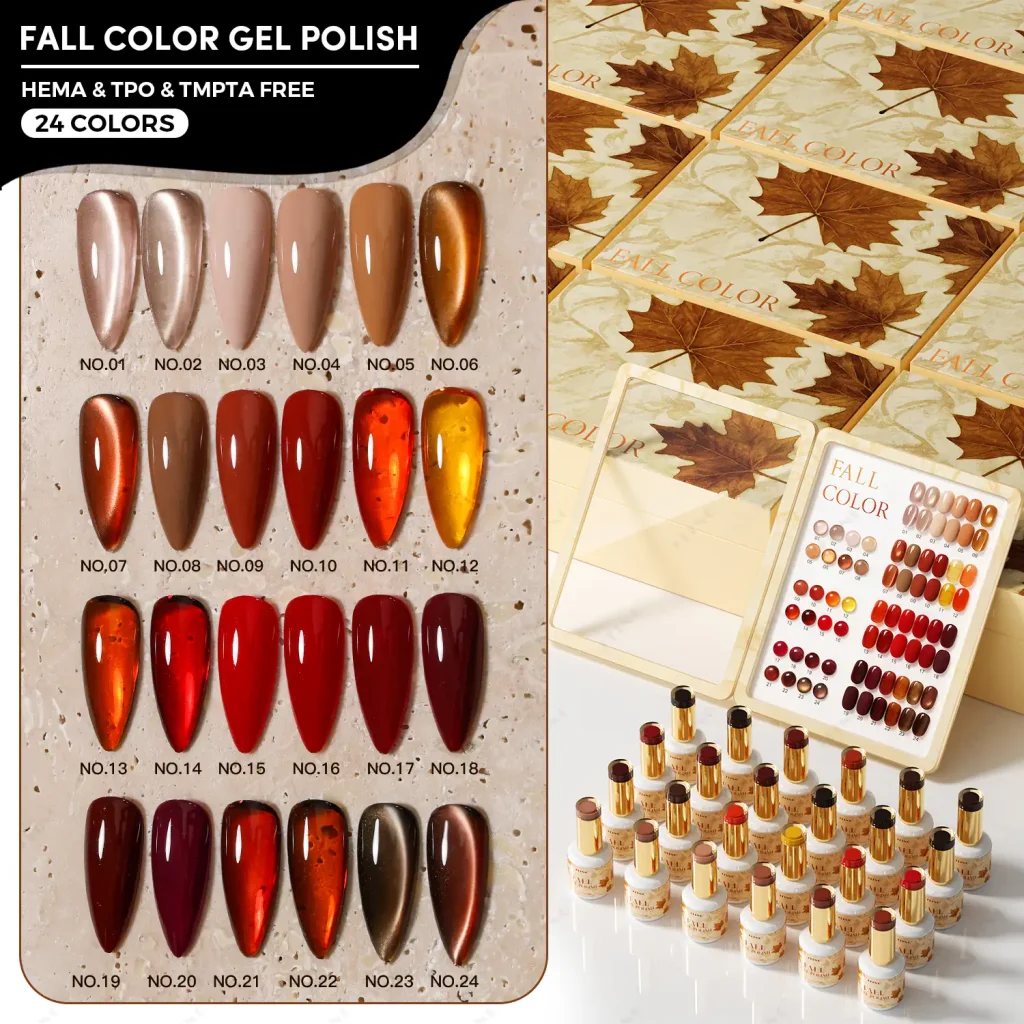
JTING Fall Color Gel Polish (model D47) brings 24 autumn shades into 15 ml bottles, with six jelly colors, six cat eye colors and twelve additional color shades. The formula is HEMA-free, TPO-free and TMPTA-free, with a lightweight, self-leveling texture. UV lamp curing is required.
This guide explains how to select autumn gel nail polish colors, use jelly depth and cat eye effects, compare sample results and plan wholesale or private label orders. It also covers practical design choices, service costs, product photography and replenishment.
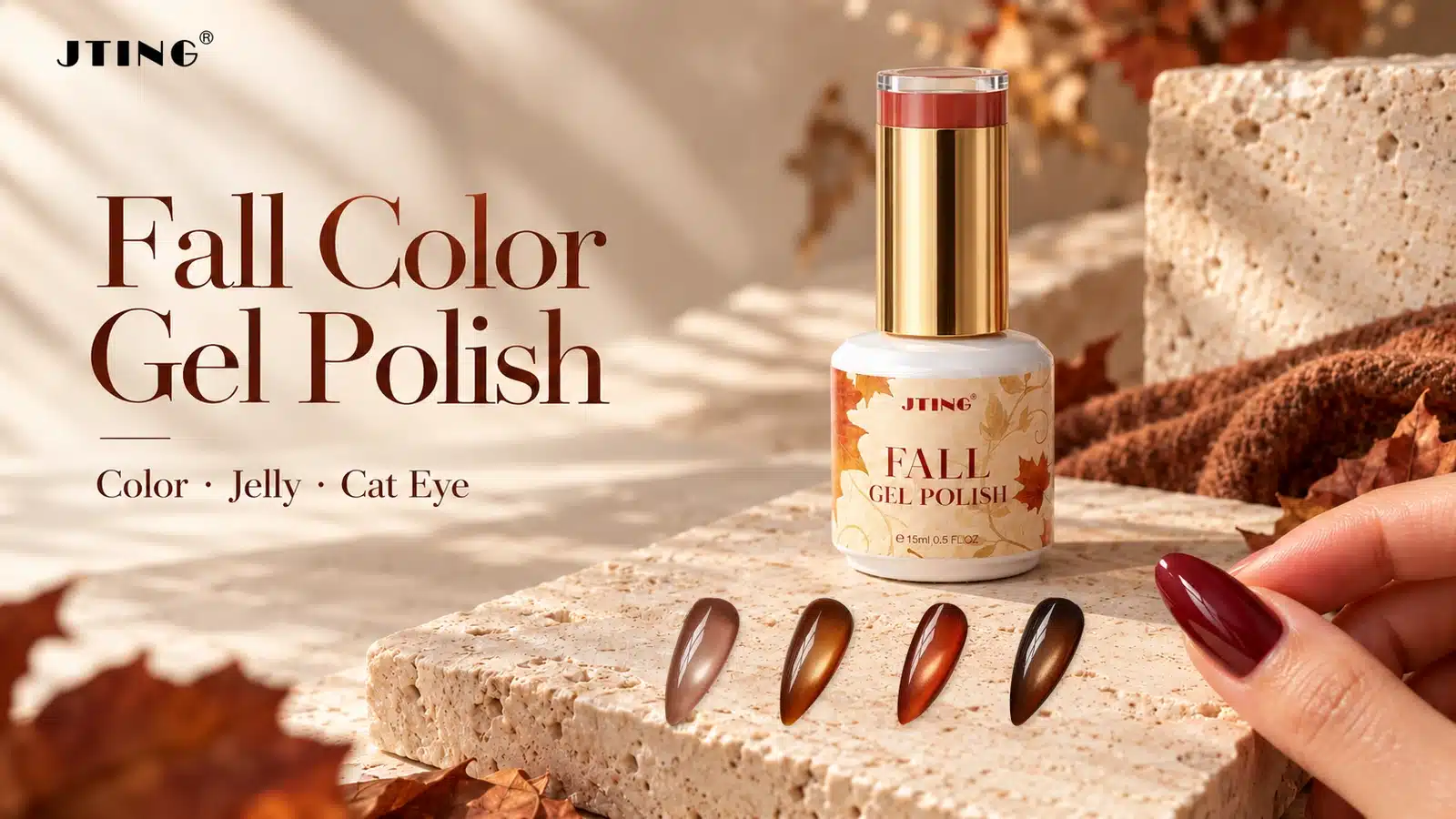
Plan autumn color, translucent jelly depth and cat eye accents as parts of one coordinated range.
1. Decide What an Autumn Collection Adds to Your Existing Range
Choose fall gel nail polish around the services your customers sell: everyday warm neutrals, deeper accent colors, translucent nail art or magnetic effects. Compare the proposed shades with your existing stock so that each addition fills a color gap, introduces a useful finish or completes a combination.
Separate a missing color from a missing effect. A salon may have several brown shades but need a translucent amber for layered art. Another may have enough everyday color and want a cat eye option for an accent service. For a distributor, those are different reasons to introduce the same autumn collection.
Scroll horizontally if needed to view all columns.
| Existing Range | Possible Addition | Question to Ask |
|---|---|---|
| Mostly light neutrals | A deeper warm contrast | Which darker shades do customers request alongside their everyday colors? |
| Several similar browns or reds | A different finish or clearer shade role | Does the proposed addition change the finished look enough to justify stocking it? |
| Mostly full-color services | Jelly depth or a magnetic accent | Which additional designs can the salon team demonstrate consistently? |
| A broad professional catalogue | A coordinated seasonal presentation | Can buyers understand the shades and effects without sorting through unrelated products? |
For each proposed addition, record the closest shade already in stock, the application it will support and the customers likely to use it. This makes the sample shortlist easier to explain to your purchasing team and gives sales staff a practical starting point for recommendations.
2. Read the 24 Shades by Color and Effect
JTING Fall Color Gel Polish contains 24 numbered shades in 15 ml bottles: six jelly colors, six cat eye colors and twelve additional color shades. Start with the effect required for the service, then compare the colors within that group.
Scroll horizontally if needed to view all columns.
| Shade Group | Shade Numbers | What to Evaluate |
|---|---|---|
| Color Shades | No.03, 04, 05, 08, 09, 10, 15, 16, 17, 18, 19, 20 | Color depth, even application and the role of the shade in your range |
| Jelly Colors | No.11, 12, 13, 14, 21, 22 | Translucency, the underlying base and depth built through thin layers |
| Cat Eye Colors | No.01, 02, 06, 07, 23, 24 | Base color, magnetic light-band definition and appearance from different angles |
Evaluate jelly gel polish for translucent color and layered depth. Evaluate cat eye gel polish for its base color and magnetic light band. For the other shades, compare color evenness and the coverage your application needs. These separate criteria make sample results easier to compare.
Use the original shade number on sample cards, bottle labels and quotation requests. Color descriptions such as latte, caramel, amber or wine help explain a direction, but a numbered physical sample is the reference for approving the color. Screens, lighting and the base beneath a translucent shade can change its appearance.
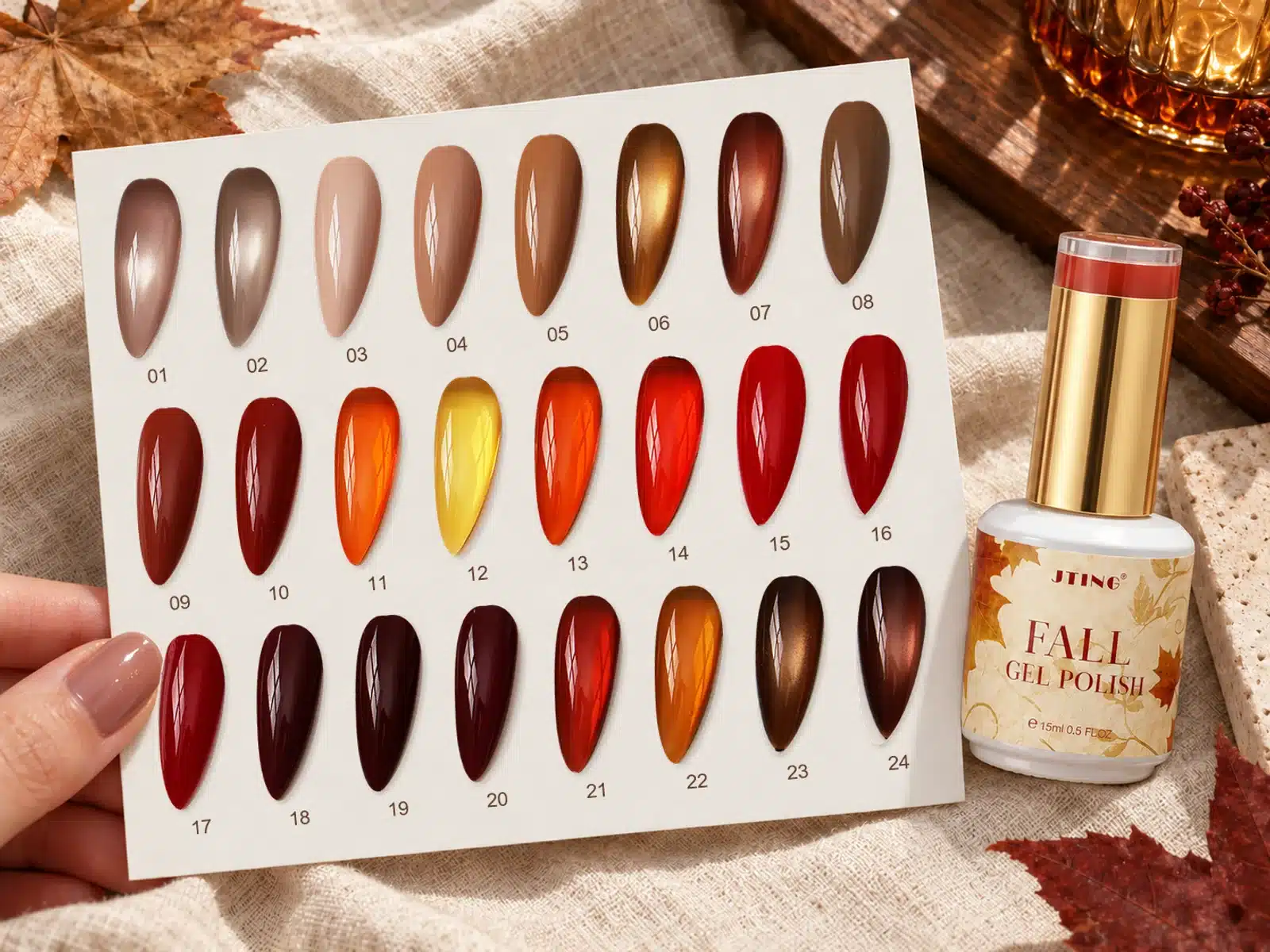
Compare the numbered autumn shades and effect families; confirm color and finish with the original chart and physical samples.
3. Build Tonal Combinations with Color, Jelly and Cat Eye Shades
Start a combination with the look your customer needs: an everyday manicure, a warmer contrast, a translucent design or a light-catching accent. Then choose shades that support that result. A combination does not need every effect on every nail.
How to Choose Fall Gel Nail Polish Colors
For an everyday autumn gel nail polish selection, compare a lighter warm neutral with caramel, red-brown or deep wine. Check the combination on the nail lengths your salon customers use. A dark accent can give a short set a clear focal point, while longer nails provide more space for layered detail.
Use Transparency or Light as the Point of Difference
Add a jelly shade when you want to see depth through the color. Add a cat eye shade when the design depends on a changing band of light. Compare each effect against the neighboring color rather than choosing all bottles from separate photographs.
Prepare sample cards for the services you want to offer: one simple tonal combination, one translucent design and one magnetic accent. Label each with the shade numbers, supporting products and application sequence. Use the selected cards to discuss your preferred order configuration with JTING.
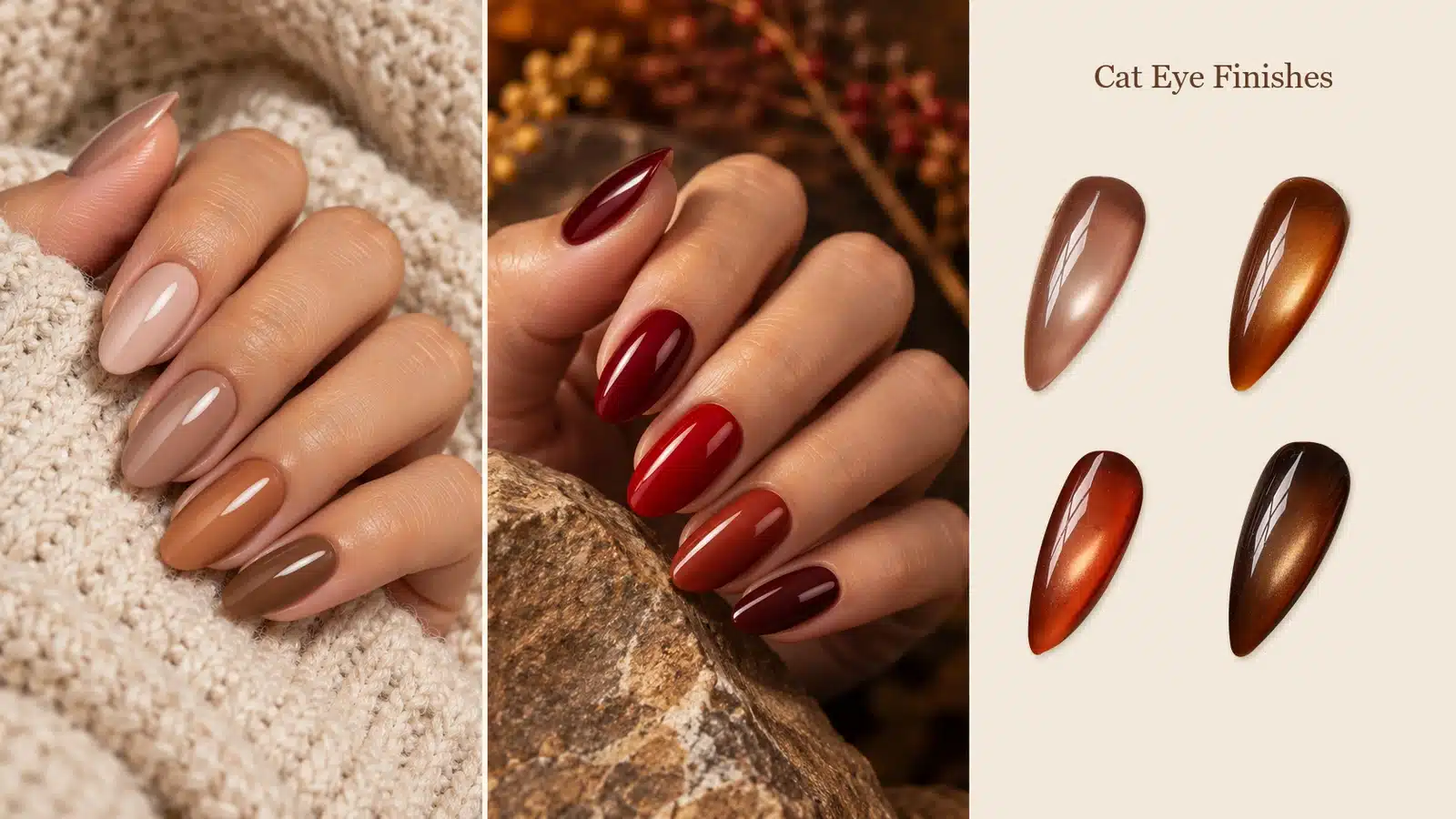
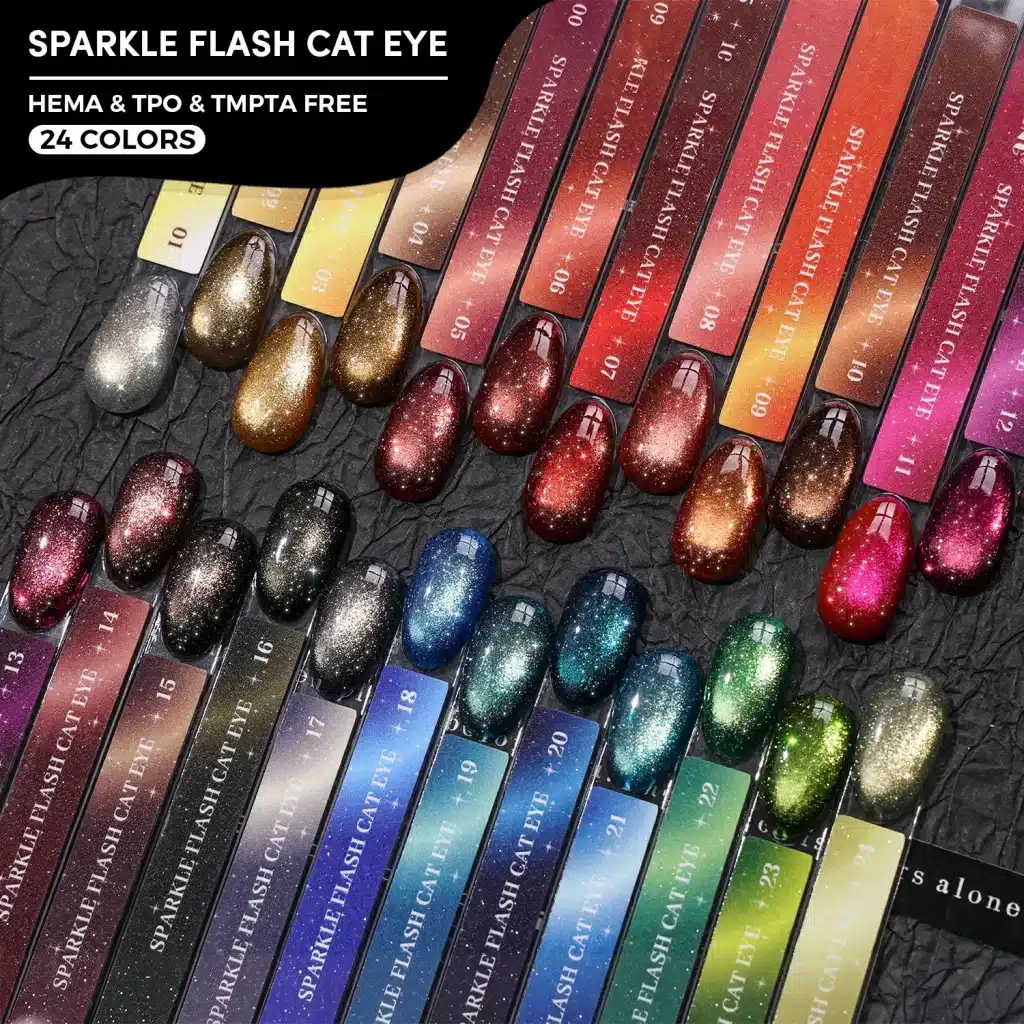
Compare lighter everyday colors and deeper contrasts with photographed cat eye sample options.
4. Use Jelly Gel Polish for Amber Depth and Layered Autumn Designs
What Is Jelly Nail Polish?
Jelly nail polish describes translucent color: the layer beneath remains part of the finished appearance. The six jelly shades in this collection are UV-cured gel products, rather than air-drying nail lacquer.
When planning amber nails or tortoiseshell nail art, assess how the selected translucent color builds depth and how clearly the underlying detail remains visible. Prepare the additional colors and art tools needed for darker markings, soft transitions or other details in your chosen design.
How to Use Jelly Gel Polish for Amber Nail Art
- Prepare a consistent base using the application system you intend to recommend.
- Apply a thin, even color layer and cure it fully according to the product instructions.
- Add the next thin layer or planned detail, curing each required stage before continuing.
- Check the result over the intended base, then complete the design with a compatible finish.
Build saturation with controlled thin layers, curing each required stage fully. Compare the result against the translucent look you want, and record the base and layer sequence so that the approved sample can be reproduced.
For customer demonstrations, show a simple translucent application alongside one layered design. Keep the product combination and shade numbers available with the display, rather than relying on a photograph to explain the method.
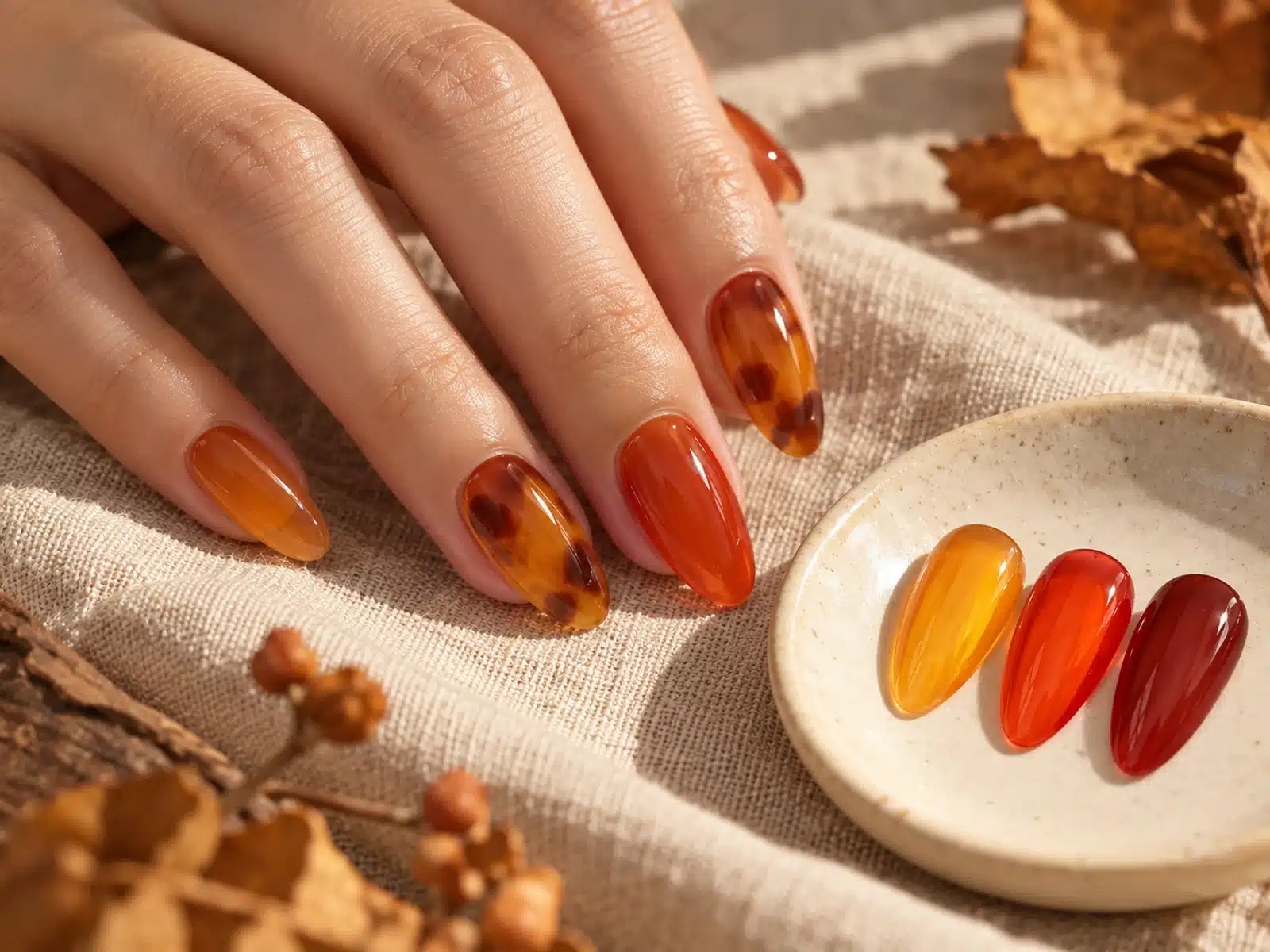
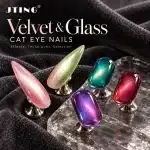
Assess translucent color and layered amber depth with the base and additional design materials you intend to use.
5. Evaluate Cat Eye Definition and Control the Light Band
How Does Cat Eye Nail Polish Work?
A magnet moves the magnetic particles in uncured gel to form a reflective pattern. Once the intended effect is created, curing fixes the finished arrangement. The light band changes in appearance as the viewing angle changes.
The collection's cat eye shades are No.01, 02, 06, 07, 23 and 24. Compare a brown cat eye or other warm metallic shade by both its body color and light band. Check the full nail under the light your customers will use to view the finished manicure.
How to Use Cat Eye Gel Polish in a Sample Demonstration
Use the recommended application system and a suitable magnet. With the magnetic layer still uncured, adjust the magnet's orientation and position without touching the wet surface. Observe how the reflective area moves, then cure as directed once the intended effect is formed. Confirm the layer sequence, magnet choice and curing instructions with JTING for the shades you are evaluating.
For a repeatable demonstration, keep the sample position, viewing light and magnet consistent. Examine the finished nail from the front and at an angle. A bright reflection in one photograph does not show how the effect reads as the hand moves.
What Buyers Should Compare
- The contrast between the color and reflective band.
- Whether the chosen light-band shape is clear on the planned nail length.
- How reliably the technician can reproduce the approved appearance.
- The additional tool and training needed for customer demonstrations.
When training staff on how to apply cat eye gel polish, keep the selected shade, magnet, base and lamp instructions with the demonstration sample. Record the magnet orientation used for the approved light band so that different technicians can follow the same method.
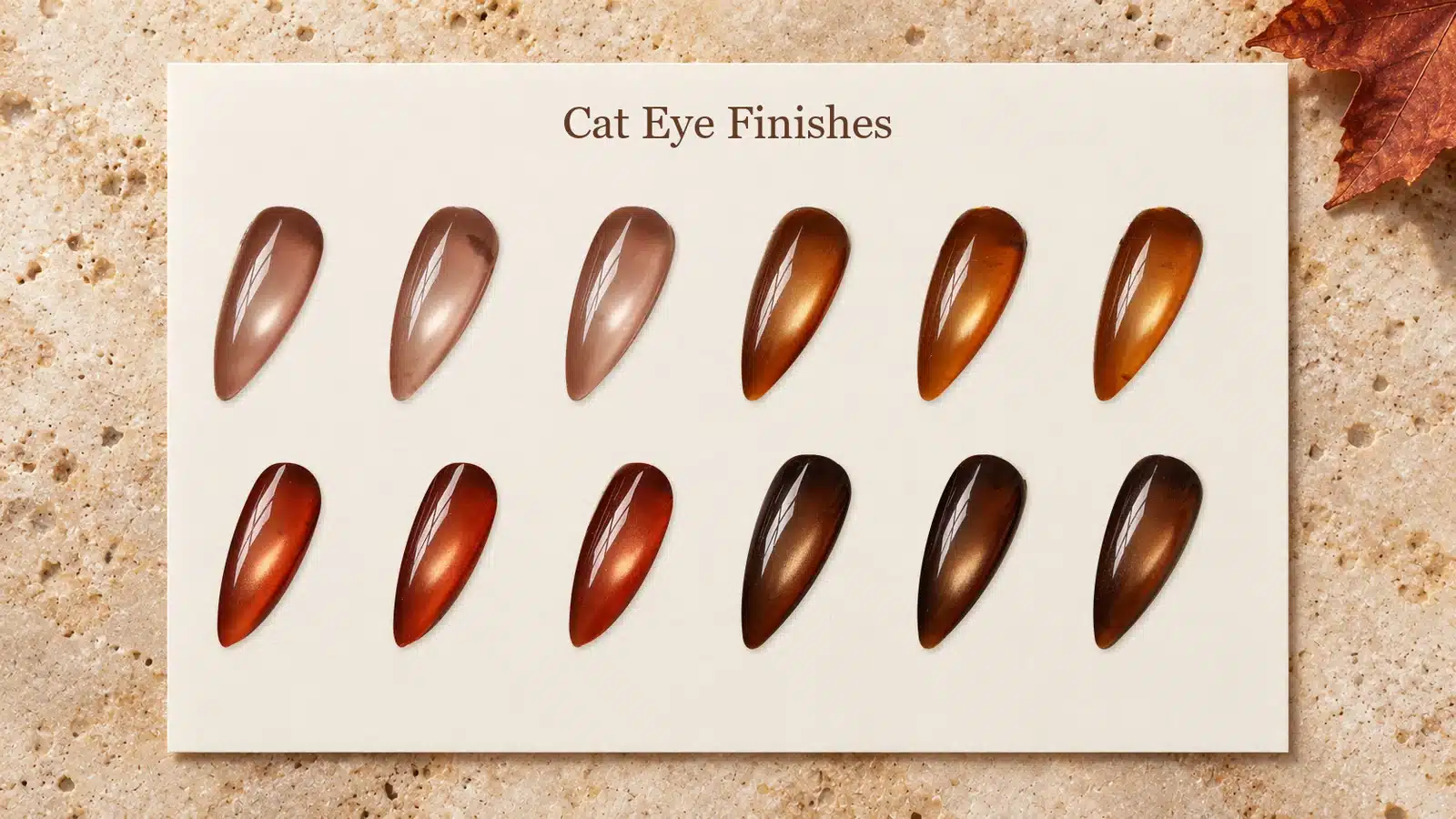
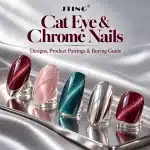
Compare the photographed cat eye samples for their color, broad luminous finish and surface detail.
6. Compare Coverage, Brush Control and Self-Leveling
Fall Color Gel Polish has a lightweight, self-leveling texture. In a sample trial, assess what that means for the technician: whether the gel spreads evenly, whether brush marks remain and how easily the edges can be controlled without flooding the surrounding skin.
Apply two thin, even coats, curing each layer fully according to the product instructions. Check the result against the sample you want to approve: color evenness and coverage for the color shades, translucent depth for the jelly shades, and color with a defined light band for the cat eye shades.
For dark gel polish colors, check the sidewalls, cuticle line and center of the nail under consistent working light. If more correction is needed, review the amount on the brush and the application sequence rather than increasing the thickness to hide an uneven area.
Record the amount on the brush, the number of layers and any edge cleanup required. Repeat the comparison on samples of the same size with the same preparation. This helps you assess both the finished appearance and the working time needed for the service.
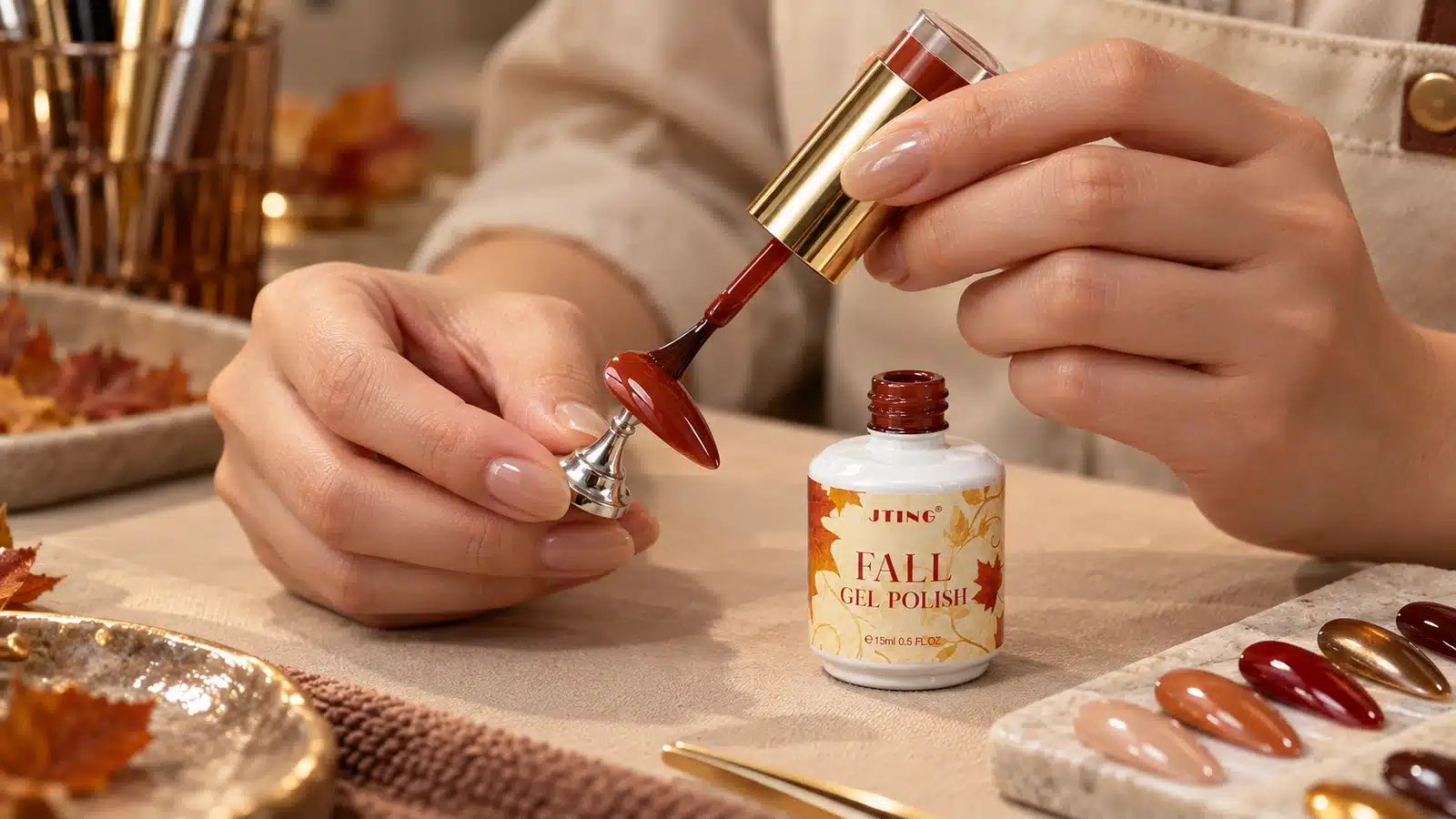
Compare brush control and even application using thin coats and the planned product system.
7. Match Autumn Nail Designs to Different Salon Services
Autumn nail designs become easier to sell when customers can distinguish a simple color service from a more detailed appointment. Build examples around the time, materials and skills each design requires.
Scroll horizontally if needed to view all columns.
| Design Direction | Collection Role | What the Salon Needs to Plan |
|---|---|---|
| Everyday full color | A selected neutral, warm red-brown or deeper shade | Even color, neat edges and a clear finished reference |
| Tonal or accent nails | Coordinated lighter and deeper colors | Shade placement and a combination suited to the nail length |
| Amber or tortoiseshell-inspired art | Translucent jelly depth with additional detail as needed | Layer sequence, compatible materials and a longer demonstration |
| Cat eye and vintage accents | A magnetic feature with selected color or decoration | Magnet control, accessory application and service time |
Include a simple example for short fall nails as well as a more detailed set. Keep enough of the gel surface visible to explain the color or effect; heavy decoration can make a sample attractive while making the underlying product difficult to assess.
For natural-nail and extension services, assess the color over the preparation and foundation products used by the salon. Include any building or tip-attachment products, metallic borders, pearls and raised decorations in the design's materials list so staff can prepare the complete service.
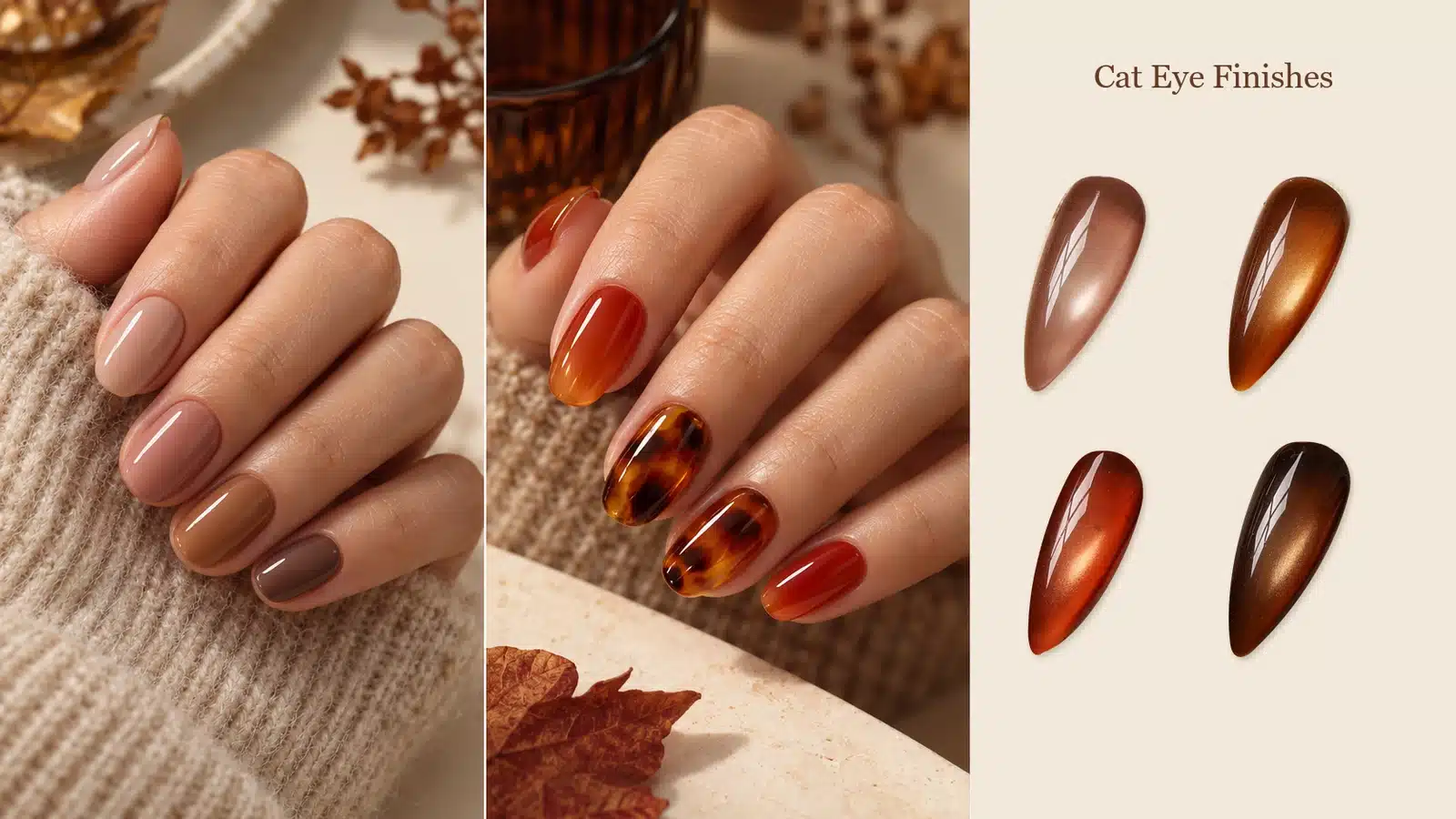
Compare tonal color and layered jelly manicure directions with photographed cat eye samples.
8. Check Base Color, Top Coat and Supporting Materials Together
Evaluate an autumn manicure as a complete application, not just a color layer. The base beneath a jelly shade contributes to what the customer sees. With a cat eye shade, the base and color combination can also change the contrast of the reflective area.
Use the intended base and top coat during sample approval. For glossy and matte versions of a design, prepare separate samples with the chosen compatible finishing products. Label the finish on each sample card so customers can see which additional product produces the surface they want.
Build a materials list for each demonstration: shade numbers, base products, top coat, magnet, art tools and decorations. Ask for an itemized order specification identifying the bottles, packaging, charts and any agreed accessories. Sales teams can then explain the design and its required materials accurately.
The collection requires UV lamp curing. Confirm the lamp specification and full curing instructions for the products and layers being used. Keep the same system in training and sample approval; a short setting exposure or a dry-looking surface is not a substitute for the required full cure.
For a broader explanation of the process, see the gel nail polish curing guide. Product-specific directions remain the reference for your actual application.
9. Troubleshoot Uneven Color, Weak Cat Eye Effects and Cloudy Layers
If a trial does not match the intended appearance, isolate the conditions before changing the order or rejecting a shade. The same visible problem may have more than one cause. Use the table as a check sequence, then share the sample details with JTING if the issue remains.
Scroll horizontally if needed to view all columns.
| Observation | Factors to Check | Next Comparison | Information to Keep |
|---|---|---|---|
| Visible brush marks or uneven color | Brush load, layer thickness and application consistency | Repeat with thin, even coats on the same prepared base | Shade number, brush method and layer sequence |
| Color pulling back at an edge | Surface preparation, residue and product compatibility | Review the preparation and base system before repeating | Products used, preparation steps and a close photograph |
| Weak or unclear cat eye band | Shade choice, magnet, viewing light and shaping method | Compare magnet orientation on an uncured sample, then finish as instructed | Magnet type, position, base and shade |
| Jelly layers look too dark or cloudy | Product amount, underlying color and added materials | Compare a thinner application with the same planned base | Layer order, materials and the target appearance |
| Uneven finished surface or questionable cure | Layer thickness, lamp instructions and the complete product system | Stop the trial and confirm the required curing procedure before reuse | Lamp details, exposure used and all products applied |
For technical follow-up, send the shade number, batch identification where available, a close photograph or short video, and the complete application sequence. Keep the trial sample available. These details help JTING compare the reported result with the product and application conditions.
10. Evaluate Samples before Approving a Wholesale Order
Begin with the applications your customers plan to offer. A color chart is a useful first selection, but wholesale approval should include finished examples of the effects and techniques you intend to demonstrate.
What to Check in Gel Nail Polish Samples
- Color Shades: compare the required color depth, edge control and evenness on the planned base.
- Jelly Colors: compare translucency, layering and how clearly any underlying detail remains visible.
- Cat Eye Colors: compare the body color and light-band appearance, including how consistently the technique can be repeated.
- The complete service: check the finish with the actual base, top coat and accessories you intend to use.
Approve the display appearance and the service trial separately. Use finished tips to assess color, surface and magnetic definition. During a service trial, record the complete product system, application date and wear observations under the agreed conditions. Use those records when discussing the performance your customers need.
Retain the approved sample, shade number and application notes with the order specification. If a shade needs further work, identify the change clearly: lighter color, more translucent depth, a different light-band shape or easier edge control. Agree any revised sample with JTING before approving it for the order.
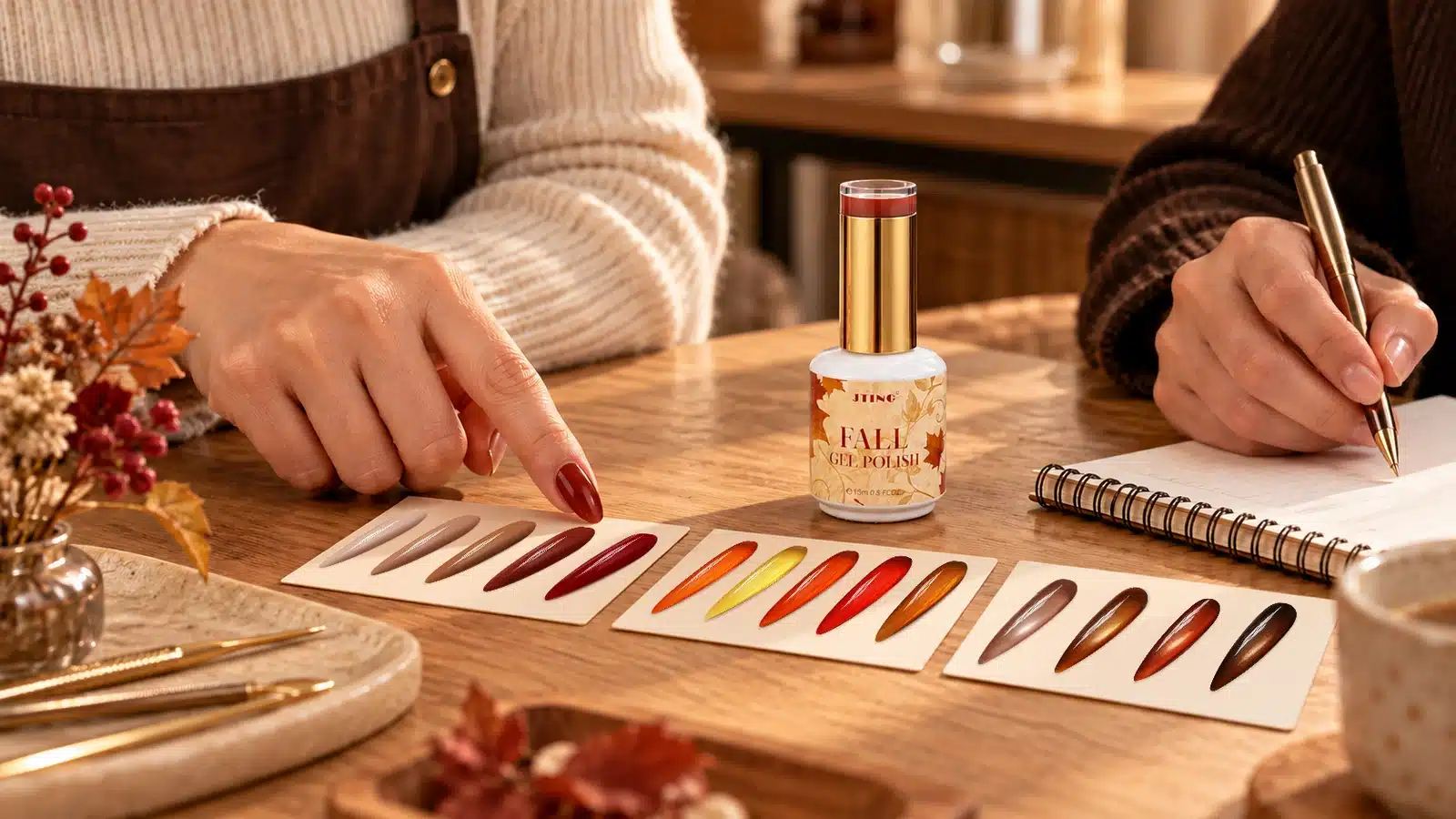
Review color, jelly and cat eye samples with application notes before approving the order.
11. Compare Application Costs and Resale Costs Separately
For a professional salon, the cost of a design includes color gel, supporting materials, working time and any additional training. For a brand or distributor, the buying comparison also includes packaging, transport and the requirements of the sales channel.
For the salon cost sheet, record the color and supporting materials used, hands-on working time, and any additional training needed. A simple full-color service and a layered jelly design can require different amounts of product and appointment time. A cat eye service also includes shaping the magnetic effect.
Each bottle contains 15 ml. Measure actual use during your trials before estimating the number of services per bottle. Nail length, coverage area, layer sequence and whether the shade is used on every nail all affect consumption.
For the resale cost sheet, separate the product price, branding and packaging, freight, import costs and sales-channel fees as applicable. When comparing wholesale gel nail polish quotations, align bottle volume, shade quantities and presentation first. Assess the total cost per sellable unit against your planned selling price and channel requirements.
12. Create Product Images That Help Customers Choose Correctly
Different images answer different buying questions. A numbered real shade chart helps customers select a color; a hand model shows how a combination reads as a manicure; an application video explains the movement or technique behind an effect.
Keep Color References Consistent
Use a consistent base, viewing light and camera setup for comparison photographs. Keep each finished sample connected to its shade number and product combination. Avoid comparing a jelly shade over a pale base with another over a dark base as if the difference came only from the bottle color.
Show the Effect in Motion
A short moving view is useful for cat eye nail polish because the reflective band changes with the viewing angle. Keep the nail and light arrangement controlled so that the video explains the finished effect instead of relying on unrelated lighting changes.
Prepare three complementary sales assets: a numbered chart for selection, a finished-hand photograph for the design, and a short application or effect video for the technique. For amber nail art or decorated vintage sets, include the supporting materials and steps. Keep the same shade references across the catalogue, online listing and sales demonstration.
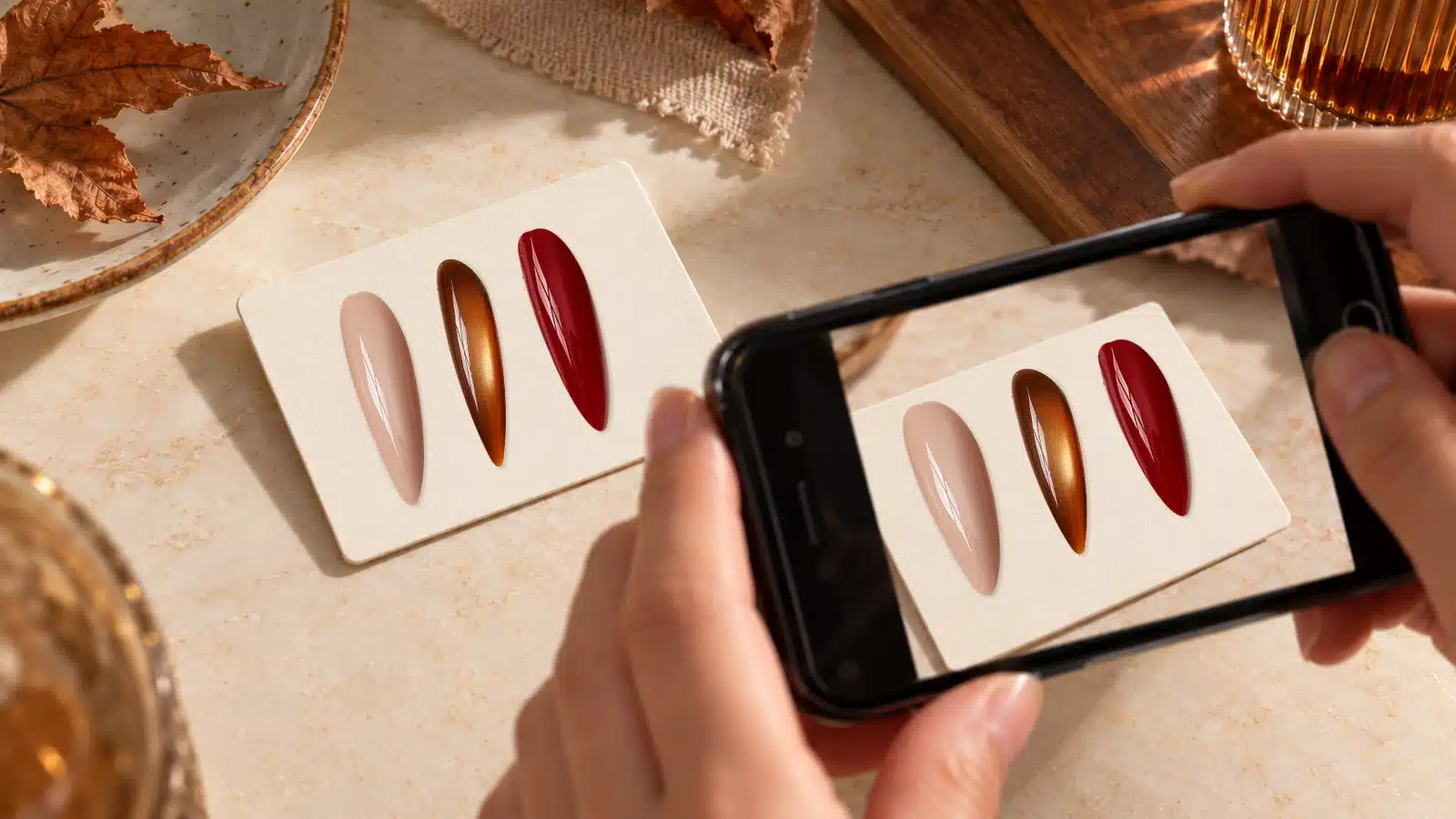
Keep shade identification and viewing conditions consistent when preparing photographs and short effect videos.
13. Plan First-Order Quantities by Shade and Sales Channel
Start first-order planning with the way the collection will be sold. A salon supplier preparing individual shade recommendations has different stock questions from a brand planning a complete seasonal presentation.
List the selected colors by role: everyday color, deeper contrast, translucent design and magnetic effect. Compare that list with customer requests and existing inventory. Give each proposed quantity a reason, such as repeat demand for a similar color or a planned demonstration of a new technique.
Build a first-order worksheet with one row per proposed shade: effect, intended application, existing stock, customer requests and estimated order quantity. Refine the list using sample feedback and any advance orders from your sales channel.
Send that worksheet to JTING with your preferred complete-collection or selected-shade presentation. Confirm the available configuration, minimum quantities and packaging, then keep the agreed per-shade list with the quotation. This gives purchasing and sales teams the same reference for the launch.
14. Develop Bottle Labels, Seasonal Packaging and Color Charts
A private label gel nail polish collection needs clear product identification as well as an autumn visual theme. JTING's current presentation uses a white bottle, a gold-colored cap and maple-leaf artwork. Use that as a presentation reference when discussing the branding you need.
JTING can adapt existing label designs with your logo and product information, or discuss changes to suit the project. Keep the shade number readable on the bottle and connected to the color chart, sample records and reorder list. Attractive artwork should not make the color difficult to identify.
Review the bottle label, shade identification, color chart, inner arrangement and outer packaging together. Approve the layout and agree the supplied contents before production. Where the launch includes tools or decorative accessories, list them separately in the specification.
For a private label collection, share your sales channel and preferred presentation. If you want to work from an existing design, review the label and sticker customization options alongside the product information required for your destination market.
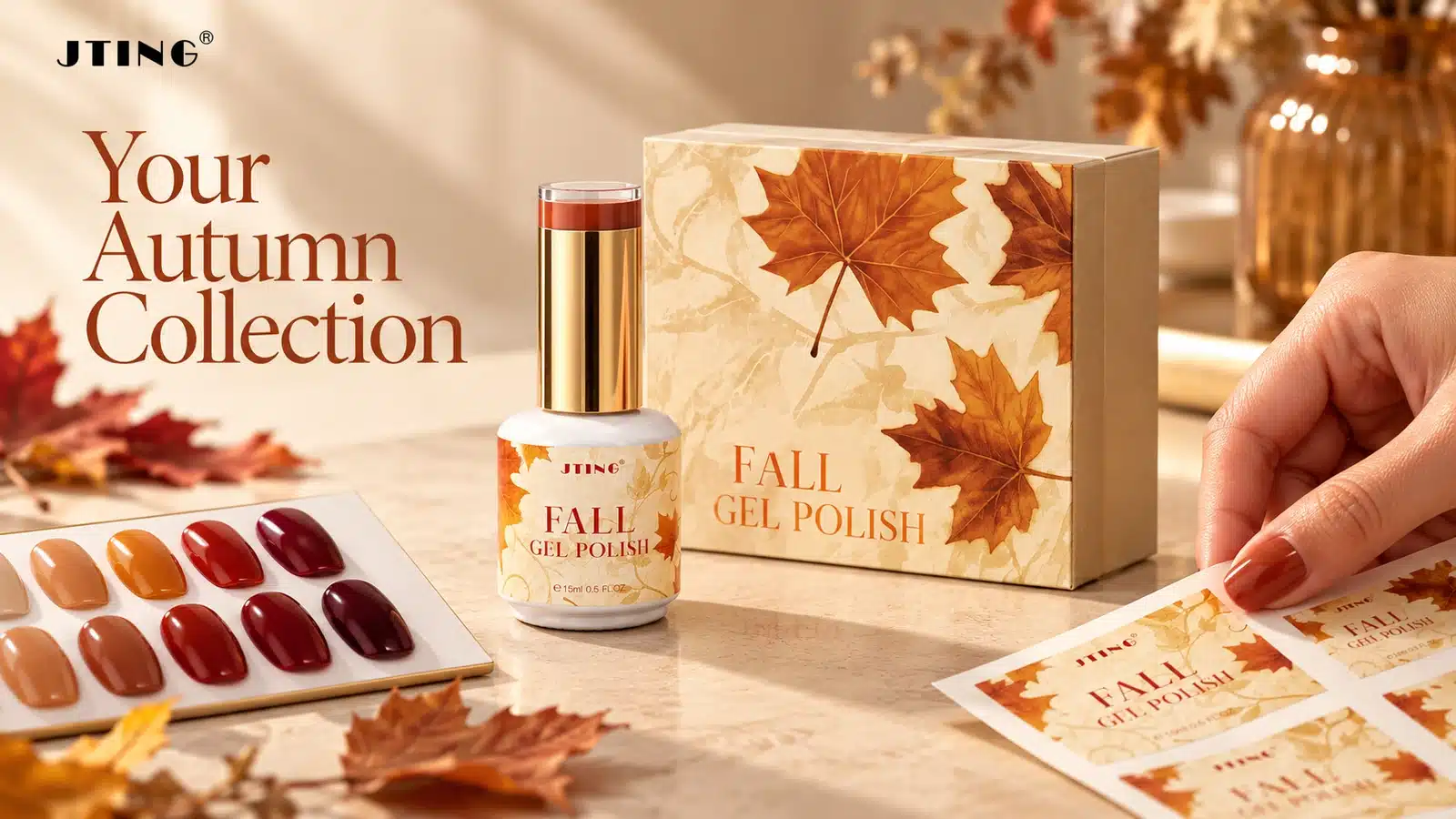
Coordinate bottle identification, seasonal packaging and the color chart around the presentation agreed for your order.
15. Compare Quotations, Lead Times and Product Documents
A useful quotation starts with JTING Fall Color Gel Polish, model D47, followed by the selected shade numbers, quantities per shade, 15 ml bottle presentation, branding, packaging and destination. Add your required launch date so that the sample and production plan can be discussed together.
Scroll horizontally if needed to view all columns.
| Order Item | What to Confirm |
|---|---|
| Minimum quantities | JTING's general starting points are 10 pieces per shade for private label gel nail polish and 100 pieces for house-brand mixed-color orders. Confirm the terms for this collection, packaging and customization. |
| Samples and development | Standard samples typically take 7–10 business days. Custom color or exclusive formula development typically takes 2–4 weeks; the actual scope and schedule are confirmed for the project. |
| Bulk production | Typically 15–20 days after sample and packaging approval, subject to the product, quantity and agreed production requirements. |
| Destination and documentation | Confirm the destination market, product information and applicable document support before finalizing the order. |
The collection is HEMA-free, TPO-free and TMPTA-free. For import and product-listing preparation, share the destination market and required documentation with JTING. Depending on the product and destination, support can include ingredient information, SDS/MSDS, COA and relevant market-specific information. Confirm the applicable documents alongside the final formula, label and packaging.
If you are an importer or wholesale buyer, include any packaging, labeling and shipment requirements in the initial brief. Resolve them before treating quotations as directly comparable.
16. Manage Reorders and Stock after the Seasonal Launch
After launch, monitor what customers actually buy and use. Record orders by shade and effect, and distinguish sales of a complete collection from demand for particular colors. Downstream salon feedback can explain why a shade is being consumed even when your own invoices record only sets.
- Compare stock on hand with confirmed orders and recent customer requests.
- Identify whether demand concerns everyday color, jelly art or cat eye applications.
- Check the agreed reorder unit, minimum quantities and lead time with JTING.
- Place the next order against that demand and the expected delivery schedule.
As the seasonal campaign ends, review remaining stock by shade and effect. Keep promoting warm neutrals or deeper colors that customers continue to request, and adjust later quantities where a design attracted interest but generated little repeat demand.
Keep the approved shade and branding references for repeat orders. If you want individual-color replenishment or a different configuration, confirm availability and terms before promising that option to your customers.
17. Questions Buyers Ask about Fall Color Gel Polish
Which Shades Are Jelly Gel Polish and Which Are Cat Eye Gel Polish?
The jelly shades are No.11, 12, 13, 14, 21 and 22. The cat eye shades are No.01, 02, 06, 07, 23 and 24. The other twelve are additional color shades. Select the effect required for the service, then compare the colors on physical samples.
Do All 24 Shades Have the Same Coverage?
The expected result depends on the shade and effect. Evaluate jelly shades for translucent depth, cat eye shades for color and magnetic definition, and the other shades for the coverage and appearance required by your service. Apply two thin coats and cure each layer fully as instructed, then compare the result with your target sample.
How Should I Choose Shades for a Smaller Autumn Range?
Compare the proposed colors with your existing stock and customer requests. Select useful everyday colors, deeper contrasts and any jelly or cat eye effects that add a service your customers need. Confirm the available selected-shade ordering configuration and quantities with JTING.
What Tools Do I Need for the Jelly and Cat Eye Designs?
Plan a suitable curing lamp, the recommended base and top coat, and the tools needed for the chosen design. Cat eye applications require a suitable magnet; layered or decorated art may need additional colors, tools or accessories. Confirm the supplied contents and prepare a complete materials list for each demonstration.
Can the Collection Be Used for Everyday Color and Detailed Nail Art?
The range supports simple color combinations alongside translucent layering and magnetic accents. More detailed artwork may require extra colors, tools or decorations. Choose examples that match your customers' skills, service time and intended nail lengths.
What Should I Compare When Testing Samples?
Record the shade, base, layer sequence, finish and curing conditions. Compare color evenness, jelly transparency or cat eye definition as appropriate, then assess the complete system used for the intended service. Keep appearance approval separate from an agreed wear trial.
Can I Customize the Bottle Labels, Packaging and Color Chart?
Yes. Discuss adapting existing designs or developing changes with JTING. Share your logo, required product information, shade identification and packaging needs, and confirm the final presentation and contents before production.
What Should I Confirm about Minimum Quantities, Lead Times and Reorders?
Confirm quantities per shade, the ordering configuration, branding and packaging. JTING's general MOQ and timing guidance is a starting point; the actual requirements for this collection and your customization are agreed with the quotation. Confirm reorder units and availability before planning replenishment.
18. Discuss Your Autumn Gel Nail Polish Range with JTING
For samples or a quotation for JTING Fall Color Gel Polish, model D47, share the colors and effects you want to add, your selected shade numbers and estimated quantities per shade. Include your destination market, sales channel and intended launch timing.
Tell us whether you need JTING-branded supply or private label bottles and packaging. We can discuss the sample selection, brand presentation, supporting product information and order configuration for your autumn range.