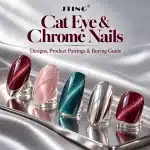
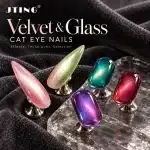
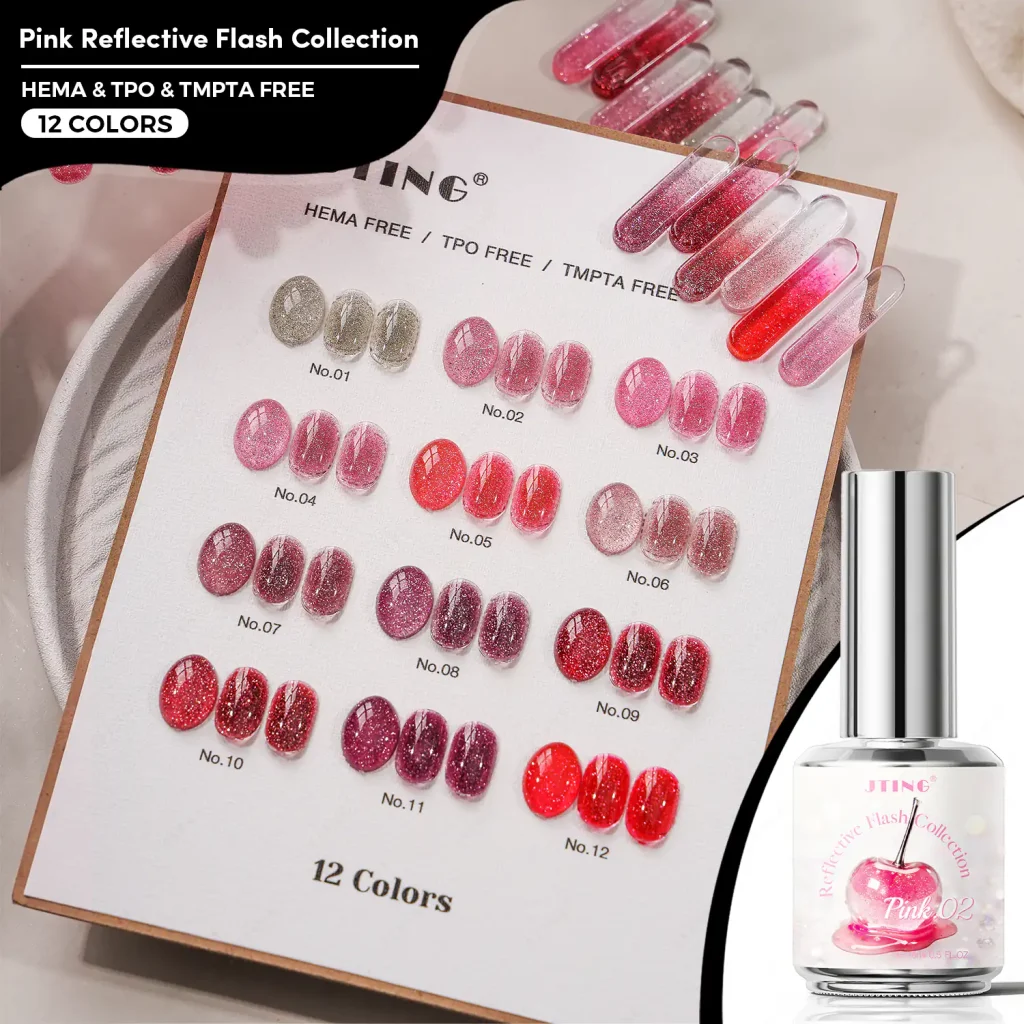
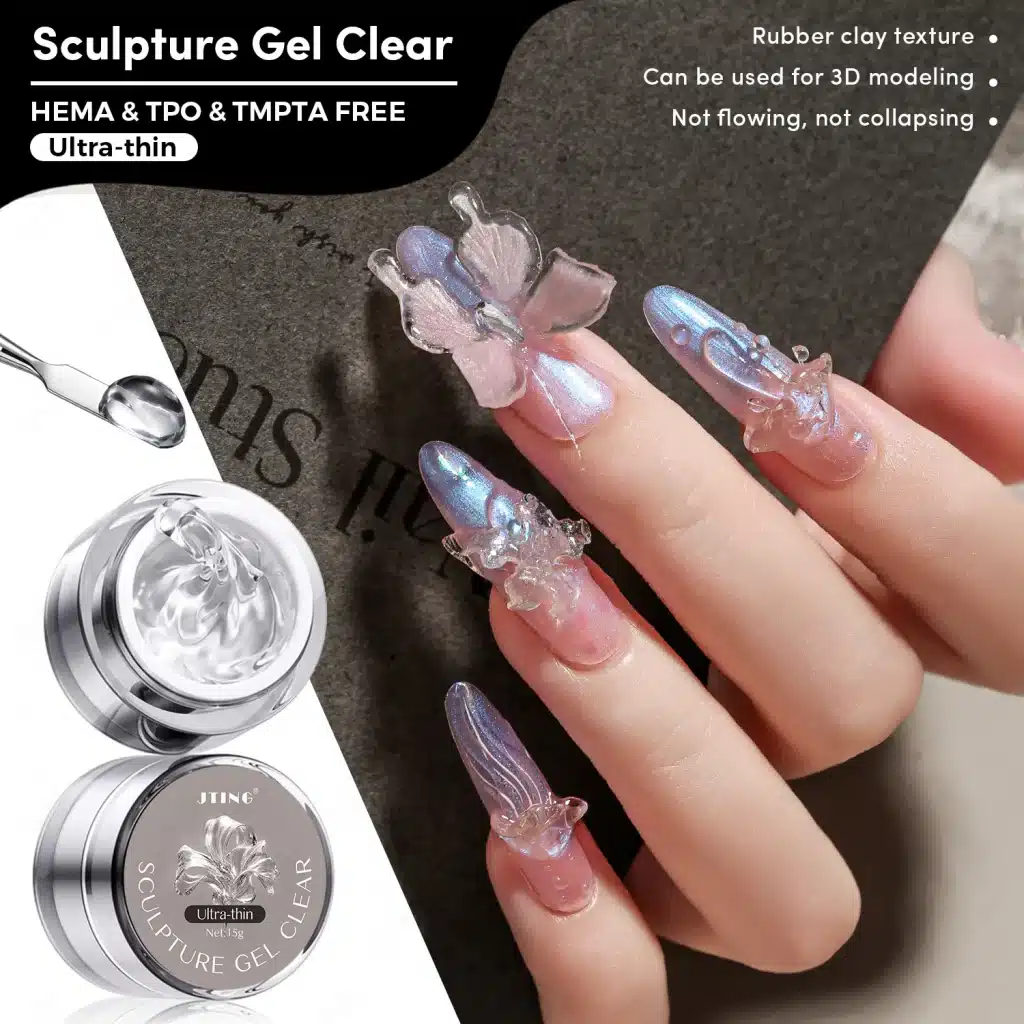
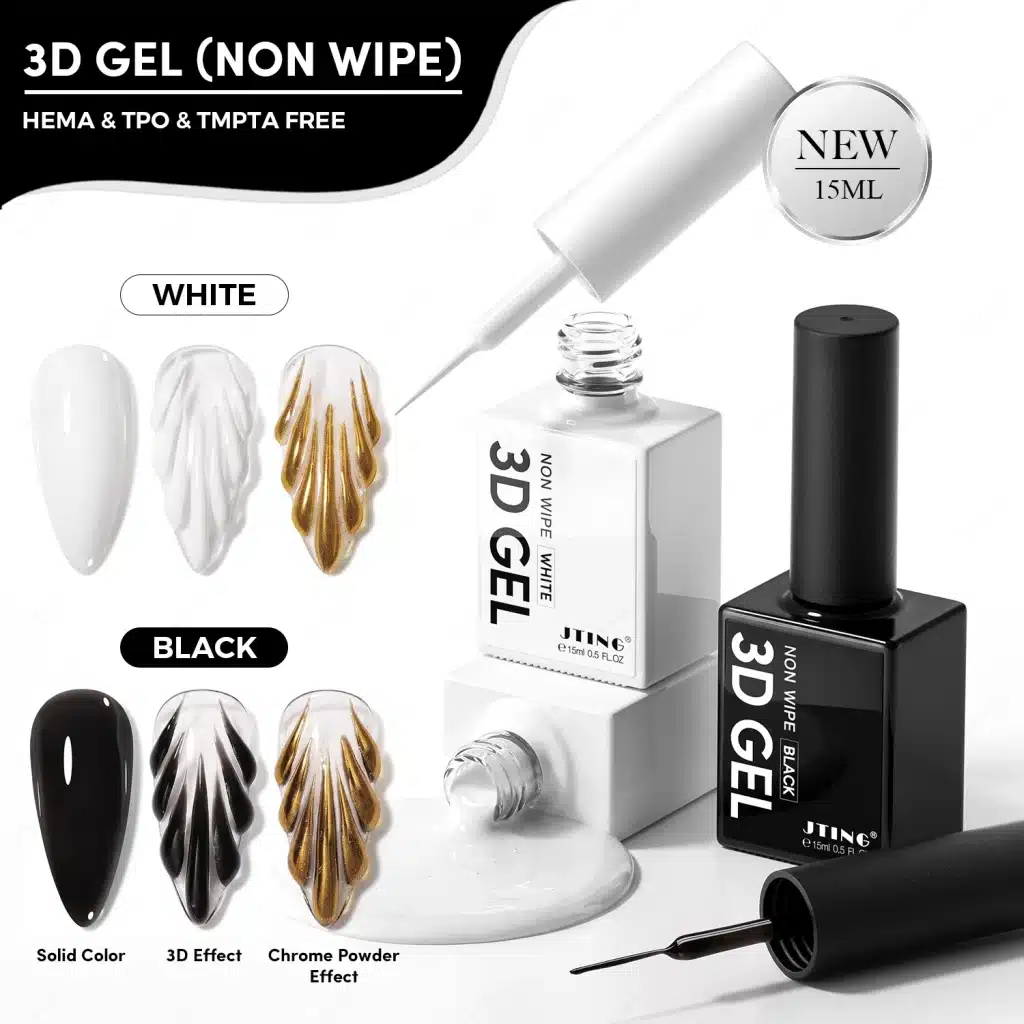
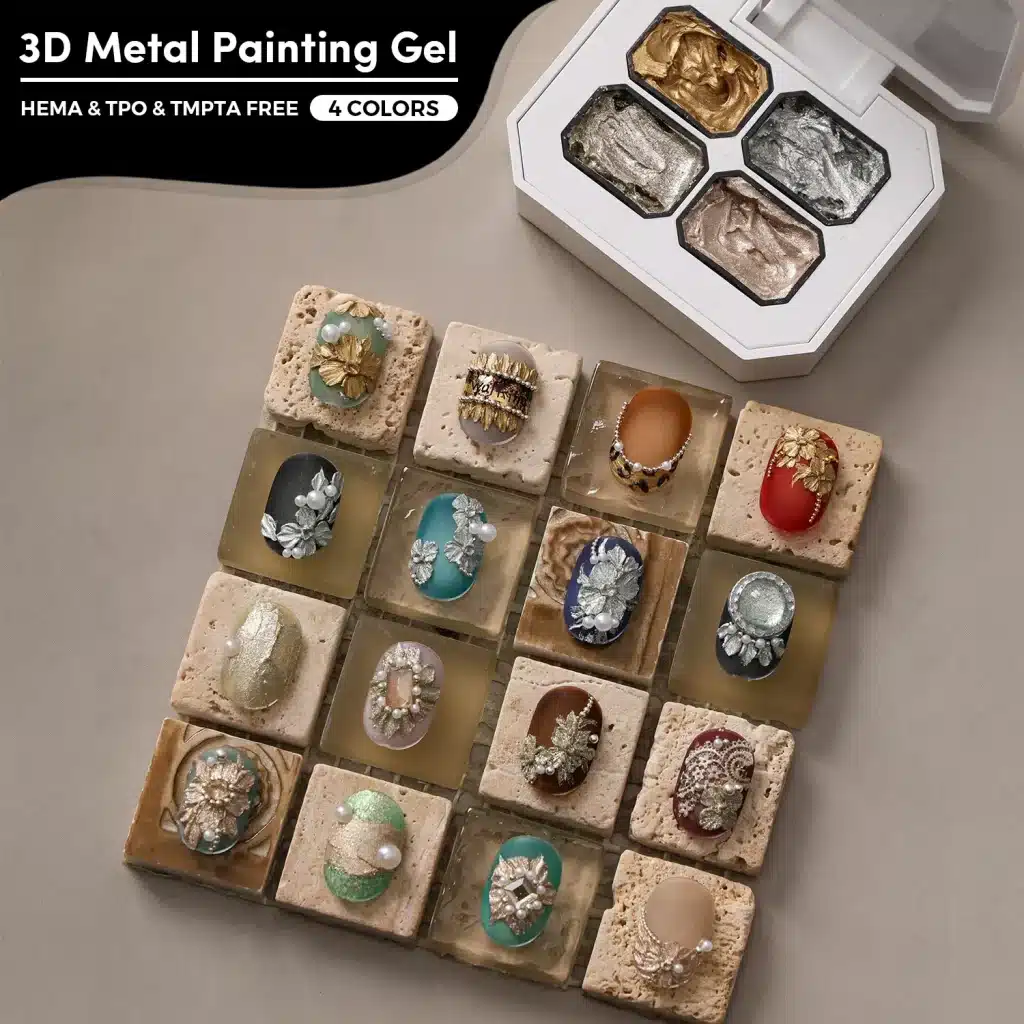
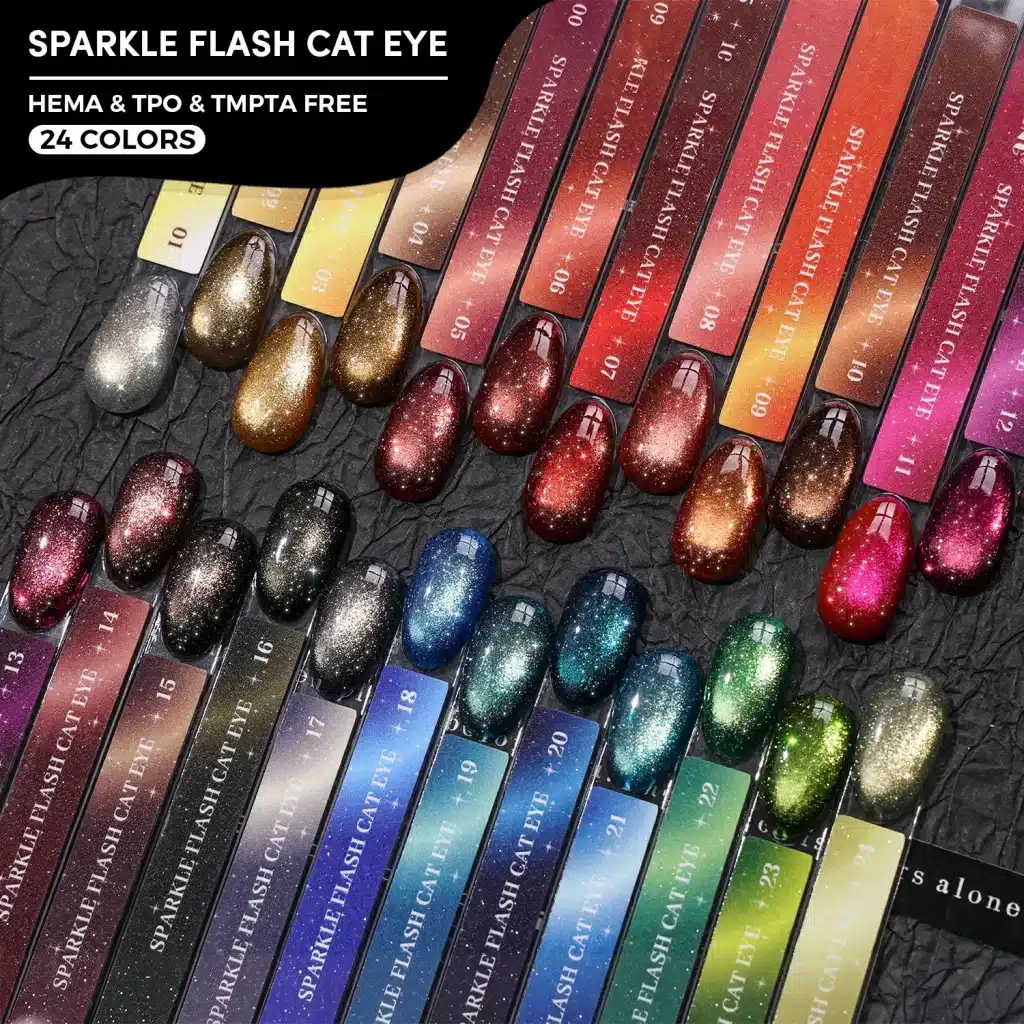
Cat eye and chrome nails bring moving magnetic light together with reflective tips, fine metallic lines and iridescent details. For nail brands, distributors and professional salons, these combinations offer several ways to develop a coordinated range: restrained everyday accents, translucent color stories or more expressive statement designs.
This guide helps you choose a magnetic foundation, match the decorative material to the design and compare the complete finished samples. It also covers application routes, common problems, packaging and order planning, so the looks you select can become a clear product offer that salon customers understand and your business can supply and reorder.
01. Cat Eye and Chrome Nails: A Quick Answer
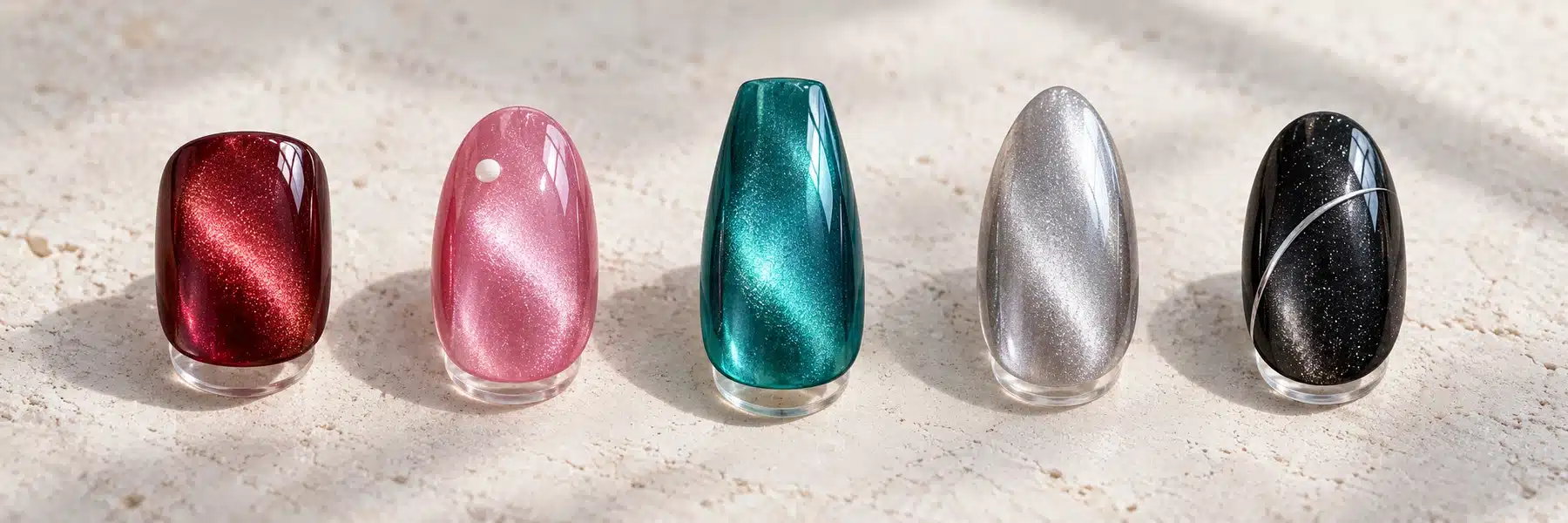
Cat eye and chrome nails combine two different visual ideas: a magnetic highlight that appears to move through the color, and a reflective surface or metallic accent. Cat eye nails with chrome can place these effects on one nail or on different nails within a set. A magnetic gel marketed as chrome cat eye may offer another route. Those routes are not interchangeable products, even when their photographs look similar.
For professional buyers, the first decision is therefore not which shade to order. It is which effect the finished service must deliver, how much of the magnetic layer should remain visible, and which materials the salon team can reproduce consistently. A reflective silver outline over burgundy cat eye requires a different purchasing brief from a translucent aurora veil over pale pink magnetic gel.
Start with the Dominant Effect
- Magnetic depth first: choose a cat eye foundation, then restrict reflective decoration to tips, dots, borders or selected nails.
- Mirror reflection first: select a suitable chrome system and use cat eye on neighboring nails or clearly separated areas.
- Soft optical layering: evaluate a sheer aurora finish that allows the underlying magnetic movement to remain readable.
- A simpler product route: assess a magnetic chrome cat eye gel on its own merits rather than assuming it contains a separate powder coating.
An opaque full chrome coating may hide the cat eye beneath it. Adding more magnetic pigment underneath does not necessarily solve that design problem. Reducing coverage, changing the reflective material, or moving the effects onto separate nails is often a more useful sampling direction.
Build the buying brief around finished swatches, product identities and documented application requirements. Ask to see the same design head on and at an angle, because a still image can overstate reflection while concealing weak magnetic definition. Approve the complete combination rather than choosing each bottle separately. The strongest commercial assortment gives each product a clear job and gives professional customers a realistic way to achieve the advertised result.
02. Why Buyers Are Exploring Combined Nail Finishes
Pinterest's October 6, 2026 report points to interest in cat eye and chrome combinations, playful dots and gothic details. Treat these as creative directions to evaluate, not as proof of local salon demand or a forecast of wholesale sales. A relevant design signal still needs testing against the customers, price positioning and service capabilities of each business.
One Color Can Support Different Service Identities
A magnetic shade does not have to belong to only one collection story. A smoky rose cat eye can become a restrained professional design with a narrow silver edge, a playful set with spaced metallic dots, or a more expressive service with an accent nail. This makes finish planning useful for buyers who want variety without building an unnecessarily large color inventory.
The commercial opportunity is not automatically a larger basket of products. It may be a clearer way to demonstrate existing materials. A distributor already carrying magnetic gel and metallic liner can show how the two work together, provided the pairing has been tested. A private label brand can organize a collection around coordinated results instead of asking buyers to imagine combinations from disconnected bottle photographs.
Keep Inspiration Separate from the Order Decision
Before extending a range, ask salon partners which combinations they would actually offer. Give them distinct choices: a quick accent service, a detailed artistic service and a full statement set. Their response is more useful when it identifies intended appointment formats, training needs and acceptable material complexity, rather than simply whether they like an image.
For example, a salon supplier may receive enthusiastic feedback on elaborate gothic artwork but discover that customers mainly request burgundy magnetic gel with a single silver line. The appropriate first assortment would then emphasize a reliable red foundation and a controllable liner, not a large decorative bundle. Conversely, an education focused distributor may justify a broader selection if its customers actively purchase materials for advanced classes.
Use the design interest as an invitation to test a practical proposition. Decide what the combination adds to the professional offer, which existing shades it complements, and what evidence would justify a repeat order. That keeps collection development grounded in use rather than novelty alone.
03. Cat Eye, Chrome, Aurora and Metallic: What Is the Difference?
These names describe overlapping appearances, not a universal ingredient or application classification. A buyer can receive four samples with similar promotional language yet find that each requires a different workflow. Separate the optical effect from the material format before comparing prices or approving packaging descriptions.
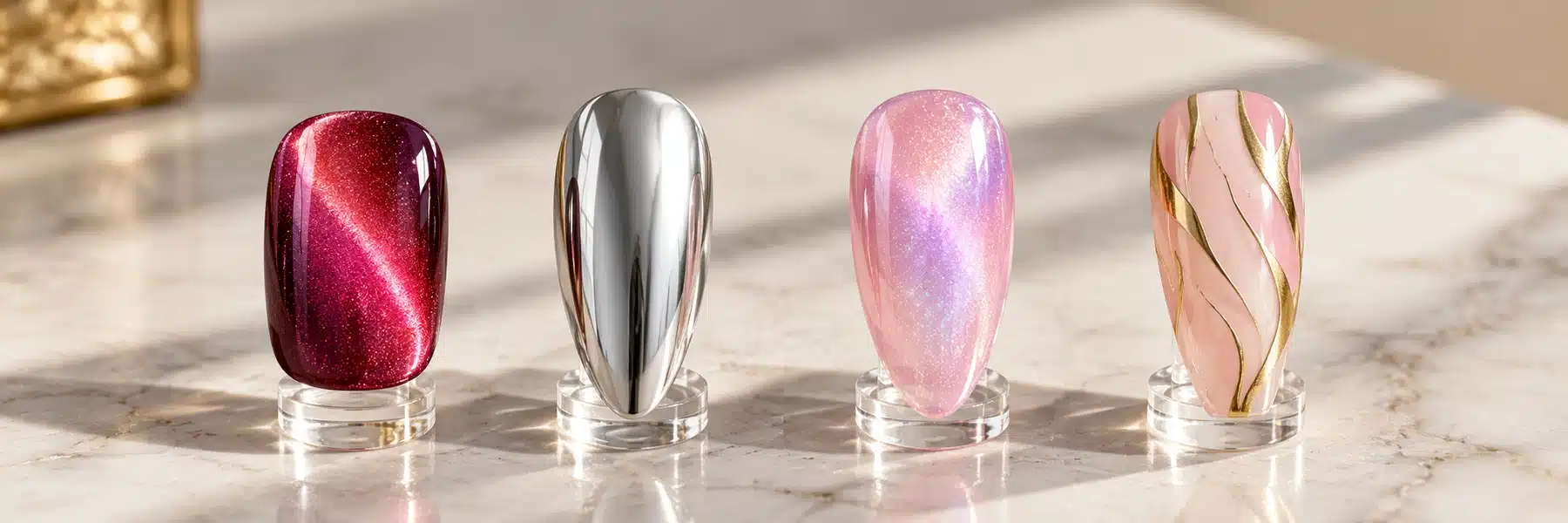
| Effect | What to Look For | Buying Question |
|---|---|---|
| Cat eye | A highlight formed by magnet responsive particles in an uncured magnetic product. | How controllable is the highlight with the specified magnet and application method? |
| Chrome | A reflective appearance that may come from powder, gel or another decorative system. | Is the sample genuinely mirror like, softly reflective or visibly particulate? |
| Aurora | An iridescent color shift or translucent optical veil. | How much base color and magnetic definition remain visible? |
| Metallic | A metal inspired appearance, including fine lines, opaque color or shimmer. | Does the format suit broad coverage, detailed drawing or both? |
Cat eye creates a patterned distribution of reflective particles. The magnet shapes that pattern before the relevant gel layer is cured. Chrome powder is a separate decorative material applied within a compatible coating system; it does not become magnetic simply because it is placed over cat eye gel. Likewise, a metallic liner does not automatically respond to a magnet.
The phrase chrome cat eye needs particular care. It can name a magnetic gel with a bright, chrome inspired visual character rather than a service involving rubbed powder. Ask what is in the bottle, which effect comes from magnetizing it, and whether any additional decoration was used in the demonstration. Product naming alone cannot answer those questions.
Aurora is also not synonymous with holographic. An iridescent shift and a rainbow diffraction effect should not be promised as the same result without checking the sample. For a purchasing team, descriptive accuracy prevents mismatched expectations between the technical evaluator, packaging designer and sales staff.
A useful approval sheet records material type, opacity, reflective character and magnetic behavior separately. That vocabulary makes substitution decisions more precise: a fine silver shimmer may be attractive, but it is not a like for like replacement when the brief requires a clear mirror border.
04. Four Ways to Combine Cat Eye and Chrome Effects
Choose the construction route before selecting decorative details. It determines which products need to interact directly, where compatibility testing matters most, and how accurately a professional customer can interpret the collection imagery.
1. Magnetic Gel with Reflective Accents
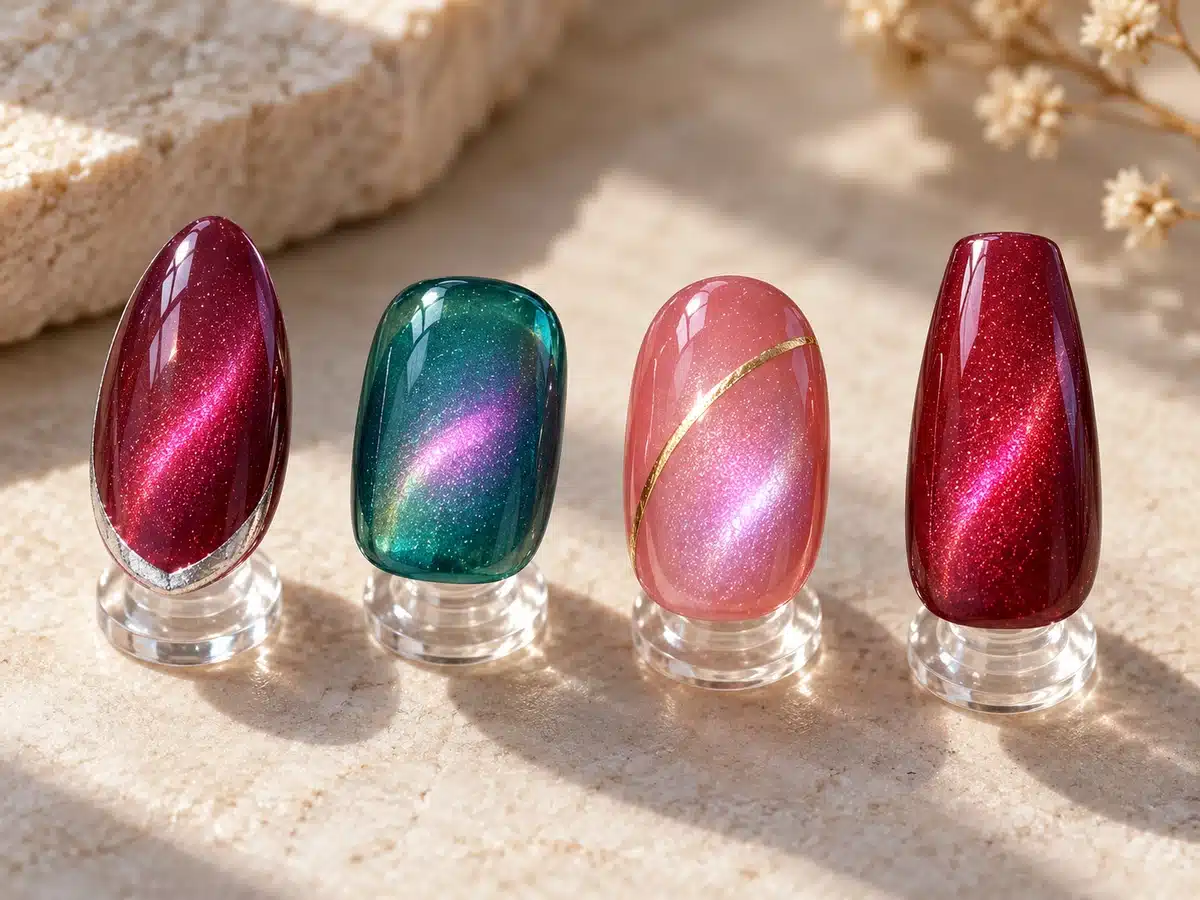
Use cat eye as the main field and add a limited metallic or chrome detail. A border, crescent or scattered dot leaves enough uncovered space for the magnetic highlight. This route suits an assortment built around recognizable cat eye shades, with one or two accent colors supporting several designs. Evaluate detail control and the approved finishing sequence rather than only the brilliance of the accent sample.
2. A Sheer Optical Finish over Magnetic Depth
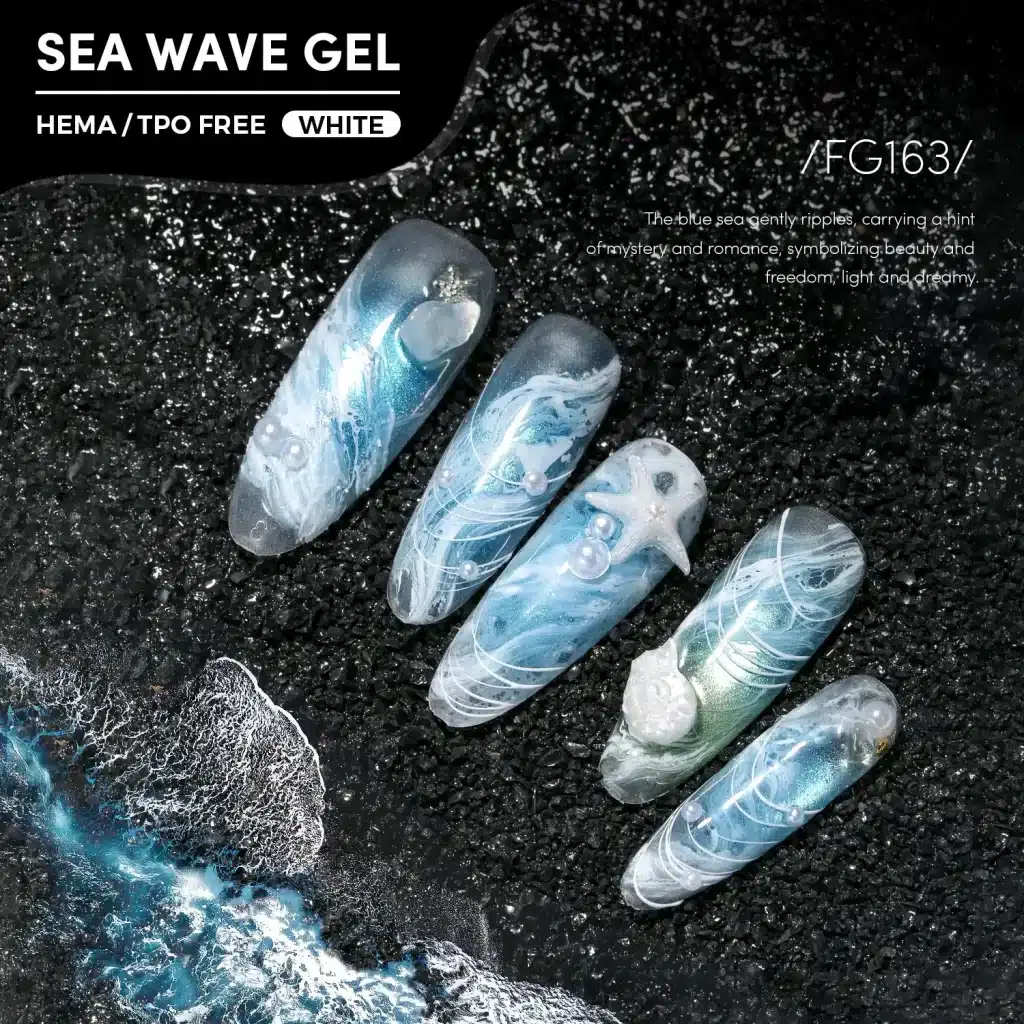
A translucent aurora effect can change the surface character while leaving some underlying movement visible. The challenge is balance: even a seemingly delicate veil may soften a narrow magnetic line or shift the base color. Compare paired swatches with and without the optical layer. Reject combinations where the extra material adds complexity but removes the effect the customer wanted.
3. Separate Cat Eye and Chrome Nails
Place the finishes on different nails within a coordinated set. This is a practical option when full mirror coverage is important but would obscure a magnetic foundation. A charcoal cat eye set with one silver chrome accent nail can communicate both effects clearly. Each nail still needs its own suitable product system, but the two decorative effects do not have to compete within the same visible area.
4. Magnetic Chrome Cat Eye as the Main Product
A gel sold under this name may provide its intended reflective magnetic appearance without a separate powder stage. Evaluate it as a defined formula and service route, not as a shortcut that guarantees every chrome design. If the target reference shows an opaque mirror surface, confirm whether the magnetic gel alone can actually deliver that appearance.
For range planning, avoid ordering all four routes merely to cover terminology. A compact collection might combine the first and third, sharing one magnetic palette while offering different decoration levels. A specialist artistic range might prioritize the second. Select the route that fits professional customer capability, then document exactly what the demonstration contains.
05. Who Should Add This Look to Their Product Range?
Combined finishes are most useful when they answer a clear range or service need: a brand extending its color identity, a distributor adding a demonstrable accent pairing, or a salon group introducing a repeatable upgrade. Define that role before selecting shades. The same visual concept can justify different quantities, supporting products and training across these three business models.
Private Label Brands Seeking a Coherent Extension
A brand with an established neutral color range can introduce a small magnetic capsule with coordinated metallic accents. The benefit is a visible extension of its existing identity rather than an unrelated novelty launch. Before adding more shades, check whether the proposed colors offer genuinely different undertones, depth or magnetic character. Similar bottle colors can produce meaningfully different finishes, while differently named products can be redundant in use.
Distributors and Professional Salon Suppliers
These businesses need products their sales teams can explain accurately. A supplier may choose a straightforward magnetic foundation and fine liner pairing because its customers value controllable details. An educator serving advanced technicians may instead prioritize layered aurora effects and several magnet shapes. Neither assortment is inherently better; the choice depends on what the distribution network can demonstrate and support.
Salon Groups Building a Repeatable Service Menu
A salon group should compare reproducibility across technicians, not just approve the work of its strongest artist. Ask different team members to reproduce the proposed sample under the same documented conditions. If a design repeatedly requires correction, simplify the coverage or reduce the decorative steps before committing to a large material allocation.
Professional e-commerce sellers also need a precise product boundary. A photograph showing cat eye, powder decoration and a metallic liner should not imply that one magnetic bottle produces every visible feature. Clear inclusion lists and separate application references reduce ambiguity for business customers assembling their own service systems.
JTING supports OEM/ODM and private label gel nail polish development, including coordinated colors, packaging and sampling. A useful inquiry describes the intended professional customer, target finish and planned assortment size. It should also identify whether the buyer needs magnetic gel, liner gel or a broader paired system, so that unsupported assumptions about additional materials do not become part of the purchasing brief.
06. How to Choose the Cat Eye Gel Foundation
The magnetic foundation determines whether the finished design has depth worth preserving. Choose it using the intended decoration, not in isolation. A strong narrow beam may work beneath a sparse silver outline, while a softer velvet distribution can suit translucent pink or a lightly iridescent finish.
When reviewing professional cat eye gel options, compare particle appearance, color transparency and magnetic control as separate attributes. A brighter sample is not automatically a better foundation if its sparkle competes with the planned detail. Equally, a very subtle effect may disappear once the design is viewed at normal hand distance.
Evaluate the Foundation under the Intended Conditions
- Inspect the shade over the actual proposed undercolor, including a transparent or tinted option where relevant.
- Compare a concentrated highlight with a broader magnetic distribution using the recommended tools.
- Observe whether the pattern remains clear while the technician completes the approved workflow.
- Review the finished combination after its required finishing layers, not only before decoration.
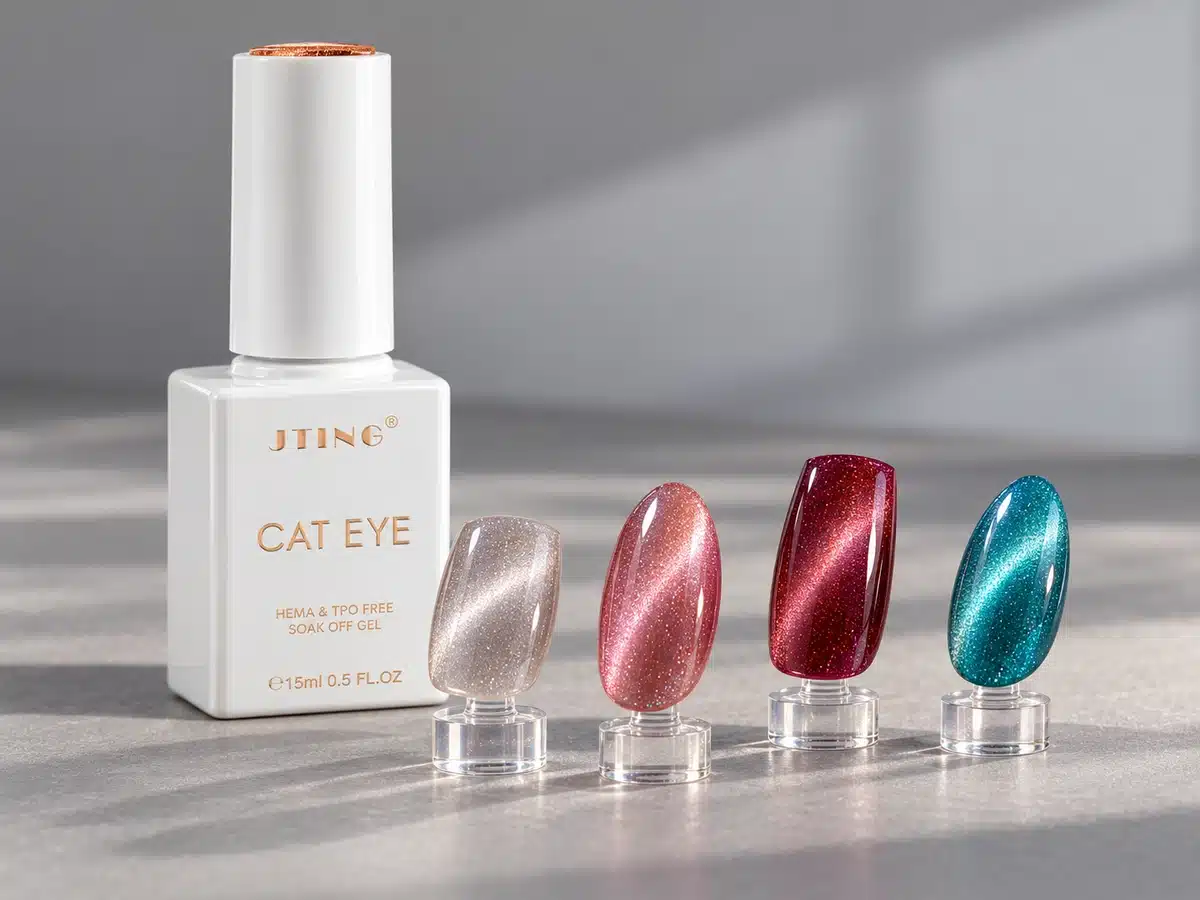
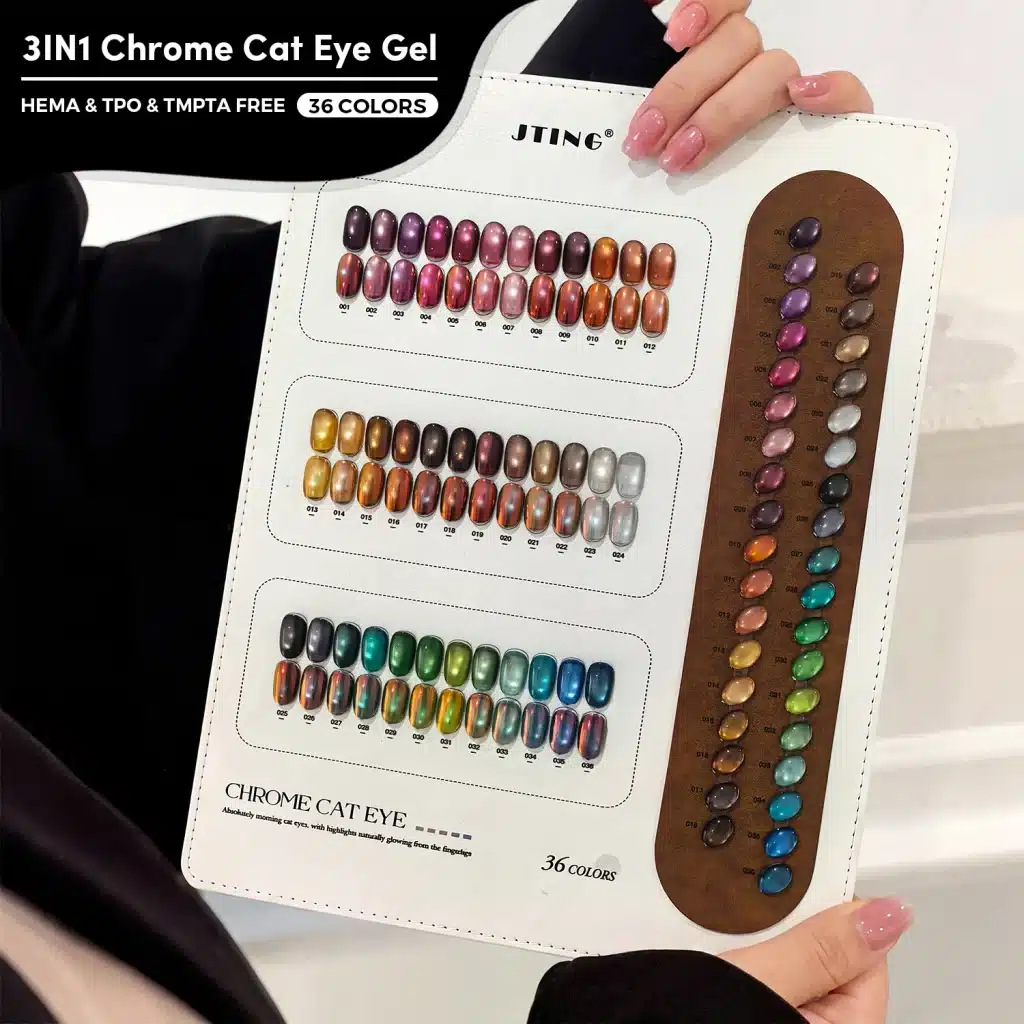
JTING's 36-color 3IN1 Chrome Cat Eye Gel is one integrated option in 15 ml bottles, combining base, color and top functions. The 3IN1 application and buying guide explains its two-thin-coat method: cure the first, magnetize the uncured second, then cure to a glossy no-wipe finish. Sample this standard magnetic result first; discuss any additional powder or decorative layer as a separate pairing.
For a conventional magnetic range, record the required base and top coat alongside the color reference. Comparing the complete service route makes it easier to decide whether an integrated product genuinely simplifies the assortment or whether your accounts prefer their established separate-layer system.
A buyer comparing a smoky silver and a dark plum foundation should ask which one supports more of the intended range, not which swatch looks more dramatic alone. If both work with the same restrained accents but only the silver supports a translucent palette, that difference can guide the first assortment. Keep the final choice tied to the complete service concept.
07. Chrome Powder vs Chrome Gel vs Metallic Liner Gel
Choose the decorative format according to the mark it must make. Broad reflection, controlled drawing and translucent optical layering are different requirements. A familiar product name should not substitute for a finished sample showing the exact role the material will play.
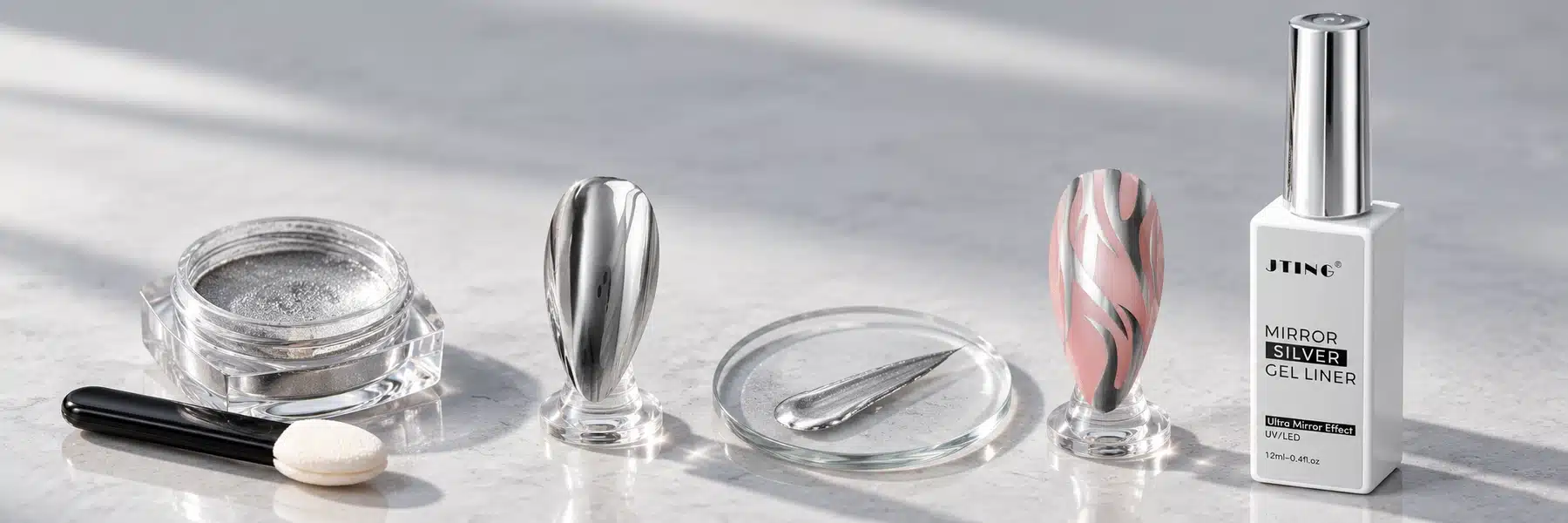
| Material | Useful Evaluation Direction | What Must Be Confirmed |
|---|---|---|
| Chrome powder | Mirror coverage or a defined reflective decoration within an appropriate system. | Compatible receiving surface, application stage, sealing method and effect after finishing. |
| Chrome effect gel | Brush applied reflective color where the formula delivers the desired finish. | Actual opacity, reflection, leveling behavior and intended coverage. |
| Metallic liner gel | Outlines, dots, narrow French borders and small graphic motifs. | Line control, edge definition, approved thickness and finishing instructions. |
Powder may be appropriate when the design depends on a continuous mirror effect. However, the result belongs to a system rather than the powder alone. A receiving coat that works for one combination cannot be assumed suitable for another. Avoid improvising shortened curing or mixing powder into magnetic gel without explicit product guidance.
Chrome gel is a particularly broad label. Some samples look metallic, some highly reflective, and some are intended for specific decorative techniques. Ask for a comparison against the target finish rather than accepting the word chrome as a performance specification. A smooth silver color may be useful even when it does not provide a powder style mirror.
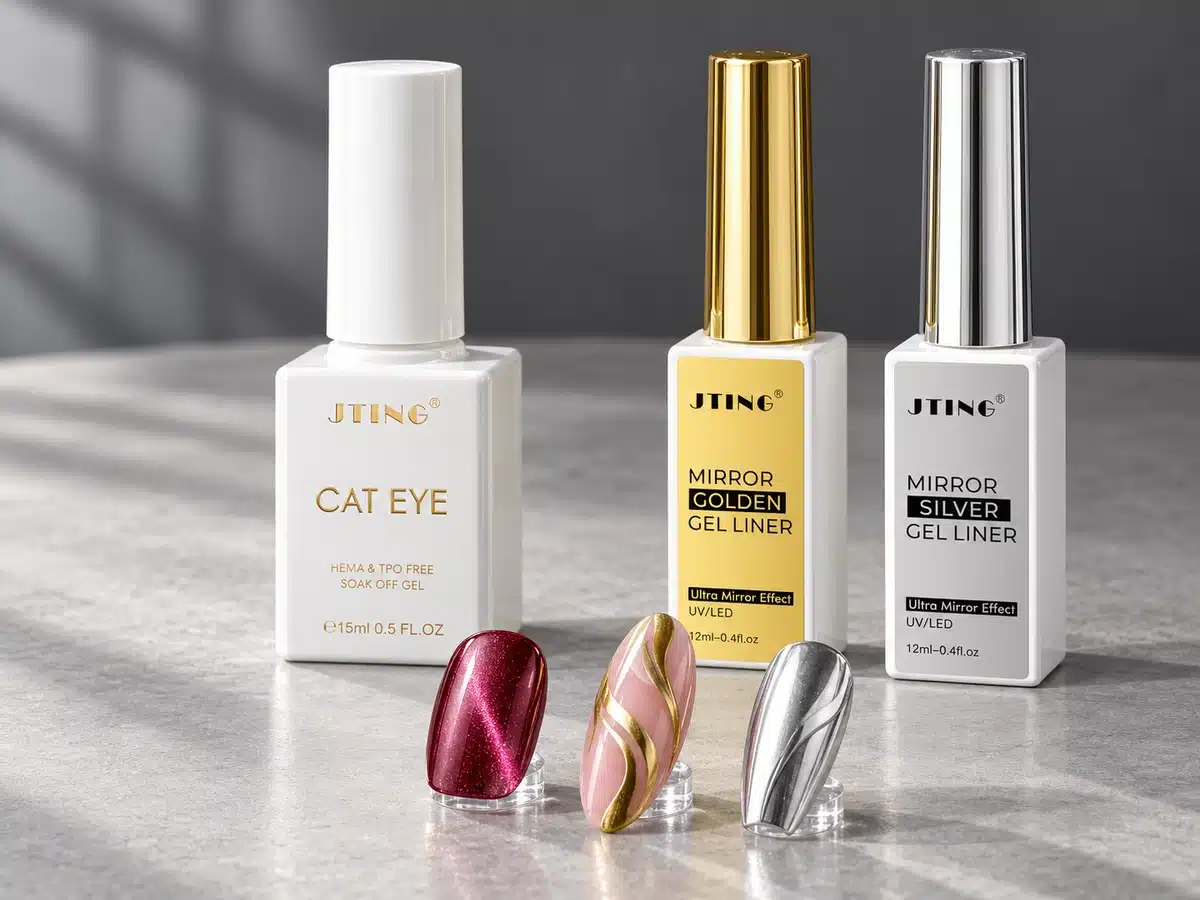
For precise accents, JTING's Mirror Silver and Golden Gel Liner provides a focused gold-and-silver option with a built-in fine brush for curves, outlines and French-tip details. Compare its finished line with the intended base. The wider liner gel range is useful when the collection also needs opaque, colored or other decorative lines.
Consider a buyer developing thin gold crescents over brown cat eye. The critical questions are whether the material holds a clean curve and whether the finished gold remains distinct against the base. Full mirror coverage is secondary. A buyer developing silver accent nails should instead prioritize broad reflection and a suitable coverage method. Identify the powder or gel format in the quotation so the order includes the material the design actually needs.
08. How Base Colors Change the Finished Look
A base color is an optical decision, not merely a background. It influences contrast, perceived warmth and how clearly the magnetic highlight separates from the surrounding nail. Its role becomes even more important when another reflective layer changes the amount of underlying color that remains visible.
Dark Foundations Create Contrast, Not Automatic Superiority
Black can provide a strong backdrop for some translucent magnetic shades, but it is not a universal requirement. It may make a delicate pink too smoky or shift an intended brown toward charcoal. A burgundy or plum undercolor can preserve a more specific color identity while still creating contrast. Compare the actual formula combinations instead of assuming every cat eye needs black underneath.
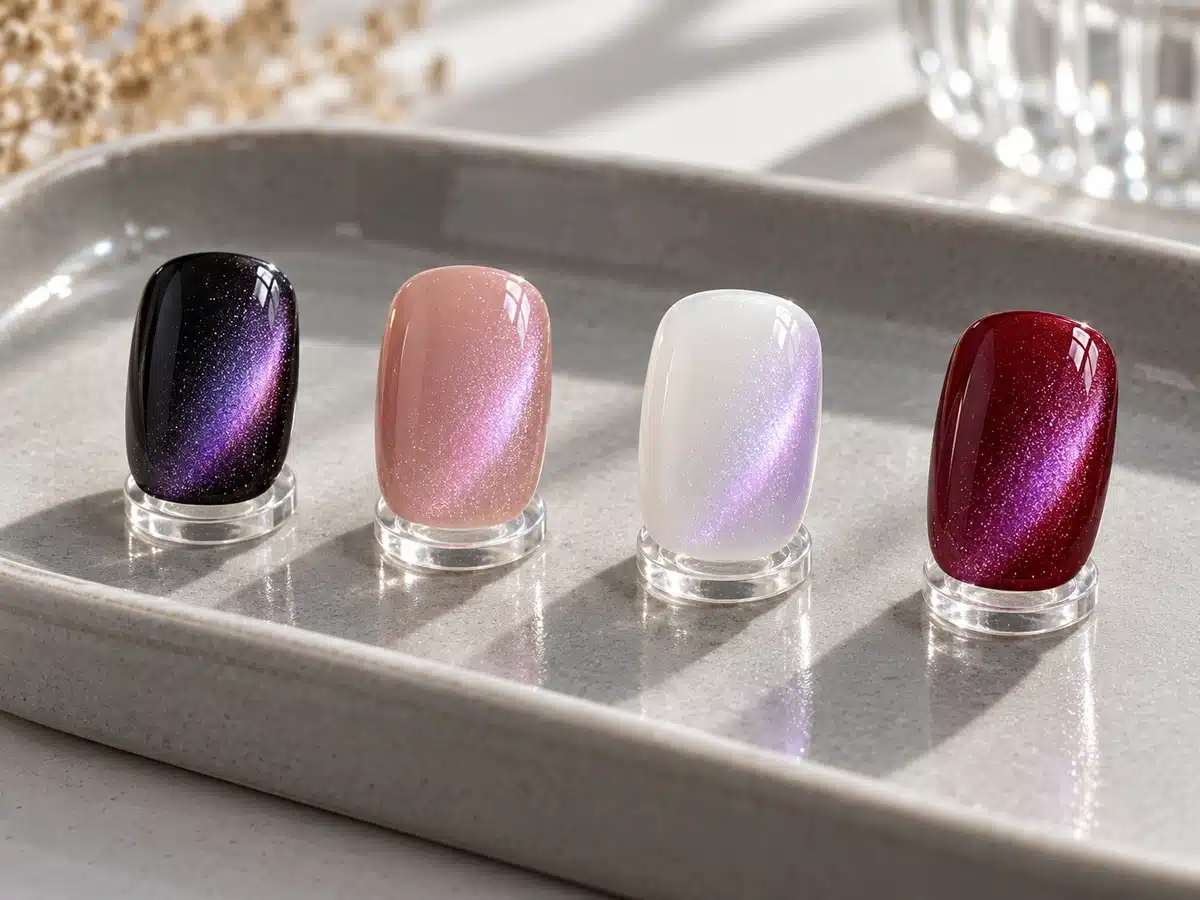
For a dark red concept, test the same magnetic gel over black, deep red and its approved standalone application where applicable. The decision should consider what happens outside the bright highlight. If those areas read black rather than red, the design may no longer match a red collection even though its central beam remains attractive.
Light and Sheer Foundations Serve Different Briefs
A pale foundation can support a softer overall impression, while a transparent or jelly tinted route can preserve visual openness. Neither guarantees a glass effect: the magnetic product's own opacity still matters. A dense particle field may conceal the undercolor, and an opaque reflective overlay may conceal both.
- Cool nude: evaluate for restrained silver details and softly neutral collections.
- Warm beige or peach: compare with champagne and gold accents before approving undertone harmony.
- Deep red or plum: assess whether the magnetic highlight supports or distracts from the intended depth.
- Sheer pink: inspect clarity after every approved layer, especially beneath aurora decoration.
For a meaningful comparison, keep the magnetic product, decoration and photography conditions consistent while changing the undercolor. Otherwise, a stronger lamp reflection or different magnet placement can be mistaken for a base color advantage.
Record the base identity alongside every approved swatch. A shade chart labeled only with the magnetic bottle number can create confusion if the displayed result depends on a separate tinted layer. Business customers should be able to identify the combination they are ordering, not discover the missing foundation during their own demonstrations.
09. How to Build a Balanced Color Palette
A balanced collection contains different useful roles, not simply many attractive shades. Begin with the looks professional customers need to construct, then choose colors that make those looks distinguishable. This prevents a capsule from becoming a row of near identical magnetic silvers with different names.
One proposed starting structure is a quiet neutral, a translucent pink direction, a warm brown or amber, a deep red, and a cool dark shade. Pair these with a restrained silver or gold accent according to the brand's visual identity. This is an assortment planning example, not a prescription that every business should purchase the same colors.
| Palette Role | Design Contribution | Overlap to Check |
|---|---|---|
| Neutral anchor | Connects magnetic effects with understated professional services. | Several beige shades that become indistinguishable after decoration. |
| Transparent color direction | Supports jelly inspired and airy combinations. | A formula too opaque to justify its separate role. |
| Warm depth | Introduces amber, bronze or brown pairings. | A gold highlight that duplicates the accent material. |
| Dark statement | Supports burgundy, plum or gothic designs. | Colors that all read black in finished swatches. |
Assess the Collection as a Set
Lay the proposed swatches together and identify what each one adds. If two shades serve the same customer, same service and same decorative pairing, one may be enough for the opening order. Keep both only when the distinction is visible and commercially meaningful, such as a warm red versus a cooler wine tone.
Also compare accent versatility. A silver liner might work across neutral, pink and charcoal concepts, while gold may better support amber and warm burgundy. Neither metal needs to appear everywhere. A collection feels more considered when the accent follows the color story rather than being applied uniformly to every sample.
Plan replenishment around individual roles. If a neutral foundation is intended for several designs, make sure its reorder identity remains clear outside a boxed collection. JTING can discuss coordinated shade development and private label presentation, but the buyer should approve both the individual colors and the relationships between them before confirming the range.
10. Choose the Right Coverage: Full Nail, French Tip or Fine Detail
Coverage controls which effect the viewer notices first. A full reflective surface, a French tip and a fine metallic line can use similar colors yet communicate very different products. Decide how much magnetic space the design needs before judging whether an accent is too subtle or too dominant.
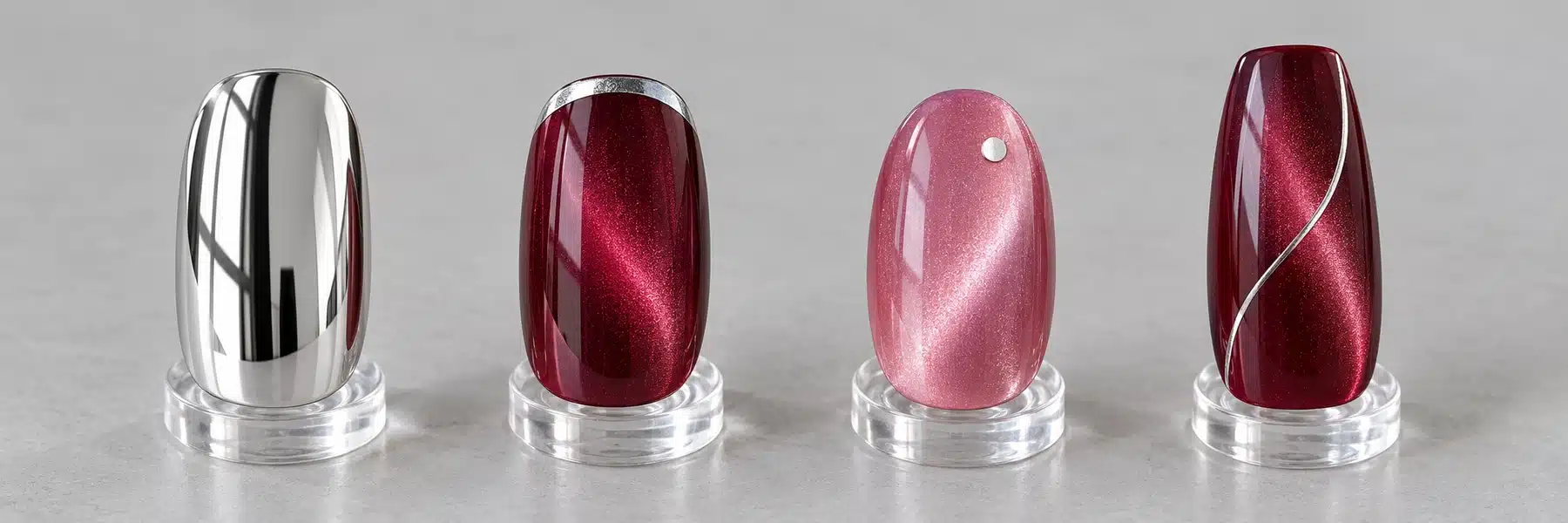
Full Nail Coverage
Choose this when reflection is the main objective. If the decorative material is opaque, place the cat eye effect on another nail or leave clearly defined uncovered areas. A fully hidden magnetic layer adds material and application steps without contributing a visible effect. For sheer aurora coverage, the question changes: confirm that the remaining magnetic definition still contributes to the final appearance.
French Tips
A reflective tip can frame a magnetic nail bed without covering its center. Its width should match the intended nail length and shape. A broad tip on a short nail may leave too little visible cat eye, while a very narrow line on a long demonstration tip may disappear at ordinary viewing distance. Approve examples on the lengths professional customers actually service.
Fine Details
Outlines, dots, narrow crescents and small graphic elements keep material coverage limited. The main selection issue is precision rather than maximum opacity across a large area. For a border design, inspect the junction between the magnetic field and metallic detail. An uneven edge can be more noticeable than a modest difference in reflective brightness.
A salon group might propose three versions of one smoky pink foundation: a full magnetic nail with one dot, a slim chrome French tip, and a separate mirror accent nail. These offer different design intensities without requiring three unrelated magnetic colors. Sample each version independently; shared ingredients do not guarantee identical application demands.
Coverage also affects how a professional service should be demonstrated. A close detail photograph can explain a fine outline, but a complete set view is needed to show balance. Buyers should review both before approving range imagery or training material.
For broader finish planning, the professional chrome nails guide provides a related reference. Keep the purchasing decision specific to the intended coverage, however: a product approved for a narrow decorative mark is not automatically approved for a full nail coating.
11. Polka Dot Cat Eye Nails with Chrome Accents
Polka dot cat eye nails work best when the dots organize the surface rather than compete with every reflection. The magnetic foundation already creates visual movement. Dots add a fixed rhythm, so their size, spacing and position should leave enough uninterrupted color for the underlying effect to remain recognizable.
Choose One Clear Design Relationship
A pale magnetic foundation with small silver dots produces a different brief from dark cat eye with large contrasting circles. For a restrained professional capsule, consider a few evenly spaced reflective dots placed away from the brightest magnetic band. For a more graphic artistic set, use a deliberate cluster on selected nails and leave others undecorated.
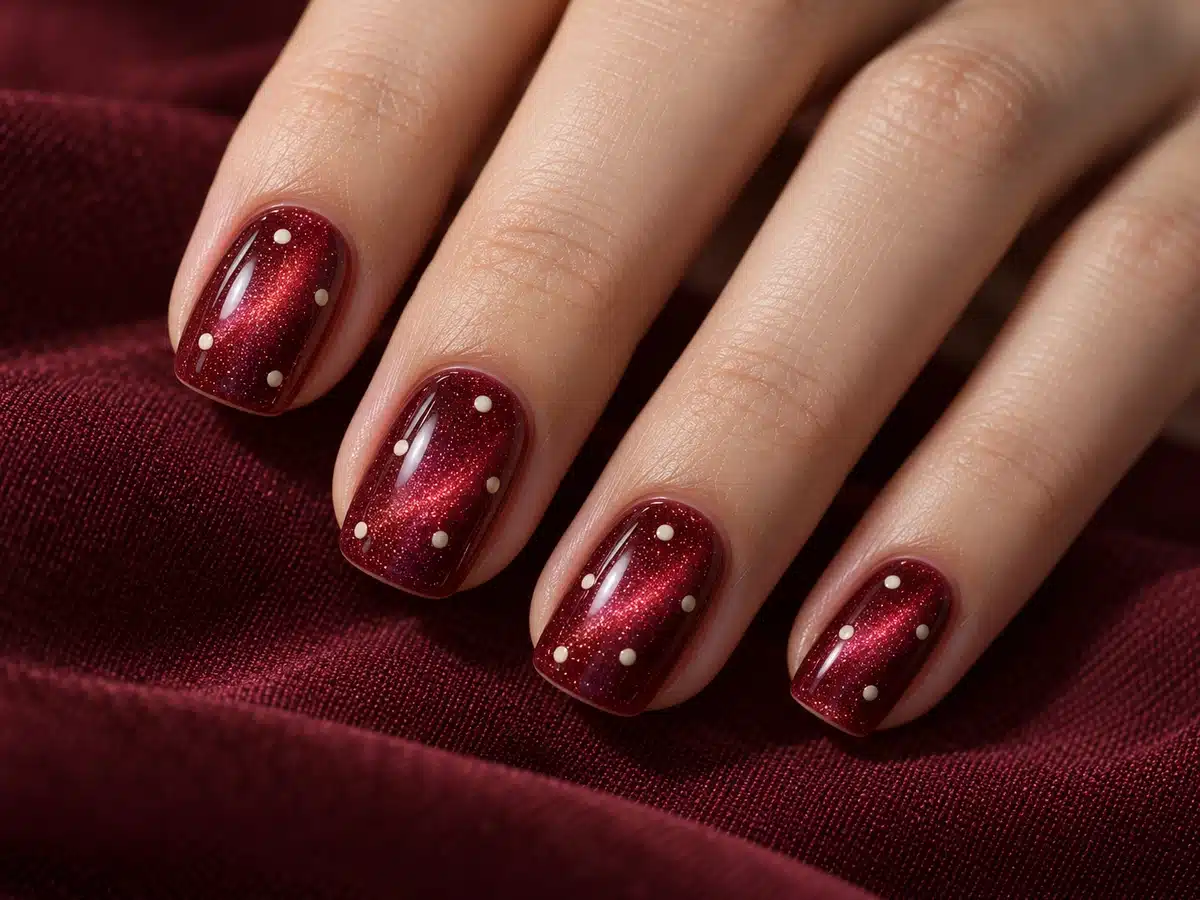
Not every dot needs to be chrome. A design with opaque colored dots and one metallic accent can separate pattern from reflection more clearly than an entirely reflective pattern. This can be useful when the magnetic particles are already bright. Treat the metallic element as punctuation rather than assuming greater coverage creates a better result.
- Minimal direction: one small metallic dot over a neutral cat eye foundation.
- Playful direction: a controlled mix of dot sizes on selected nails, balanced by plain magnetic nails.
- Structured direction: a short row or gentle curve of dots that follows the nail shape.
- Contrast direction: dark dots with a limited silver accent over a lighter magnetic field.
For material approval, ask whether the chosen product is intended to create dots at the proposed thickness. A liner designed for thin strokes should not be assumed suitable for thick raised droplets. If a dimensional effect is required, specify that separately and obtain the appropriate application guidance rather than building excess material with an unsuitable gel. For short polka dot cat eye nails, begin with fewer, smaller marks so the pattern does not hide the magnetic foundation.
A practical distributor sample board could show one foundation in three dot arrangements while keeping the metal color constant. This demonstrates design flexibility without making customers sort through an oversized materials list. The board should identify which effect comes from the magnetic gel and which comes from the decorative product.
Review the samples at normal hand distance as well as close up. Dots that look precise in a macro photograph may merge visually with the magnetic highlight. The approved design should remain legible as a complete professional service, not only as an enlarged detail.
12. Aurora and Glass-Like Cat Eye Combinations
Aurora cat eye nails bring an optical color shift to a magnetic foundation. A glass-like brief is more specifically about perceived clarity and depth. Combining them requires restraint. If every layer adds opacity, sparkle or a strong competing reflection, the final nail may become visually dense even though each individual material was described as delicate.
Protect the Sense of Depth
Start by deciding what must remain visible: the tinted foundation, the magnetic highlight or both. A pale lavender cat eye under a sheer iridescent veil may retain a layered appearance. The same veil over a dense metallic magnetic shade may read as a single bright surface. Neither result is inherently wrong, but they should not carry the same product description.
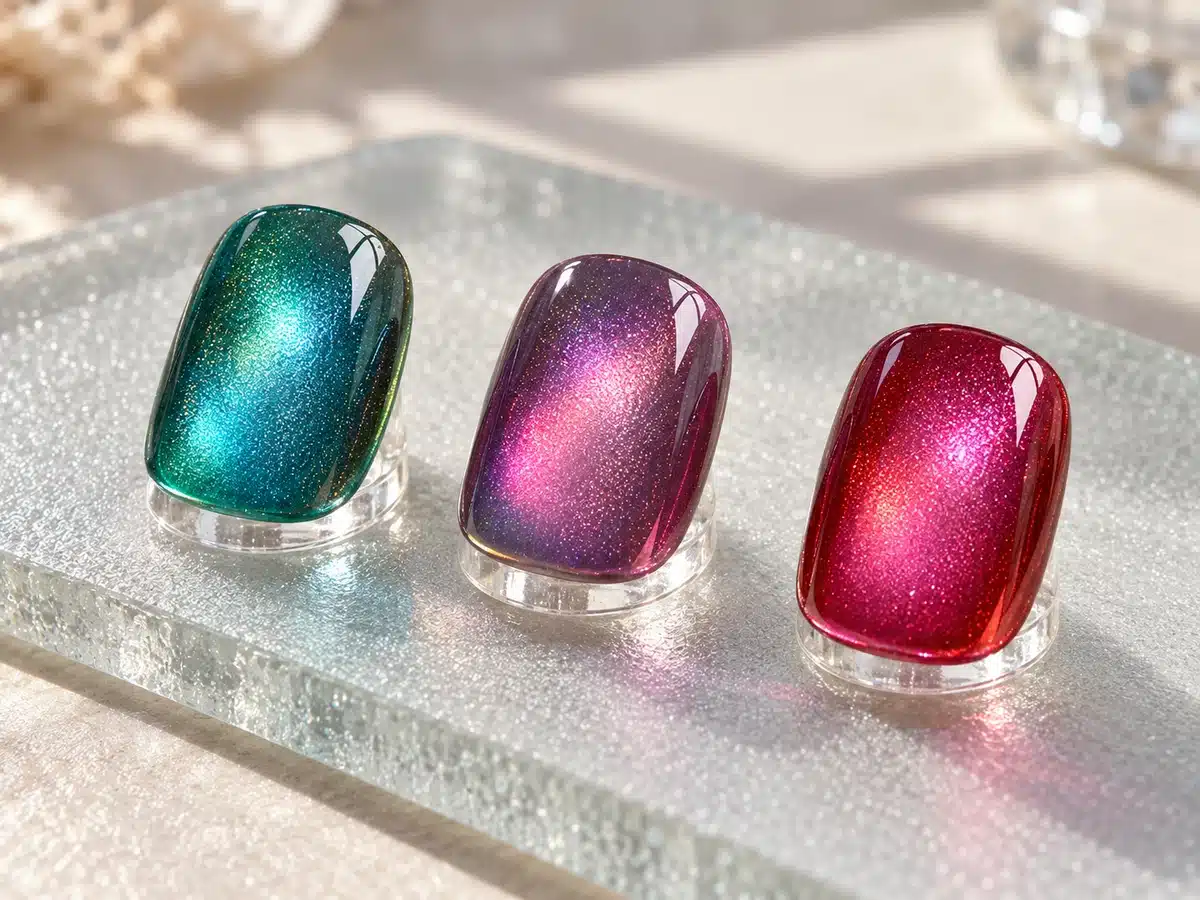
JTING's 16-color Glass Aurora Cat Eye is a magnetic range to shortlist for a glass-like direction. Assess its own finish before deciding whether another optical layer adds value. Compare the undecorated sample with any proposed layered version under the same broad and directional lighting, then use a short rotation video to check how clearly the magnetic effect remains visible.
Use Iridescence Selectively
Instead of applying aurora everywhere, evaluate a partial veil, a small accent area or an alternating nail arrangement. A transparent center surrounded by a restrained iridescent border can preserve more magnetic space than a complete overlay. The exact construction must still follow the selected products' approved methods.
A buyer building a cool toned collection could compare clear pink, lavender and pale blue directions with the same aurora material. Select the pairing in which the base identity remains distinct. If all three become nearly identical after finishing, reduce the assortment or choose a lighter decorative application rather than selling redundant shades.
For the display board, keep a clear area of each sample visible beside the most iridescent section. This lets a buyer compare color depth, edge transparency and color shift without relying on a single bright reflection. Add a matching undecorated sample when the collection will be sold with optional art products.
The purchasing brief should name the desired transparency, color shift and magnetic definition individually. That gives the supplier room to recommend a workable combination without treating an inspiration photograph as a complete formula specification. Approve the final finish only after its required sealing layers, because the surface appearance before finishing may not match the result customers receive.
13. Dark Red and Gothic Cat Eye Designs
Dark red cat eye designs offer a useful foundation for gothic details because they can combine depth, controlled light and sharp decorative contrast. The buying challenge is preserving the red identity. A sample that appears burgundy in direct light may look almost black across most of the nail, particularly after additional decoration.
Define the Red Before Choosing the Motif
Compare wine, berry, brown red and cooler plum directions separately. A warm burgundy with gold decoration communicates a different mood from a cool cherry shade with silver. Choose the undertone that fits the collection, then assess whether the magnetic highlight reinforces it or introduces an unwanted silver cast.
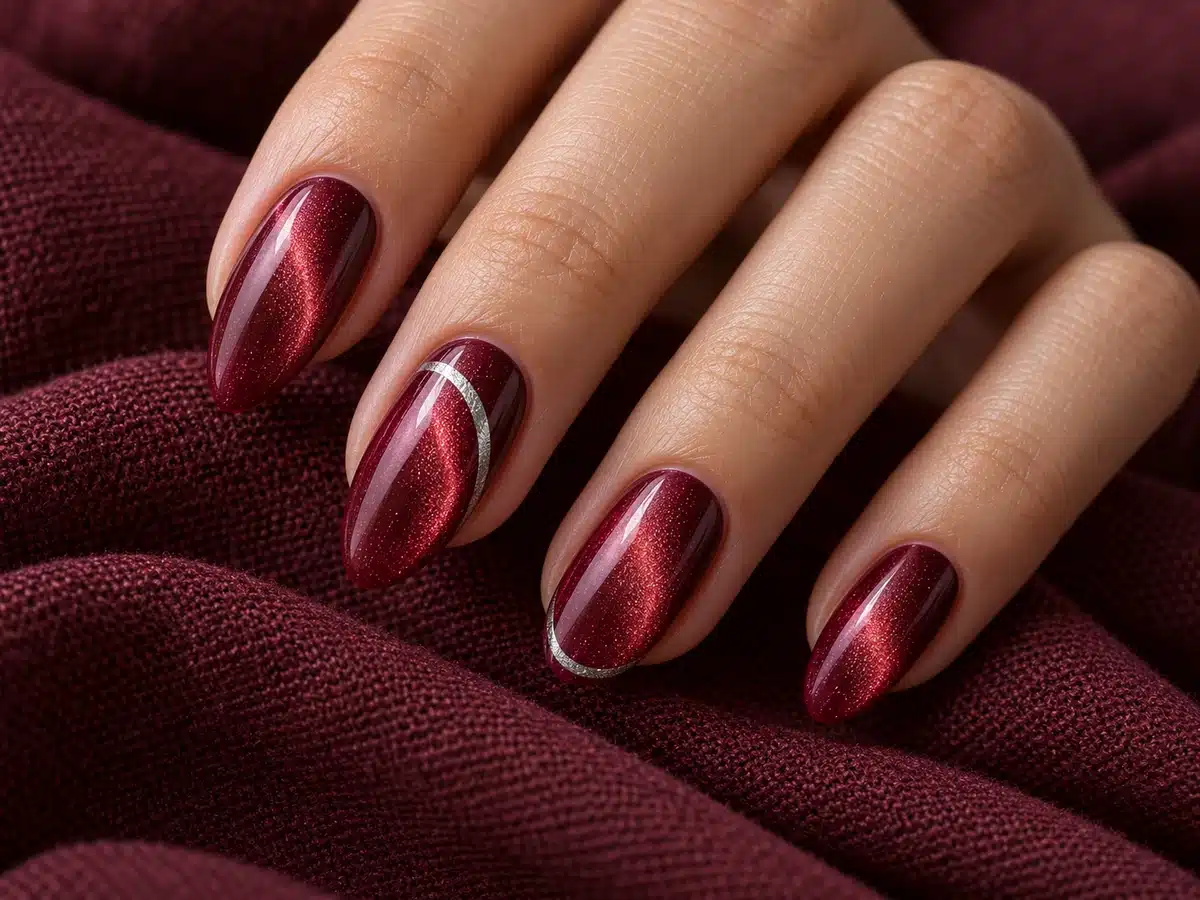
A gothic concept does not require dense artwork on every nail. A pointed metallic French tip, a restrained arch or a fine ornamental border may provide enough definition. If a brand uses symbolic motifs, review their suitability for its markets and customers rather than assuming a single symbol communicates the same message everywhere.
| Proposed Direction | Pairing Logic | Approval Focus |
|---|---|---|
| Wine red and silver | Cool contrast with a clear graphic edge. | Red remains visible beside the bright accent. |
| Brown burgundy and gold | Warmer tonal relationship. | Metal and highlight do not merge into one broad reflection. |
| Deep cherry and dark framing | Color depth with limited metallic interruption. | Outline remains distinguishable from the darkest foundation areas. |
For a professional range, include a simpler counterpart to the most detailed sample. A distributor might present an elaborate ornamental set for artistic direction and a slim silver border version for everyday service adaptation. Both should use clearly identified materials, without implying that the intricate version can be reproduced with the magnetic bottle alone.
Inspect dark samples from several angles and at realistic lengths. The chosen design should still read as intentional when the brightest highlight moves away from the center. Avoid relying on one dramatic photograph to approve the collection. A good dark palette remains differentiated in its quieter areas, where the customer can judge the actual red, surrounding depth and relationship to the metallic detail.
14. Pink Jelly Cat Eye and Chrome Looks
Pink jelly cat eye and chrome combinations depend on preserving a light, translucent character while introducing enough definition to make the design readable. The objective is not simply pale pink plus more shine. Buyers need to decide how much tint, magnetic density and reflective detail the finished nail should carry.
Separate Tint from Magnetic Density
A sheer pink foundation can look airy before decoration but become visually heavy under a dense magnetic layer. Conversely, a very faint magnetic product may disappear behind a reflective overlay. Request paired samples that show the pink foundation alone, the magnetic stage and the completed design, so that the contribution of each material is clear.
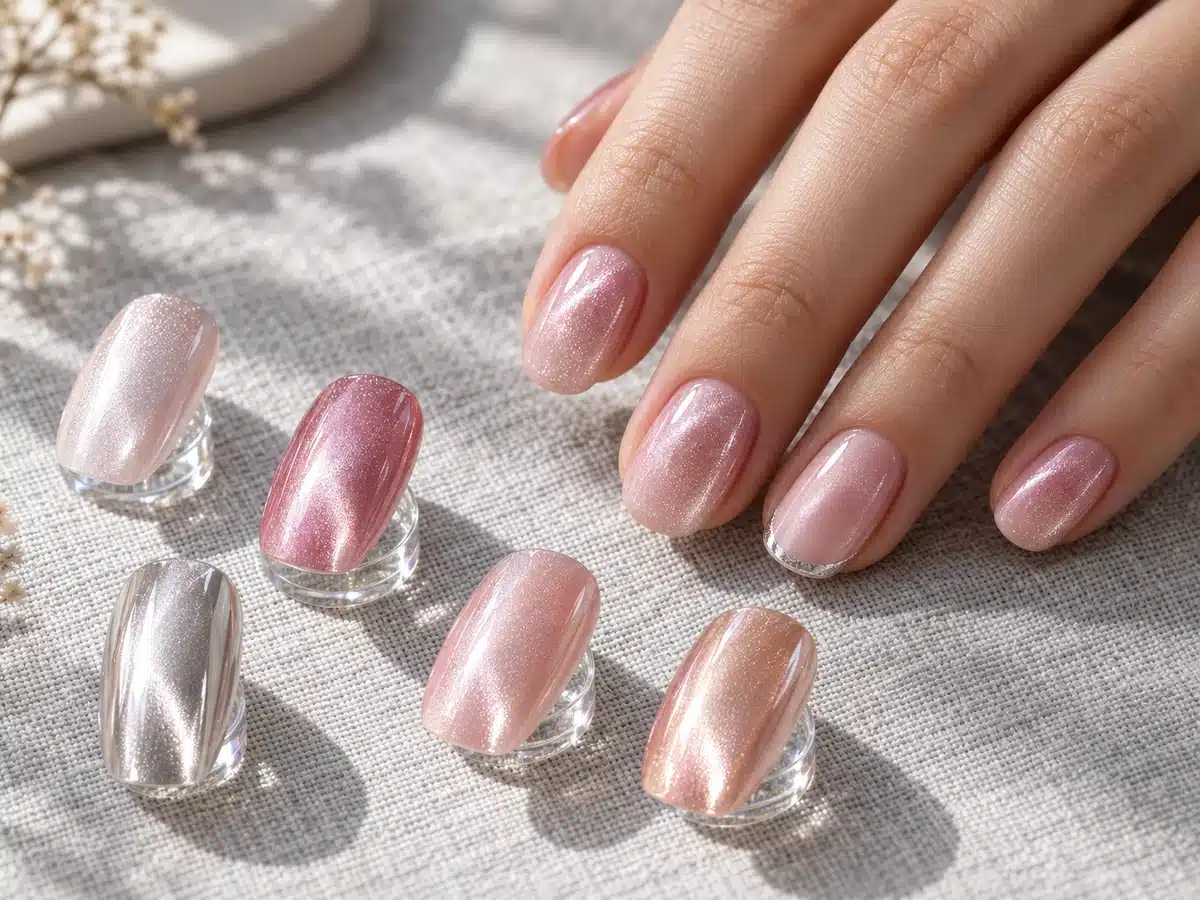
Jelly is a description of visual translucency, not a guarantee that any pink gel can be layered interchangeably. A tinted color gel and a combined magnetic product can follow different application requirements. The final service must respect those differences rather than adding layers simply to chase a reference image.
Choose a Reflective Detail That Leaves Breathing Space
A narrow silver French edge, one small metallic dot or a limited champagne accent can preserve the pink center. A full opaque chrome surface cannot be expected to retain the same translucent character. If a stronger mirror element is important, place it on a separate accent nail and let the remaining nails carry the jelly magnetic effect.
For a proposed pink capsule, compare a cool rose, a warmer peach pink and a muted translucent nude using the same accent material. A supplier serving understated professional salons may prioritize nude and rose; a warmer brand palette may suit peach and champagne. Show both options to representative accounts and record which they would stock, in what quantities, and with which metallic accent. This makes the color decision more useful than a general preference vote.
Shade names should reflect the approved appearance rather than promise a result that depends on unlisted materials. Include the required foundation and decoration in the professional demonstration, and make clear whether the featured finish comes from one magnetic product or a coordinated system.
Evaluate the completed samples against both light and darker backgrounds to understand their translucency without changing the actual product recipe. Approve the combination that preserves its intended pink identity, readable magnetic movement and balanced accent after the complete finishing process.
15. Two-Tone Cat Eye and Metallic French Designs
Two-tone cat eye nails work best when each finish has a clear job. A magnetic background can provide movement, while metallic French tips define the outline. If both areas compete with equally strong reflection, the smile line may disappear in photographs and the finished service becomes harder to explain to salon customers.
Begin with a restrained pairing: a translucent rose magnetic field with a silver tip, a warm champagne field with a pale gold edge, or a deep plum field with a narrow contrasting metallic line. Match the design direction to actual shade references during sampling.
Choose the Boundary Before the Color
Ask the technician to demonstrate the design on the shortest and longest lengths offered on the menu. A tip that looks balanced on an extended almond shape can dominate a short square nail. Decide whether the metallic area follows the natural free edge or creates an optical smile line, then keep that decision consistent across the display set.
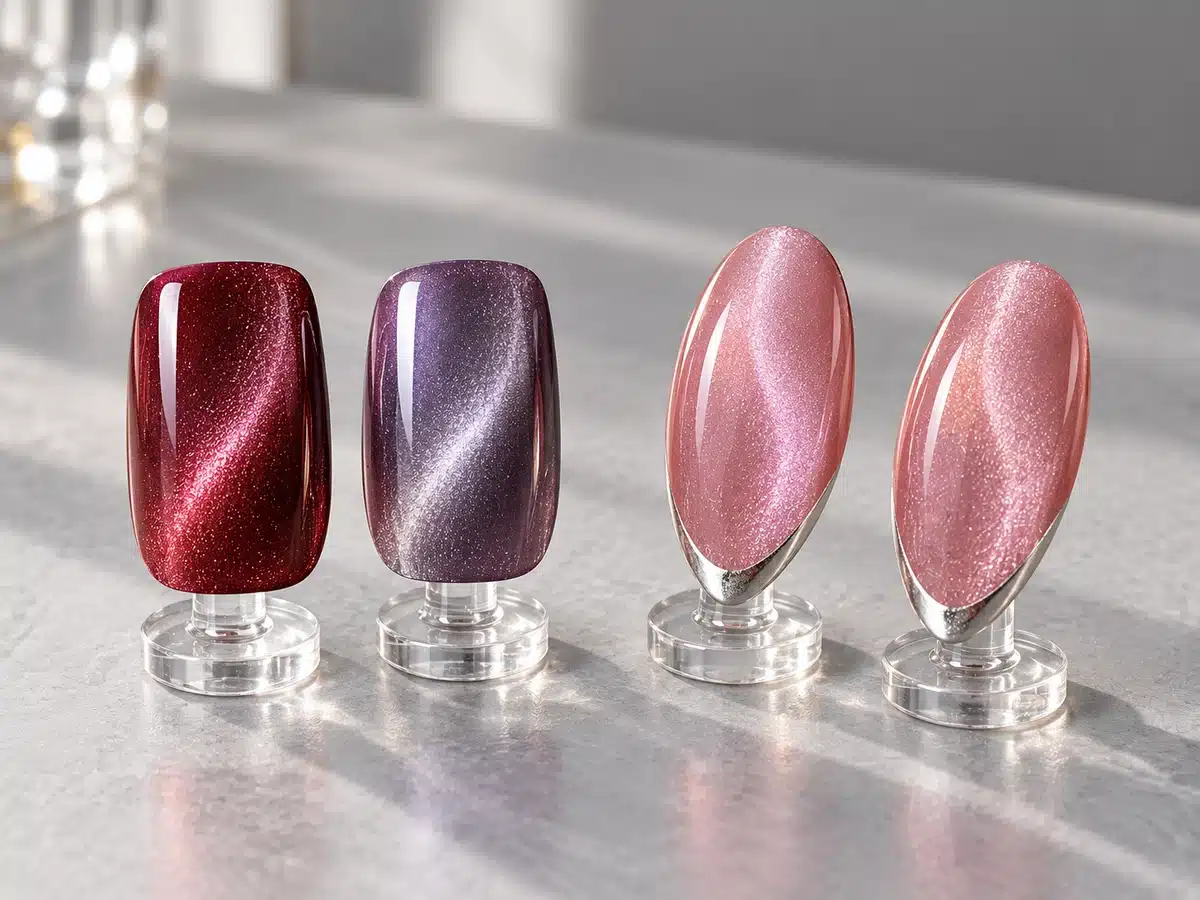
- Use a fine metallic outline when the magnetic movement should remain dominant.
- Choose a wider tip when the contrast itself is the selling point.
- Reserve split-color or double French versions for appointments that allow precise placement and cleanup.
For powder-based tips, establish an approved selective application method with the actual powder and gel products. Unwanted pickup outside the tip is a compatibility or technique issue to resolve during sampling, not something to hide in retouched images. A chrome-effect gel may offer a different application route, but its finish should be approved separately rather than presented as identical to rubbed powder.
Use the French manicure gel guide when defining the tip structure. Give salon partners one standard version and one advanced upgrade so training, pricing and customer expectations stay aligned.
16. Short Nails and Understated Professional Designs
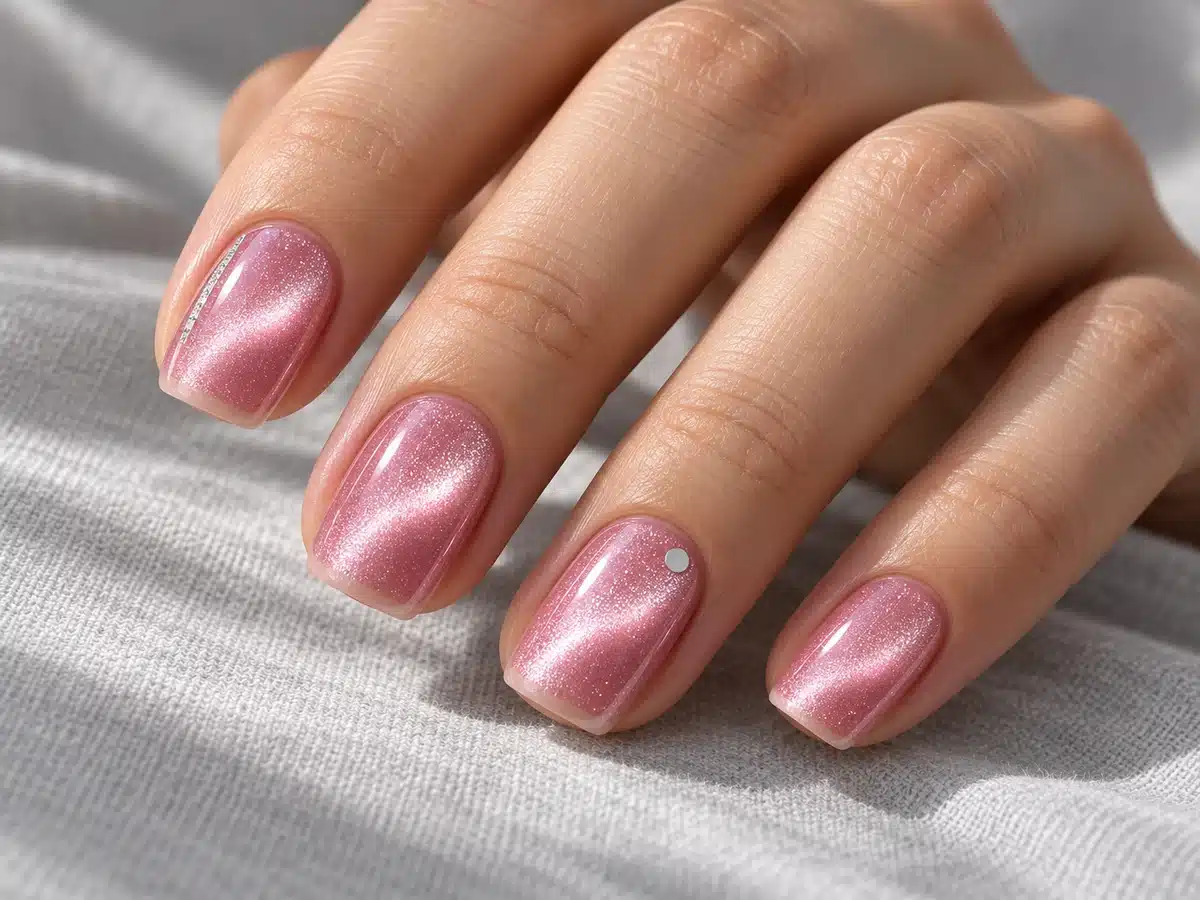
Short cat eye nails need an effect that remains legible across a small curved surface. A broad, soft magnetic glow can be easier to appreciate than several tightly packed lines. For a quieter professional design, compare sheer neutral backgrounds, muted pinks and cool silvery effects under ordinary room lighting rather than selecting solely from dramatic closeups.
Short chrome nails also require a deliberate balance between coverage and reflection. A pale glazed appearance, a single metallic accent or a fine French edge can keep the result restrained. Dark mirror-like finishes can be equally intentional, but they reveal uneven outlines and surface irregularities more readily in direct reflections.
Evaluate Real Working Lengths
Build a sample board with the lengths your salon accounts actually request. Include short round, soft square and another locally relevant shape. Photograph each from above and at an angle so buyers can see whether the highlight follows the curve or seems concentrated in one corner. Avoid compensating for an unsuitable effect by applying an unnecessarily thick layer.
For an understated sample shortlist, JTING's 48-color Water Light Cat Eye offers a magnetic range to review. Choose the actual shade references that suit the intended neutral or softly colored direction, then compare their appearance on short curved tips. A soft magnetic sheen, fine metallic edge or translucent neutral finish gives salon accounts a clear starting point for a quieter menu.
Distributors should offer short-nail demonstrations alongside longer display tips. Otherwise, a product may appear suitable only for elaborate extensions, even when a restrained application could serve a broader salon audience. Include the actual layer sequence and background shade on the reverse of each sample card.
17. Application Order for Different Product Systems
The correct application order depends on the products, not the appearance in a reference photograph. Cat eye gel polish, integrated magnetic systems, chrome-effect gel and third-party chrome powder do not share one universal sequence. Before a distributor writes training materials, identify the exact products and obtain their preparation, layer, lamp, curing and finishing instructions.
Conventional Magnetic Gel Systems
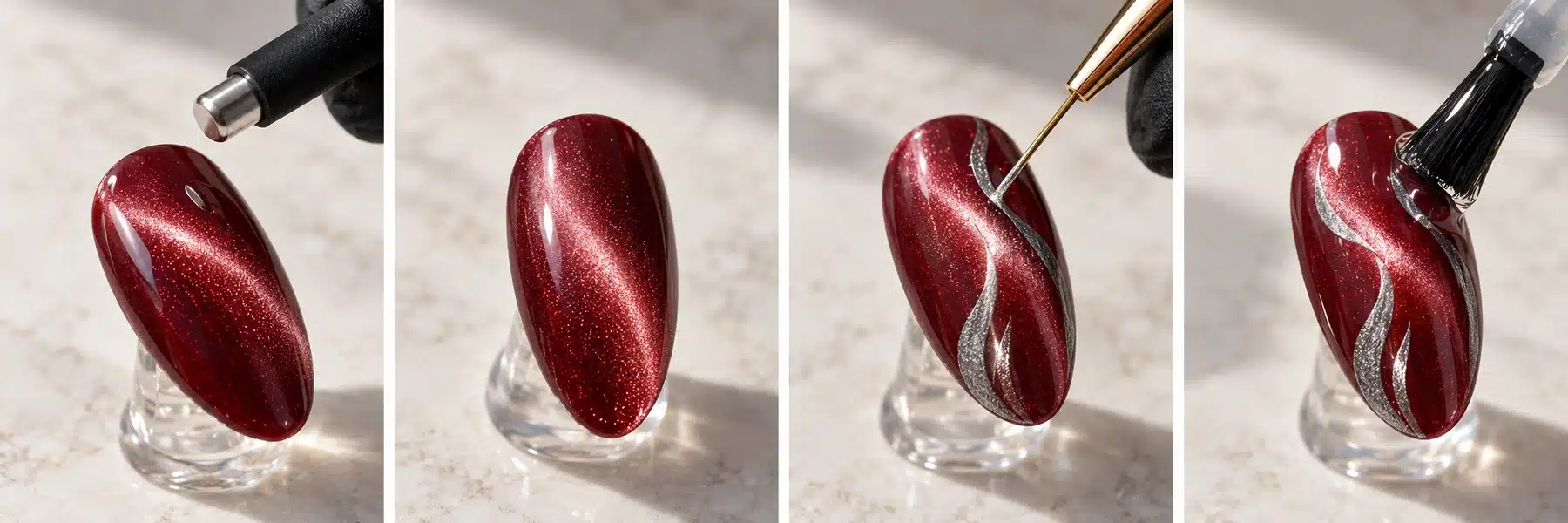
For a system that specifies separate products, prepare the nail and apply the prescribed base, curing it as directed. Add a background color only when required or chosen for the approved design. Apply the magnetic layer at the instructed thickness, position the magnet while that layer is uncured, and cure according to the product instructions once the pattern is ready. Finish with the specified compatible top coat when required.
Do not confuse background color with base coat. One determines the visible background; the other has a role within the adhesion system. A dark background may strengthen visual contrast in some combinations, but black is not a mandatory starting point for every cat eye gel. Approve the intended background with the actual shade.
Integrated Base, Color and Top Systems
Integrated products need their own branch in training. JTING's 3IN1 method combines base, color and top functions: apply two thin coats, cure the first, magnetize the uncured second coat, then cure for a glossy no-wipe finish. The standard method does not require a separate base or top coat. Follow its product instructions rather than adding layers from a conventional system by habit.
That standard application does not automatically approve additional powder, art layers or another brand's top coat. If a buyer wants an integrated product as the foundation for a more complex design, request compatibility guidance and evaluate the proposed combination separately. A simpler service route and a layered art route are different specifications.
Third-Party Chrome Powder Systems
Where third-party chrome powder is used, first complete the compatible underlying gel layers. Apply the powder-receiving product prescribed by that system and give it the full cure specified for that actual product and lamp. Apply and burnish the powder using the supplier's method, remove loose residue as directed, and seal with the approved finishing product. The powder itself is not a substitute for curing the gel beneath it.
Never deliberately shorten a general gel cure to make powder stick. If the powder will not transfer after the prescribed full cure, investigate whether the receiving product, powder and application method are compatible. A shiny or hard-looking surface cannot establish complete cure. The gel nail polish curing guide provides further context for discussing product and lamp requirements.
| System | Effect Step | Confirmation Needed |
|---|---|---|
| Separate magnetic layers | Magnetize the uncured magnetic coat | Required base, background and finishing layers |
| Integrated magnetic product | Follow its dedicated coat sequence | Whether additional layers are permitted |
| Powder-based chrome | Burnish onto the prescribed cured receiving surface | Powder, receiving gel and sealer compatibility |
| Chrome-effect gel | Apply the gel using its own method | Layer thickness, curing and finishing instructions |
For a combined cat eye and chrome design, document which layer creates movement and which creates the surface reflection. Check that the powder treatment does not obscure the intended magnetic pattern. Approve a complete finished sample rather than approving each bottle independently and assuming the assembled design will behave identically.
18. Top Coat and Chrome Base Compatibility
A no-wipe top coat for chrome powder must be selected for that particular powder workflow, not simply because its label says no-wipe. The term describes a finishing characteristic; it does not guarantee powder transfer, mirror clarity or adhesion with every other product. Ask which receiving surface and final sealer the powder supplier actually prescribes.
The phrase chrome base can also cause purchasing errors. It may mean the colored background, a dedicated powder-receiving gel or the underlying foundation system. Put each product's function beside its name on the order sheet. That distinction prevents a buyer from ordering a regular base coat when the technician wanted a powder-receiving surface.
Compare the Complete Finish
Prepare matched samples using the intended background and powder, changing only the compatible receiving or sealing product being assessed. Keep the prescribed cure conditions for each product rather than imposing one shared schedule. Observe powder transfer before sealing, then compare reflection, color shift and edge appearance after finishing.
Record whether the final top coat changes a cool silver toward a warmer appearance, softens a crisp magnetic line or introduces visible texture. These are useful approval observations, not proof of a universal chemical incompatibility. Investigate with the suppliers before assigning a cause.
Give the Receiving Layer and Final Sealer Separate Roles
For a powder-based design, discuss JTING Chrome Magic Top Coat as a chrome-workflow product and Glass Top Coat as a clear gloss finishing option. State the exact powder and magnetic foundation when requesting a sample combination. These are distinct product roles, not a claim that every powder or integrated magnetic gel uses the same pair.
The gel top coat guide provides further finish-selection guidance. Keep the standard no-extra-top-coat route for an integrated product separate from any approved decorative finishing route, and identify the selected method in customer instructions.
19. Common Problems and How to Diagnose Them
A useful complaint starts with the stage at which the result changed. Ask whether the issue appeared during application, after magnet positioning, during powder transfer, after sealing or during wear. Collect product names, batch references, lamp details, layer sequence and unedited images before changing the process. A single closeup rarely identifies the cause.
When the Magnetic Pattern Looks Weak
If cat eye gel polish seems unresponsive, confirm that it is a magnetic product and that the magnet is being used on the uncured effect layer. Check the product's mixing or preparation instructions, the applied thickness, the magnet orientation and whether the working distance is practical without touching the gel. Do not assume that every metallic-looking gel contains magnet-responsive particles.
Repeat the demonstration on a clean practice tip using the supplier's recommended method. Change magnet position alone before changing the product or background. If the effect appears in one direction but not another, document that difference. This gives technical support something more useful than the statement that the magnet does not work.
When the Line Moves Before Curing
If a defined line becomes diffuse while the technician completes other nails, compare a workflow that finishes and cures each magnetic nail according to instructions. Keep the remaining variables unchanged. Record the interval between removing the magnet and starting the cure, then compare pattern definition. Use that observation to choose a manageable work sequence for the salon team.
When Chrome Powder Will Not Stick
First verify the prescribed receiving product, its full cure requirements and the powder supplier's application method. Check for residue, an unsuitable surface treatment, a contaminated applicator or a substituted top coat. Use a fresh applicator and a correctly prepared sample to separate contamination from a broader compatibility issue.
Do not respond by undercuring the gel. A powder-transfer problem is not permission to compromise the underlying system. If the correct combination still fails, retain the sample and ask the supplier to review it. Likewise, a hard surface alone does not diagnose overcuring or explain failed transfer.
| Observation | Useful Check | Avoid Assuming |
|---|---|---|
| Patchy powder transfer | Receiving surface, applicator and prescribed method | Every patch requires a shorter cure |
| Dullness after sealing | Loose powder removal and sealer compatibility | The powder was defective before comparison |
| Free-edge loss | Edge preparation, layer buildup and approved sealing | All wear is caused by the effect pigment |
| Uneven magnetic brightness | Layer consistency and magnet placement on the curve | More gel will always improve the effect |
When the Finished Service Chips or Lifts
Locate the separation rather than treating every failure as the same problem. Is the decoration wearing away while the underlying coating remains, or is the whole coating lifting from the nail? Review preparation, product compatibility, thickness, lamp use and the client's service history with the technician. Keep photographs of the affected edges before removal.
For repeated commercial complaints, compare an approved reference combination with the reported combination on equivalent practice samples. A controlled comparison can help narrow the investigation, but it does not replace professional assessment of curing or safety. Stop using suspect material until the supplier has reviewed any unresolved product concern.
Agree the next step with the supplier: clarify the method, evaluate a new combination, review a replacement sample or arrange further technical investigation. Keep the affected product and a reference sample identifiable until the review is complete. Give salon accounts a clear update on what to use, what remains under review and when the next decision will be made.
20. How to Evaluate Samples Before Ordering
Evaluate samples against the service and sales channel you intend to support. A dramatic display tip may be excellent for a campaign but unsuitable for a distributor whose salons need quick, consistent applications. Write the acceptance criteria before opening the samples so visual excitement does not replace a purchasing decision.
Set Up a Practical Comparison
Request the exact shade references, instructions and proposed bottle-and-brush configuration. For the first system-screening round, prepare matching practice tips and compare a light shade, a dark shade and a representative effect direction. This helps choose the service route before extending the sample selection. Evaluate different product systems through their own prescribed methods, rather than treating an initial shortlist as approval of an entire color range.
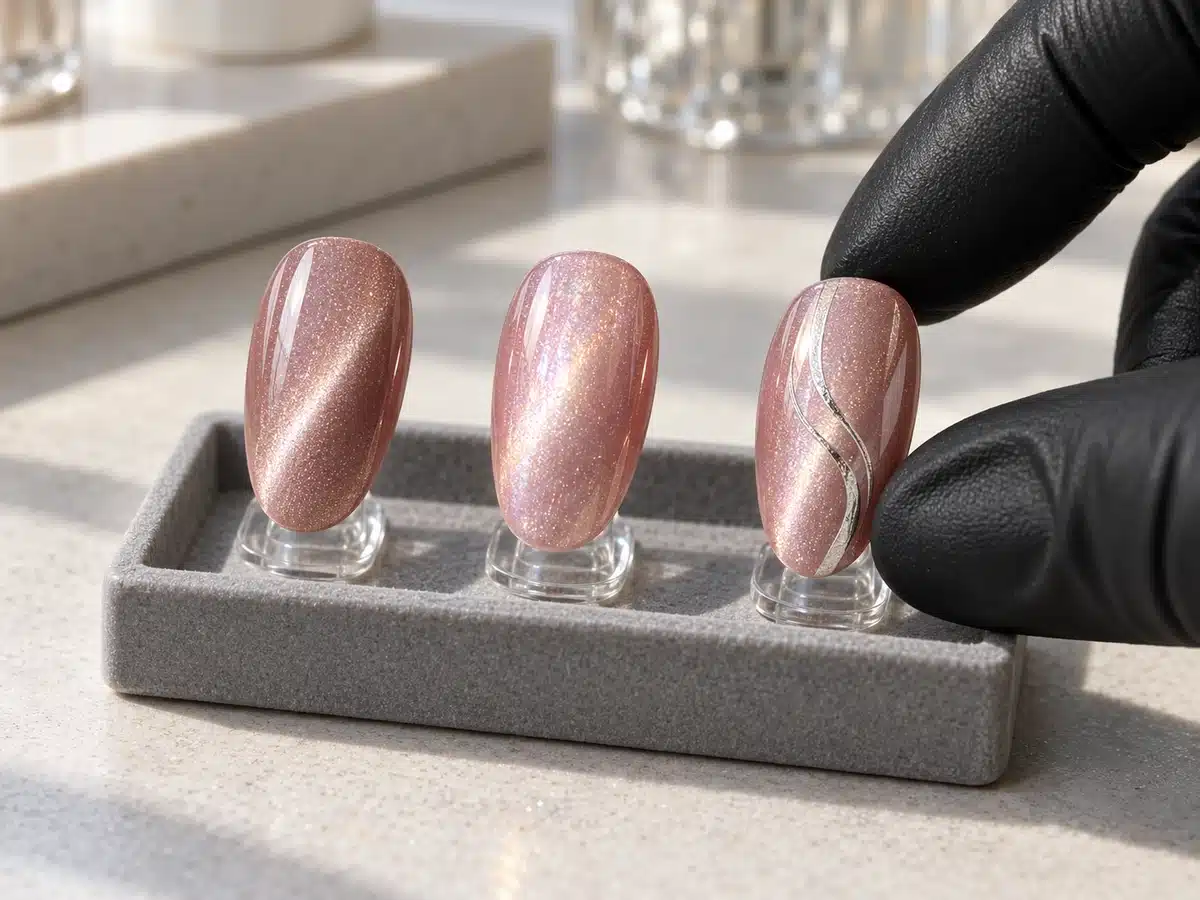
Keep an untouched approved reference and label every working sample with the product, batch where available, background, layer sequence, lamp and operator. Follow each gel product's prescribed curing requirements. Visual comparisons help assess appearance and handling; they do not establish complete cure or replace product-specific technical evaluation.
| Decision Area | Recommended Observation | Approval Record |
|---|---|---|
| Application control | Brush loading, spread and access near sidewalls | Operator notes with the selected brush |
| Magnetic appearance | Pattern clarity and repeatability across matching tips | Still images and a rotation video |
| Chrome combination | Transfer, final reflection and edge coverage | Exact third-party powder and gel pairing |
| Shade distinction | Difference between neighboring colors in ordinary light | Approved physical shade board |
| Service suitability | Training needs, handling steps and cleanup | Decision for standard or advanced menu placement |
Include More Than One Operator
After an experienced technician establishes the intended result, ask another trained operator to follow the written method without verbal coaching. Observe which decisions remain unclear: magnet orientation, coat selection, powder pickup or finishing. Refine the instructions and repeat the comparison. A product that only one demonstrator can present convincingly may require more training than your channel can support.
Do not make the test artificially easy by using only oversized flat swatches. Include curved tips and the shorter lengths your customers service. Assess whether the effect remains visible after the full finishing sequence and whether the brush helps maintain a controlled application. Record failures as well as successful samples.
Separate Appearance Approval from Wear Evaluation
If professional wear evaluation is appropriate, agree its scope with qualified technicians and the supplier. Define what will be recorded, when observations occur, which products are used and what would stop the evaluation. Follow product instructions and applicable professional precautions. Do not turn informal observations into a certified wear claim or guaranteed service duration.
Ask the supplier which additional documentation or product-specific assessment is relevant to your destination and intended claims. A satisfactory swatch does not establish regulatory suitability, stability or safety. Those questions need their own evidence and responsible review.
Before the final purchase order, confirm every ordered shade reference and its selected configuration. The full test program need not be repeated identically for every color, but the approval record should identify what was checked for each shade and which shared system evaluation applies. Mark each item approve, revise, hold or exclude, and attach the complete product combination and packaging configuration. Review changes to the formula, brush, receiving gel or sealer against that record.
21. How to Photograph Magnetic and Reflective Finishes
Cat eye nails and chrome nails need different visual evidence. A magnetic finish is defined partly by how its bright area moves as the viewing angle changes. A chrome finish is judged through reflection, surface continuity and the way the background color influences the result. One heavily edited still cannot explain both reliably.
Use a Repeatable Capture Setup
Fix the camera position, background and light placement when comparing shades. Use a neutral surrounding area and keep exposure and white balance consistent within the comparison. Reflective surfaces can pick up clothing, phone cases and colored walls, so inspect the scene before deciding that a sample has an unexpected tint.
Capture a clear overall image, an angled closeup and a slow rotation video. For magnetic products, keep the light stationary while rotating the sample so the buyer can distinguish movement in the finish from movement in the lighting. Include an ordinary room-light view alongside the stronger demonstration setup.
If a product also has a reflective effect under direct illumination, label that capture condition plainly in the sales materials. Do not substitute a flash image for the normal-light appearance. Likewise, avoid calling a powder finish magnetic merely because a highlight appears to move across its curved surface.
Show the complete approved system, including the background shade and finishing layer where applicable. A customer should be able to reproduce the photographed route without discovering an undisclosed dark base or extra powder. Keep shade references visible on comparison boards and use the same reference in ordering documents.
Do not reshape magnetic lines or intensify colors through retouching. Physical samples remain the commercial approval reference.
23. Build a Coordinated Wholesale or Private Label Collection
Build a wholesale gel nail polish collection around distinct buying reasons rather than a large shade count. A salon-oriented range may need dependable neutrals, a few deep contrasts and clearly differentiated statement effects. A distributor serving nail art specialists may prioritize more dramatic movement and complementary design products. Neither route requires every shade to perform every role.
Assign Each Shade a Role
For private label cat eye gel polish, map shades by undertone, depth, transparency and magnetic appearance. Add the intended background and pattern to the selection board. Two bottles with different names may produce almost the same finished result, while one shade shown over different backgrounds may appear misleadingly like several separate products.
- Core shades should support repeatable everyday services and clear replenishment decisions.
- Accent shades should create a visible difference from the core assortment.
- Seasonal trials should have a defined review point before becoming permanent stock.
- Supporting products should be selected for approved combinations, not just matching packaging.
| Collection Direction | Core Products to Identify | Decision Before Ordering |
|---|---|---|
| Restrained magnetic accents | Selected magnetic shades and one fine metallic liner | Which foundations work with the same metal, and which need a different accent? |
| Glass-like color depth | Chosen translucent magnetic shades and any optional optical decoration | Does the extra layer improve the sample enough to justify another product? |
| Mirror-focused designs | Named powder or gel, the appropriate receiving route and final sealer | Which items are supplied together and which are sourced separately? |
Buyers comparing wholesale cat eye gel polish should also decide whether they need ready-selected colors or a more customized collection. Use the private label gel nail polish guide to organize the development route, and the private label brand options when aligning the collection with the intended sales channel.
Keep separately sourced chrome powder identifiable in the purchasing specification. JTING can discuss cat eye and chrome cat eye gels for the foundation, along with appropriate gel-based detailing options. If a design includes another supplier's powder, provide its exact reference and application requirements during the pairing discussion. Specify who supplies each component and who confirms its intended combination.
24. Packaging, Brushes and Shade Presentation
Packaging customization should support how a magnetic product is handled at the desk. Evaluate brush loading, control near the sidewalls and the ability to place a consistent thin coat with the selected formula. A visually attractive bottle does not compensate for a brush that makes the approved application difficult.
JTING offers 100+ bottle and cap options and 50+ brush options. Start with suitable existing configurations, then discuss changes where the product or brand genuinely needs them. Review custom gel polish bottles and brush options together, since fit and handling belong to the assembled configuration. Brushes are supplied with orders rather than as a standalone purchase.
Make the Shade Easy to Identify
Use a stable shade reference on the bottle, outer packaging and physical color chart. Distinguish the actual gel color from the finish shown over a particular background. If the display presents a magnetic design, include enough application information for the salon to identify that version rather than expecting the bottle color to explain it.
Choose packaging boxes according to shipping, shelf presentation and collection size. Check the proposed insert with the actual filled configuration and confirm what is included. A collection image should not imply that magnets, third-party powders or accessories are bundled unless the order specification says so.
For labels and stickers, existing designs can be adapted to the brand, with further changes discussed as needed. Reserve space for the required product information and batch identification before approving decorative details. Labels are order components, not an independently offered printing purchase.
25. What Changes the Quotation and Order Requirements?
A useful quotation compares the same product, quantity and packaging scope. Ask for a line-by-line specification covering formula direction, shade count, quantity per shade, fill size, bottle, brush, branding and outer packaging. Separate development, accessories, freight and documentation items where relevant so a lower bottle price does not conceal a different project.
JTING's minimum order quantity for private label gel nail polish starts from 10 pieces per shade; house-brand mixed-color orders can start from 100 pieces. These are starting points, not unconditional terms for every effect, formula or packaging combination. Final requirements depend on the product type, packaging style and customization level.
Define Approval and Delivery Scope
Standard samples typically take 7-10 business days, while custom color or exclusive formula development typically takes 2-4 weeks. Bulk production typically takes 15-20 days after sample and packaging approval. Confirm the applicable schedule for the actual product, revisions, shade count, order size, packaging and document requirements; these estimates are not a guaranteed arrival date.
Confirm the sample selection, packaging, dispatch and shipping arrangements with the quotation. For the launch calendar, allow separate time for sample review, artwork approval, production, transit and destination handling. State the required arrival date as well as the campaign date so the proposed schedule can be assessed against the full delivery route.
All JTING products are HEMA-free, but this does not mean allergy-free. Other formulation attributes and supporting documents must be confirmed for the selected products and destination. Do not treat a general company document as a blanket certification for every SKU or market.
Request a revised quotation when the formula, bottle decoration, box structure or assortment changes. Keep the commercial approval tied to the final sample references. Otherwise, the buyer may approve one configuration, compare prices for another and discover the difference only when preparing the purchase order.
26. Launch, Reorder and Reduce Slow-Moving Shades
Separate initial interest from repeat demand. A shade can attract attention in a video without becoming a dependable salon reorder. Track sales by shade and channel, but also record whether buyers received a physical swatch, a demonstration and the appropriate instructions. Weak sales can reflect unclear presentation as well as limited color appeal.
Review the Assortment by Role
Keep core, accent and seasonal shades identifiable in the stock record. Compare available stock with recent sales and the confirmed replenishment schedule. Account for goods already ordered and commitments to salon accounts before placing another order. Avoid applying the same reorder quantity to every shade simply because they launched together.
When a color moves slowly, inspect its sample and photographs first. A magnetic shade shown only as a static bottle may not communicate its value. A chrome design photographed under an unsuitable light may look unlike the physical reference. Correct the presentation before deciding whether a discount is the only option.
Offer relevant pairings or training demonstrations without promising untested combinations. A quiet neutral may become useful beside a statement effect, but a forced bundle can merely transfer excess stock to distributors. Use actual customer requests to decide whether a revised set improves the assortment.
For reorders, retain the approved physical reference and state whether any formula, shade, brush or packaging change is requested. Ask how proposed substitutions will be communicated before approval. Compare incoming goods with the agreed reference through the same documented viewing and application method used during selection.
When retiring a shade, inform accounts and identify an evaluated alternative where available. Preserve the original reference rather than renaming remaining stock.
27. Frequently Asked Questions
Can You Put Chrome Powder over Cat Eye Gel?
Yes, where the complete product combination is approved, but compatibility should not be assumed. Cure the magnetic layer according to its instructions, then use the powder supplier's prescribed receiving surface, full cure and sealing method. Check whether the powder softens or hides the magnetic movement. For an integrated cat eye system, additional art layers are a separate compatibility question, not part of its standard method. Evaluate the finished combination before adding it to salon training.
Why Is My Chrome Powder Not Sticking?
Check whether you are using the receiving product specified for that powder, with its prescribed full cure and application method. Surface residue, an unsuitable substitution or a contaminated applicator can complicate transfer. Repeat on a clean practice sample with the approved combination before changing several variables. Do not shorten a general gel cure to create tack. If transfer still fails, share the exact products, lamp details and sequence with the supplier rather than diagnosing from surface hardness.
What Is the Difference Between Chrome Powder and Chrome Gel?
Chrome powder is a separate decorative material applied through a compatible surface-and-sealer workflow. Chrome gel is a gel product whose effect and application depend on its formulation. When comparing chrome powder vs chrome gel, approve the appearance and handling separately; the names do not promise identical mirror clarity or service steps. Ask whether the quoted product is magnetic, metallic-looking or intended for powder application. Those functions determine the tools, training and supporting products your accounts need.
Do I Need a No-Wipe Top Coat for Chrome Powder?
Many powder workflows specify a compatible no-wipe receiving product, but no-wipe alone is not a compatibility guarantee. Use the actual powder supplier's prescribed surface and full cure, followed by its approved sealing route. Also distinguish the receiving layer from the final protective layer; they may have different roles. A conventional glossy top coat, an integrated product's no-wipe finish and a dedicated powder-receiving gel should not be treated as interchangeable without guidance and sample evaluation.
Can Short Cat Eye Nails Look Understated?
They can, when shade, contrast and pattern suit the shorter surface. Compare a soft broad glow, a restrained neutral and a narrow accent before committing the assortment. Show short cat eye nails on realistic salon lengths rather than only elongated display tips. Ordinary room-light photographs help buyers judge subtlety. Avoid claiming universal workplace suitability, since professional dress requirements differ.
How Should Salons Offer Metallic French Tips?
Define tip width, placement and the number of decorated nails. A fine metallic edge and an elaborate double French design require different handling, so time and price them separately. Choose an approved gel or powder route and demonstrate cleanup. On short nails, check whether the tip overwhelms the background. Give reception teams approved examples for deciding whether a requested design fits the booking.
When Do You Use the Magnet for Cat Eye Gel Polish?
Use it while the specified magnetic coat is uncured, then cure according to product instructions once the pattern is formed. Which coat receives the magnet depends on the system. JTING's 3IN1 route magnetizes the uncured second thin coat after curing the first. Do not apply that sequence automatically to another product. Keep magnet position, nail curve and the interval before curing consistent when training operators or comparing samples.
Do Cat Eye Nails Always Need Separate Base and Top Coats?
No. Conventional systems may specify separate base and top products, while an integrated system may combine those functions. Follow the selected product rather than adding familiar layers by default. JTING's standard 3IN1 method does not require a separate base or top coat. This does not establish that every magnetic product works that way, or that optional powder decoration is approved. Give salon accounts a product-specific sequence so simplified and conventional routes are not accidentally mixed.
Can You Create Cat Eye Nails with Any Gel Polish?
No. Ordinary gel nail polish does not become magnetic when a magnet is held nearby. Choose a magnetic product rather than assuming a metallic or reflective gel will respond. Do not mix products or add pigments to create a new magnetic formula without manufacturer guidance. Ask for a demonstration of the exact shade and product reference being quoted, not an unrelated representative bottle.
How Long Do Cat Eye Nails and Chrome Nails Last?
There is no universal duration for every system, technician and client. Preparation, compatibility, application, curing, nail condition and daily use affect the outcome. Distinguish decorative surface wear from failure of the underlying coating. Use supplier-supported claims for the exact product and evaluate the service through qualified professionals. A display sample or isolated customer report cannot establish a collection-wide wear guarantee.
How Should Buyers Select Private Label Cat Eye Gel Polish?
Start with the target service, magnetic appearance and operator skill level. Choose shades that differ meaningfully in undertone, depth or effect, then evaluate the bottle, brush and application route. For private label cat eye gel polish, approve stable references and accurate shade presentations before decorative packaging dominates the decision. Agree how revisions and substitutions will be handled so later orders retain a clear specification.
What Should a Wholesale Cat Eye Gel Polish Inquiry Include?
Include the destination, sales channel, shade references, quantities by shade, preferred fill size and whether you need house-brand or private label products. State the packaging scope and any formulation or documentation requests. For wholesale cat eye gel polish, also explain whether the assortment supports straightforward magnetic services or more advanced combined designs. Identify third-party powders separately. This lets the supplier quote the actual collection rather than an incomplete bottle list that changes after samples are selected.
Does HEMA-Free Mean Allergy-Free or Suitable for Every Market?
No. All JTING products are HEMA-free, but this is not an allergy-free guarantee or confirmation of every other formulation attribute. Share the sales destination, selected products and required formula attributes with JTING so the relevant ingredient information and available product documentation can be discussed. TPO-related requirements need their own product-specific confirmation. Have the applicable market requirements reviewed by the appropriate responsible professionals before finalizing the order and product labeling.
Can the Same Collection Be Reordered without Changes?
Retain approved physical references, specifications, artwork and the bottle-and-brush configuration. State whether the reorder should match the previous approval or includes changes. Ask the supplier to identify proposed substitutions before authorization. Compare incoming shades through the original viewing and application method. A photograph alone is insufficient for matching a moving magnetic finish, particularly when the lighting, background or finishing system differs.
28. Prepare Your Cat Eye and Chrome Collection Brief
A useful collection brief turns visual inspiration into decisions a supplier can evaluate. Begin with the commercial setting: salon distribution, a private label launch or an extension of an existing professional range. Explain which services the products should support and what customers currently find difficult about their assortment.
- Describe the intended effects, including magnetic movement, surface reflection, coverage and preferred undertones.
- Attach labeled references and state which features matter; do not rely on a color name alone.
- List the desired shades and quantities, distinguishing core stock from limited trials.
- Identify the intended product systems and any third-party powder or finishing products.
- Specify bottle, brush, branding and box requirements, with existing components identified where relevant.
- State the destination, requested documentation, target launch window and sample approval responsibilities.
Make the Sample Decision Explicit
Agree what would make the collection acceptable before requesting revisions. That might include a clearer distinction between two shades, easier brush control on short nails or better visibility of the magnetic effect after the proposed finishing sequence. Define priorities so one revision does not solve a minor appearance issue while compromising the main service requirement.
Separate essential requirements from preferences. For example, a buyer may need a clearly visible magnetic effect, a fixed bottle format and a particular destination document, while remaining flexible on the decorative metal or outer-box design. Marking those priorities helps JTING propose samples and packaging choices that fit the project rather than revising every element at once.
Send the brief through JTING's contact page with the references and questions grouped together. Request a proposed sample scope and a quotation based on that same scope. The strongest starting point is a collection that your customers can understand, your technicians can reproduce and your purchasing team can reorder without ambiguity.