Metallic nail art can be a fine accent, a flowing focal point or the finish on a raised design. For brands and salon suppliers, the opportunity is to connect those effects with clear shade choices, supporting products and services customers can understand.
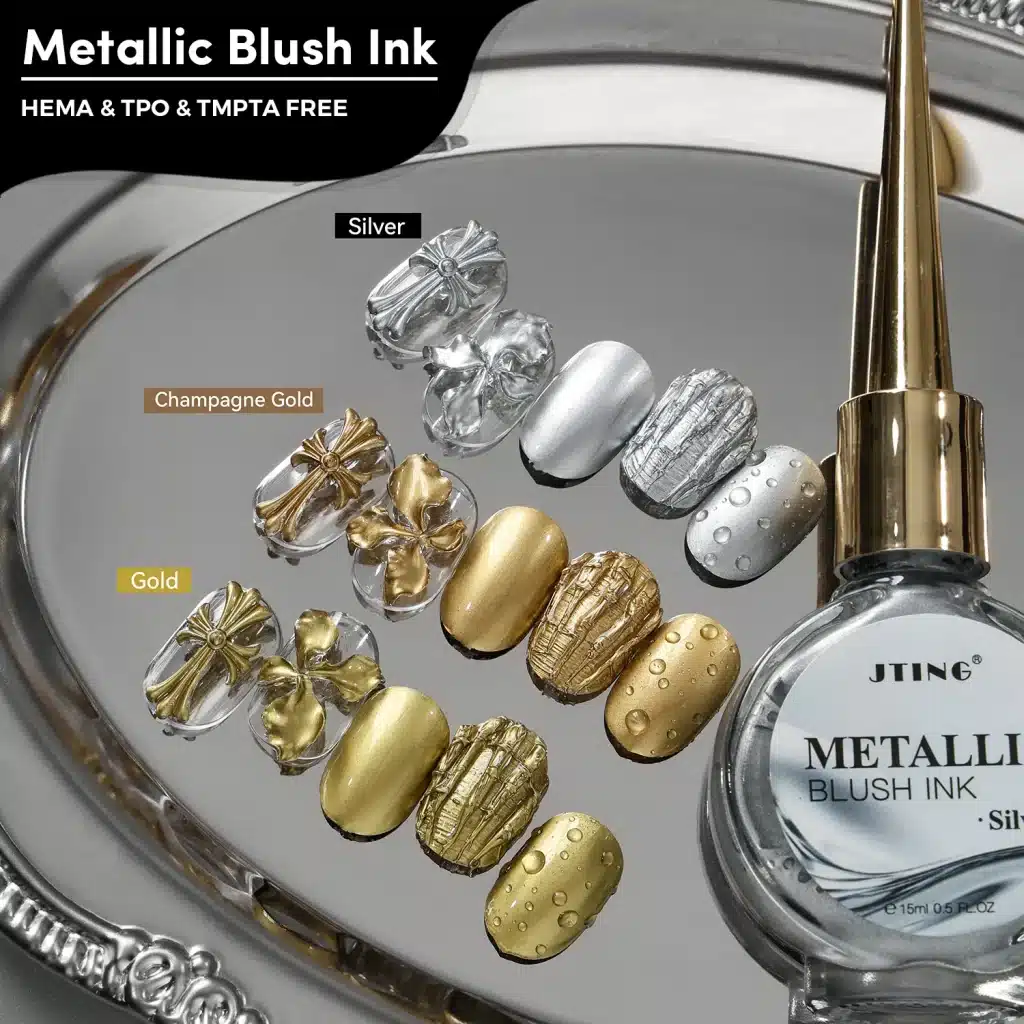
JTING 3-Color Metallic Blush Ink brings Silver, Gold and Champagne Gold into one coordinated range. Each 15 ml bottle includes a fine-tipped brush; all three shades are HEMA-, TPO- and TMPTA-free. The ink air-dries naturally without UV or LED curing.
This guide explores metallic nail art ink, shade and background combinations, design planning, sample comparisons and wholesale or private label buying.
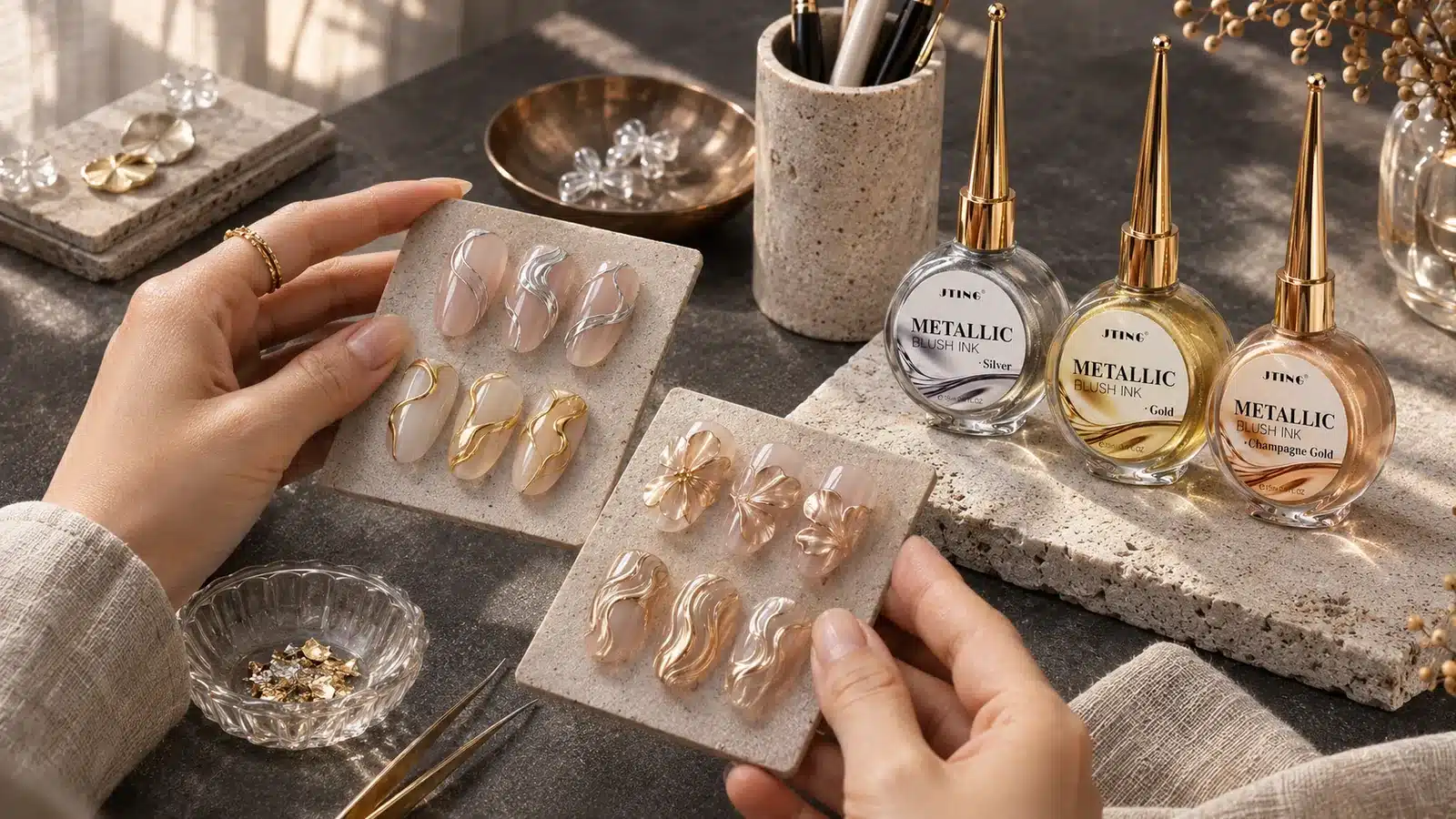
Compare fine accents, flowing designs and textured metallic finishes when planning your nail art range.
1. Understand Metallic Ink, Chrome Powder and Metallic Painting Gel
Choose a metallic material by the design it needs to create. Flowing marks, painted detail, powder finishes and raised structures involve different materials and working methods.
JTING Metallic Blush Ink brings fine accents, fluid patterns and metallic surface coloring into an existing gel nail polish range. Its three tones give brands and salon suppliers a focused addition to the backgrounds and texture products they already offer.
2. Choose Silver, Gold or Champagne Gold for Your Range
The three shades provide distinct design directions. Silver gives a cool contrast, gold brings warm brightness, and champagne gold creates a softer warm metallic accent. Select the mix around the designs and customers your range serves.
Compare the three colors on the same base and nail shape. A different background or angle can change the apparent intensity, so a consistent sample layout makes the actual shade relationship easier to judge. Each bottle contains 15 ml.
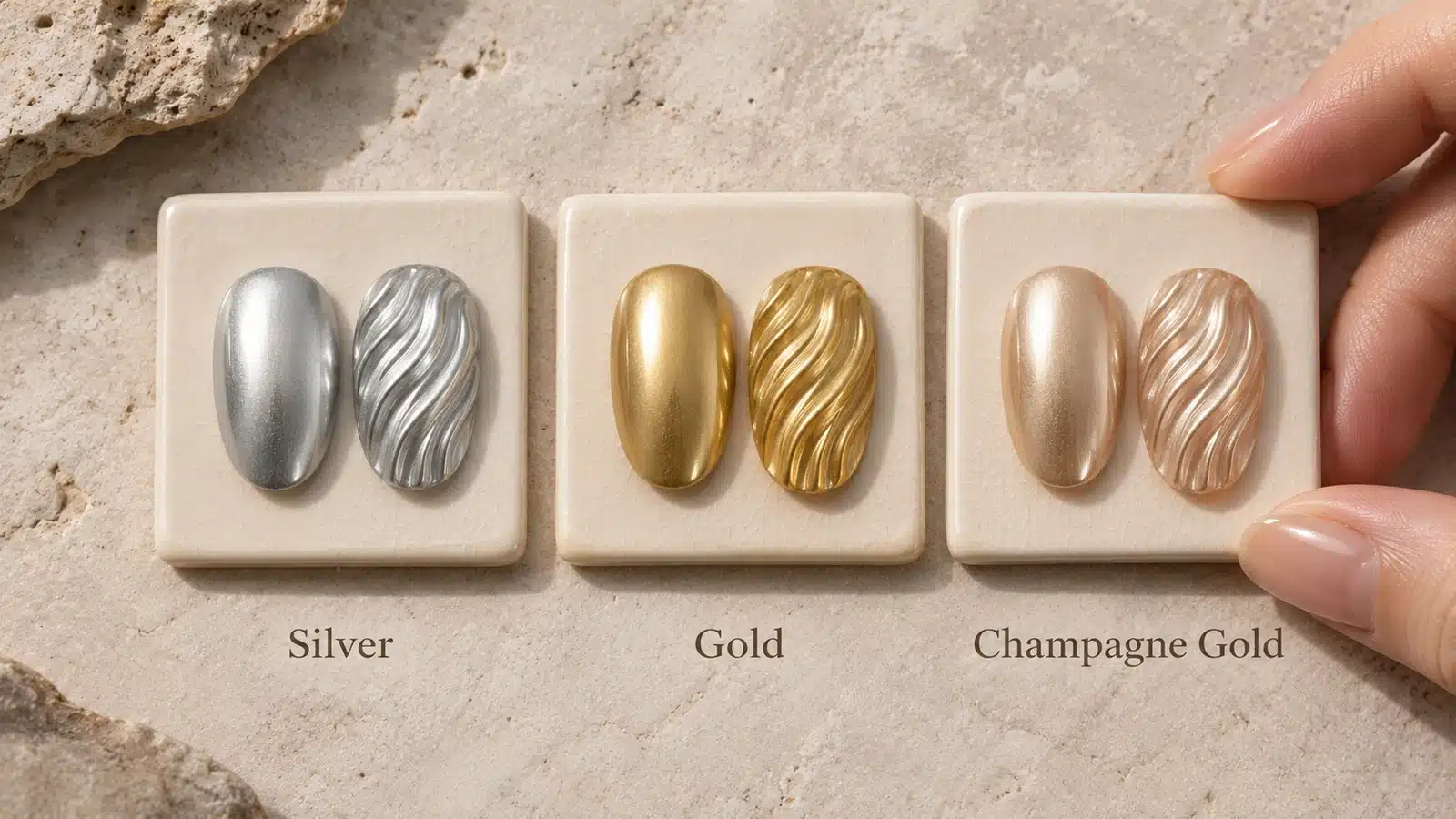
Compare the three metallic tones on matching nail shapes under the same light.
3. Match Metallic Tones with Nude, Dark and Effect Bases
A nude base leaves the metallic detail in focus without a strong background color. Black and other dark bases increase the visual contrast of selected silver or gold areas. Brown supports a warm vintage direction, especially with champagne gold.
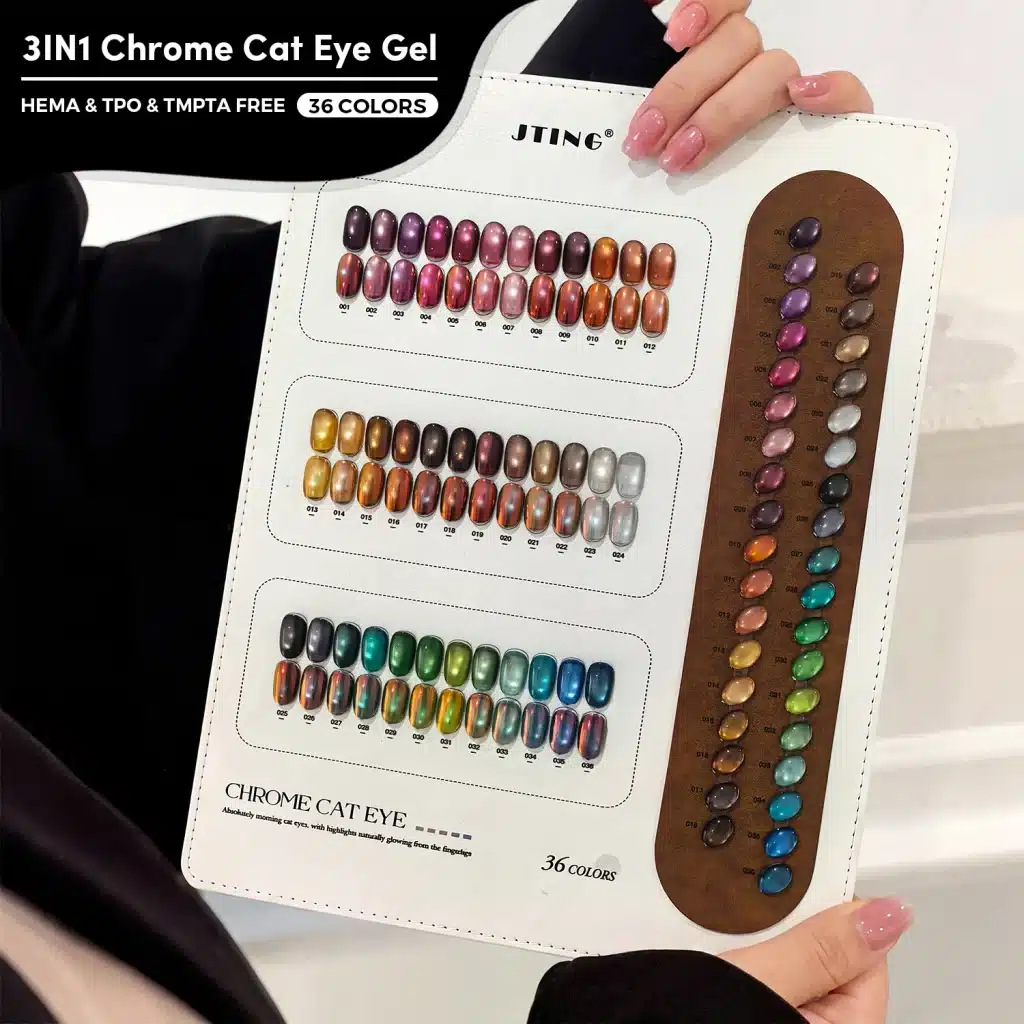
Cat eye and glitter backgrounds already contain movement or sparkle. Use metallic ink selectively over them, leaving some of the original effect visible. The aim is a relationship between two finishes rather than an uninterrupted layer that hides the background.
For a useful sales board, show one silver design on nude and dark bases, one warm gold accent on a rich solid color, and one champagne gold design over brown. Buyers can then connect each metallic tone to gel colors already present in their catalogue.
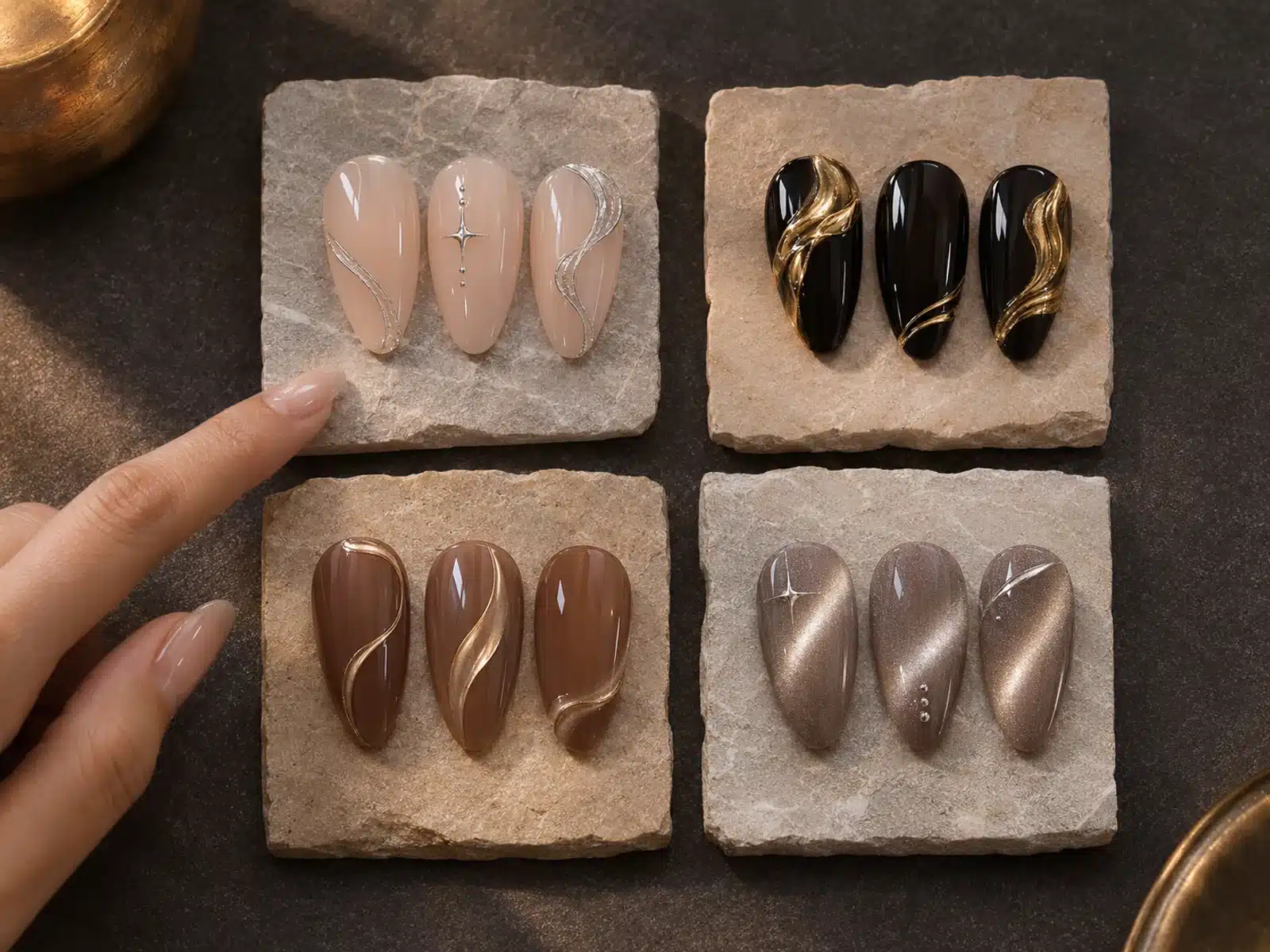
The background changes how the metallic detail reads within the finished design.
4. Plan Fine Lines, Flowing Patterns and Textured Finishes
Fine-line accents frame a plain color with a curve, outline or small painted detail. The fine-tipped brush reaches localized areas, making this a useful application for customers who want a metallic focal point within a restrained manicure.
Flowing patterns make irregular movement part of the design. For metallic marble nails, a diagonal flow across selected nails gives the set a continuous direction; a small contour near the tip offers a lighter variation.
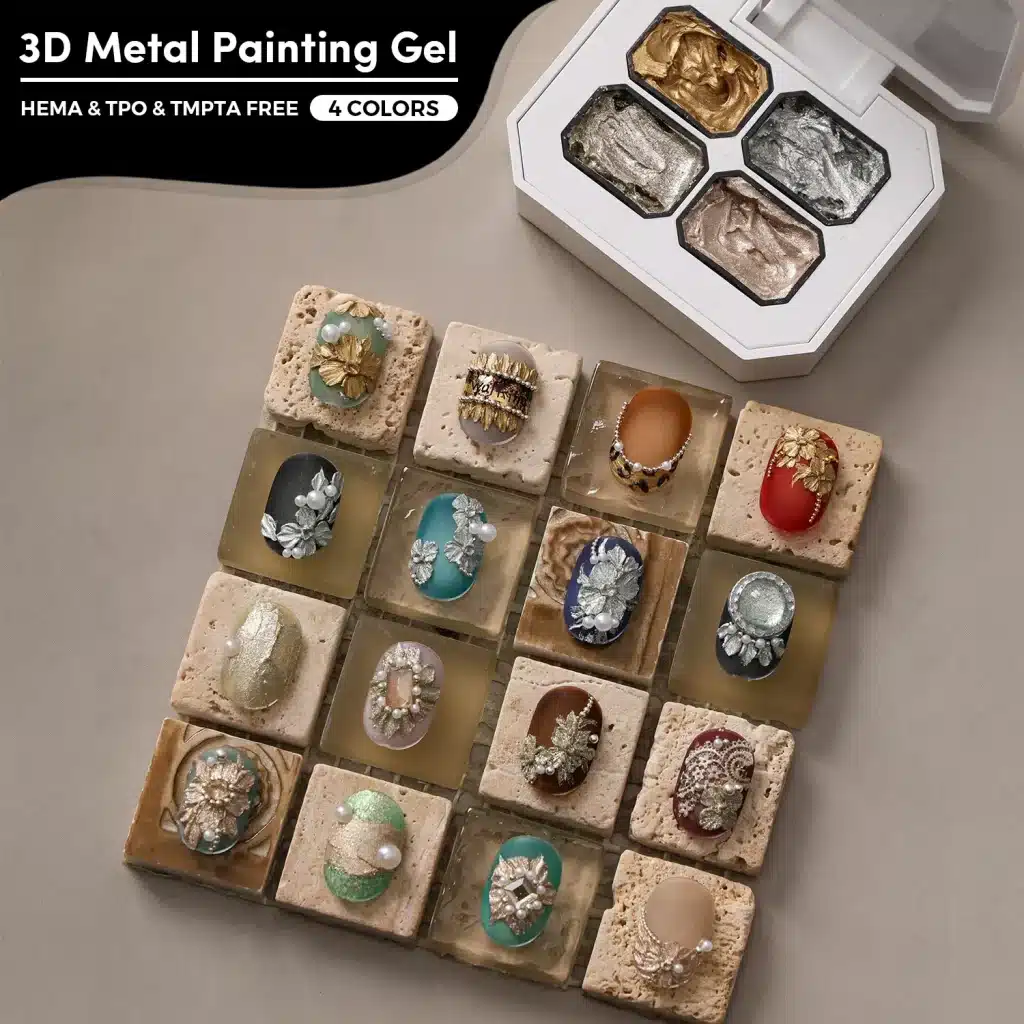
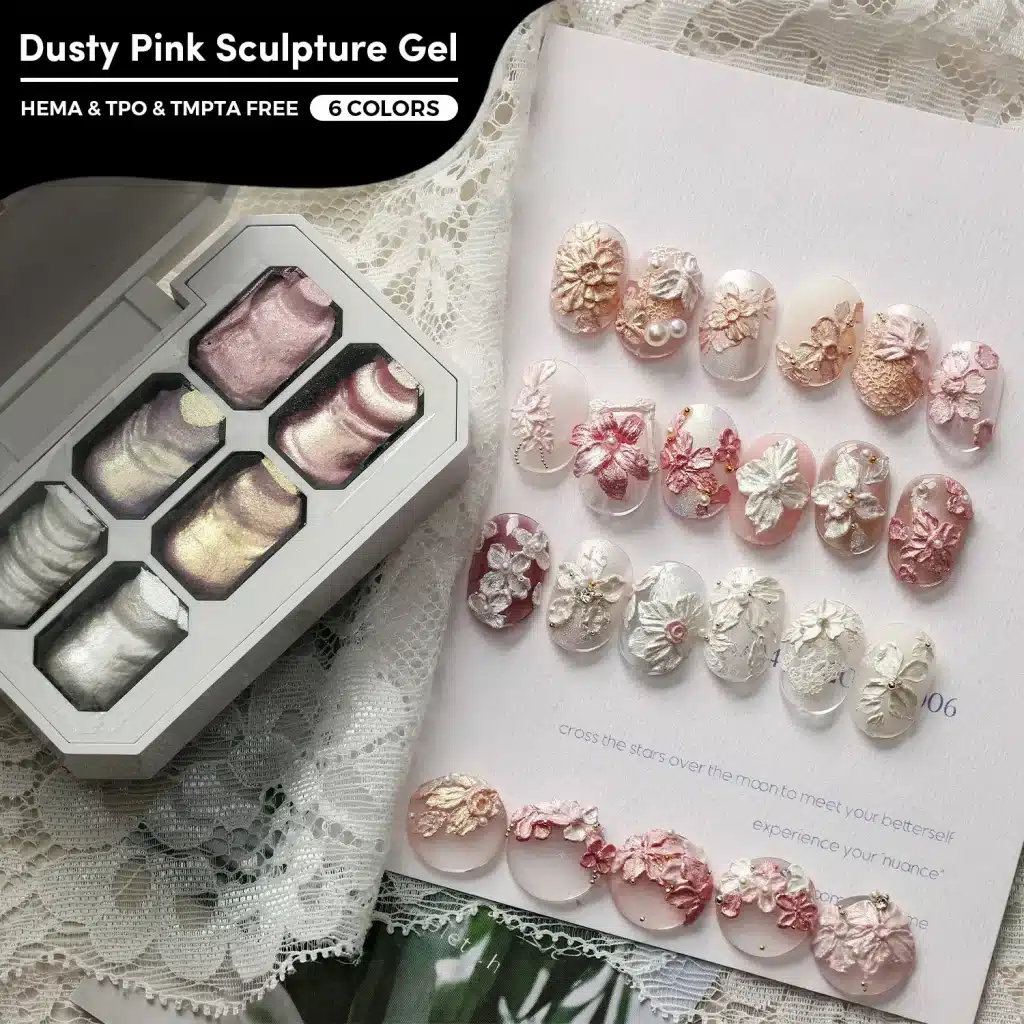
Textured finishes bring metallic color to existing ridges, waves and folds. The underlying relief creates the shape, while the metallic surface makes its contours more prominent. These three application families give a supplier distinct looks to demonstrate from the same color range.
5. Separate Metallic Color from Raised Nail Art Structure
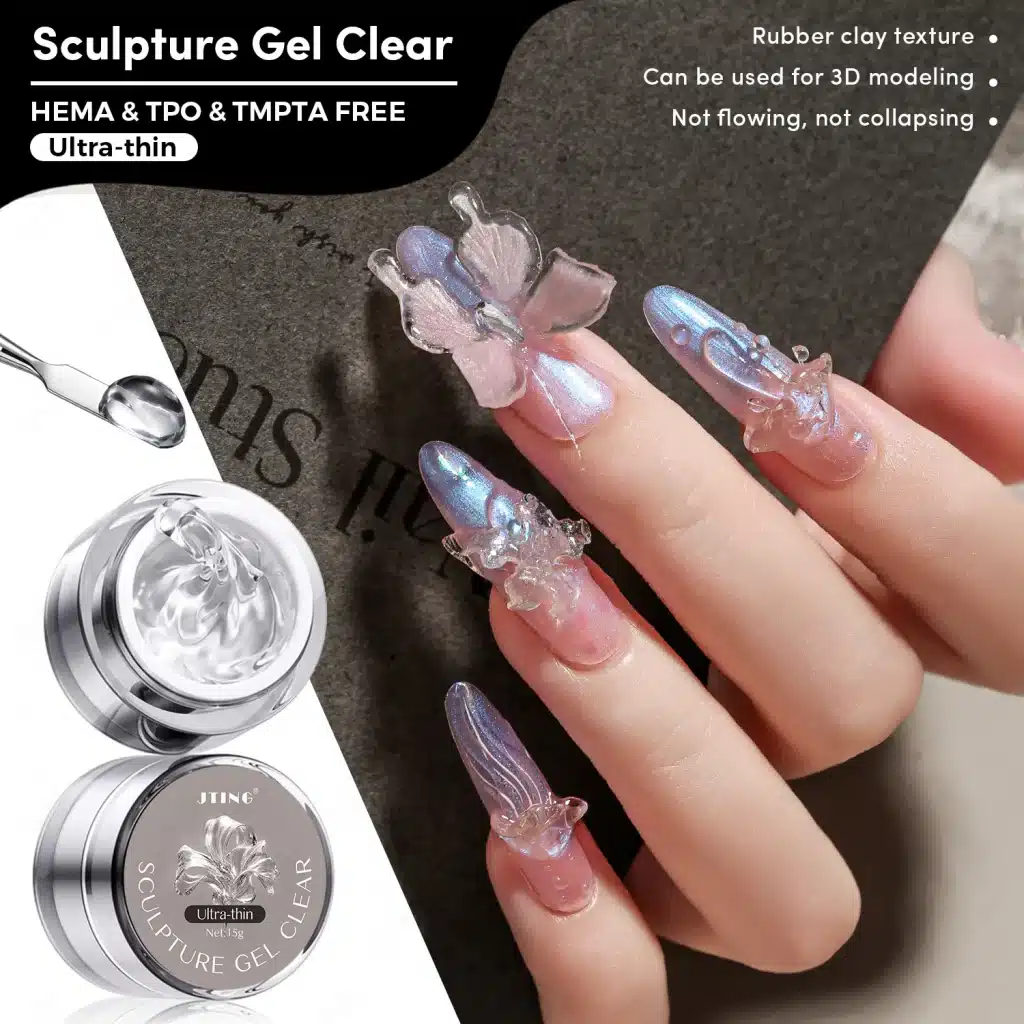
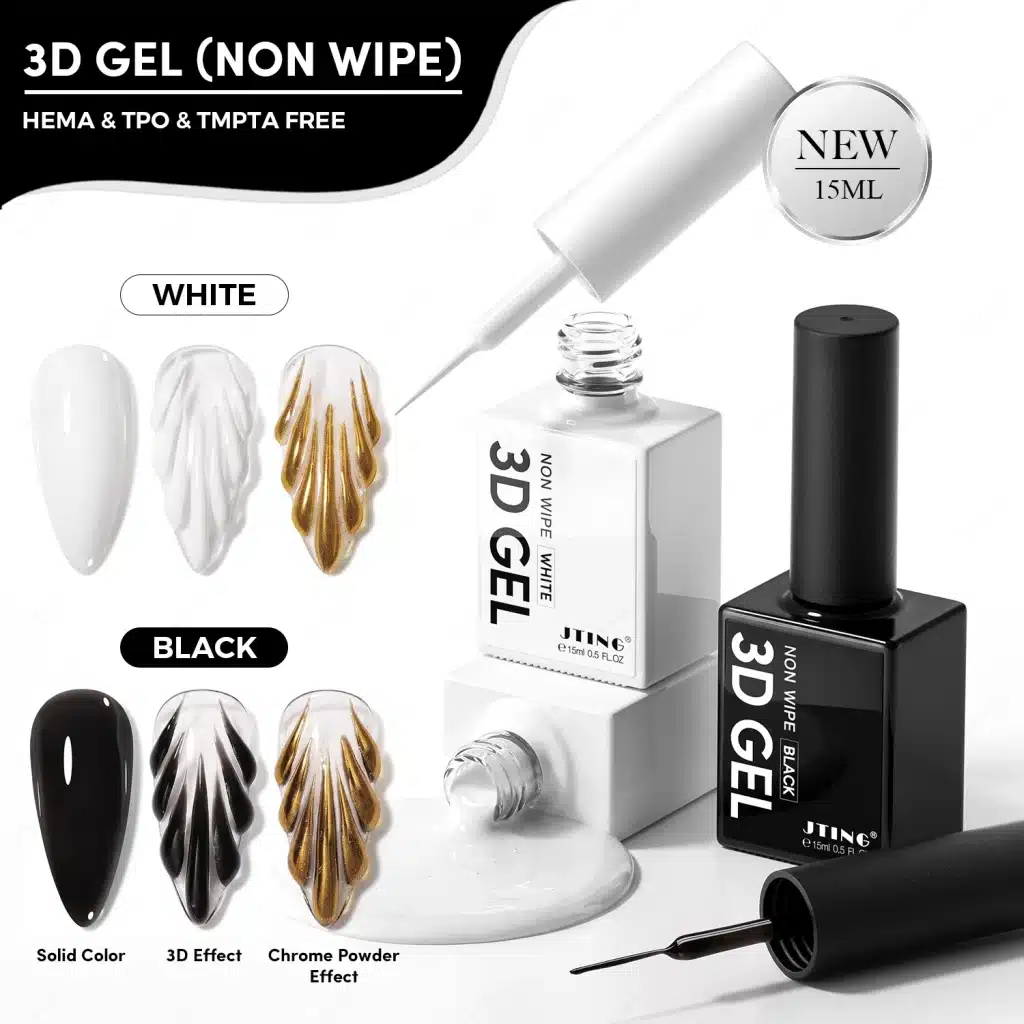
Metallic color brings reflective definition to raised waves and folds. In the documented pairing, FG117 Wave Liner Gel forms the relief and Metallic Blush Ink adds the metallic surface finish after the structure is cured.
Silver gives the contours a cool metallic character; gold makes them a brighter warm focal point; champagne gold creates a softer finish beside nude and brown backgrounds. The choice changes the mood of the same type of structure.
Offer the texture-building product alongside the chosen metallic shade as a complete design pairing. A clear materials list helps technicians prepare the service and gives distributors a practical combination to introduce to their salon customers.
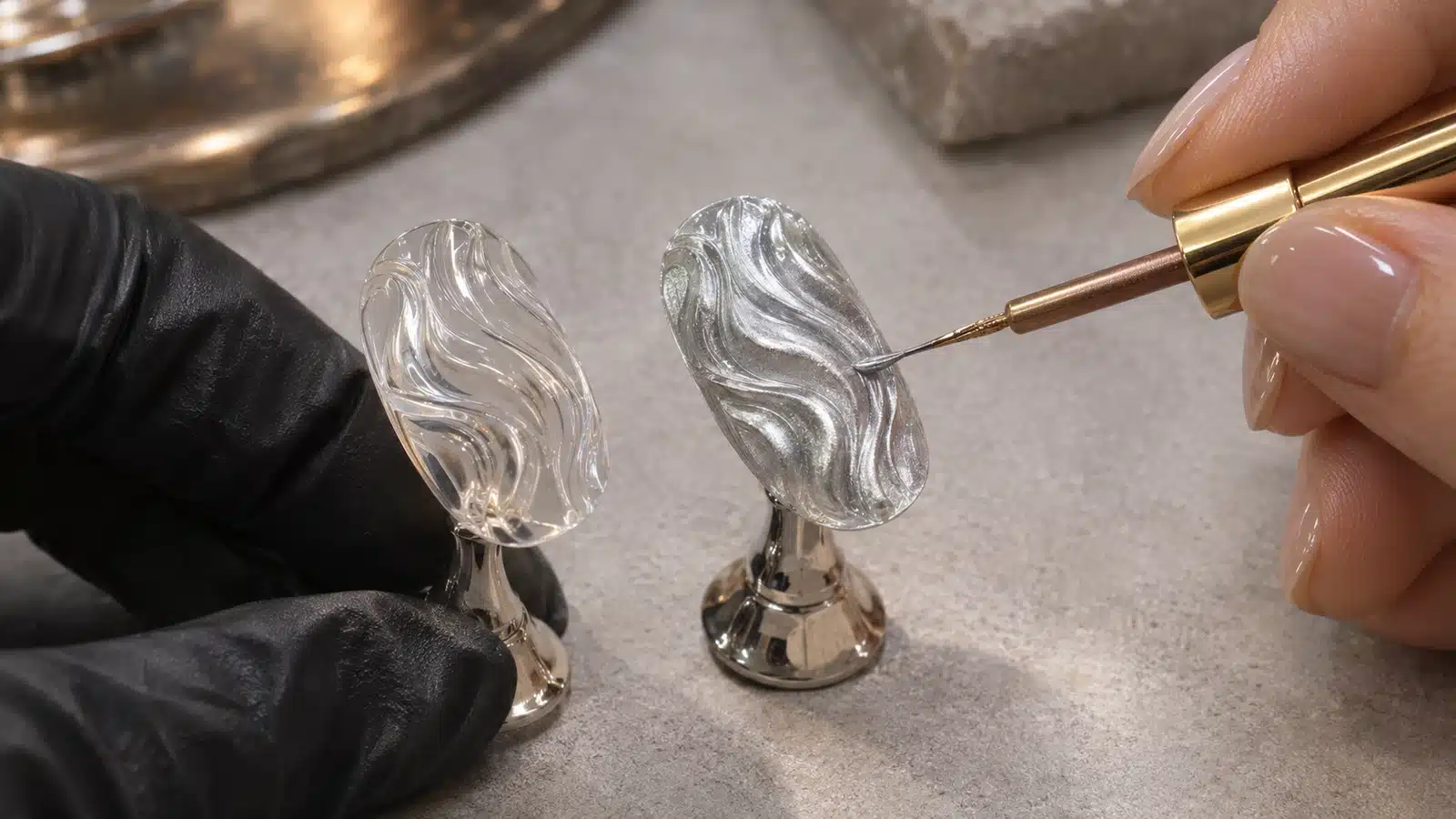
The structure-building material forms the relief; Metallic Blush Ink supplies the metallic finish.
6. Build Minimal, Vintage and Statement Nail Designs
Minimal metallic nail art uses a small accent beside plain tonal nails. A silver curve over nude or a gold detail near the tip gives the manicure a focal point while keeping most of the background visible. This is a useful entry design for a salon introducing the collection.
Vintage designs combine warm backgrounds with selected metallic details. Champagne gold over brown gives a softer direction; warm gold creates a brighter focal area. Use the same color story across the set while varying the size and location of the metallic marks.
Statement designs place more emphasis on flowing texture or contrast. A dark base with a metallic focal nail can carry the main detail, with simpler matching nails keeping the set coherent. Additional relief and ornaments belong in a separate, more detailed service tier.
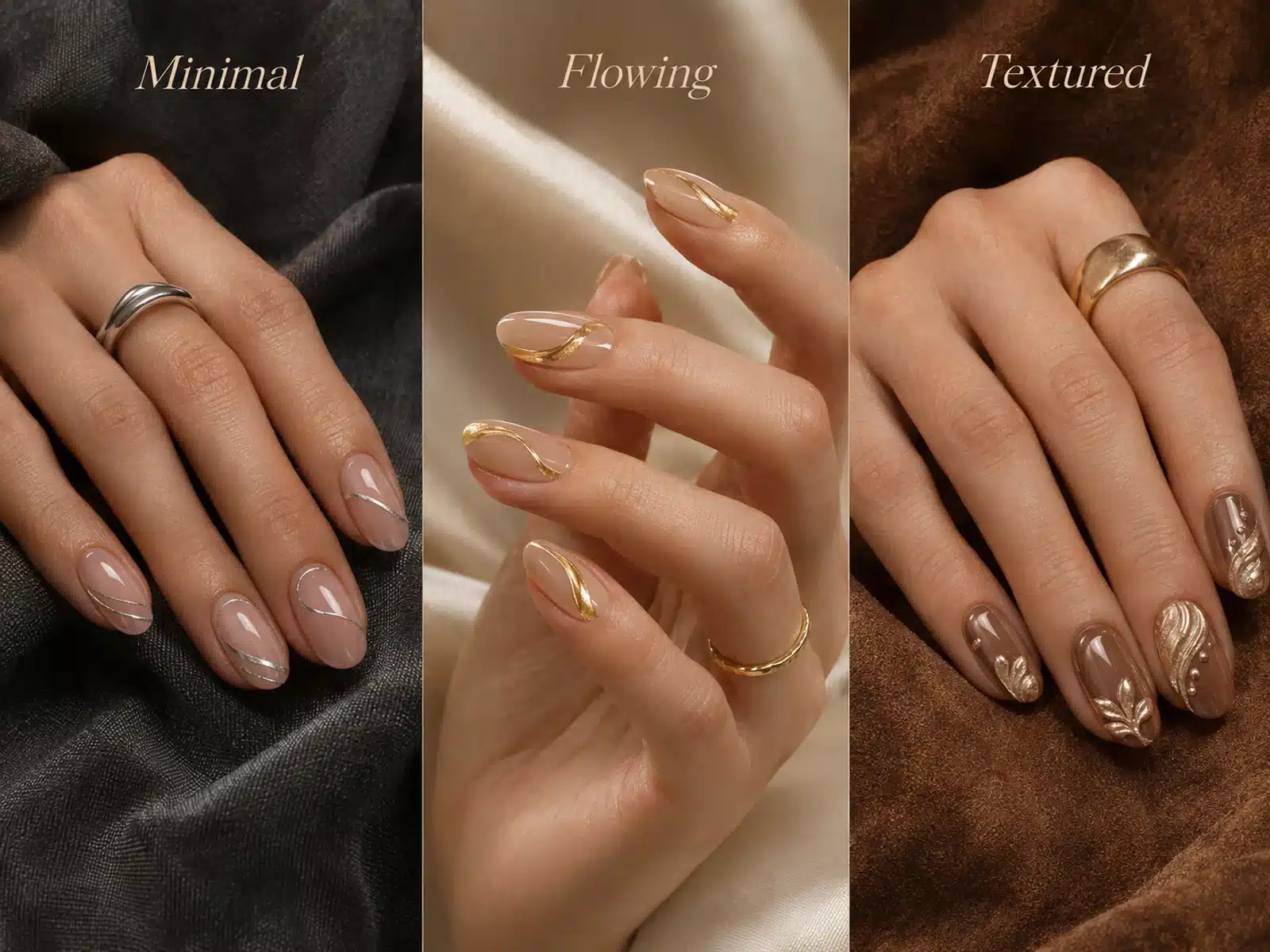
Offer distinct design directions from restrained metallic accents to textured statement nails.
7. How to Use Metallic Blush Ink for Metallic Nail Art
JTING Metallic Blush Ink air-dries naturally and does not require a UV or LED lamp. Gel products used for the background or raised structure retain their own curing instructions.
For the documented raised-wave design, use the following sequence:
- Create the structure. Apply FG117 Wave Liner Gel to form the raised wave design.
- Cure the structure. Cure the Wave Liner Gel according to its instructions before adding metallic color.
- Add metallic color. Apply the selected Metallic Blush Ink shade over the formed texture with the fine-tipped brush.
- Let the ink air-dry naturally. The ink itself needs no lamp curing.
For fine lines and flat flowing accents, plan the metallic placement around the chosen background and let the ink air-dry. Keep the background and any finishing products identified in the demonstration materials so technicians can follow their respective instructions.
8. Control Placement, Coverage and Metallic Definition
For fine lines, start with a small amount on the brush and use the tip to place the mark. Compare the line width on a sample tip before repeating it across the set. If the mark becomes broader than intended, reduce the amount and shorten the stroke rather than adding more surrounding detail.
For flowing patterns, begin in the selected area and observe the extent of the metallic color before adding another mark. A localized placement gives more room to adjust the design than covering the nail at once.
For textured finishes, follow the formed contours with controlled placement. Compare the relief before and after coloring: ridges and folds should remain visually distinct. Let the ink air-dry naturally; the background and structure-building gels retain their own curing instructions.
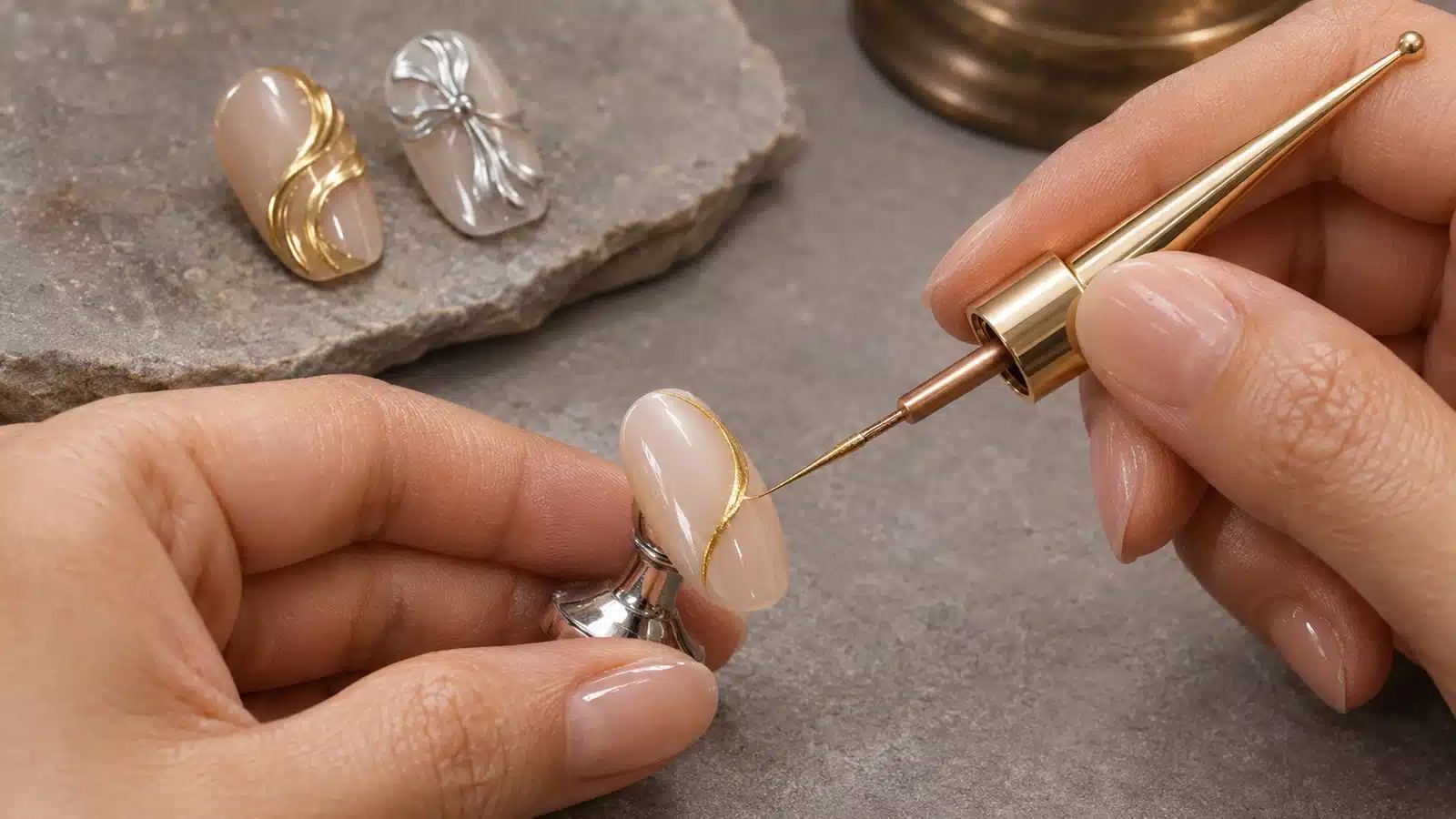
Control brush placement and the extent of metallic color for the intended detail.
9. Troubleshoot Uneven Color and Lost Texture Detail
Compare the application with the intended result, keeping the ink shade and background the same while adjusting one variable.
Retain the successful sample with its background, shade and brush method. These references give the salon team a practical starting point for the next service.
10. Build Salon Service Levels and Training Samples
Build service choices around the work included in each design. A small metallic detail, a flowing art set and a raised metallic design offer different levels of decoration and preparation.
Present each service with a full-set photograph and one detail view. For training, demonstrate the action that distinguishes the tier: a controlled line, a flowing placement or coloring over a formed structure. This lets technicians explain both the finished appearance and the work behind the service.
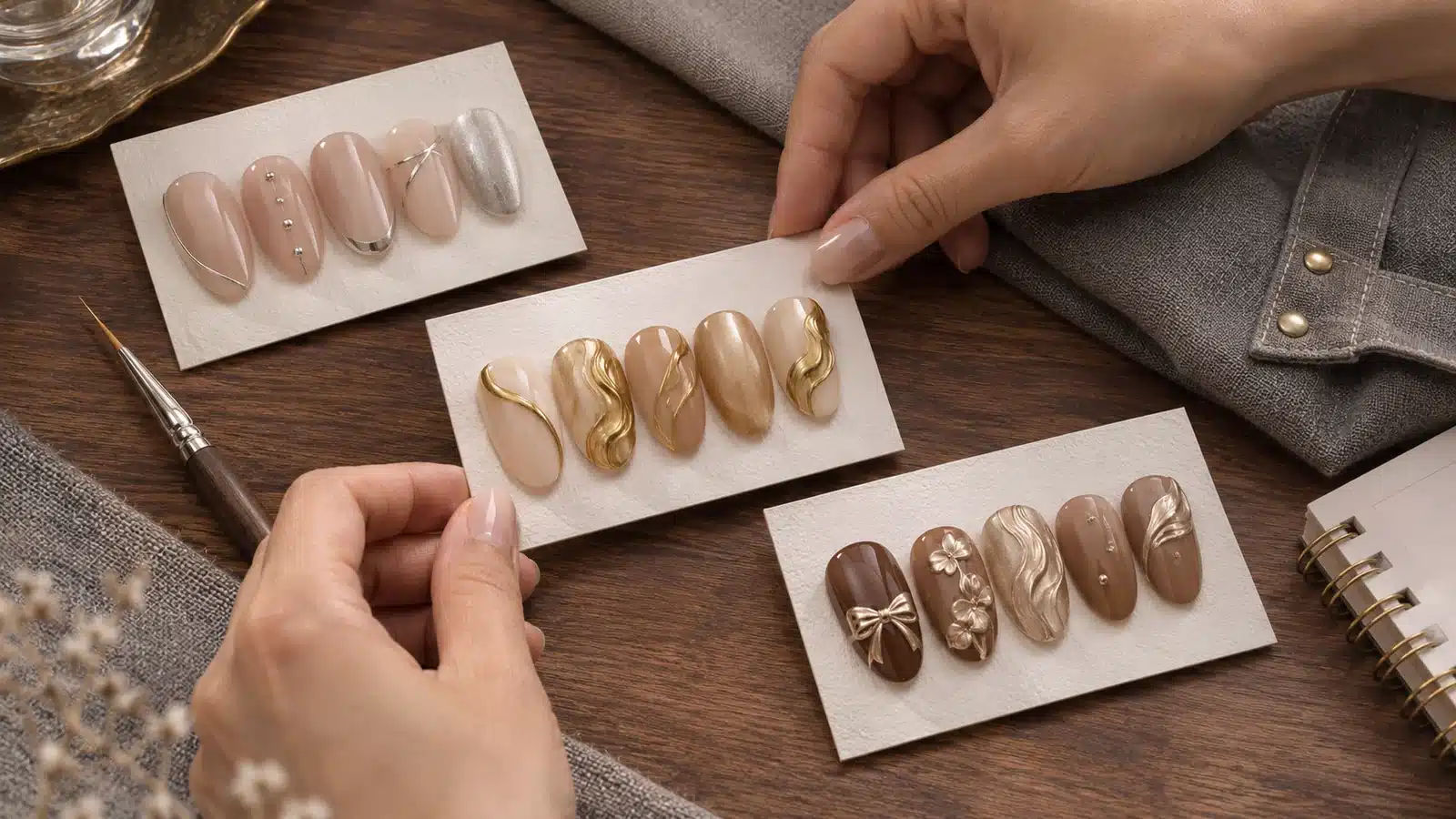
Separate simple accents, flowing art and raised metallic designs into recognizable services.
11. Photograph Metallic Finishes for Catalogues and Listings
Metallic reflections change as the camera, light or nail moves. Photograph the three shades with the same background and lighting arrangement so a brighter highlight is not mistaken for a different color.
Use three complementary views: the full manicure for style, a close-up for line and texture detail, and a short movement video for reflection. With raised art, include an angle that makes the structure visible rather than relying entirely on a frontal highlight.
Connect the shade name and model reference to each asset. Silver, Gold and Champagne Gold should stay identifiable across sample boards, catalogue photographs, product listings and order records. This reduces avoidable confusion when a distributor requests repeat stock.
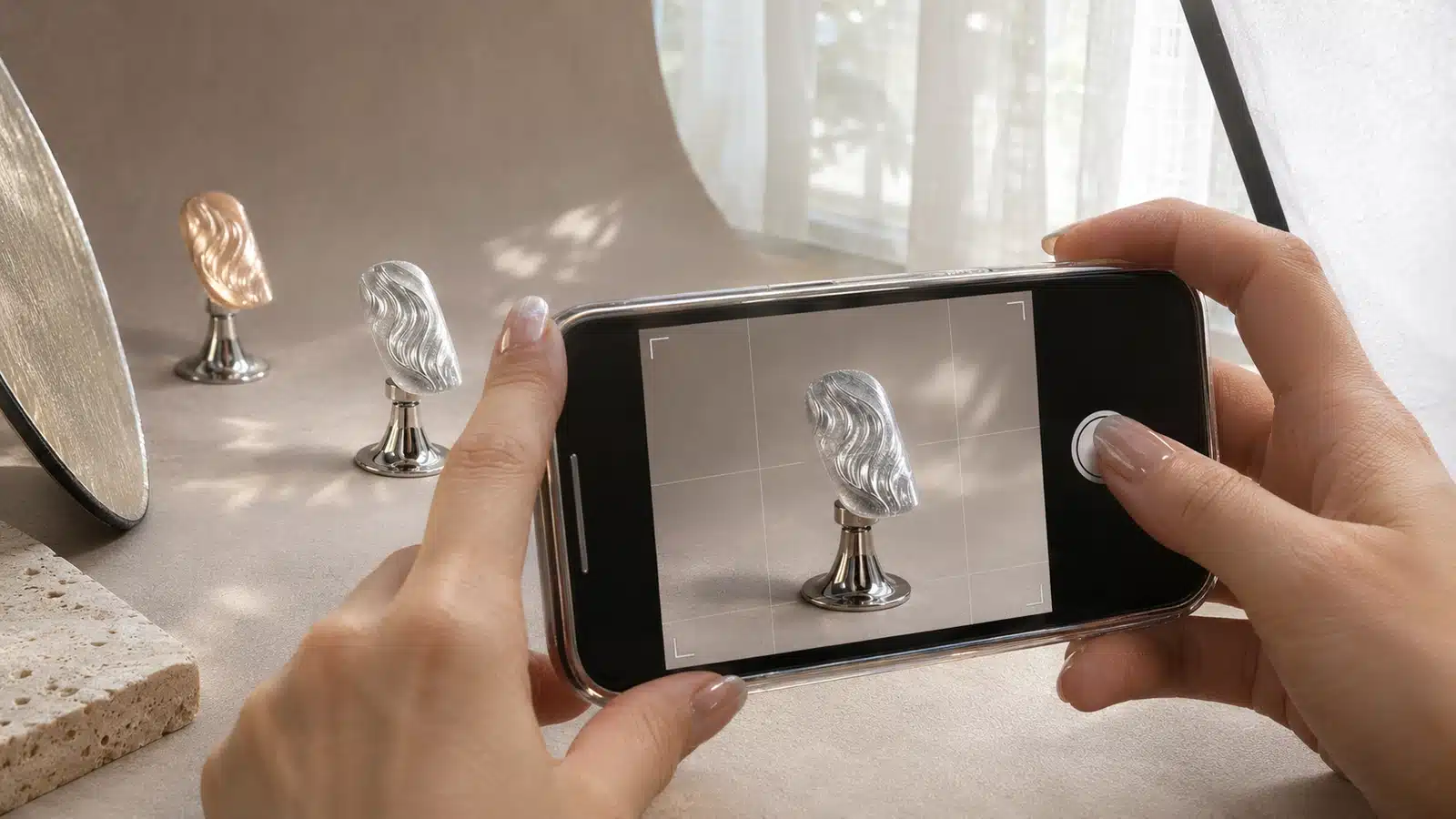
Use close-ups and different viewing angles to show metallic reflection and relief.
12. Evaluate Samples with a Repeatable Design Comparison
Choose samples that represent the designs you intend to sell. Compare the three metallic colors on one common base, then add the particular background and texture combinations needed for your range.
Describe changes through the desired result: a finer accent, a smaller metallic area or a different shade relationship. Keep the final reference with the artwork and color list used for production.
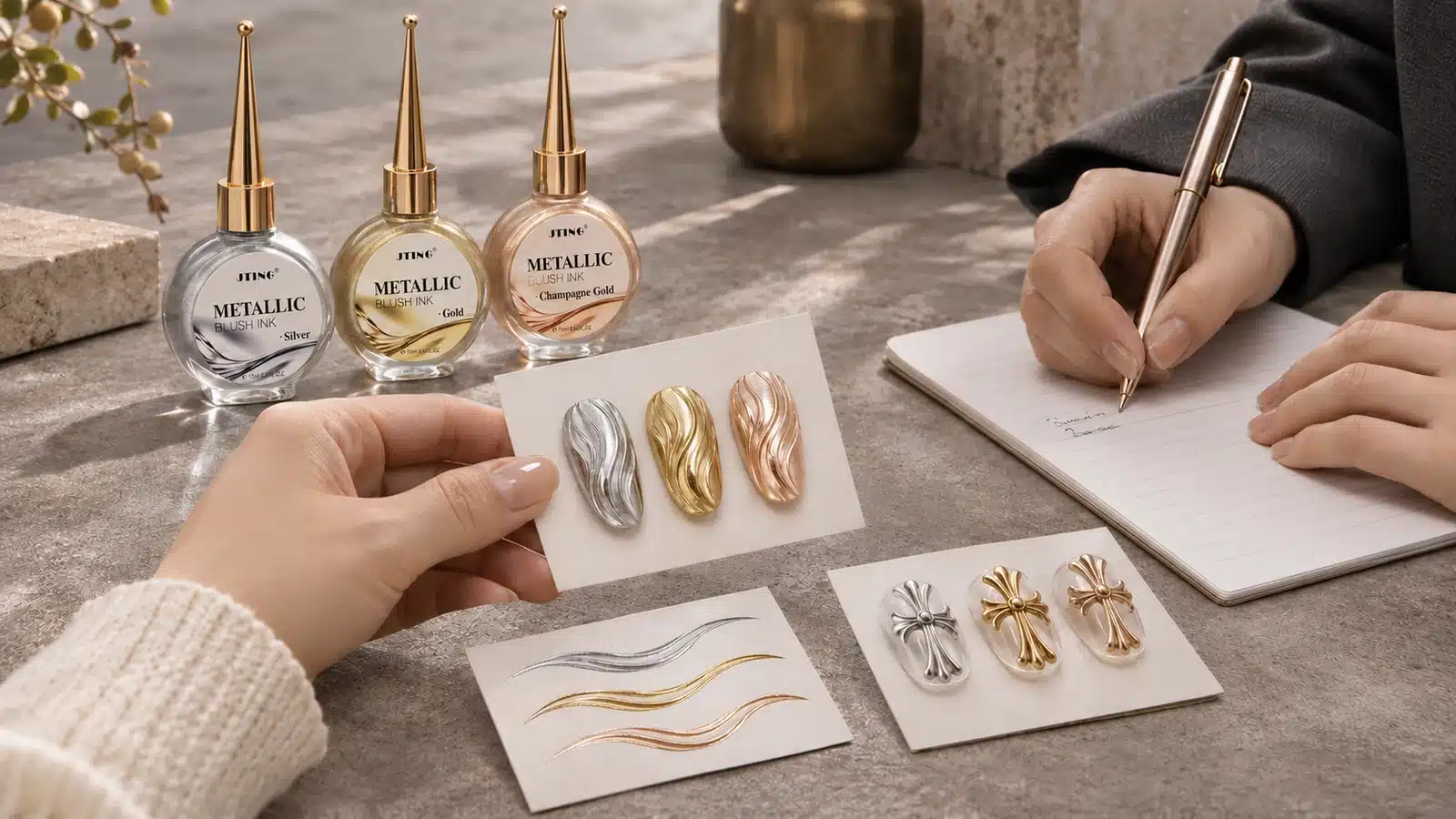
Keep shade selection, design samples and application notes connected when reviewing your range.
13. Calculate Material Use, Service Time and Resale Costs
A fine silver line and a broad metallic accent draw from the same 15 ml bottle but use different amounts of ink. A raised design adds a structure-building material and a separate shaping stage. Measure those applications separately when setting a service price.
Service material cost = metallic ink used + background products + texture materials + finishing products + decoration and consumables. Record the number of decorated nails and the preparation, application and finishing time at the salon’s labor rate. Keep air-drying time identifiable when planning the appointment workflow.
For brands and distributors, calculate landed cost per bottle from product, customization, packaging, freight and applicable import charges. For a three-shade offer, total the actual bottles and packaging in that offer before setting the resale price. Track channel and fulfilment expenses separately.
Gross margin (%) = (net sales revenue − cost of goods sold) ÷ net sales revenue × 100. Use revenue and cost for the same quantity; operating expenses still need to be accounted for when assessing profit.
14. Plan Shade Quantities, Bundles and Reorders
Plan the initial shade mix around the designs your customers buy. A catalogue focused on cool monochrome accents gives silver a different role from a range built around warm statement gold or softer champagne gold and brown designs. Use those applications to set the first quantities, then refine the mix with actual orders.
For salon supply, connect each ink with the background and texture products in the demonstration. For education, stock the shades used in the lessons. For an own-brand range, keep the bottle, color chart and listing names consistent so sales remain traceable by shade.
List bundle contents clearly in the quotation: color and quantity of ink bottles, supporting materials and packaging. JTING coordinates the labels and packaging with the selected sales format.
Planned replenishment = expected demand until the next delivery + safety stock − usable stock − confirmed incoming stock. Apply the agreed order quantities to positive requirements. Track sales by metallic shade and use salon consumption feedback to explain changes in demand.
15. Build a Private Label Metallic Nail Art Ink Collection
JTING provides private label nail art ink with customized bottle labels, packaging, color charts, product photography and videos. These materials connect the three metallic shades to a recognizable collection.
Make Shade Identification Clear
JTING adapts bottle labels with your logo and product information. Keep Silver, Gold and Champagne Gold connected to their model references in charts and order records. Explore custom labels and stickers for brand presentation options.
Connect Packaging with the Sales Format
JTING develops branded packaging around the selected colors and quantities. Product information and artwork should match the actual contents, whether you are introducing individual shades or an agreed collection.
Give Your Sales Team Useful Content
JTING produces charts for selection, manicure photographs for catalogues and listings, and videos for application demonstrations. Explore the Build Your Brand service to connect product, packaging and launch materials.
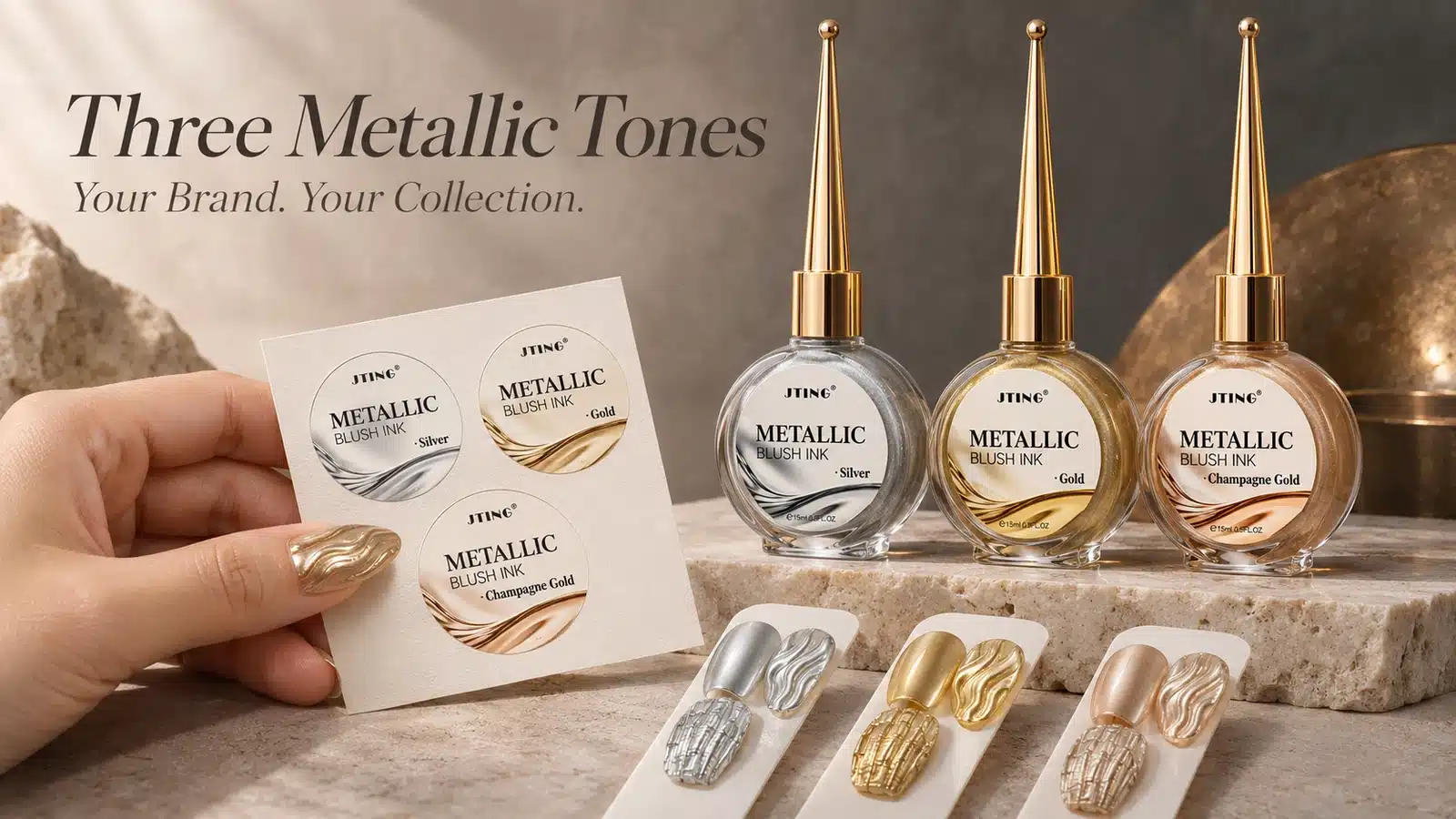
Connect metallic shades with bottle labels, color references and launch materials.
16. Compare Wholesale Quotes and Launch Requirements
For wholesale nail art ink, compare quotations with the same shades, quantity per shade and packaging configuration. Separate JTING-branded product supply from private label work so the launch budget reflects what is included.
- Product: Metallic Blush Ink, selected colors and quantity per shade.
- Branding: JTING-branded supply or your label artwork and product information.
- Packaging: actual contents, box requirements and any supporting products.
- Launch materials: shade charts, product photographs and demonstration videos.
- Delivery: destination market and intended launch schedule.
JTING supports samples and bulk supply. MOQ and scheduling depend on the ink order and customization requirements. JTING provides product information and document support according to the product and destination market requirements.
17. Questions About Metallic Blush Ink
Does Metallic Blush Ink Need a UV or LED Lamp?
No. JTING Metallic Blush Ink air-dries naturally and does not need lamp curing. Gel backgrounds and texture-building gels follow their own curing instructions.
Which Metallic Blush Ink Shades Are Available?
The range includes Silver (FG172), Gold (FG173) and Champagne Gold (FG174). Each Metallic Blush Ink bottle contains 15 ml.
What Is the Difference Between Gold and Champagne Gold?
Gold provides a brighter warm metallic direction. Champagne Gold has a softer warm tone suited to understated accents, nude backgrounds and brown vintage designs.
Does Metallic Blush Ink Include a Fine-Tipped Brush?
Yes. The included fine-tipped brush supports lines, small accents and localized metallic detailing.
Does the Ink Create Raised Nail Art by Itself?
The ink supplies metallic color. Raised structures are formed with a separate product; the documented pairing uses FG117 Wave Liner Gel for the structure and Metallic Blush Ink for its metallic finish.
Can I Use Metallic Details with Cat Eye Designs?
Metallic details can be combined with cat eye backgrounds. Leave part of the magnetic effect visible so the two finishes contribute separately to the design.
Is Metallic Blush Ink HEMA-, TPO- and TMPTA-Free?
Yes. JTING Metallic Blush Ink has a HEMA-, TPO- and TMPTA-free formula.
Does JTING Offer Private Label Metallic Nail Art Ink?
Yes. JTING supplies customized labels, packaging, color charts, product photography and videos for a private label collection.
How Should I Store and Handle the Ink?
Close the bottle tightly after use and store it in a cool, shaded place away from heat and nail lamps. Take small amounts as needed and do not return discolored product to the original bottle.
18. Start Your Metallic Nail Art Collection with JTING
Introduce cool silver, warm gold and soft champagne gold through designs your customers can recognize and sell. Connect fine accents, flowing patterns and textured finishes to a clear range of services and supporting products.
Contact JTING for Metallic Blush Ink samples, wholesale pricing, customized labels, packaging and launch materials. Share the shades and applications you want to introduce so the collection fits your channel.