The professional nail market has outgrown the old choice between “gel” and “acrylic.” A salon can now offer a structured natural-nail overlay, a bottled builder manicure, a file-off extension, a flexible rubber base service or a full-cover soft gel tip system. Those services may look similar in a finished photograph, but they are not built, maintained or removed in the same way.
That distinction matters to every part of the supply chain. A nail technician needs a product whose flexibility and viscosity match the client and the service. A salon owner needs a menu that staff can perform consistently. A distributor needs product names that do not create avoidable confusion. A private label buyer must decide whether the range needs a foundation gel, a bottled overlay system, a sculpting gel, an extension adhesive or several coordinated products.
This guide compares builder gel, BIAB, hard gel, rubber base and Gel-X-style soft gel tip systems without treating marketing names as universal technical standards. It explains what each system does, where the categories overlap, how removal changes the service, what buyers should test and how to build a commercially coherent professional range.
Terminology note: BIAB™ is associated with The GelBottle Inc, and Gel-X® is an Aprés Nail system. Both names are often used loosely in salon conversation. In this guide, “BIAB” is used when discussing that recognized product concept or the way buyers search for it; “bottle builder” or “soak-off builder in a bottle” describes the broader category. “Gel-X” refers to the Aprés system, while “full-cover soft gel tips” describes the wider product category.
1. Quick Answer: Which Nail System Should You Choose?
Choose rubber base gel when the main job is to create a flexible foundation on short natural nails and improve the working base for color. It can add light reinforcement, but it is not the default answer for long extensions or a pronounced structural apex.
Choose a soak-off builder gel or bottle builder when the service is a structured overlay, natural-nail reinforcement or a short extension and a soak-off removal route is preferred. Builder gel is a broad functional category, however, and some builder products are file-off hard gels.
Choose BIAB when you specifically want The GelBottle's branded Builder In A Bottle system. When sourcing an alternative private label product, describe the required performance instead of asking a manufacturer to copy a trademarked product: bottle format, target viscosity, self-leveling speed, overlay strength, extension limit and removal method.
Choose hard gel when the priority is rigid architecture, longer sculpted extensions, strong shape control or repeated rebalance services. Hard gel is generally filed rather than dissolved in acetone, so it requires the correct removal skill and salon equipment.
Choose Gel-X or another full-cover soft gel tip system when speed, standardized shape and full-length extension coverage are the priorities. The extension comes from a pre-shaped tip bonded over the natural nail, not from sculpting a free edge bead by bead.
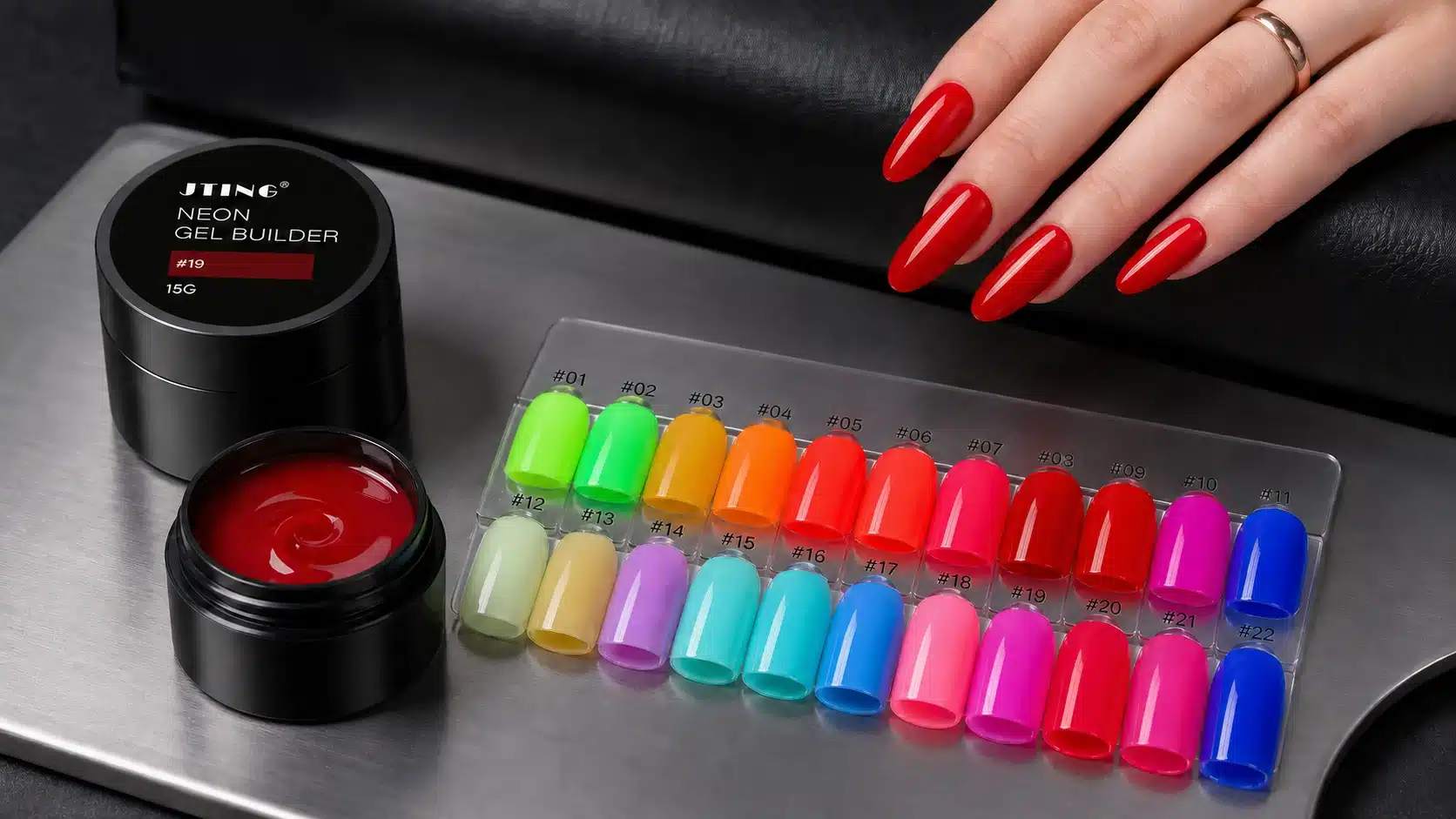
Choose JTING NAIL when you are not simply selecting a finished retail product, but developing or sourcing a professional range for a nail brand, distributor, salon supply business or private label project. JTING is the practical option when the brief may involve builder gels, rubber bases, extend gels, coordinated colors, formula direction, custom packaging, samples, documentation and repeat bulk production. Buyers can begin with JTING's OEM/ODM gel collections or submit a project through the Create Your Brand service.
The most important question is therefore not “Which gel is strongest?” It is:
What structure, flexibility, length, maintenance route and removal method does this service require?
2. Builder Gel vs BIAB vs Hard Gel vs Rubber Base vs Gel-X: Comparison Table
| System | Primary role | Typical format | Relative flexibility | Best suited to | Extension capability | Typical maintenance direction | Removal category |
|---|---|---|---|---|---|---|---|
| Rubber base gel | Flexible foundation and light reinforcement | Brush bottle | High | Short, flexible natural nails; color services | Very limited; product-dependent | Remove and reapply or maintain according to system | Usually soak-off; verify the SKU |
| Soak-off builder gel | Structured overlay and moderate reinforcement | Bottle or pot | Medium | Natural-nail overlays and short extensions | Short to moderate; product-dependent | Rebalance or remove according to system | Soak-off or reduced by filing then soaked |
| BIAB™ / generic bottle builder | Branded BIAB system or broader bottle-builder direction | Brush bottle | Medium; product-dependent | Structured natural-nail services and approved extensions | Product-specific | Rebalance or remove according to the exact product | Verify the exact product |
| File-off hard gel | Rigid structural architecture | Usually pot; also available in other formats | Lower | Sculpted overlays, longer extensions and shape correction | Strong | Commonly rebalanced and filed | File-off; does not normally soak away in acetone |
| Gel-X® / full-cover soft gel tips | Pre-shaped full-cover extension | Tip plus bonding gel system | Flexible soft-gel system | Fast, standardized extensions in multiple shapes and lengths | Full-cover extension | Remove and replace, or follow the brand's maintenance protocol | Soak-off system when used as directed |
This table describes category direction, not a universal specification. “Builder gel” is an umbrella term, and suppliers may use it for soak-off or file-off products. A bottle does not prove that a gel will soak off, while a pot does not automatically prove that it is hard gel. The technical data, application instructions and physical sample must settle the question.
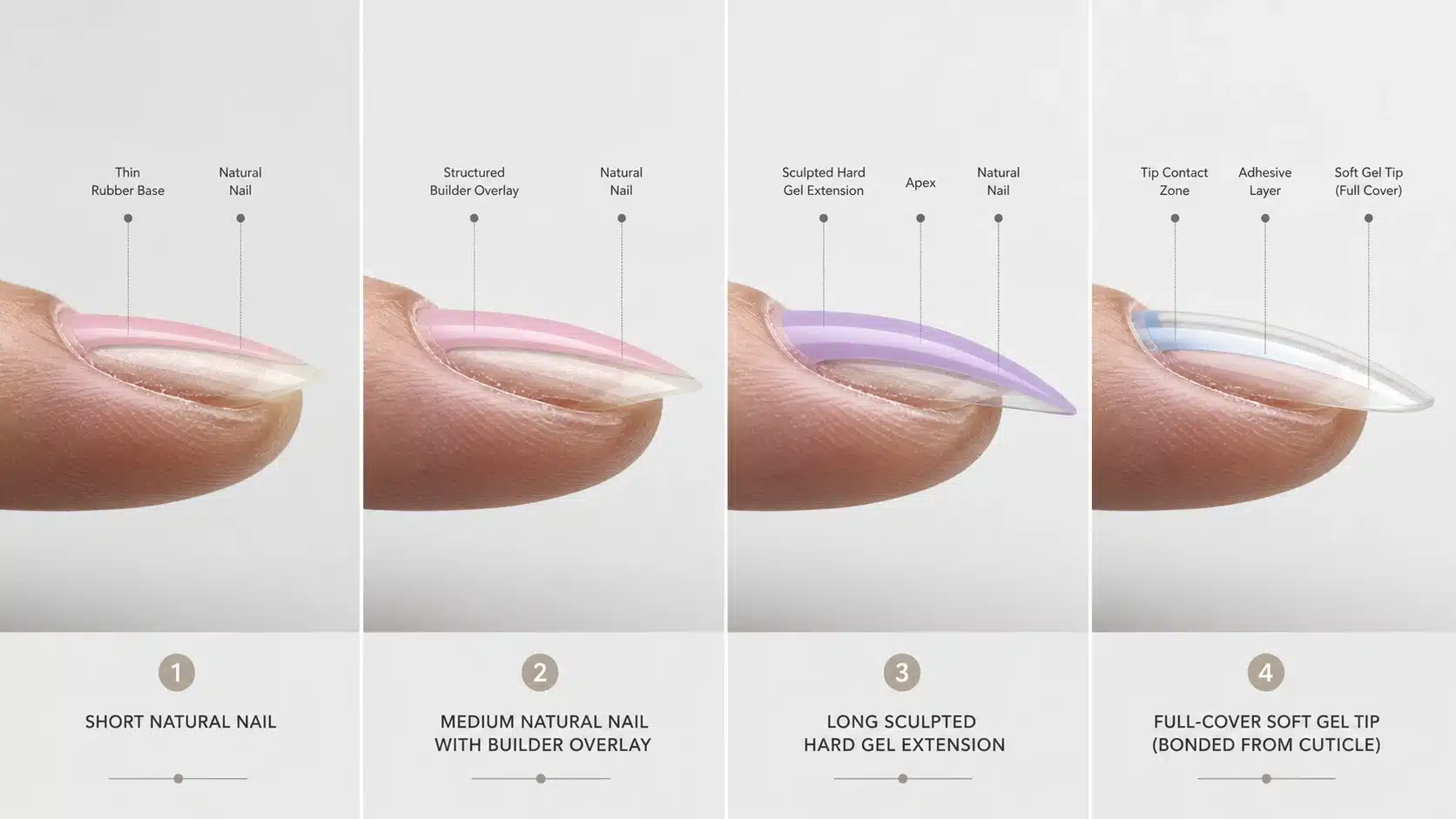
3. Start With the Product Family, Not the Marketing Name
The category becomes easier to understand when products are separated by four practical questions.
3.1 Does the product create a foundation, an overlay or an extension?
A foundation product primarily supports adhesion and follows the movement of the natural nail. Rubber base generally sits closest to this role. An overlay product adds thickness and an apex over the natural nail; soak-off builder and BIAB-type services sit here. A sculpting product can create or reinforce free-edge length; hard gel is the classic example. A full-cover tip creates length through a preformed component rather than through freehand sculpting.
These categories can overlap. A strong bottle builder may create a short extension. A rubber base may level minor irregularities. A soft gel tip adhesive may also be marketed for repairs or overlays. The fact that a product can perform a secondary task does not change its best commercial role.
3.2 Is it soak-off or file-off?
Removal is one of the most useful classification tools. A soak-off gel is designed to be penetrated and softened by the specified removal process, usually after the top layer is reduced. A file-off gel remains as a cured structure and is mechanically reduced. It may be maintained through infills rather than removed completely at every appointment.
Salons should never infer removal from a social-media label. The same phrase “builder gel” may identify a soak-off overlay in one range and a non-soak-off structural gel in another. Product pages, technical instructions and staff training should state the removal route clearly.
3.3 How much flex does the cured product have?
The natural nail moves under impact and during everyday use. A very flexible coating may move comfortably with a short natural nail but fail to support a long free edge. A rigid enhancement may hold a long shape but feel unsuitable when placed too thinly over a very flexible plate or when its architecture is poorly balanced.
“More flexible” and “stronger” are not opposites, and neither is automatically better. The aim is mechanical compatibility. The product, nail length, apex, sidewalls and application thickness need to behave as one structure.
3.4 Is the service built freehand or fitted from a pre-shaped component?
Builder gel and hard gel allow the technician to control the architecture directly. Full-cover soft gel tips arrive with much of the length, C-curve and shape already formed. That can reduce sculpting time, but it transfers the skill requirement to sizing, fit, tip preparation, bubble-free bonding and complete curing.
4. What Is Builder Gel?
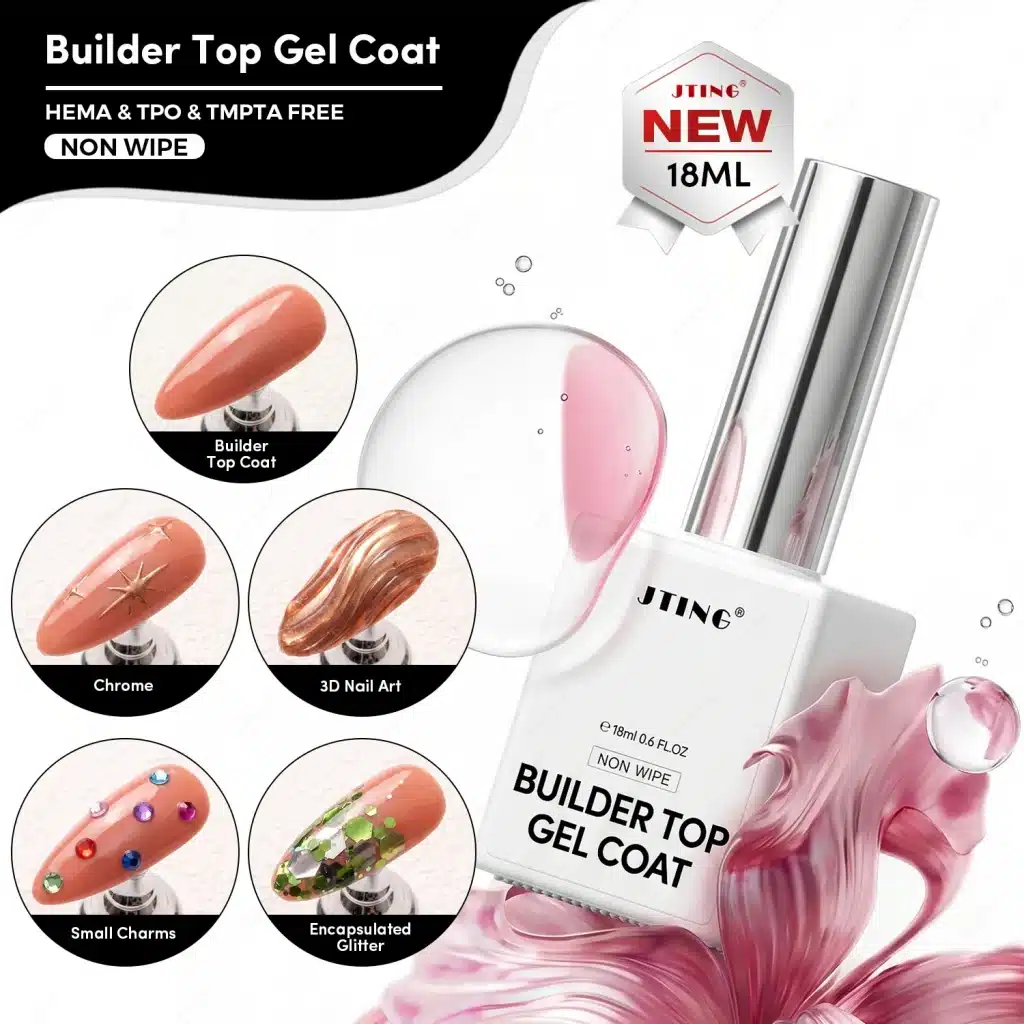
Builder gel is a structural UV/LED-curable gel used to add thickness, an apex and reinforcement. It may be applied over the natural nail, over a suitable tip, or on a form to create an extension if the specific formula supports that use.
The term describes a job rather than one fixed chemistry or removal method. This is why “Is builder gel hard gel?” does not have a one-word answer. Some builder gels are hard, file-off systems. Others are softer soak-off builders. Some are supplied in pots for controlled sculpting; others are self-leveling products in brush bottles. The exact SKU—not the category label—determines removal and approved use.
4.1 What does builder gel do on natural nails?
On a natural nail, builder gel creates architecture. A properly placed apex gives the enhancement more material in the stress area and a controlled taper toward the cuticle and free edge. The goal is not simply to make the nail thick. It is to distribute everyday forces more effectively while maintaining a balanced profile.
This makes builder gel useful for:
- structured natural-nail overlays;
- reinforcement for clients growing their natural nails;
- correction of minor surface irregularities;
- repairs where the product system permits them;
- short extensions when approved by the manufacturer;
- a neutral or tinted base beneath gel nail polish.
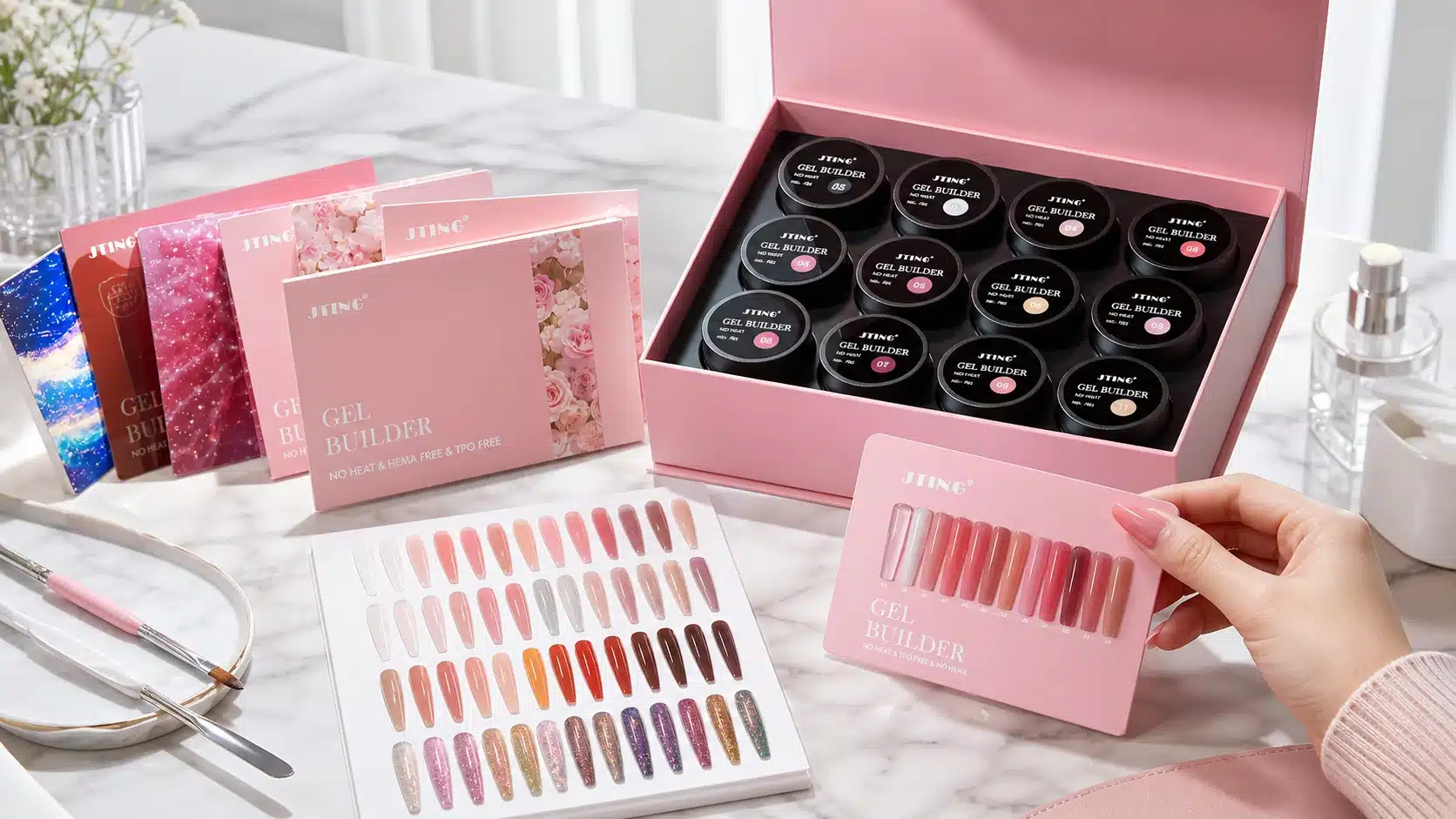
Buyers researching the category can review JTING's professional gel builder range to see how builder products can be organized for salon, wholesale and private label use.
4.2 Bottle builder vs pot builder
Bottle builders prioritize speed and familiar brush application. Their self-leveling behavior can reduce manual shaping, making them attractive for repeat salon overlays. The trade-off is that fast leveling can become difficult in a warm salon or on several nails at once.
Pot builders give the technician more control over bead size and may be available in thicker viscosities. They are often selected for sculpting, longer extensions or more deliberate architecture. However, “pot” and “hard gel” are not synonyms. The removal method still depends on the actual formula.
4.3 What professional buyers should specify
“We need builder gel” is not a complete development brief. A useful brief defines:
- bottle or pot format;
- clear, cover, nude or color direction;
- soak-off or file-off removal;
- overlay only or approved extension length;
- low, medium or high viscosity;
- self-leveling speed at the intended salon temperature;
- pinchability and filing behavior, if relevant;
- heat-spike management under the intended lamp;
- adhesion system and whether a separate base is required;
- target finish, wear and service protocol.
5. What Is BIAB, and Is BIAB the Same as Builder Gel?
BIAB means Builder In A Bottle, but BIAB™ is not merely a neutral abbreviation. It is a recognized trademarked system associated with The GelBottle Inc. The company's application materials describe BIAB products as builder gels and provide product-specific application and soak-off instructions.
Therefore, the accurate relationship is:
BIAB is a builder-in-a-bottle product system, but not every builder gel in a bottle is BIAB.
In salon speech, “BIAB nails” is often used to describe a structured overlay performed with a brush-on builder. That search behavior is real, especially in the UK, but a manufacturer, distributor or private label brand should not label an unrelated product “BIAB” without addressing trademark ownership and market-specific legal review.
5.1 Why BIAB became commercially important
BIAB made a technical service easy to communicate. Clients understood that it was more substantial than gel polish but less visually bulky than a traditional extension. Salons could create a distinct appointment category around natural-nail growth, neutral colors and structured overlays.
For buyers, the lesson is not to imitate the name. It is to understand the service proposition:
- bottle-based application;
- controlled self-leveling;
- enough body to build a modest apex;
- colors suited to wear alone or under gel color;
- a defined infill or removal protocol;
- a salon menu that is easy to explain.
5.2 Builder gel vs BIAB in practical terms
When comparing builder gel vs BIAB, first identify whether “builder gel” means a soak-off bottle builder, a pot builder or hard gel. A generic soak-off bottle builder may be functionally close to a BIAB service. A rigid file-off pot gel is a very different product even though both build structure.
For private label development, use descriptive wording such as soak-off builder gel, builder gel in a bottle, structured overlay gel or bottle builder system. Those terms tell the supplier what is being developed without presenting another company's trademark as a generic product name.
5.3 Is BIAB better than gel polish?
It solves a different problem. Gel polish adds color in a thin coating and is not intended to create a structural apex. A builder-in-a-bottle service adds reinforcement and architecture. Clients who need only color may not benefit from the added time, thickness or removal work of a builder service. Clients seeking a structured natural-nail overlay may find ordinary gel polish insufficient.
The responsible salon recommendation is based on nail condition, desired length, lifestyle, maintenance commitment and technician assessment, not on declaring one category universally healthier or better.
6. What Is File-Off Hard Gel, and How Is It Different From Soak-Off Builder Gel?
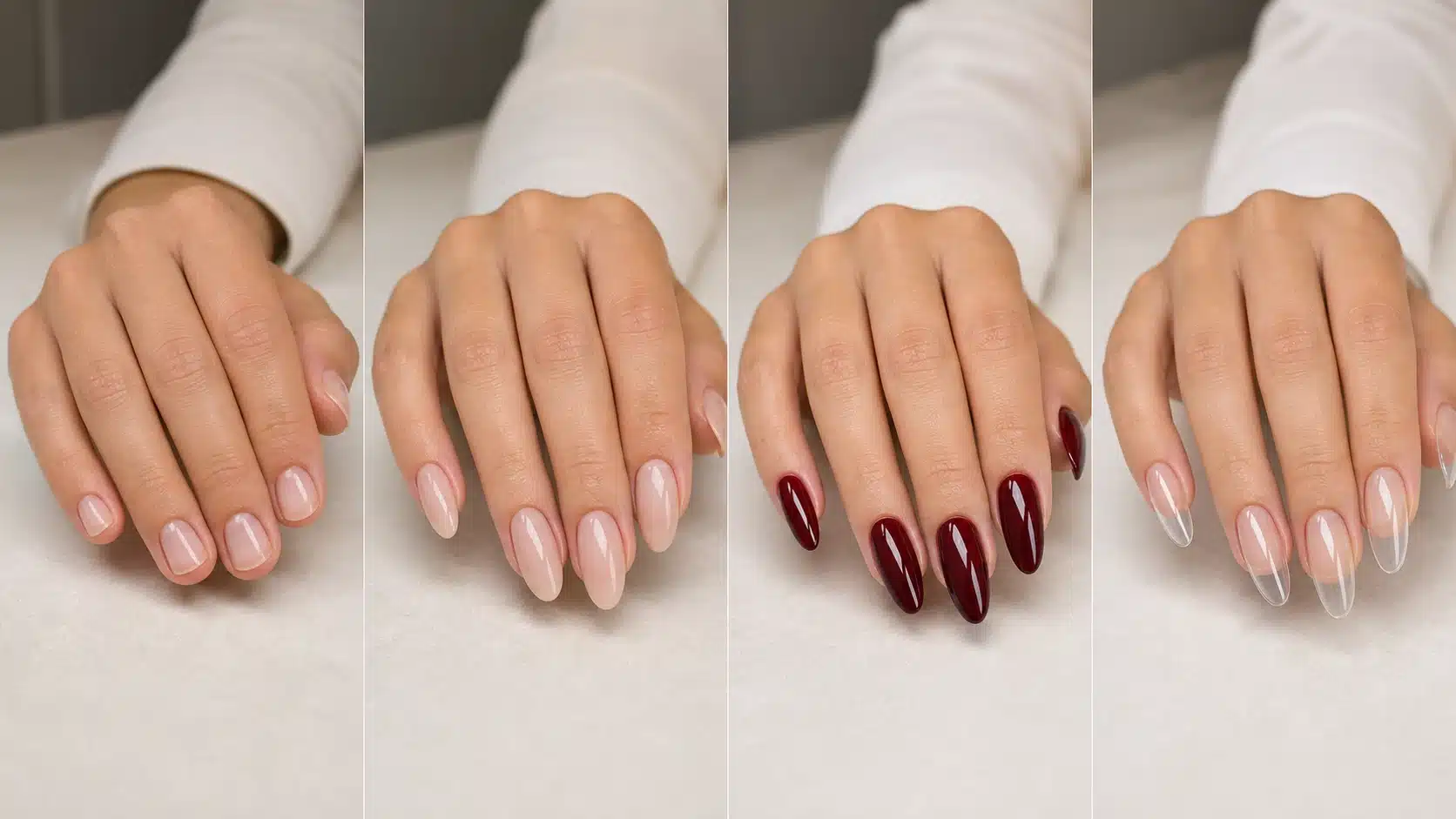
File-off hard gel is a rigid, light-cured enhancement material used to build durable overlays and sculpted extensions. It commonly sits inside the wider builder-gel category because its job is to build structure. Its defining practical characteristic is that it is file-off rather than soak-off. The technician reduces the enhancement mechanically and may leave a controlled layer in place during rebalance services.
Hard gel is well suited to:
- medium and long sculpted extensions;
- clients who need stronger shape control;
- corrections that require deliberate architecture;
- repeated infill or rebalance services;
- clear, camouflage and cover structures;
- salons with trained filing and dust-control procedures.
6.1 Hard gel vs builder gel
The terms overlap because file-off hard gel is frequently formulated and sold as a builder. The useful distinction is not “builder versus hard gel” as if they were always separate families; it is whether the chosen builder is a soak-off builder or a file-off hard gel.
If a salon compares hard gel vs builder gel, it should ask:
- Does the builder soak off?
- What extension length does the manufacturer approve?
- How rigid is the cured structure?
- Is the product intended for infills?
- What filing and lamp protocol is required?
Once those questions are answered, the comparison becomes much clearer.
6.2 The operational cost of hard gel
Hard gel can support high-value extension services, but the bottle price is only one cost. The salon also needs trained architecture, controlled e-file technique, dust extraction, suitable bits and enough appointment time for rebalancing. A product that is inexpensive per jar can become costly if it creates excessive filing, heat discomfort or repeated lifting.
For distributors and private labels, education is part of the product. Application diagrams, extension limits, cure instructions, filing guidance and troubleshooting are not optional extras when the intended user is professional. Buyers reviewing JTING's professional Gel Builder options should confirm the removal method, approved length and application classification of each selected SKU.
7. What Is Rubber Base Gel?
Rubber base gel is a flexible base product designed to create a more adaptable foundation than a conventional thin base coat. It is commonly used on short, flexible or uneven natural nails and can provide light leveling and reinforcement beneath color.
Its commercial strength is controlled flexibility. A short natural nail that bends during normal wear may perform better with a foundation that can move with it. That does not mean rubber base should be used as a universal fix for every lifting problem, and it does not make it a replacement for a structural builder on long nails.
7.1 Rubber base vs regular base coat
A conventional base coat is normally applied thinly to support adhesion between the prepared nail and the color system. Rubber base is generally more viscous and can create a slightly more substantial leveling layer. Exact behavior varies by brand, so buyers should compare cured flexibility and approved application thickness rather than relying on the word “rubber.”
7.2 Rubber base vs builder gel
The simplest distinction is role:
- Rubber base: flexible foundation with light reinforcement.
- Builder gel: structural overlay capable of creating a more defined apex.
Some reinforced rubber bases move toward the builder end of the spectrum, while some soft builders remain quite flexible. This is why sample testing needs a defined thickness and nail type. Comparing one very thin builder layer with an unusually thick rubber base layer does not reveal the true product difference.
7.3 When rubber base is the wrong choice
Rubber base may be unsuitable when the planned length and leverage require more architecture, when the client needs a rigid correction, or when the service is a full sculpted extension. Adding more and more flexible base does not necessarily produce the performance of a builder. Excess thickness can also complicate curing and create an unbalanced profile.
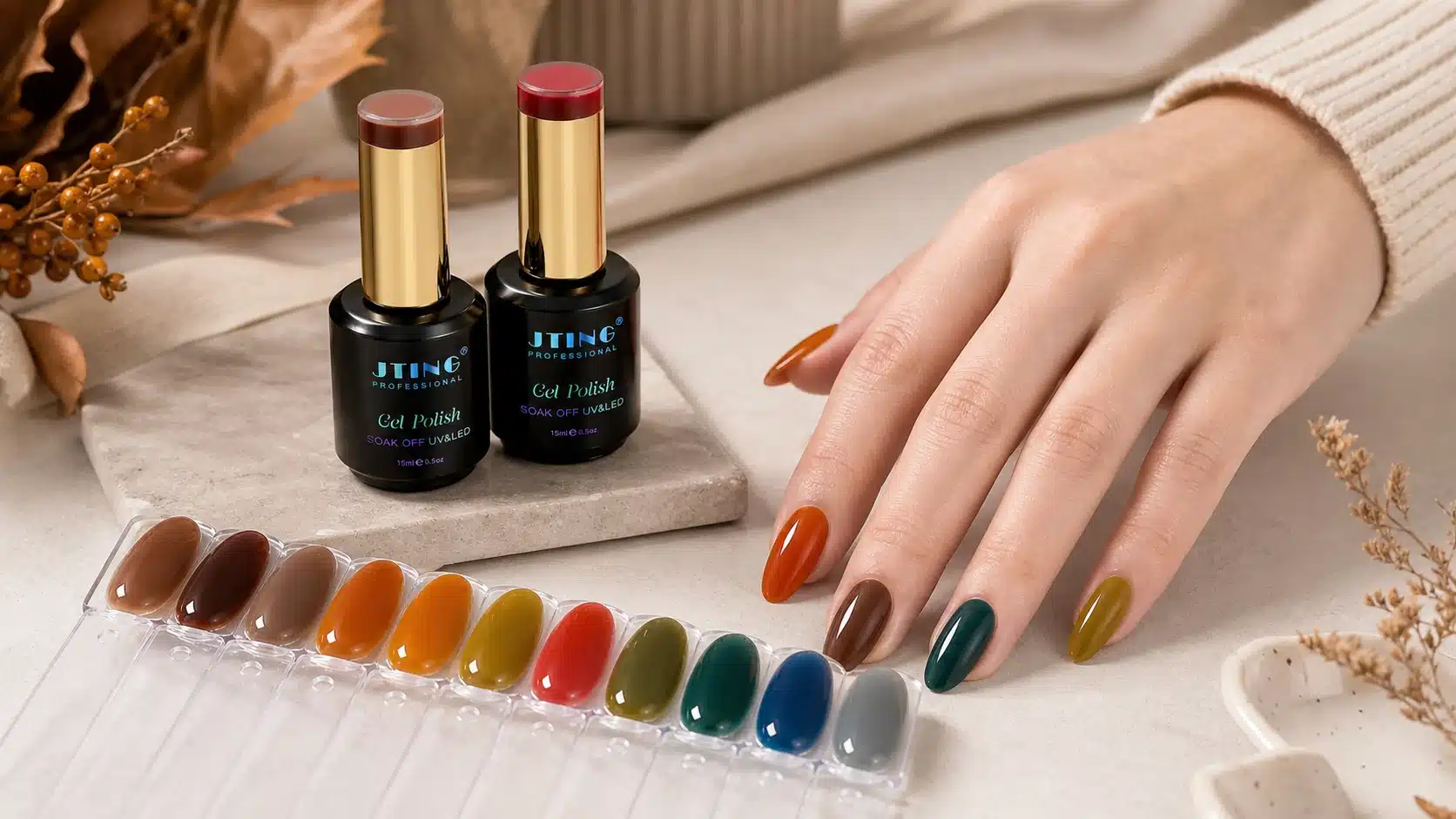
JTING's rubber base gel category provides a relevant starting point for buyers comparing flexible base systems, color directions and private label possibilities.
8. What Is Gel-X, and How Is It Different From Builder Gel?
Gel-X® is Aprés Nail's full-cover soft gel extension system. The brand describes it as a system built around pre-shaped soft gel tips, a compatible Extend Gel, tip preparation and staged curing. The wider market also sells full-cover soft gel tip systems, but those products should not automatically be presented as official Gel-X.
The structural difference is easy to see:
- builder gel creates the overlay or extension architecture from uncured gel;
- a full-cover soft gel tip supplies a pre-shaped extension that covers the nail;
- the bonding gel secures the tip to the prepared natural nail;
- flash curing holds the placement before a complete cure in a full-size compatible lamp.
8.1 Why salons choose full-cover soft gel tips
The service can be faster than sculpting every extension from scratch. Shape and length are consistent, and a salon can stock multiple tip profiles for different nail beds. It is particularly useful for clients who want an immediate transformation or a defined shape that would take longer to sculpt.
Speed does not remove the need for skill. The technician still has to:
- select a tip that fits sidewall to sidewall without force;
- match the profile to flatter or more curved nail beds;
- prepare the contact area as directed;
- control the bonding gel so there are no gaps or overflow;
- hold the tip naturally while flash curing;
- complete the full cure with the specified lamp and timing;
- remove the system without prying.
8.2 Builder gel vs Gel-X
Builder gel is the more customizable architecture method. The technician can adjust the apex, sidewalls, length and correction for each nail. A full-cover soft gel tip is the faster standardized method. It offers repeatable shapes but depends on having the right tip fit.
For a salon, the choice depends on its service model. A natural-nail specialist may prioritize bottle builder. An extension bar that values appointment speed and nail-art turnover may prioritize full-cover tips. A comprehensive salon may offer both but should explain that they are separate services.
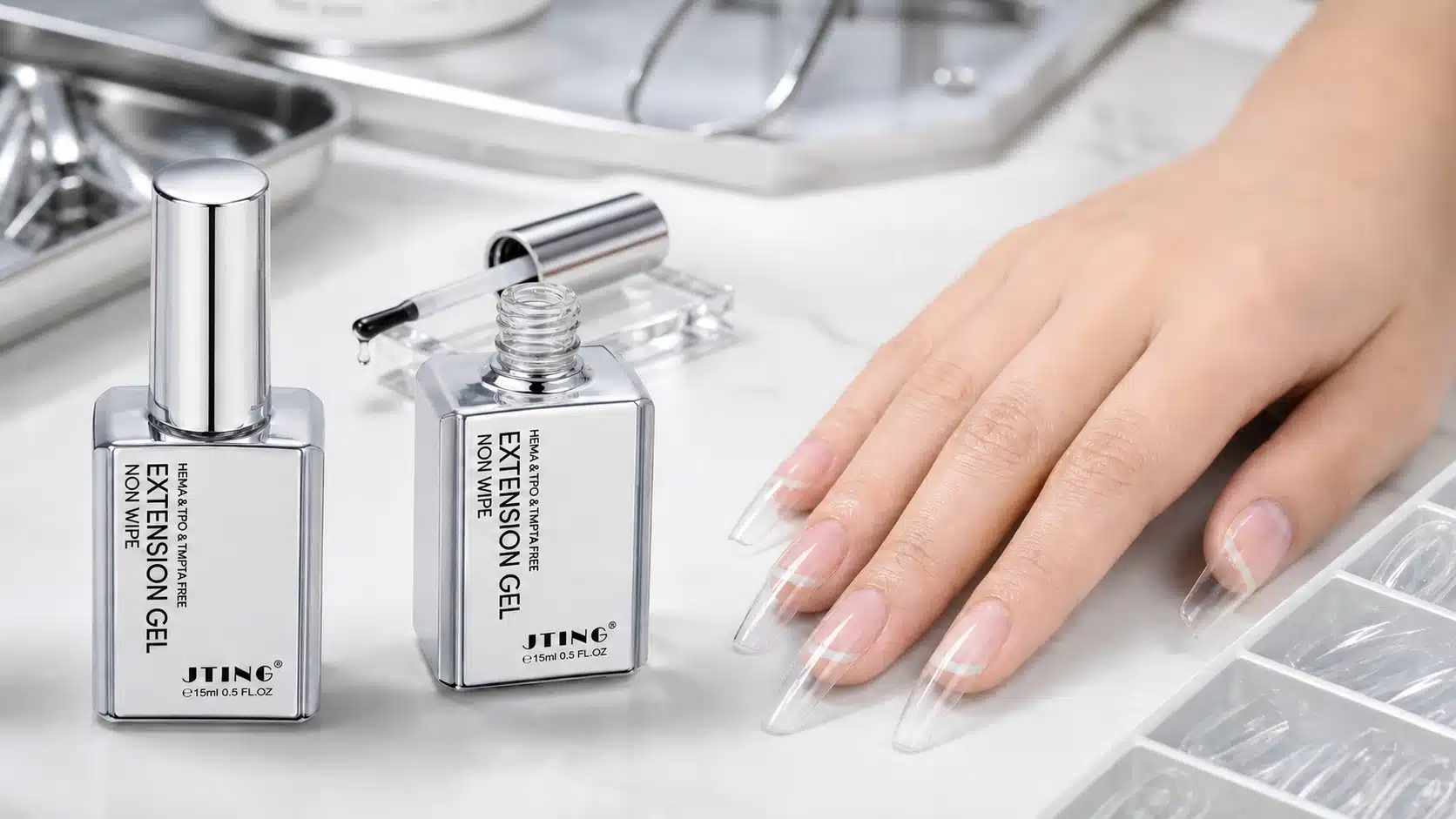
For B2B buyers, a soft gel tip range is not one SKU. It can require tips by shape, length and size; bonding gel; prep products; lamps; packaging; instructions and refill logic. JTING's nail glue gel and extend gel category and its 4-in-1 extend gel product are natural internal references for buyers developing this type of system.
For buyers sourcing this type of bonding product from JTING, JTING 4-in-1 Extend Gel is the relevant product reference. It is designed for the generic full-cover soft gel tip service direction and should not be labeled JTING Gel-X, because Gel-X® identifies the Aprés system.
9. Which System Is Best for Different Clients and Services?
There is no credible universal winner. The following decision paths are more useful than a generic “best gel” claim.
9.1 Best for short, flexible natural nails
Start by evaluating rubber base or an appropriately flexible soak-off builder. Rubber base suits a light reinforcement service; bottle builder suits a more structured overlay. The final choice depends on the amount of movement, desired length and whether an apex is required.
9.2 Best for growing natural nails
A soak-off bottle builder is often the most commercially understandable option. It creates structure without forcing the client into a long extension. The salon can maintain length gradually and offer clear, nude or tinted shades that look complete without an additional color service.
No gel makes the natural nail biologically grow faster. What a well-applied overlay can do is protect the edge from some everyday breakage, allowing retained length to become more visible. Marketing should not turn that practical benefit into an unsupported health claim.
9.3 Best for long sculpted extensions
Hard gel is usually the stronger candidate when long free-edge architecture and repeated rebalancing are central to the service. A product approved only for short extensions should not be pushed beyond its intended length because it happens to be labeled builder gel.
9.4 Best for fast full-length transformations
Full-cover soft gel tips are designed for this use. Their commercial advantage is a ready-made shape with less freehand sculpting. The salon must stock enough sizes and profiles to avoid forcing a poor fit.
9.5 Best for pedicures
A thin, flexible service is usually more suitable than building unnecessary bulk. A rubber base may be useful where the product instructions and professional assessment support it, but enhancement materials should not be applied over damaged, infected or medically concerning nails. Those conditions require appropriate professional or medical referral, not concealment.
9.6 Best for salons with several technicians
The best system is the one the team can standardize. A slightly slower formula with predictable leveling may produce better economics than a very fast product that floods sidewalls in less experienced hands. Multi-technician salons should run timed tests and score application control, finish consistency, removal and rework.
10. Application and Maintenance Workflows Compared
The systems use different service logic. The following workflows are simplified buying references, not replacements for the selected manufacturer's instructions.
10.1 Rubber base service
- Assess and prepare the natural nail according to the product system.
- Apply the required dehydrator or primer only if specified.
- Apply a controlled base layer, keeping uncured product off the skin.
- Add a leveling layer only within the approved thickness.
- Cure in the compatible lamp for the stated time.
- Add gel color and top coat if required.
- Remove or maintain according to the exact rubber base instructions.
10.2 Bottle builder or BIAB-style service
- Prepare the natural nail and apply the specified foundation.
- Place a slip layer if the system requires one.
- Build a controlled apex with the bottle builder.
- Check the side profile and free-edge balance before curing.
- Cure completely; repeat only within the approved application method.
- Refine the surface if needed, then finish with color or top coat.
- Rebalance or soak off according to the exact product, never the category name alone.
10.3 Hard gel service
- Complete professional preparation and adhesion steps.
- Build or sculpt the structure in controlled layers.
- Cure each stage under the specified lamp.
- File the architecture and inspect stress points.
- Finish with color and top coat as required.
- At maintenance, reduce lifted or excess material and rebalance safely.
10.4 Full-cover soft gel tip service
- Size every tip before application.
- Prepare the natural nail and the tip contact area as directed.
- Apply the compatible bonding gel without trapping air.
- Seat the tip at the prescribed angle and pressure.
- Flash cure while maintaining stable alignment.
- Complete a full cure in the compatible lamp.
- Refine and finish the surface.
- Soak off through the specified system rather than pulling the tip away.
The compatible top coat and base coat system should be evaluated alongside the structural product. Mixing unrelated lamps, bases, builders, adhesives and top coats may make troubleshooting far harder because each component introduces another variable.
11. Common Failures and What They Usually Reveal
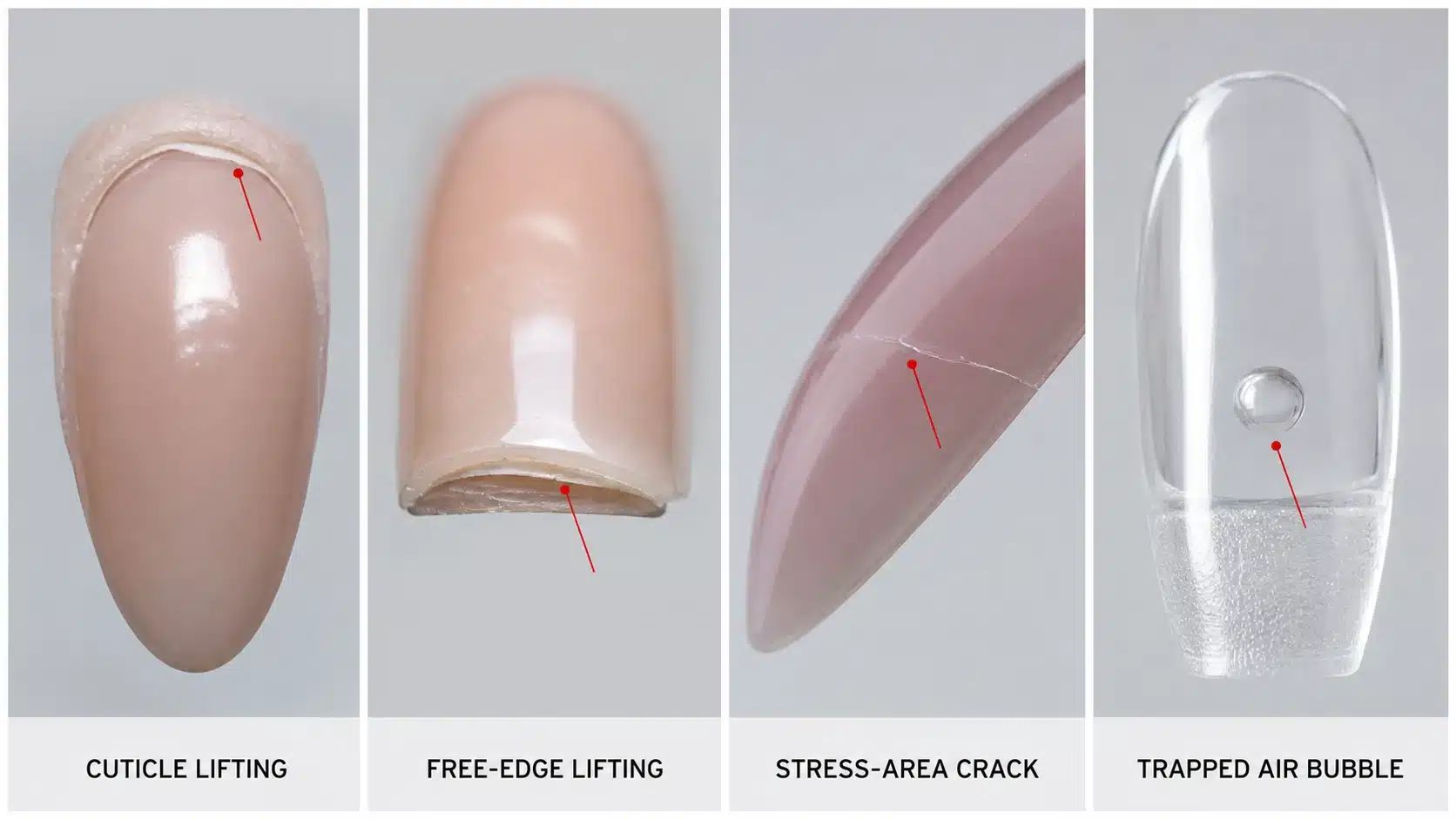
11.1 Lifting around the cuticle
Likely causes include product touching skin, incomplete cuticle-area preparation, a thick perimeter, contamination or an incompatible adhesion routine. Switching to a stronger gel without correcting application can preserve the same failure.
11.2 Lifting at the free edge
The structure may be too flexible for the length, too rigid for the natural-nail movement, inadequately capped or poorly balanced. Repeated free-edge lifting is a useful signal that the system and the service architecture need to be reassessed together.
11.3 Cracking through the stress area
Cracking can indicate insufficient apex placement, excessive length, an enhancement that is too thin in the load-bearing area or a product whose rigidity does not suit the service. Simply adding thickness everywhere creates bulk rather than good architecture.
11.4 Heat spikes during curing
The polymerization reaction can release heat, especially with a large bead, a high-reactivity formula or sensitive/thin nails. Buyers should test the formula at realistic service thickness under the intended lamp. Low-heat mode, staged curing or smaller controlled layers may be part of the approved protocol, but the supplier's instructions must lead.
11.5 Bubbles under full-cover tips
Bubbles usually point to poor gel placement, the wrong amount of adhesive, unstable pressure or a tip profile that does not fit. They are not merely cosmetic: gaps compromise contact and make the service inconsistent.
11.6 Product that will not soak off
First confirm that the product is actually a soak-off system. If it is, the top layer may not have been reduced sufficiently or the wrap time may be too short for the applied thickness. Never force resistant material from the nail. A file-off hard gel will not become soak-off because it was sold in a familiar bottle.
11.7 Wrinkling, softness or incomplete cure
Possible causes include over-thick application, incompatible or weak light output, incorrect cure time, dense pigmentation or a hand positioned poorly in the lamp. Uncured product should not be treated as a minor finish problem. It requires immediate process correction because skin contact with reactive material should be avoided.
For a deeper explanation of photoinitiators, oligomers, monomers and cure compatibility, link technicians and buyers to JTING's guide on what gel nail polish is made of.
12. Safety, Curing and Removal: What Buyers Must Not Oversimplify
No category name makes a service automatically safe, healthy or damaging. Outcomes depend on formula, exposure control, compatible curing, application and removal.
The U.S. FDA advises users to follow labeled nail-product directions and notes that reactive methacrylate monomers can cause adverse reactions in sensitized people. The practical salon standard is to keep uncured gel off the skin, use the specified lamp and cure schedule, maintain clean tools and stop service when a client shows a concerning reaction.
12.1 “HEMA-free” does not mean allergy-proof
HEMA-free can be a meaningful formulation direction, but it is not permission to apply product on skin or improvise the cure. Other acrylates may still be present, and any cosmetic can be unsuitable for a sensitized individual. Claims must match the exact SKU and supporting documents.
JTING can discuss HEMA-free and TPO-free directions depending on the product and project. Buyers should verify the formula, target market and documentation rather than applying one claim to an entire range.
12.2 A lamp is part of the product system
UV/LED compatibility is not established by the lamp turning the surface hard. Wavelength output, intensity, exposure time, pigmentation and layer thickness influence cure. A supplier approval process should use the intended lamp and application thickness, then document the result.
12.3 Removal should preserve the natural nail
Soak-off material should be removed through the approved soak process after appropriate reduction. File-off material should be reduced by a trained technician without filing through the natural nail. Full-cover tips should not be pried away, and partially softened gel should not be scraped aggressively.
13. How Salons Should Build a Clear Service Menu
Clients do not need a chemistry lecture at reception, but they do need to understand what they are buying. A clear salon menu can separate services by outcome:
| Suggested service name | Client-facing purpose | Underlying system direction | Best for | Maintenance message |
|---|---|---|---|---|
| Flexible Gel Manicure | Flexible color foundation with light leveling | Rubber base plus color | Short natural nails | Removal or maintenance follows the selected system |
| Structured Natural Nail Manicure | Reinforced overlay with a balanced apex | Soak-off bottle builder / BIAB-type service | Natural-nail growth and short-to-medium length | Rebalance or soak-off at the recommended interval |
| Sculpted Hard Gel Extensions | Custom length and architecture | File-off hard gel | Medium-to-long extensions | Professional rebalance and filing required |
| Full-Cover Soft Gel Extensions | Fast pre-shaped extension service | Gel-X® or another full-cover soft gel tip system | Immediate shape and length | System-specific soak-off and replacement plan |
Avoid listing “builder,” “BIAB” and “hard gel” as if every client already understands the difference. Lead with the service outcome, then identify the professional system in the description. This reduces mismatched expectations and gives technicians room to recommend the correct method.
14. How Distributors and Private Label Buyers Should Evaluate the Category
A commercially useful product is more than a successful swatch. The buyer should evaluate application, system compatibility, training burden, packaging and repeat-order control.
14.1 Define one product's job
Do not ask one formula to be an ultra-flexible rubber base, a self-leveling bottle builder, a long-extension hard gel and a tip adhesive at the same time. Multi-use claims are credible only when each use has been tested at the intended thickness and documented with a clear method.
14.2 Test on service-relevant models
Flat plastic swatches show color and basic leveling, but they do not reproduce natural-nail movement, sidewall preparation, apex load or tip fit. A buyer test should include trained application on suitable human models, controlled removal and documented wear observations, subject to ethical and local requirements.
14.3 Compare viscosity at realistic temperatures
A gel that feels controlled in an air-conditioned sample room may level much faster in a warm salon. Record room temperature, bottle temperature, bead behavior and leveling time. For international distribution, test conditions should reflect the intended market.
14.4 Approve the complete system
Evaluate base, builder or adhesive, color, top coat and lamp together. For full-cover tips, also approve tip material, sizes, shapes, contact area and packaging. For hard gel, include files, bits and removal education in the operating plan.
14.5 Review documents by SKU and destination
Document needs vary by product and market. Depending on the project, buyers may request SDS/MSDS, INCI information, COA and market-specific support such as CPNP, CPSR, GPSR, ISO/GMPC-related records or other export documents. JTING's certification and compliance page provides the appropriate internal destination for readers who need to understand available support; final requirements must be confirmed for the exact product and market.
14.6 Calculate cost per successful service
Bottle price alone ignores technician time, grams used, rework, filing, soak time, tip waste and returns. Measure:
- usable services per unit;
- average application and removal time;
- failed-set or repair rate during testing;
- supporting products required;
- training and content cost;
- packaging and replacement inventory;
- reorder consistency.
A higher-priced formula may be commercially better if it reduces shaping and rework. A low-cost tip box may be expensive if common sizes run out quickly and refills are unavailable.
15. Building a Private Label Product Architecture
The strongest private label strategy is not to launch five products with overlapping names. Build a ladder in which each SKU has a distinct job.
15.1 A practical four-system range
System 1: Flexible Foundation
A clear and tinted rubber base range for short natural nails and color services.
System 2: Structured Overlay
A soak-off bottle builder range in clear, cover pink, nude and commercially useful neutral shades.
System 3: Professional Architecture
A file-off hard gel range selected from the wider gel-builder architecture, with clear, cover and camouflage options for trained extension technicians.
System 4: Fast Extension
A full-cover soft gel tip system with extend gel, practical shapes, multiple lengths and refill sizes.
Not every brand needs all four. A natural-nail brand may launch the first two. An extension specialist may prioritize hard gel and soft gel tips. A distributor can carry all four if packaging and education make the differences obvious.
15.2 Packaging must prevent category confusion
Front labels should state the product role and removal route where appropriate. Instructions should identify application thickness, cure schedule, compatible lamp and professional-use limitations. Color families can be coordinated visually, but rubber base, soak-off builder and file-off hard gel should not look so similar that a technician can pick up the wrong jar during service.
15.3 Sampling and approval with JTING
JTING NAIL supports custom color and formula direction, bottles, caps, brushes, labels, packaging boxes, color charts, photography, videos, sampling and bulk production support. Current confirmed baseline terms include private label orders starting from 10 pieces per shade and house-brand mixed-color orders starting from 100 pieces, with final MOQ depending on product, packaging, formula and customization.
Standard samples typically require 7–10 business days. Custom color or exclusive formula development typically requires 2–4 weeks, while bulk production after sample and packaging approval typically requires 15–20 days. Timelines vary with the number of shades, revision rounds, packaging and documentation.
Buyers planning a coordinated system can review JTING's OEM/ODM gel collections and Create Your Brand service before preparing a development brief.
16. Professional Buyer Sample Approval Checklist
Use one written scorecard for every candidate formula.
Product identity
- Product role is clearly defined: base, overlay, sculpting gel or tip adhesive.
- Soak-off or file-off removal is confirmed in writing.
- Approved extension length and service type are documented.
- Bottle, pot, fill volume and brush suit the intended application.
Application
- Viscosity is tested at realistic salon temperatures.
- Self-leveling speed allows controlled application.
- Apex and sidewall control are acceptable.
- The product remains off skin during normal professional application.
- Heat behavior is acceptable at the approved thickness.
Cure and wear
- Compatible lamp and cure time are specified.
- Clear, nude and highly pigmented versions are tested separately.
- Wear testing includes relevant natural-nail types and service lengths.
- Lifting, cracking, free-edge wear and discoloration are recorded.
Removal and maintenance
- Soak-off time is tested after realistic wear.
- File-off behavior and dust are assessed by trained technicians.
- Rebalance or replacement steps are documented.
- The removal method does not rely on prying or forced scraping.
Commercial readiness
- Shade architecture and SKU roles are not redundant.
- Instructions, warnings and training materials are ready.
- Packaging clearly separates product systems.
- Required documentation is confirmed for destination markets.
- Sample retention and repeat-batch standards are agreed.
- MOQ, production time and reorder plan are commercially workable.
JTING's broader manufacturing and private label service page is an appropriate next step for buyers who need to coordinate formula, quality control, packaging and export supply rather than purchase a single isolated gel.
17. Frequently Asked Questions
Is BIAB the same as builder gel?
BIAB™ is a branded Builder In A Bottle system and belongs within the broader builder-gel concept. Not every bottle builder is BIAB, and not every builder gel has the same flexibility, strength or removal method.
Is builder gel the same as hard gel?
Not always. Builder gel describes a structural function. Some builder gels are soak-off soft gels; others are file-off hard gels. Check the technical instructions for the exact product.
Is rubber base the same as builder gel?
No. Rubber base is primarily a flexible foundation with light reinforcement. Builder gel is designed to create more substantial structure and an apex. Some products sit between the categories, so compare approved thickness, rigidity and service use.
Can rubber base be used for extensions?
Only if the manufacturer explicitly approves that use and length. Rubber base is generally selected for short natural-nail reinforcement, not as the default material for long sculpted extensions.
Does builder gel soak off?
Some builder gels soak off and some do not. The term “builder” alone does not establish removal. Confirm whether the exact SKU is soak-off or file-off.
How long does builder gel last?
Wear depends on the formula, nail preparation, client, length, architecture, lamp compatibility and maintenance. Professional brands should publish a tested service interval for their own system rather than promise one universal duration.
What is the difference between BIAB and gel polish?
Gel polish is a thin color coating. BIAB is a builder-in-a-bottle system used to create a structured overlay. A BIAB service normally involves more product architecture and a different maintenance plan.
Is Gel-X the same as builder gel?
No. Gel-X® uses a full-cover pre-shaped soft gel tip bonded with a compatible gel system. Builder gel creates the overlay or extension structure directly from gel.
Which is better for weak nails: rubber base or builder gel?
It depends on the nail's flexibility, desired length and service objective. Rubber base may suit short flexible nails needing a supportive foundation. Builder gel may suit clients requiring a structured overlay. A trained technician should assess the nail and follow the selected system.
Can builder gel help natural nails grow?
Builder gel does not change the biological growth rate. A well-designed overlay can help protect retained length from some everyday breakage, but poor application or removal can create the opposite result.
Is HEMA-free builder gel allergy-free?
No. HEMA-free identifies the absence of one ingredient in the specific formula; it does not guarantee that no user can react. Avoid skin contact, cure exactly as directed and verify the complete ingredient and documentation profile.
What should a private label buyer request from a builder gel manufacturer?
Request a written product classification, intended use, removal method, viscosity direction, approved thickness and extension length, lamp protocol, ingredients and required market documents. Then approve performance through controlled samples before packaging and bulk production.
18. Conclusion: Choose the System by Service Architecture
Builder gel, BIAB, file-off hard gel, rubber base and Gel-X solve different problems, but the names do not all sit at the same level of classification.
Rubber base creates a flexible foundation. Builder gel is the wider structural category and can include both soak-off and file-off systems. Soak-off builder gel creates a structured overlay. BIAB is a recognized branded builder-in-a-bottle system, not a universal name for every bottled builder. File-off hard gel is the more rigid builder direction used for demanding overlays and extensions. Gel-X and other full-cover soft gel tip systems create length through a fitted pre-shaped tip.
For salons, the correct choice is the system that matches the client's nails, desired length, service time and maintenance commitment. For distributors and private label buyers, the correct choice is the product architecture that can be explained, tested, documented and reproduced.
Do not begin with five fashionable names. Begin with five practical questions: What is the product's job? How much structure must it carry? How should it flex? How will it be maintained? How will it be removed?
Once those answers are clear, the product, service menu and buying brief become much easier to build.