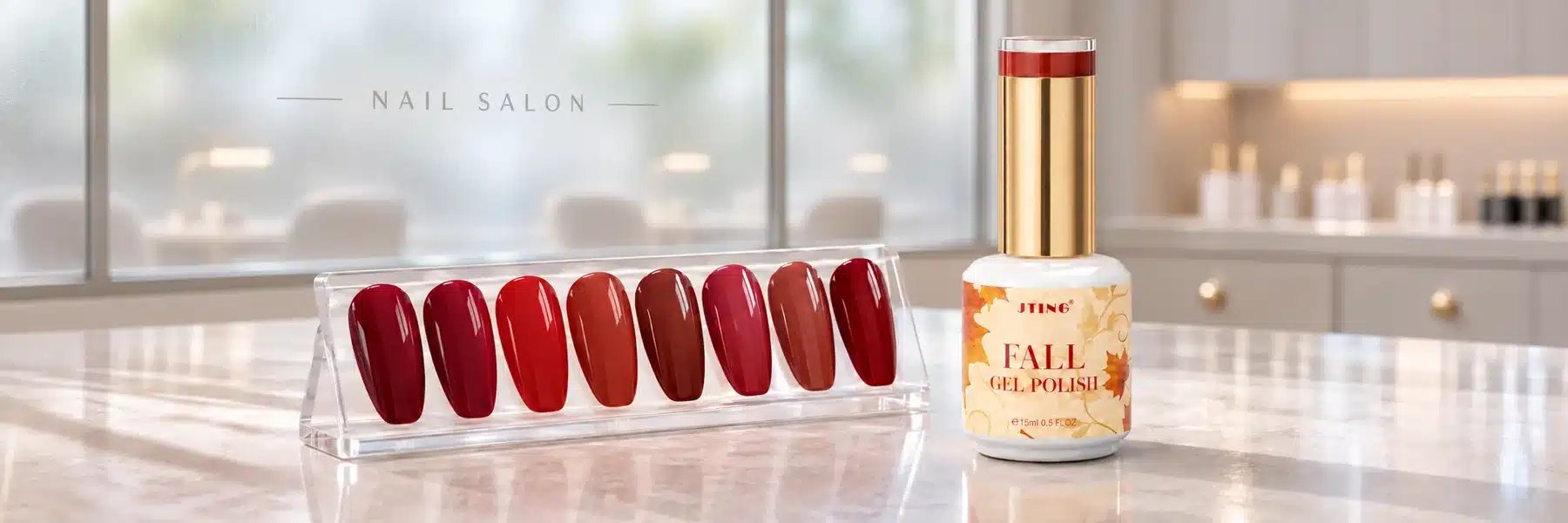
Two bottles labeled burgundy can look nearly identical on a short nail, or they can serve entirely different clients. Compare them in ordinary salon light before giving both a place in your first order. If they look alike and support the same service, stock the one that applies more consistently or is easier to replenish.
This guide helps salons, distributors and private label brands choose a first sample set, build a red assortment around it and keep the approved color consistent through reorders.
Quick Answer
Start with three types of samples: one opaque core burgundy, one or two contrast shades that differ clearly in undertone or depth, and one effect shade such as a jelly or cat eye. Compare them on the same base, under the same light and at the same number of coats. Keep only shades that look different in ordinary light and support a different service. Build a six-shade capsule first, confirm coverage and batch consistency, then expand into a wider red range.
Key Takeaways
- Burgundy sells year-round, with clear peaks in fall, the winter holidays and Valentine’s Day.
- Undertone matters more than the shade name. Berry, plum, brown-red and neutral burgundies serve different clients.
- Dark shades need extra checks for coverage, streaking, edge pooling and staining.
- One color base can serve several services when you change the finish with jelly layers, magnetic effects or a matte top coat.
- A six-shade capsule with clear roles sells better than twelve shades that look alike.
- Use the approved physical swatch and agreed batch identification to check reorders.
1. Why Burgundy Earns a Place in a Professional Range
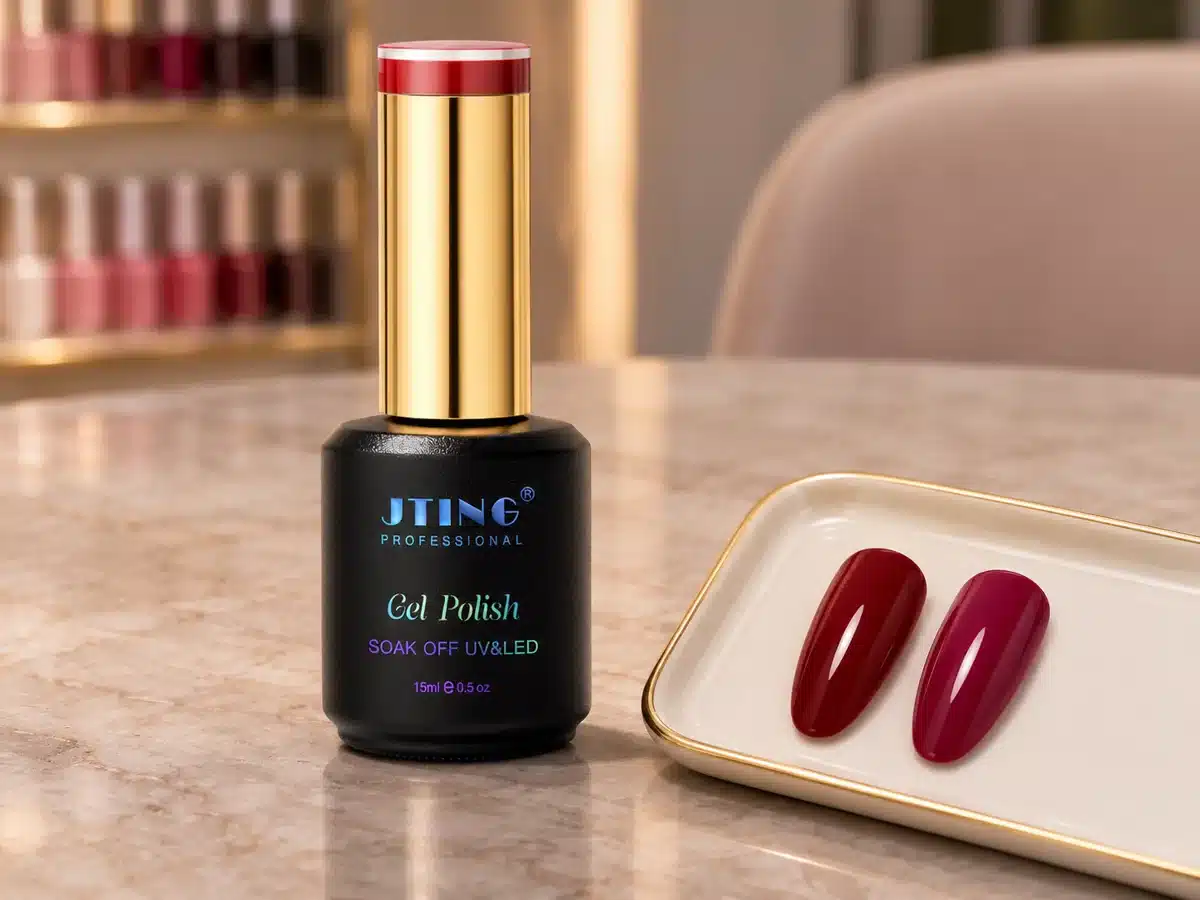
Give the everyday and seasonal shades different jobs. Keep a versatile opaque burgundy on the regular salon menu or distributor shade card. Use deeper tones and specialty finishes to refresh fall and holiday displays without replacing the core shade.
Demand Across the Calendar
Interest in burgundy nails rises from late August, peaks between October and December, and returns around Valentine’s Day. Between those peaks, deep reds remain a steady request for clients who prefer a polished, low-maintenance color. This pattern lets you plan two layers of stock: core shades that sell all year and effect shades that you push during the peaks.
What Burgundy Does for Each Type of Buyer
| Buyer | What Burgundy Delivers | Where It Fits |
|---|---|---|
| Salons and salon chains | A reliable service color with strong repeat bookings and easy upgrades to cat eye, chrome or nail art | Core menu, fall and holiday menus |
| Distributors and wholesalers | Single shades that reorder steadily and seasonal sets that lift fourth-quarter sales | Core shade wall, seasonal kits |
| Private label brands | A signature color that can define the brand’s look and anchor a collection | Hero shade, launch collection, holiday edition |
The opportunity is real, but so is the competition. Your burgundy range needs clear differences in undertone, depth and finish to earn shelf space and service time. The rest of this guide shows how to build those differences.
2. Which Burgundy Gel Polish Shades Should You Sample First?
Burgundy is a deep red with blue, purple or brown undertones, darker than a classic red and softer than black. That definition is broad, so your first sample order should be built around roles rather than names.
Three Types of First-Round Samples
- A core opaque burgundy. A full-coverage deep wine shade that suits most skin tones and most services. This is your benchmark for coverage, brush control and curing.
- One or two contrast shades. Choose shades that differ clearly from the core, for example a brighter berry burgundy and a deeper brown-red. If you cannot tell them apart in ordinary light, you only need one.
- One effect shade. A burgundy jelly, a burgundy cat eye or a burgundy reflective gel. This shows whether an upgraded service is worth adding.
Four to six samples are enough for a first round. Asking for twenty deep reds at once makes comparison harder, not easier. Once the first round confirms which directions your clients respond to, you can widen the selection within those directions.
Tip: Ask for each sample both as a bottle and as a painted swatch tip. The bottle lets you test application; the swatch gives you a fixed reference for later comparisons.
3. Burgundy vs. Wine Red, Oxblood, Black Cherry, Maroon, and Merlot
Buyers and suppliers use these names loosely. One brand’s “wine red” is another brand’s “burgundy,” and “black cherry” may describe anything from a deep berry to a near-black. Use the names as a starting vocabulary, then judge the actual swatch.
| Name | Typical Hue | Depth | Undertone | Best Season |
|---|---|---|---|---|
| Burgundy | Red with purple | Deep | Cool to neutral | Year-round, peak in fall and winter |
| Wine red | Clear red with a little purple | Medium-deep | Neutral | Year-round |
| Oxblood | Red with brown | Very deep | Warm | Fall and winter |
| Black cherry | Red-purple close to black | Darkest | Cool | Winter and holidays |
| Maroon | Brown-red | Deep | Warm | Fall |
| Merlot | Purple-red | Deep | Cool | Fall and winter |
On a shade chart, these names often overlap. Two bottles labeled differently may match, and two bottles labeled “burgundy” may be far apart. When you build or review a range, compare hue, depth and undertone directly, and record each shade by its number rather than its name.
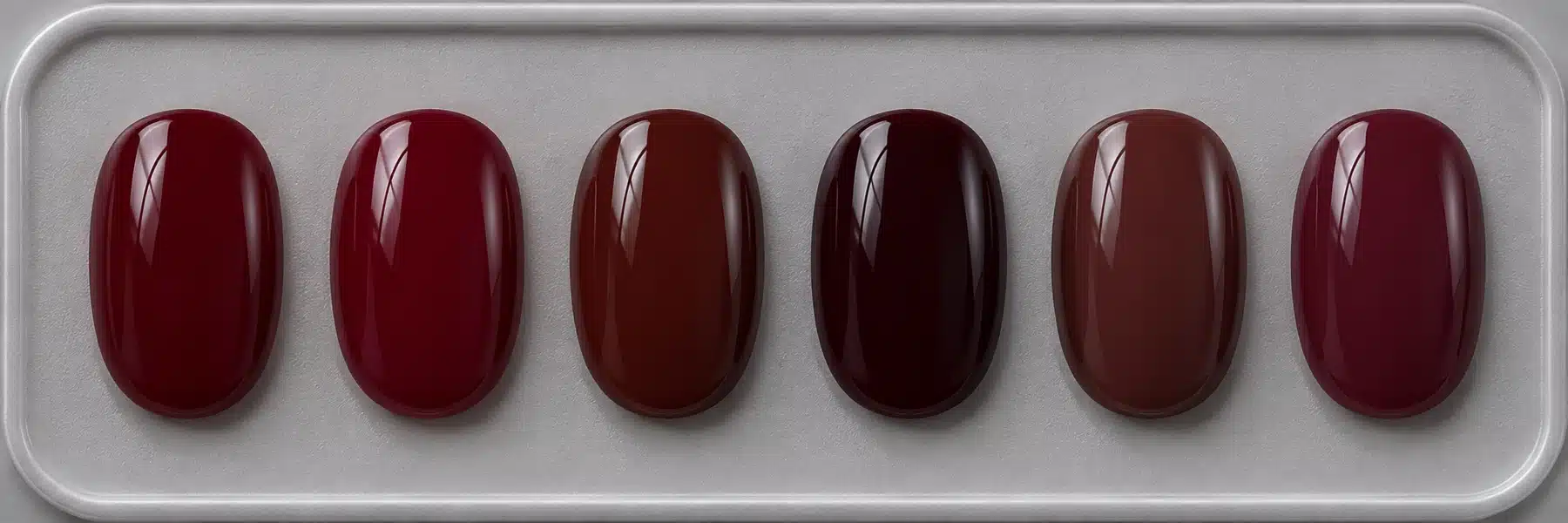
4. How to Choose a Burgundy Undertone for Different Skin Tones
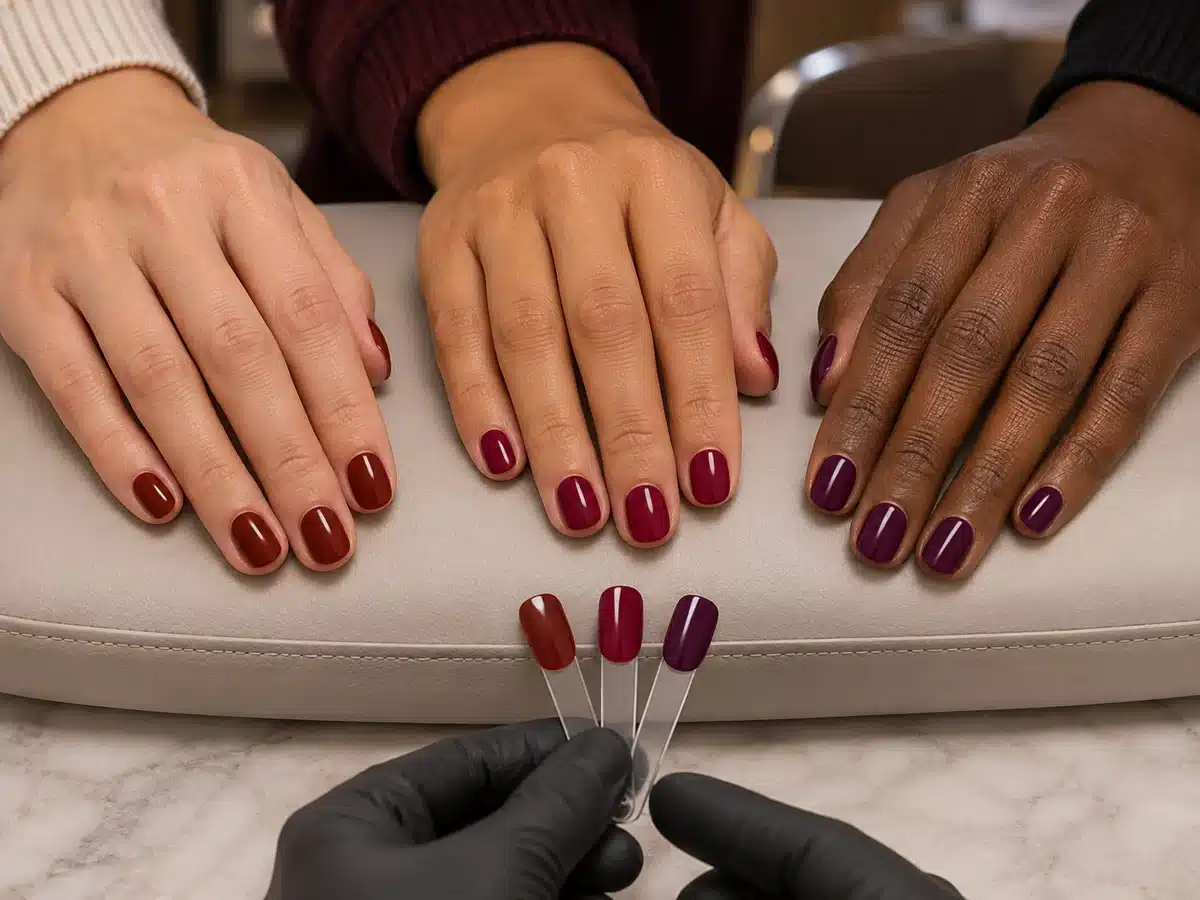
Undertone decides how a burgundy reads on the hand, and it is the most useful way to divide a range. Most burgundy gel polish falls into one of four directions.
| Direction | What You See | Role in a Range |
|---|---|---|
| Berry | Brighter red-pink depth, lively in daylight | Spring and Valentine’s Day, younger clients, jelly versions |
| Plum | Visible purple, cooler and moodier | Winter menus, cat eye bases, editorial looks |
| Brown-red | Warm, earthy, close to oxblood or maroon | Fall menus, matte finishes, warm skin tones |
| Neutral | Balanced deep wine, neither warm nor cool | Core shade, year-round, suits most clients |
Matching Burgundy to Skin Tone
- Fair and light skin: berry and neutral burgundies look rich without heavy contrast. Very dark black cherry shades can look stark on short nails.
- Medium and olive skin: compare a brown-red with a plum-leaning shade to see whether the client prefers a softer transition or stronger contrast.
- Deep skin: deeper, saturated shades such as black cherry, plum and rich wine stay vivid. Brighter berry burgundies create a striking contrast.
For salons, a simple swatch ring sorted by undertone helps technicians guide clients quickly. For brands, covering at least three undertone directions means one collection can serve a wider customer base.
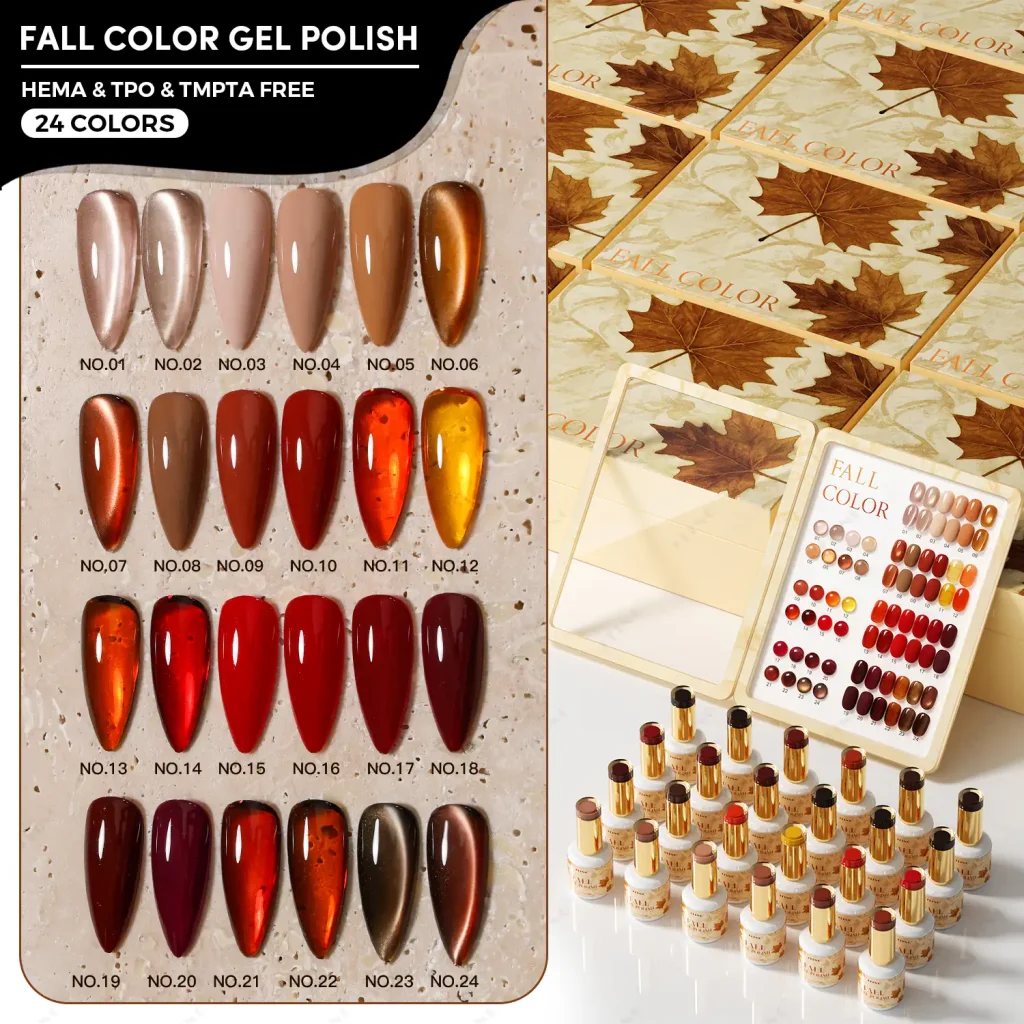
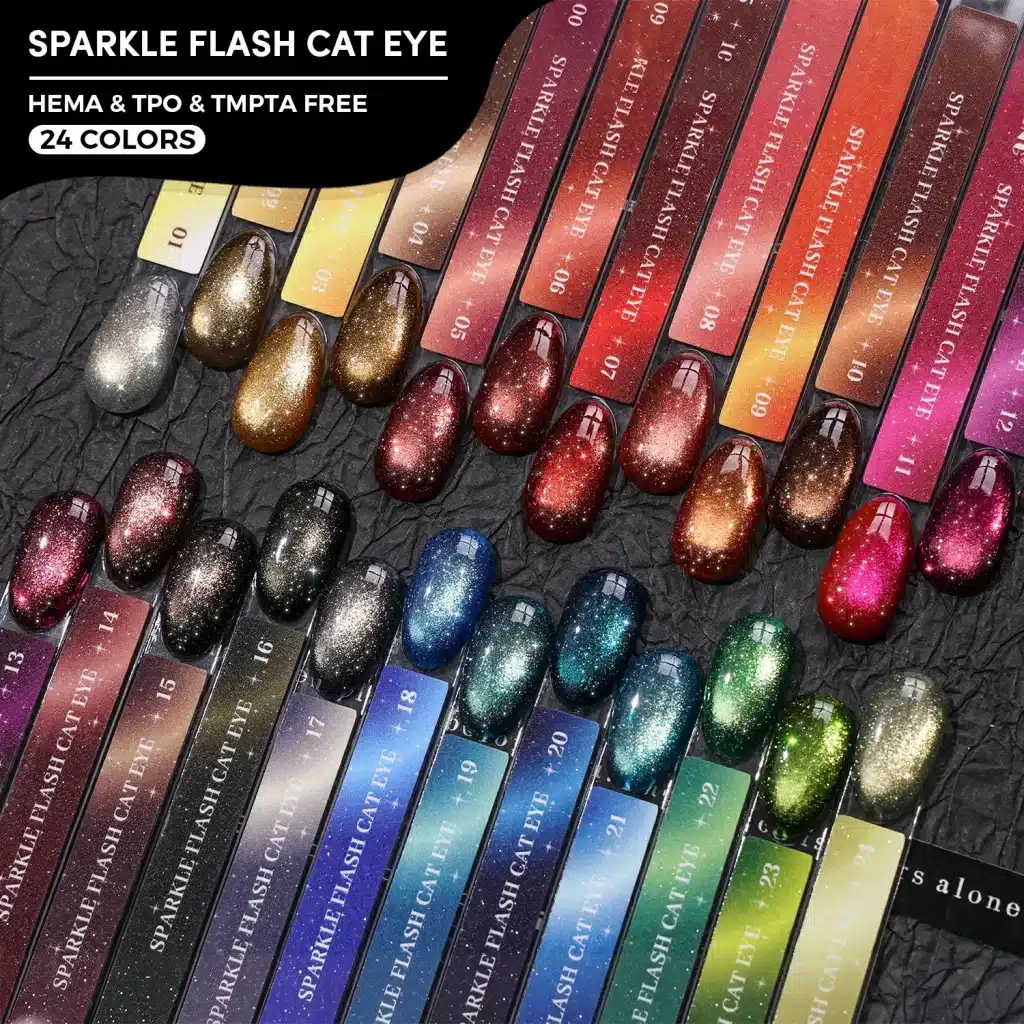
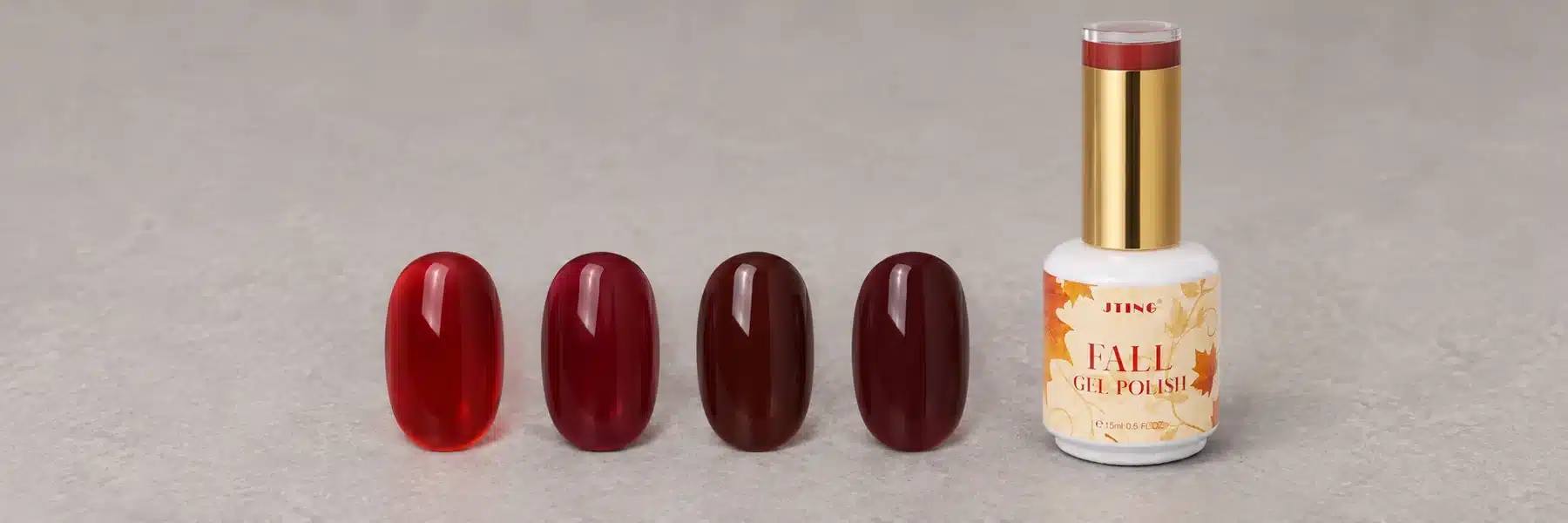
5. How to Read a Burgundy Shade Chart: The JTING 24-Color Fall Color Gel Polish Example
A shade chart is often the first thing a buyer sees, and it is easy to misread. Printed charts and screen images shift color, and swatches painted at different thicknesses make similar shades look different. The JTING 24-Color Fall Color Gel Polish is a useful example because it includes several burgundy directions in one range.
| Shade Number | Description | How to Use It |
|---|---|---|
| 20 | Deep burgundy, full coverage | Core shade and benchmark |
| 18 | Berry burgundy | Brighter contrast, spring and Valentine’s Day |
| 19 | Brown-leaning deep red | Warm fall contrast |
| 14 | Translucent deep red | Jelly layering and glass-like effects |
These are four separate shades, each with its own formula and color, not one base shown in four finishes. The descriptions above explain how they behave; they are not official shade names.
Check Every Shade in Three Kinds of Light
Burgundy changes more than most colors under different lighting. Warm salon light pushes it toward brown; daylight shows its true undertone; phone flash can make it look brighter or nearly black. When you review a chart, look at the physical swatches in daylight or a daylight lamp, then under warm indoor light, then in a flash photo. A shade that holds its character in all three is easier to sell and photograph.
For a full walkthrough of this collection, including tonal combinations and application, see our Fall Color Gel Polish application and buying guide.
6. Opaque Burgundy Gel Polish
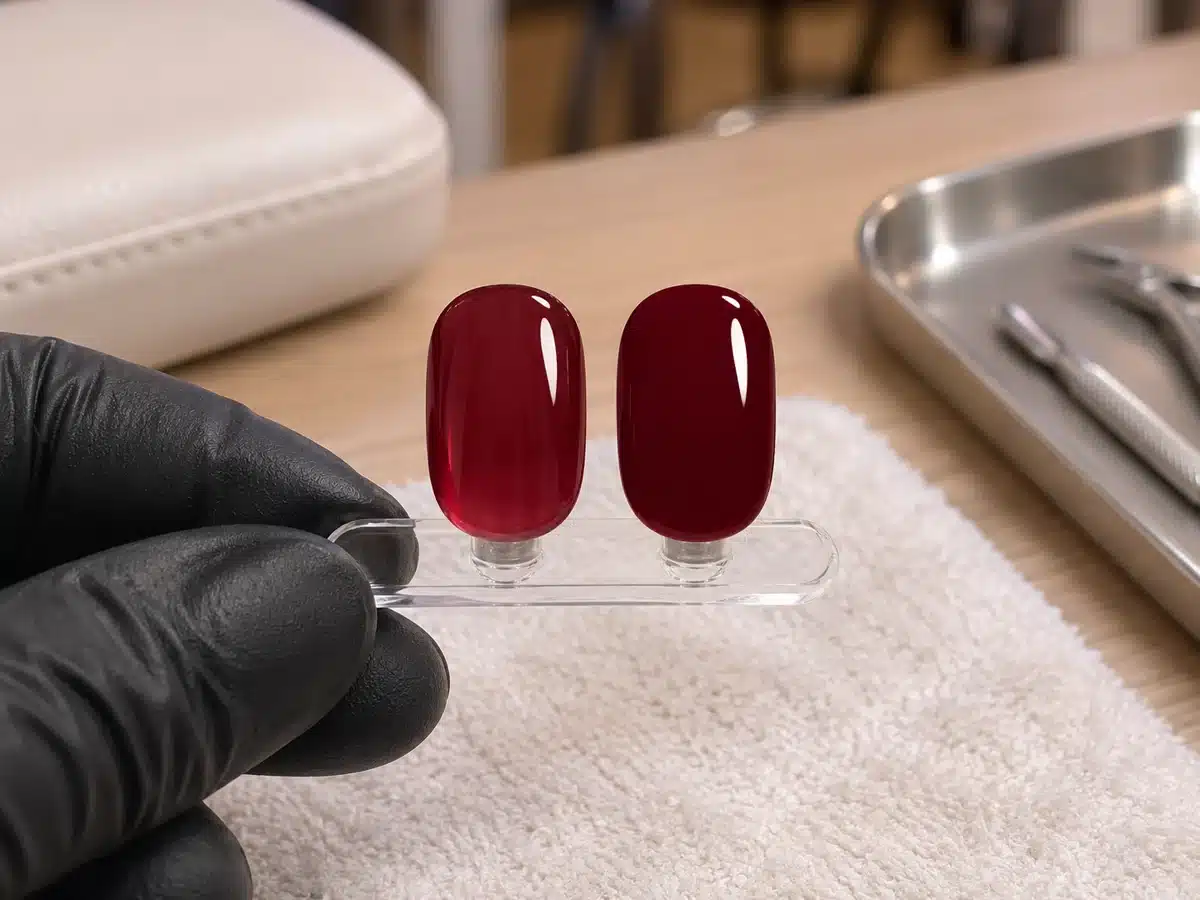
An opaque burgundy is the backbone of any deep red range. It is the shade technicians reach for most often, so it sets the standard for everything else: how quickly a color covers, how cleanly it meets the cuticle and how it behaves under a lamp.
What Good Coverage Looks Like
A well-pigmented opaque burgundy gives even, streak-free coverage in two thin coats. Use even coverage in two thin coats as an approval criterion for an opaque shade. Follow the product’s curing instructions; coverage does not establish degree of cure. If a shade needs three coats to hide the nail, it adds time to every appointment and thickness to every set.
Edges and Cuticle Work
Dark colors show every flaw at the cuticle and sidewalls. A good opaque burgundy self-levels enough to smooth out brush marks but holds its position without flooding the cuticle. Check this on a curved tip, not only on a flat swatch card.
Everyday Service Uses
- Full-color manicures on short and medium nails
- Base color for French tips, fine lines and accent nails
- Base layer under chrome powder and matte top coats
7. Preventing Staining, Streaks, and Patchy Coverage in Dark Shades
Deep pigments make burgundy beautiful, and they also cause most of its service problems. Knowing the causes helps salons train staff and helps buyers judge samples fairly.
| Problem | Usual Cause | Prevention |
|---|---|---|
| Yellow or pink staining on the natural nail | Pigment contact with the nail plate | Always apply a full, cured base coat; avoid skipping the base for speed |
| Streaks and brush marks | Thick first coat, low self-leveling, worn brush | Apply a thin first coat, let it settle for a few seconds before curing |
| Patchy coverage | Pigment settled in the bottle | Roll the bottle between the palms before use |
| Pooling at the sidewalls | Too much product on the brush | Wipe one side of the brush and cap the edges with a thin pass |
| Wrinkling after curing | Layer thickness, lamp compatibility or an incorrect cure cycle | Check the product instructions for layer thickness, lamp and cure cycle; a smooth surface does not verify cure |
| Color residue after removal | Dark pigment left in the base layer | Remove color layers fully before buffing the base; clean with a lint-free wipe |
Formulation also plays a role. JTING disperses pigment finely and balances viscosity so dark shades level smoothly and resist settling. Each batch is mixed and checked before filling, so the bottle a technician opens performs the same way as the approved sample. For full guidance on lamps and curing times, see our gel nail polish curing guide.
8. Burgundy Jelly Gel Polish
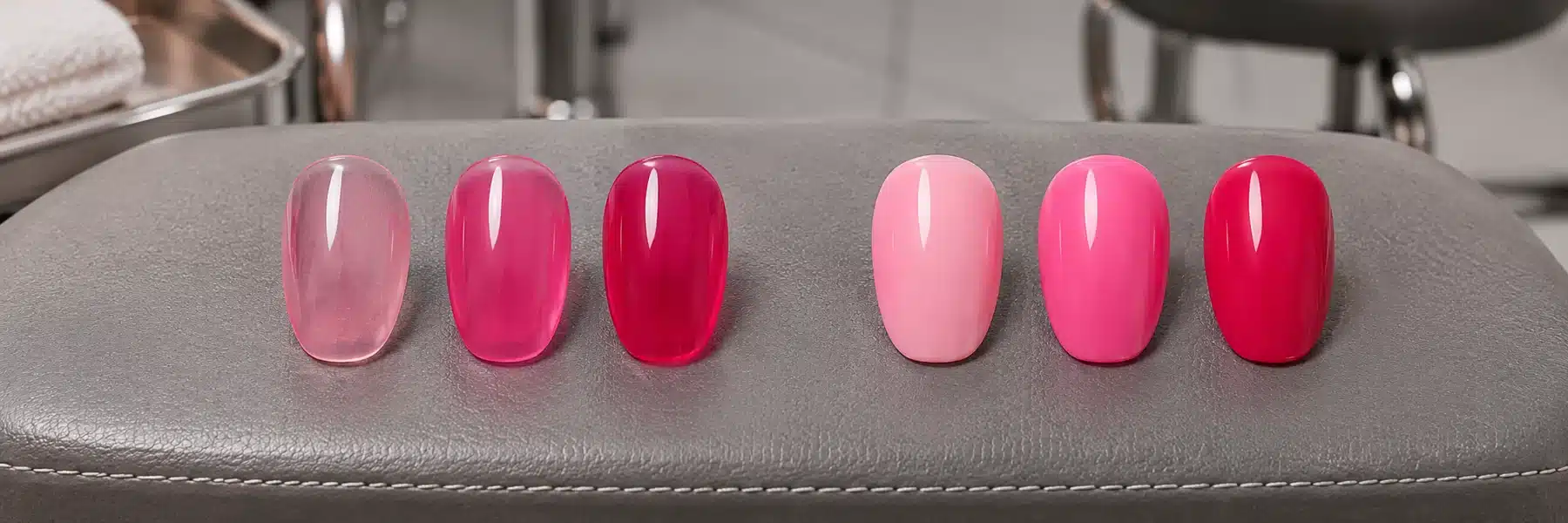
A burgundy jelly gel polish is sheer and glossy, like colored glass. It builds depth layer by layer, which gives technicians control over intensity and creates looks an opaque shade cannot.
How Layers Change the Look
| Coats | Appearance | Typical Service |
|---|---|---|
| One | Soft, translucent wine tint; nail tip visible | Natural “stained glass” look, short nails |
| Two | Rich, see-through burgundy with depth | Main jelly service, layered nail art |
| Three | Deep and near-opaque with a glassy finish | Dramatic finish without flat opacity |
Base Color Changes the Result
Over a nude base, burgundy jelly looks warm and soft. Over white, it brightens and looks closer to a raspberry. Over silver chrome or foil, it turns jewel-like. Over an opaque burgundy, it adds depth and gloss without changing the color. This makes one jelly bottle useful in four different services.
For buyers, jelly shades are a strong upgrade item because the same bottle supports several looks. A sheer burgundy can serve as a stand-alone tint or add depth over a compatible base; our jelly gel nail polish guide covers the full category.
9. Burgundy Cat Eye and Velvet Finishes
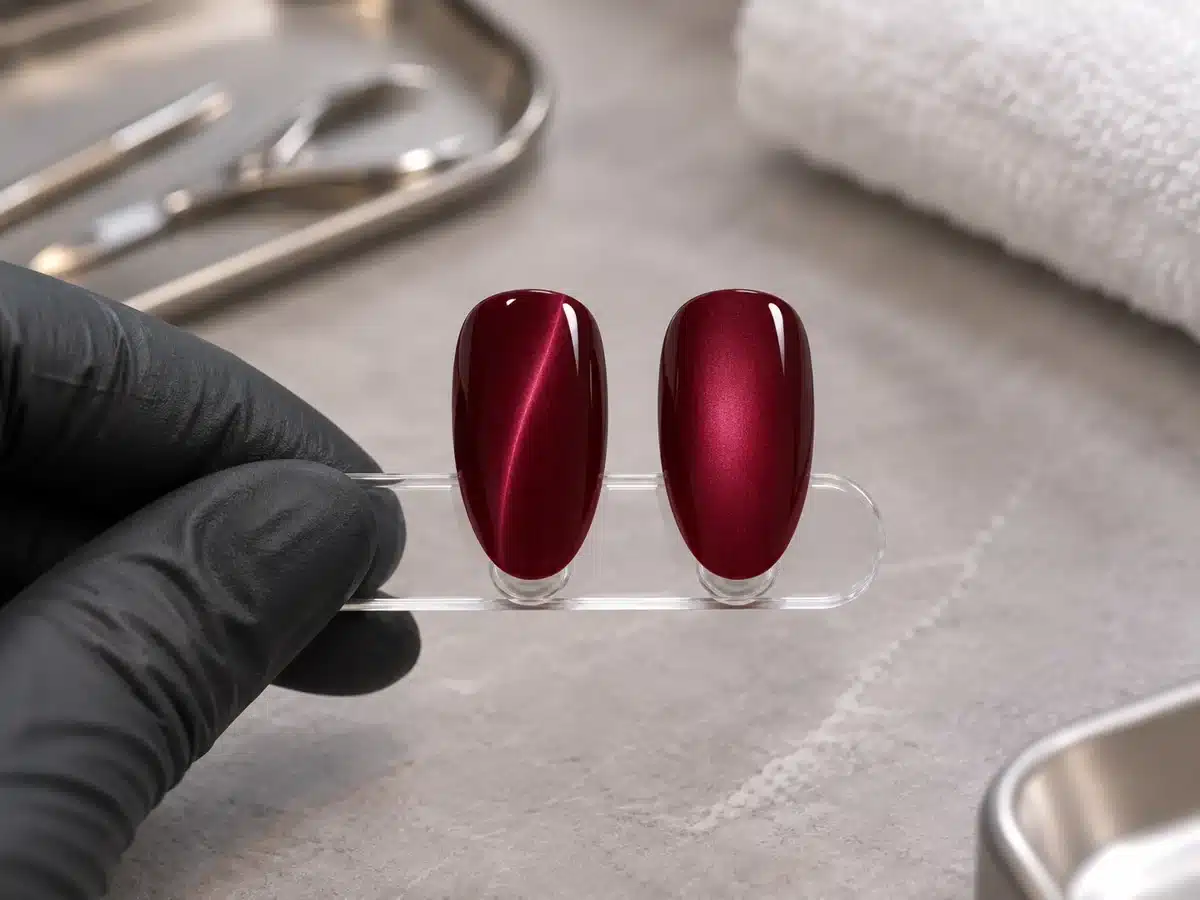
Magnetic gel turns a deep red into a moving, light-catching finish. Offer it as an upgrade when the magnetic finish is clearly distinct from the core color under salon lighting.
Check That the Base Still Reads as Burgundy
Some cat eye gels carry so much shimmer that the base color disappears from certain angles. Hold the swatch at three angles: straight on, tilted, and from the side. A good burgundy cat eye keeps its wine color in all three while the light band moves across it.
Magnet Techniques and the Looks They Create
| Technique | Result | Best For |
|---|---|---|
| Straight hold over the center | A sharp, bright line through the middle | Classic cat eye |
| Angled hold from one side | A diagonal band of light | Modern, editorial looks |
| Thin line magnet | A fine, crisp stripe | Minimal and short nails |
| Wide magnet moved slowly | Soft, diffused velvet glow | Velvet nails and holiday sets |
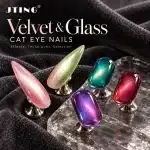
The concentrated line and the soft velvet glow can come from the same bottle, depending on the magnet and the movement. Browse JTING’s cat eye gel collection for magnetic shades that can be layered over or alongside burgundy, and see our velvet and glass cat eye guide for technique details.
10. Burgundy Chrome and Metallic Accents
Chrome over burgundy creates a high-shine metallic finish that photographs well and commands a higher service price. The question for buyers is whether to stock a dedicated burgundy chrome product or use powders over existing shades.
Full Chrome vs. Accents
- Full-nail chrome: Apply powder to a compatible receiving layer, not directly to an arbitrary cured color gel. To keep the burgundy visible, compare a translucent powder over a compatible clear receiving layer. JTING’s Chrome Magic Top Coat is an option for the powder-rubbing stage; finish with the sealing step specified for the system. For metallic borders or French tips, use a metallic liner rather than coating the whole nail in powder.
- Accents: chrome tips, half-moons or a single accent nail add shine without changing the whole set, and they take less time.
Does It Need Its Own SKU?
If customers mainly request metallic outlines or tips, start with a liner rather than stocking a separate full-coverage metallic shade. Distributors and brands may add a ready-made metallic burgundy gel when they want a one-step product for faster services or retail kits. Step-by-step application is covered in our chrome nails guide.
11. Burgundy Glitter and Reflective Gel
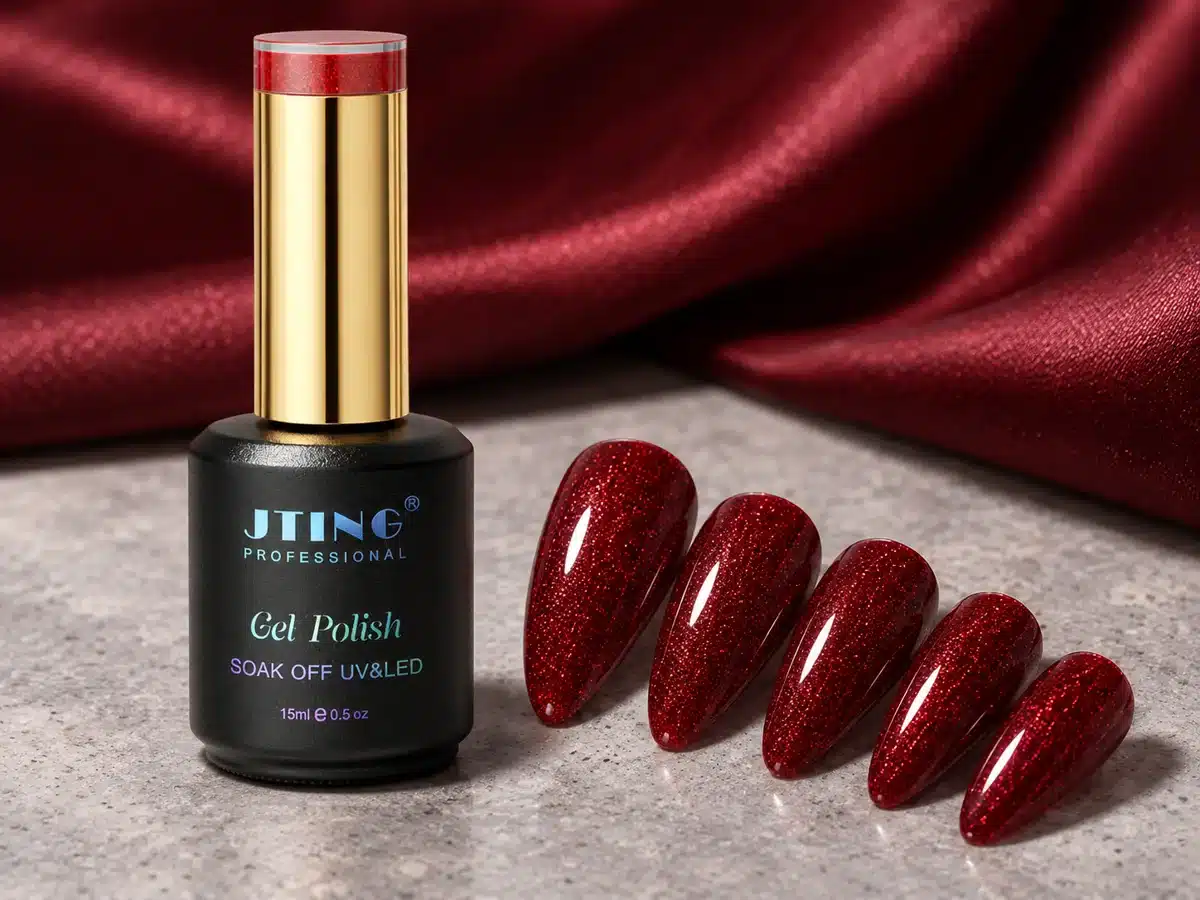
Glitter and reflective gels add sparkle, but they work differently. Glitter gel holds visible flakes that shine in any light. Reflective gel contains fine reflective particles that look subtle in normal light and flash brightly under a direct light source, such as a camera flash.
Always Compare in Two Lights
Test reflective burgundy in ordinary room light and with a phone flash. In room light, it should still look like a pleasing deep red. Under flash, it should light up evenly. A glitter gel should look sparkling in both.
Main Color or Upgrade?
Fine burgundy glitter can serve as a main color for holiday clients. Reflective gels work best as an upgrade or accent because their main effect appears in photos and evening light. JTING’s reflective gel range includes options for both full-nail and accent use.
12. Glossy vs. Matte Burgundy
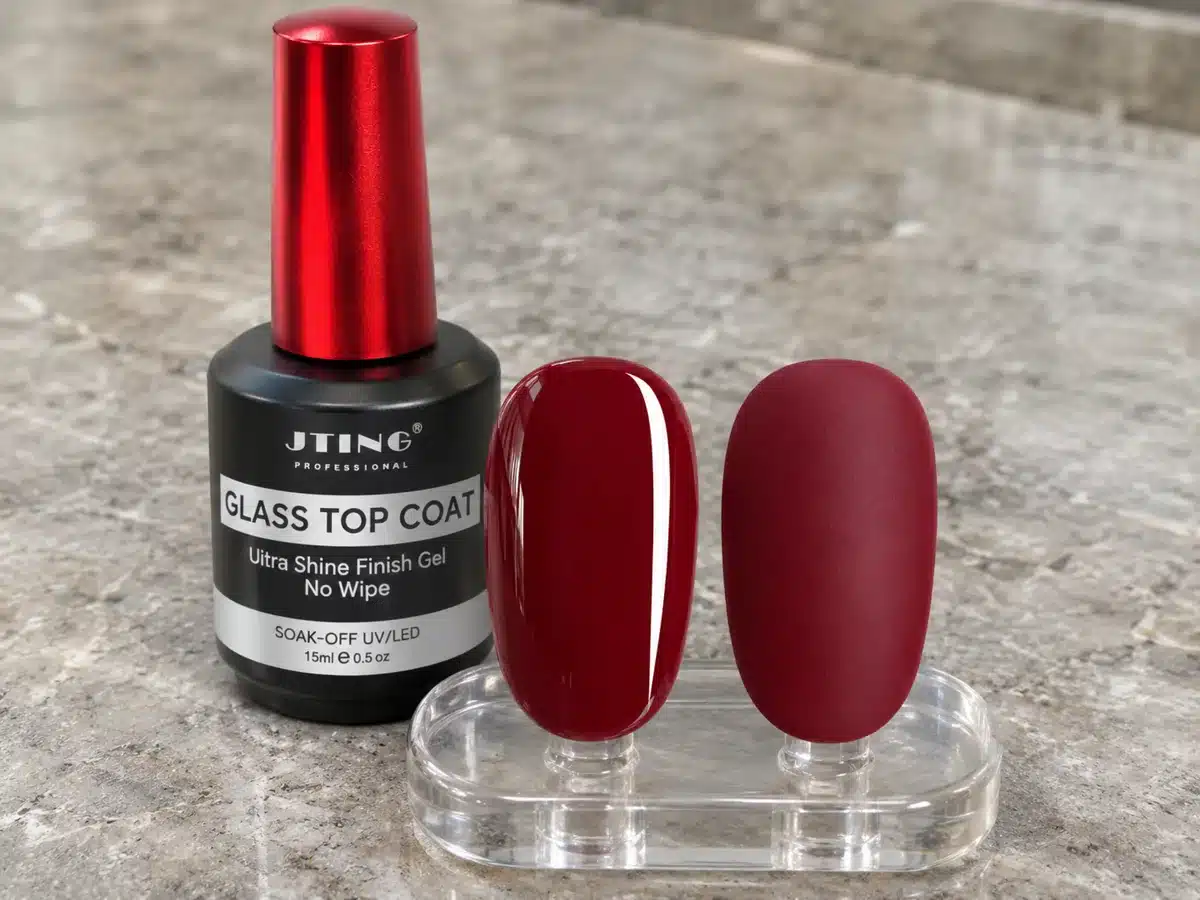
The same burgundy looks like two different colors under glossy and matte top coats. Gloss makes it richer and darker; matte softens it into a velvety, slightly lighter shade with a modern feel.
This gives salons and brands an easy way to expand the menu without adding color SKUs. One burgundy shade plus a glossy top coat and a matte top coat delivers two distinct looks. Mixing both on one set, such as matte nails with glossy French tips, creates a third.
When you compare samples, always use the same base color, the same light and the same angle. Matte finishes show scratches and oil more easily, so check how the matte top coat wears after a few days of handling. Our gel top coat guide compares top coat types in detail.
13. Pairing Burgundy with Base Coats, Builder Gels, and Top Coats
A burgundy gel polish performs only as well as the system around it. Pairing it with the right base, builder and top coat improves wear, protects the natural nail and gives distributors a reason to sell complete systems.
| Layer | Purpose | JTING Option |
|---|---|---|
| Base coat or rubber base | Adhesion, protection against staining, smoothing of uneven nails | Base coats and rubber base gel |
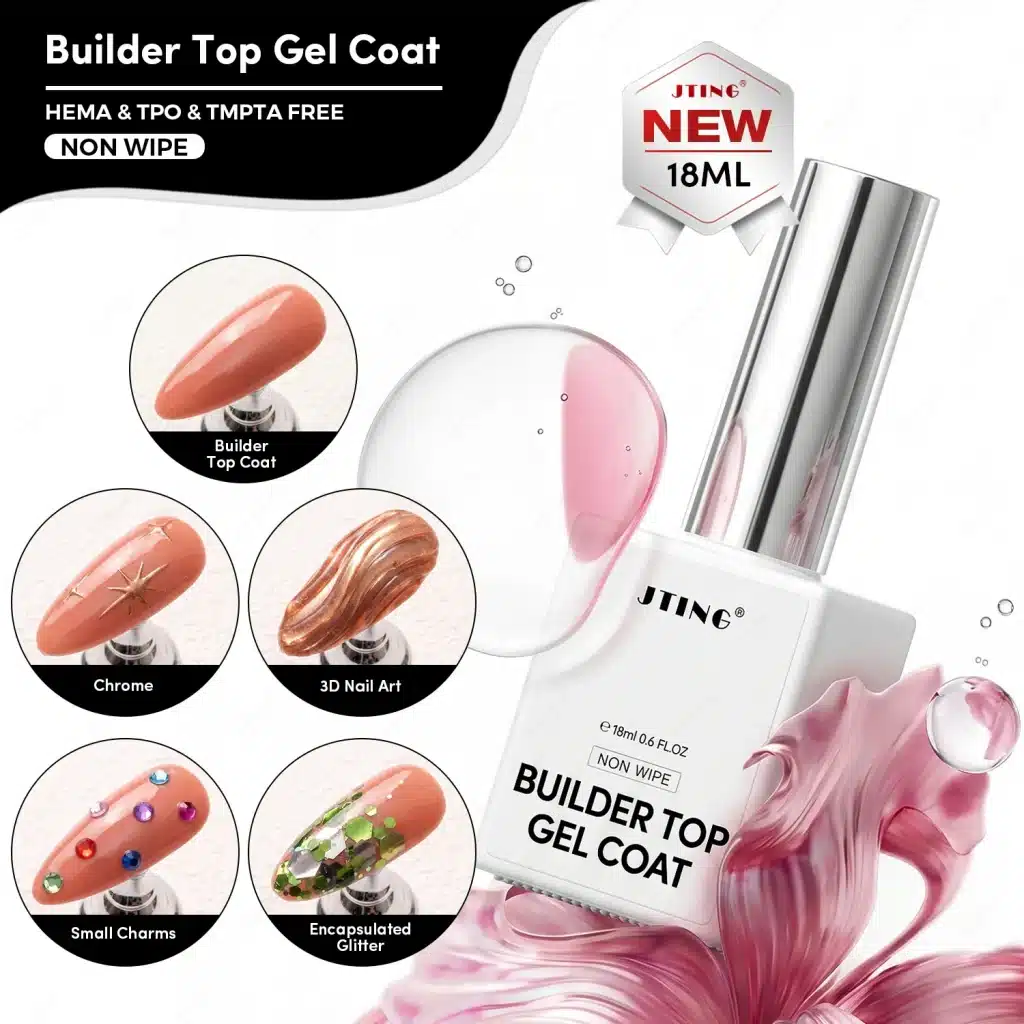
| Builder gel | Strength and structure for weak or longer nails | Builder gel, including colored builder gel |
| Burgundy color | Color, coverage and effect | Opaque, jelly, cat eye or reflective burgundy |
| Top coat | Shine or matte finish, scratch resistance | Glossy, matte and velvet top coats |
A colored builder gel in a nude or milky shade can replace a separate base and builder for clients who want strength under their burgundy. For distributors, bundling base, color and top coat in one kit raises the order value and keeps salon customers buying from the same source.
JTING formulates its gels without HEMA. Choose the base, color and top coat as a compatible system using the instructions for the selected products.
14. Performance Specs to Ask About Before You Buy
Appearance is only half of a buying decision. Professional buyers should also ask how a burgundy gel polish performs. These are the specifications that matter most, with the standard JTING works to.
| Spec | Why It Matters | JTING Standard |
|---|---|---|
| Viscosity | Controls brush pickup and flooding risk | Medium viscosity tuned for controlled flow at the cuticle |
| Self-leveling | Removes brush marks on dark colors | Levels within seconds without running into sidewalls |
| Pigmentation and coverage | Affects service time and layer thickness | Full, even coverage in two thin coats for opaque shades |
| Curing | Determines hardness and wear | Check the specified lamp or compatibility criteria, cure time and layer instructions for the selected formula |
| Wear | Client satisfaction and rebooking | Review wear on the intended system and application protocol |
| Color consistency | Reorders and multi-store matching | Agree the approved reference, measurement method and color tolerance |
| Shelf life | Stock planning for distributors | Use the selected SKU’s unopened shelf life and storage instructions |
| Formula | Ingredient requirements and product documentation | HEMA-free across all JTING products |
Ask every supplier for the same information so you can compare like with like. JTING provides product documents such as SDS and COA with orders, and supports market documentation such as CPNP, CPSR and FDA- or REACH-related files depending on the product and destination market.
15. Short Burgundy Nails for Everyday Salon Services
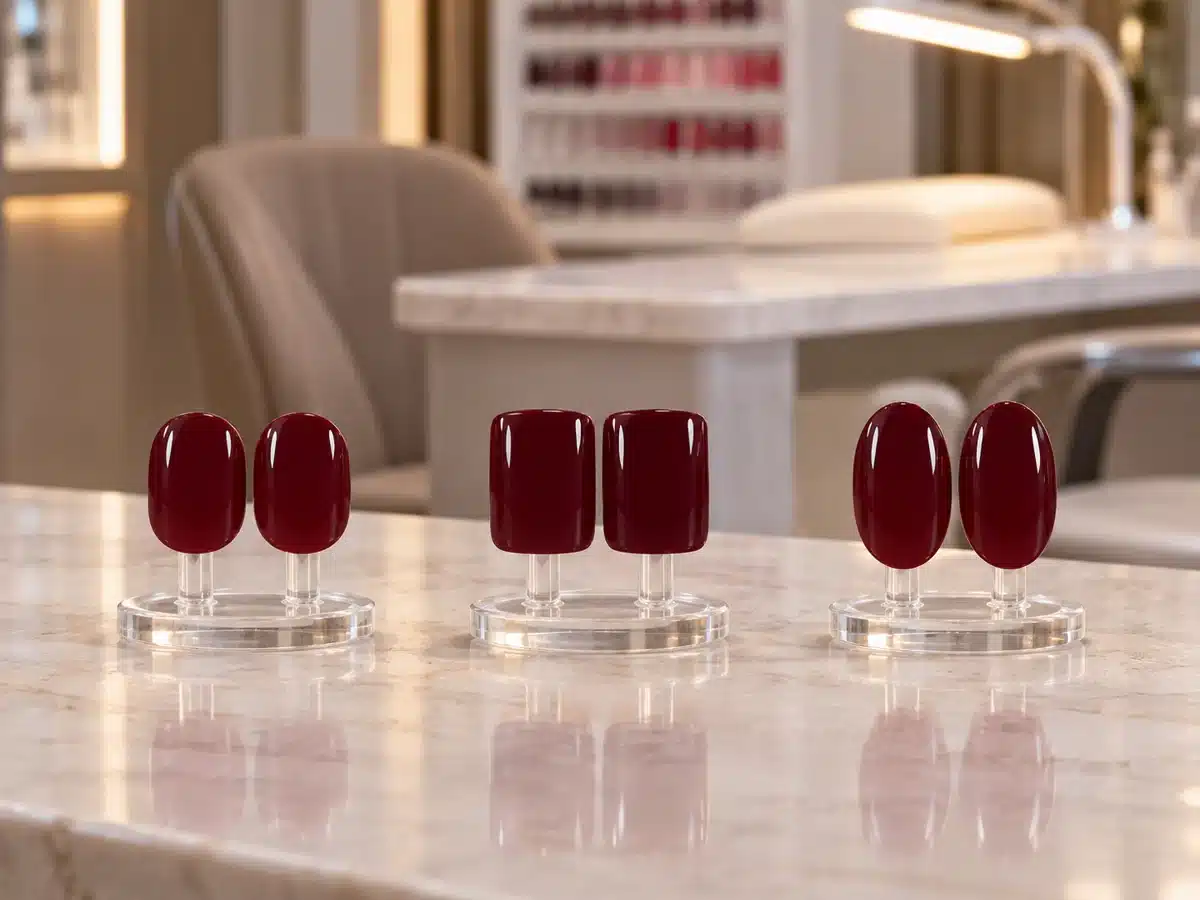
Short burgundy nails give salons an option for clients who want deep color without added length. They look polished, suit an active schedule and grow out gracefully. For salons, they are also quick to deliver consistently.
Choosing the Shape
- Short round: soft and natural, a softer outline for everyday services. Works with every burgundy direction.
- Short square: crisp and modern. Shows a clean cuticle line clearly, so it suits opaque shades.
- Short oval: elongates the finger. A good match for jelly and cat eye burgundies.
Darker shades make short nails look neat and deliberate. Lighter berry burgundies look fresher. Build a small set of display tips in these three shapes so clients can choose quickly, and so every technician delivers the same result.
16. Burgundy French Tips and Minimal Nail Art
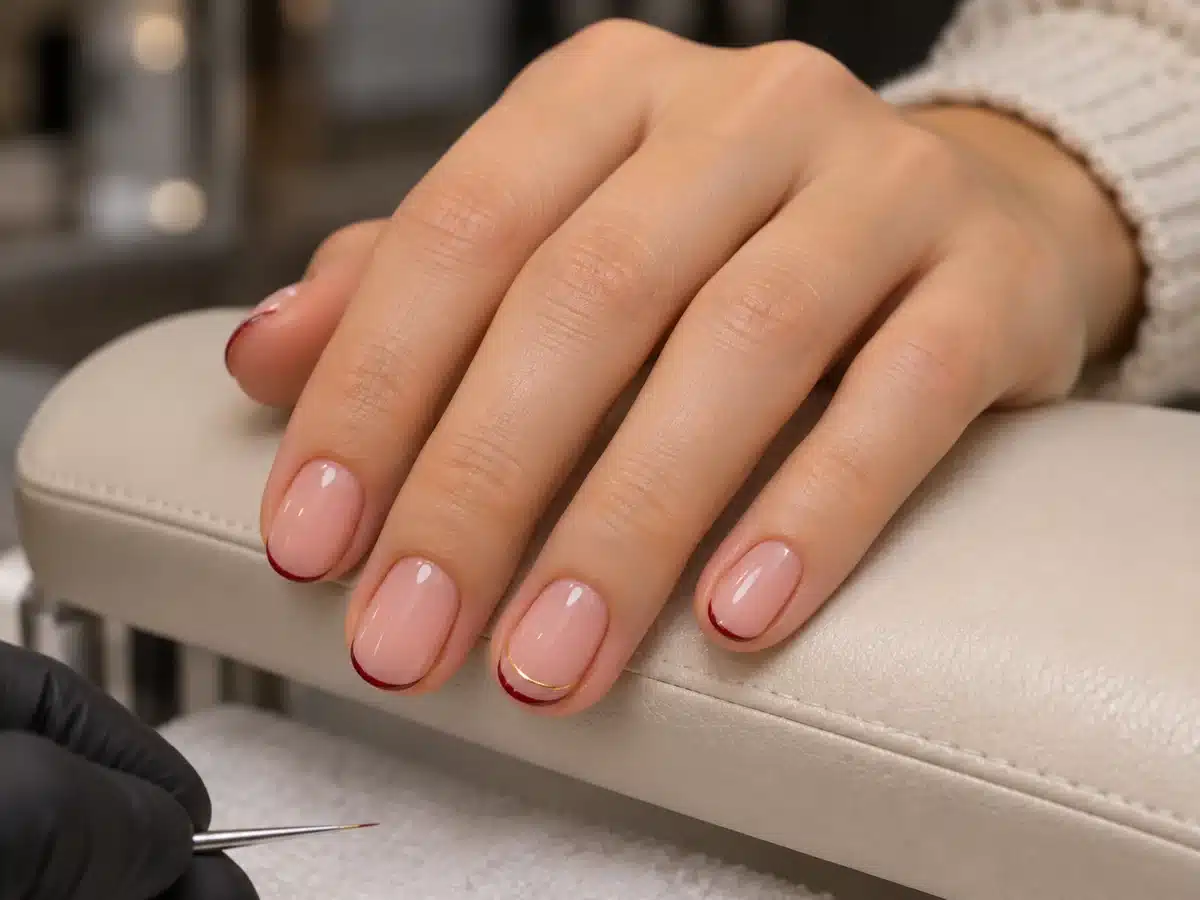
Minimal designs let salons turn a basic burgundy service into an upgraded one with little extra time.
| Design | Extra Time | Service Level |
|---|---|---|
| Micro French tip in burgundy over nude | Low | Basic upgrade |
| Fine gold or black line | Low | Basic upgrade |
| One accent nail with chrome or glitter | Low | Basic upgrade |
| Deep burgundy French over a jelly base | Medium | Premium |
| Hand-painted motifs or 3D details | High | Premium |
A burgundy French tip reads more refined than a classic white tip and works well for weddings and work settings. For tip techniques and liner tools, see our French manicure gel guide.
17. Tonal Burgundy Sets with Jelly and Cat Eye Accents
A tonal set pairs one opaque burgundy with one transparent or magnetic partner. It looks coordinated and high-end, yet needs only two or three bottles.
Simple Combinations That Work
- Opaque burgundy on four nails, burgundy cat eye on the ring finger
- Burgundy jelly layered over opaque burgundy tips for a glassy gradient
- Alternating opaque and jelly nails for a two-tone look
Partner Colors
Burgundy pairs naturally with milky white, warm nude and champagne gold. Milky white gives a clean contrast, warm nude softens the look, and champagne gold adds a festive touch. These three partners cover most tonal and contrast sets a salon will need.
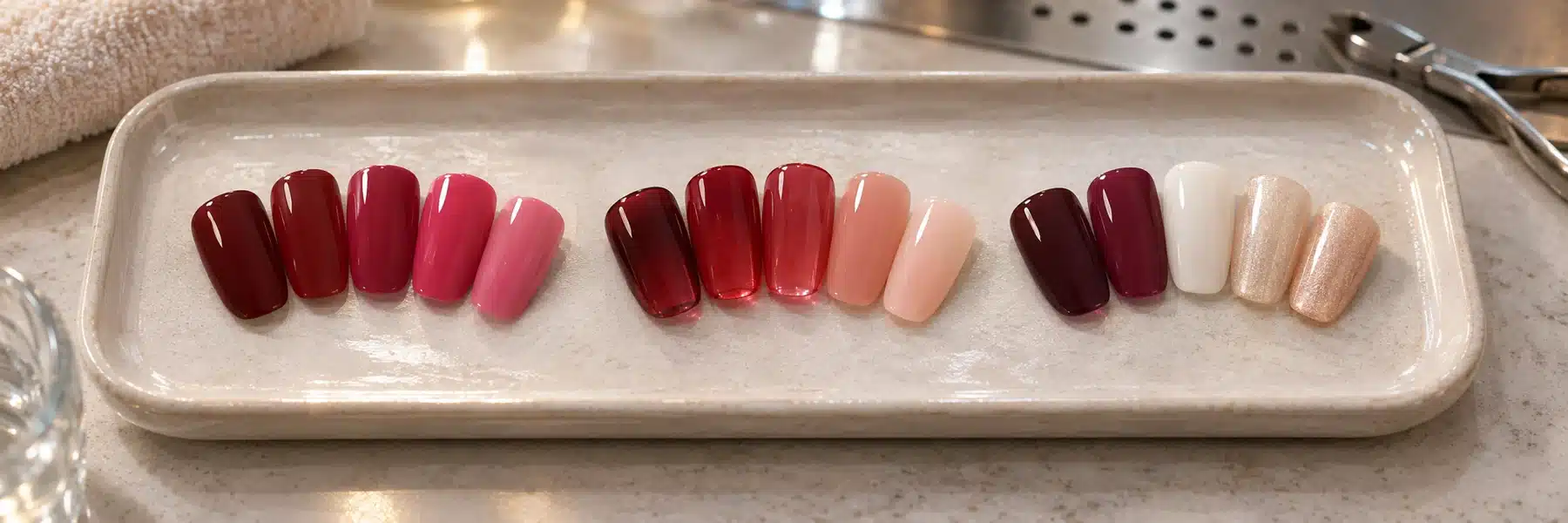
18. Burgundy Sets for Fall, the Holidays, and Valentine’s Day
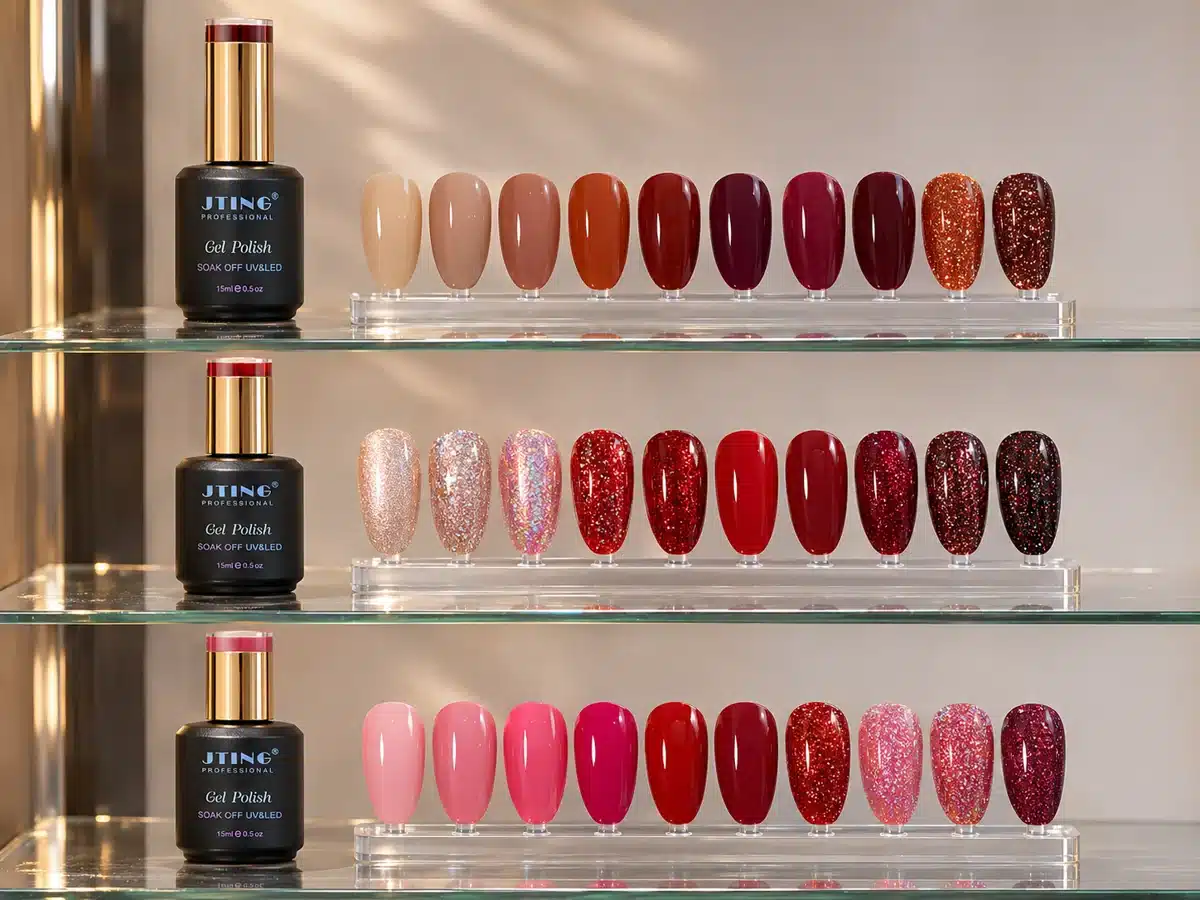
Seasonal sets are where burgundy earns its strongest sales. Planning them early lets salons promote the right menu and lets distributors and brands ship kits before demand peaks.
| Season | Lead Shade | Partner Shades and Effects |
|---|---|---|
| Fall (September–November) | Brown-red or neutral burgundy | Warm nude, caramel, matte top coat, gold line |
| Winter holidays (November–December) | Black cherry or plum burgundy | Champagne gold glitter, burgundy cat eye, chrome powder |
| Valentine’s Day (late January–February) | Berry burgundy | Milky pink, burgundy jelly, red reflective gel |
For holiday design inspiration and complementary shades, see our Christmas and New Year’s Eve gel nails guide and the fall nail trends report.
19. Displaying and Promoting Burgundy in Salons and Stores
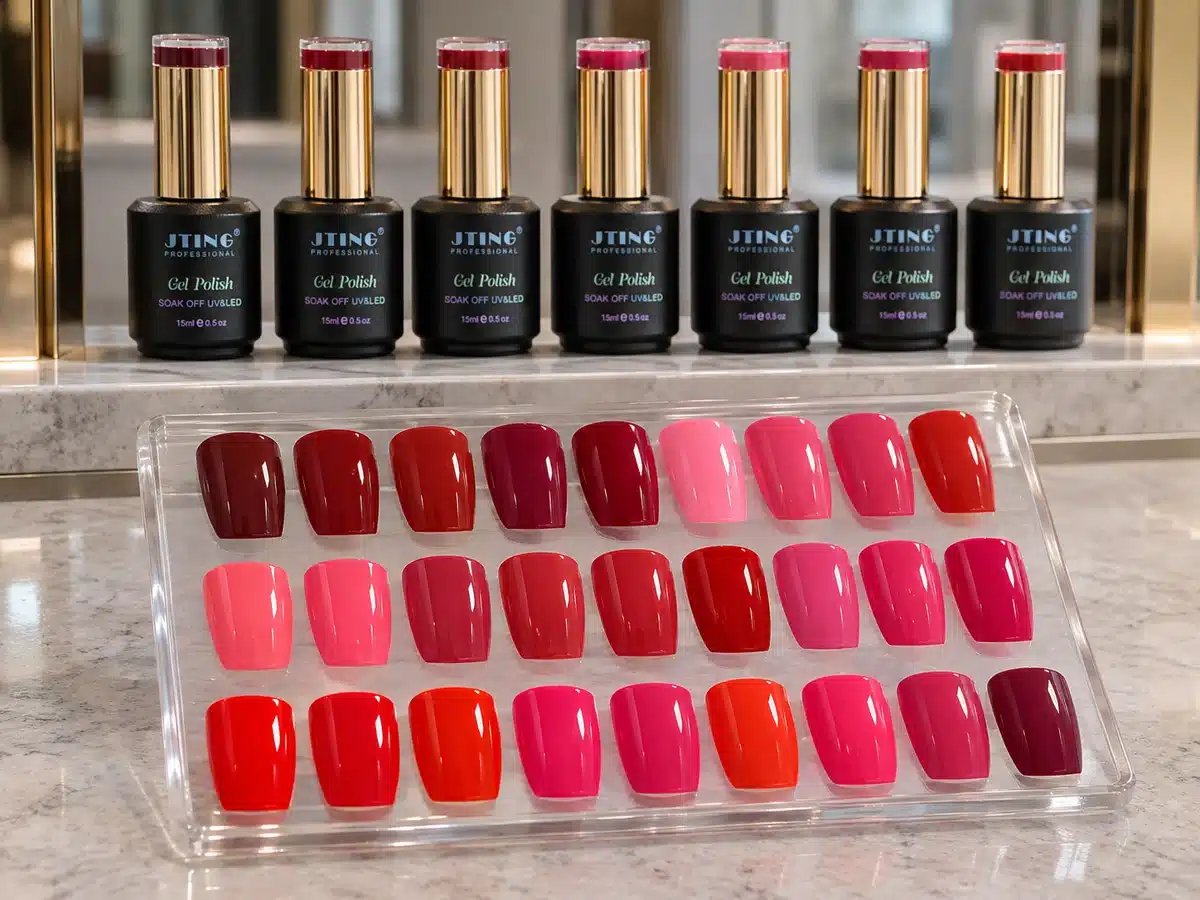
A good burgundy range still needs to be seen. How you display and promote it affects how often clients choose it and how quickly retail stock moves.
In the Salon
- Group burgundy swatches by undertone on a color wall or swatch ring
- Show the same shade in glossy and matte, and as an opaque and jelly pair
- Keep three to five finished display tips of seasonal designs at reception
In Retail and Wholesale
- Place core burgundy shades at eye level with clear shade numbers
- Sell seasonal sets in boxed kits with a printed color card
- Pair each burgundy with its matching base and top coat on the shelf
Online and Social Media
Short videos showing a cat eye shifting or a jelly layering up perform well on social platforms. Use consistent lighting so the color looks the same across posts. JTING supplies product photography and videos for private label and collection orders, ready for listings and social channels.
20. Build a 6-Shade Burgundy Capsule
A six-shade capsule covers the main undertones and finishes without overlap. It works as a salon starter range, a distributor display set or a private label launch collection.
Organize the Capsule in Three Tiers
- Core shades (sell all year): neutral opaque burgundy and berry burgundy.
- Fall and winter shades: brown-red burgundy and black cherry.
- Effect shades (seasonal push): burgundy jelly and burgundy cat eye.
| Shade | Role | Decision | Reason |
|---|---|---|---|
| Neutral deep burgundy, opaque | Core benchmark | Keep | Suits most clients and services |
| Berry burgundy, opaque | Bright core | Keep | Clearly lighter and pinker in daylight |
| Brown-red burgundy, opaque | Fall shade | Keep | Warm undertone fills a gap |
| Black cherry, opaque | Winter shade | Keep | Deepest option for holiday menus |
| Burgundy jelly | Effect | Keep | Supports layering and glass looks |
| Burgundy cat eye | Effect | Keep | Distinct magnetic upgrade |
| Second neutral wine, opaque | Duplicate | Cut | Indistinguishable from the core in room light |
| Plum burgundy, opaque | Alternative | Hold | Add in the 12-shade expansion |
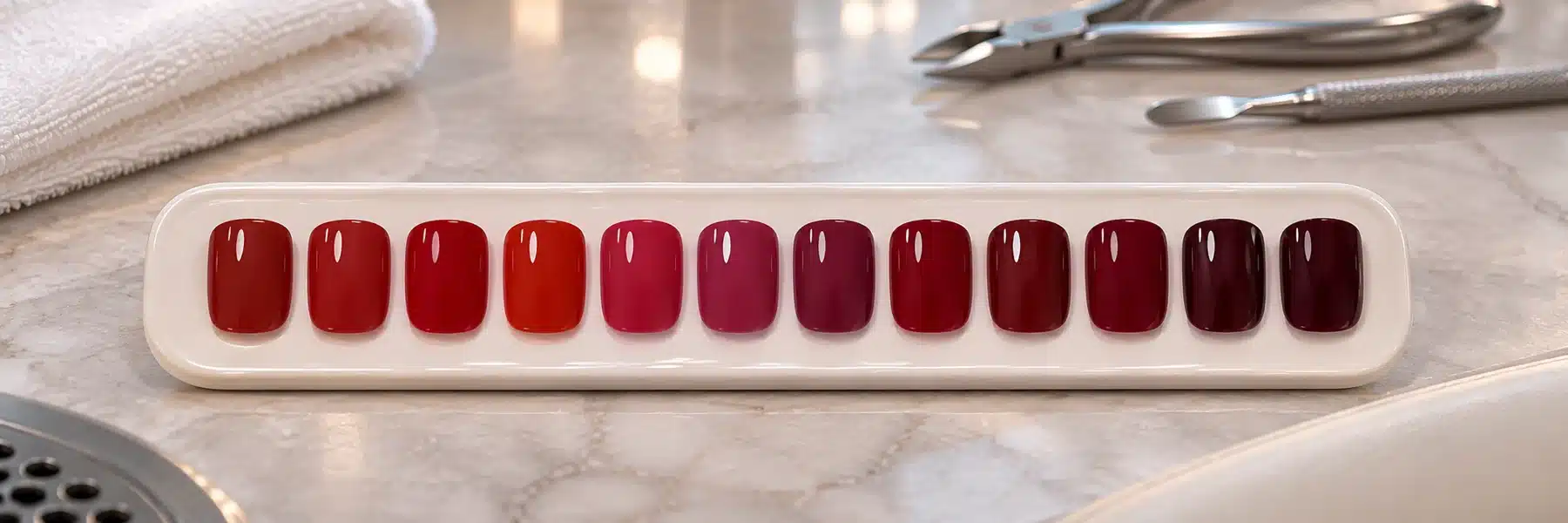
Set the six samples side by side under the light customers actually use to choose. If black cherry and the core wine look nearly identical on short tips, keep the easier shade to apply and test a cooler plum or lighter berry in the open slot. If the magnetic sample loses its wine base as it turns, compare another magnetic sample instead of buying two versions that fill the same role.
21. Expand into a 12-Shade Red and Burgundy Range
Once the capsule sells, expand only where it leaves a gap. Each new shade should fill one clear need:
| Addition | Gap It Fills | When to Leave It Out |
|---|---|---|
| Classic red | Bright entry point for buyers who do not want a dark manicure | Your existing classic red already serves the display |
| Medium wine | Visible depth step between classic red and the core burgundy | It reads as the same color as the core on short tips |
| Cool plum | Blue-purple undertone distinct from the warmer reds | The berry shade already provides enough cool contrast |
| Muted rosewood | Softer everyday choice alongside deep, saturated shades | The range is intended only for high-contrast seasonal looks |
| Warm garnet jelly | Warm translucent option distinct from the existing jelly | The two jellies look alike over the same base |
| Wine reflective gel | Flash-driven event accent distinct from the magnetic shade | The effect is too subtle in your sales setting or your existing topper does the job |
These are buying roles, not a list of confirmed supplier shade numbers. Add the strongest matches first. A nine-shade range with visible differences is more useful than a twelve-shade range padded with duplicates.
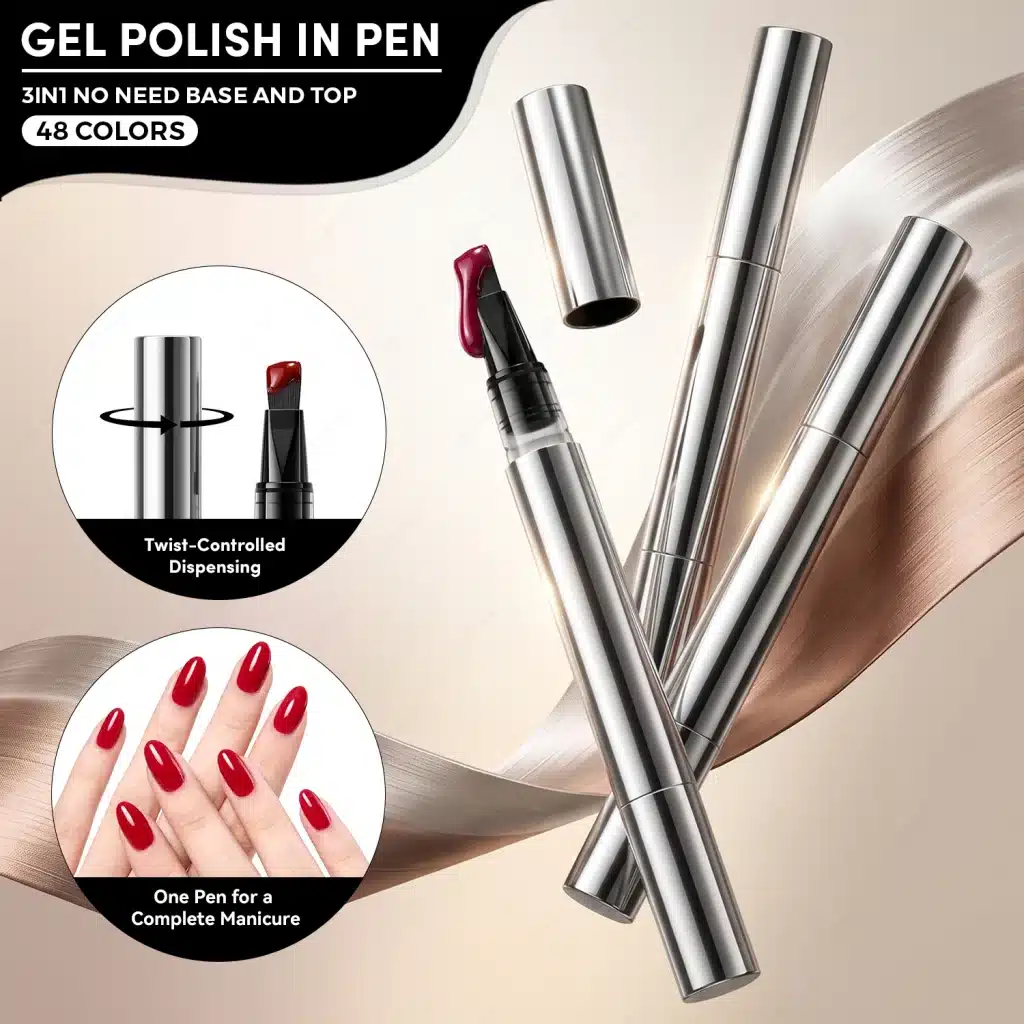
The JTING 48-color red gel polish collection is a practical source for this expansion. Use it to shortlist red candidates, then compare physical swatches against your existing capsule. Source a specialty effect separately if the red collection does not fill that role.
22. What Salons and Salon Chains Should Stock
Salons need shades that technicians can deliver quickly and consistently, plus a few upgrades that raise the average ticket.
| Category | What to Stock | Training Level |
|---|---|---|
| Regular services | Two to three opaque burgundies in different undertones | Basic |
| Upgraded services | One jelly, one cat eye, matte top coat, chrome powder | Intermediate |
| Seasonal specials | One holiday glitter or reflective burgundy | Intermediate |
Consistency Across Locations
Salon chains should use the same shade numbers, the same display tips and the same service steps in every location. Ordering from one batch for all stores, or confirming batch consistency with the supplier, reduces variation across locations; use the approved swatch to check each incoming batch. A short training sheet showing coat counts, curing times and magnet techniques helps new technicians match the standard. Learn more about JTING solutions for nail salons and spas.
23. What Distributors and Wholesalers Should Stock
Distributors need shades that reorder reliably and sets that move quickly in the fourth quarter. Wholesale gel nail polish buyers should separate three stock types:
- Best-selling single shades. The core burgundies your salon customers reorder constantly. These should always be available individually.
- Replenishment units. Decide whether you restock by single bottle, by inner box or by carton, and make sure the supplier can supply single shades in those units.
- Seasonal sets. Boxed kits for fall and the holidays, ordered early and sold through by the end of the season.
The most common mistake is buying burgundy only inside mixed sets. When one shade sells out, customers cannot buy it alone. Ask JTING to quote the replenishment unit and minimum for your core shades separately from the mixed-set order. See how JTING supports importers and wholesalers.
24. How Private Label Brands Can Differentiate Their Range
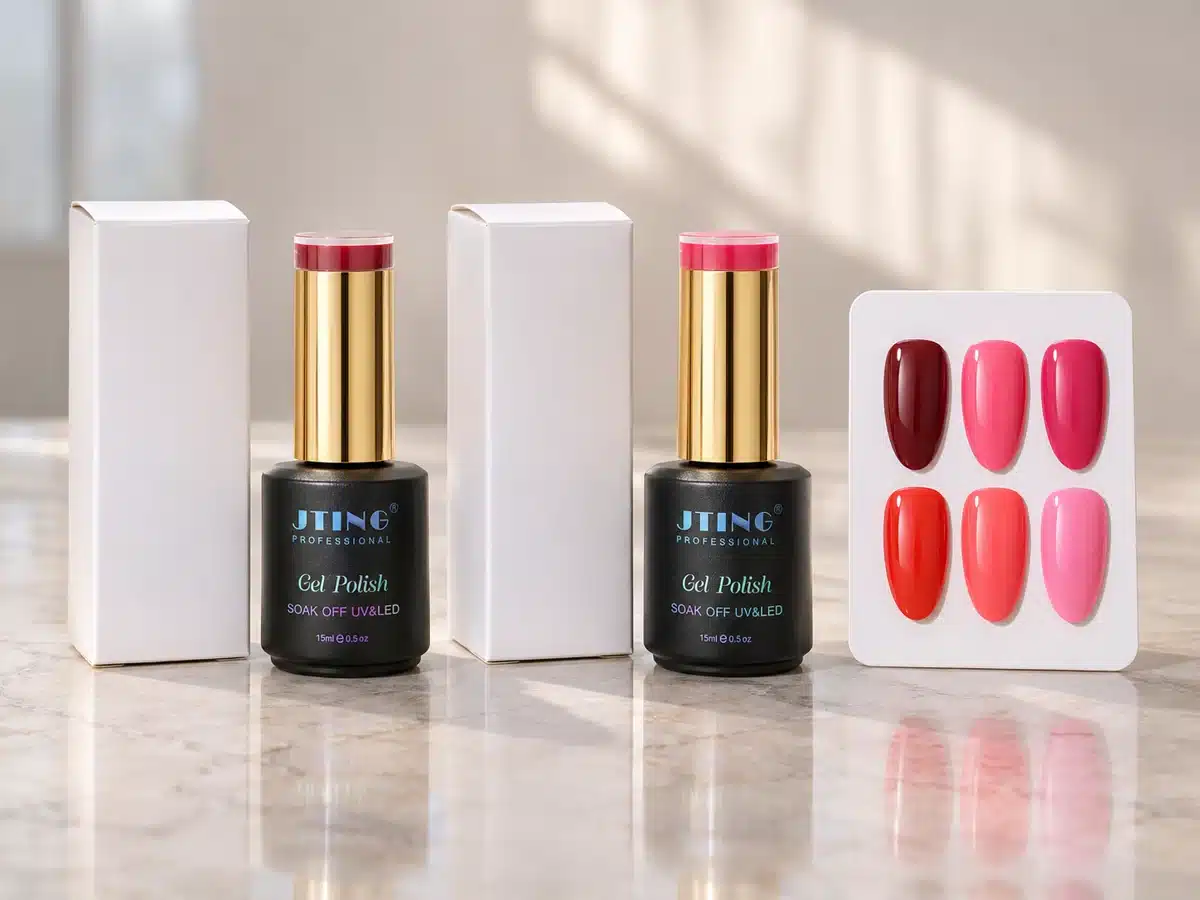
For a private label gel nail polish brand, burgundy is a chance to create a signature shade. Start with the color and finish you want customers to recognize. Explore JTING’s private label program for nail brands to develop the shade range, bottle, label, packaging and color chart together.
Define the Hero Shade and Effect
Choose one burgundy that customers will associate with your brand, such as a custom plum burgundy or a burgundy velvet cat eye. Use it in your launch, your social content and your holiday edition.
Shade Naming and Color Cards
Give shades memorable names that hint at undertone, like “Velvet Merlot” or “Cherry Noir,” and pair each name with a fixed shade number. Print color cards with real painted swatches rather than ink-printed squares, so customers see the true shade.
Packaging That Matches the Collection
JTING offers 100+ bottle and cap options, 50+ brush options, 100+ packaging box options and 1000+ private label design options. Choose a bottle color, label design and box that suit a deep, premium shade family. Explore custom bottles, labels and stickers and packaging boxes, or read our private label gel nail polish guide.
25. Developing a Custom Burgundy Shade with JTING
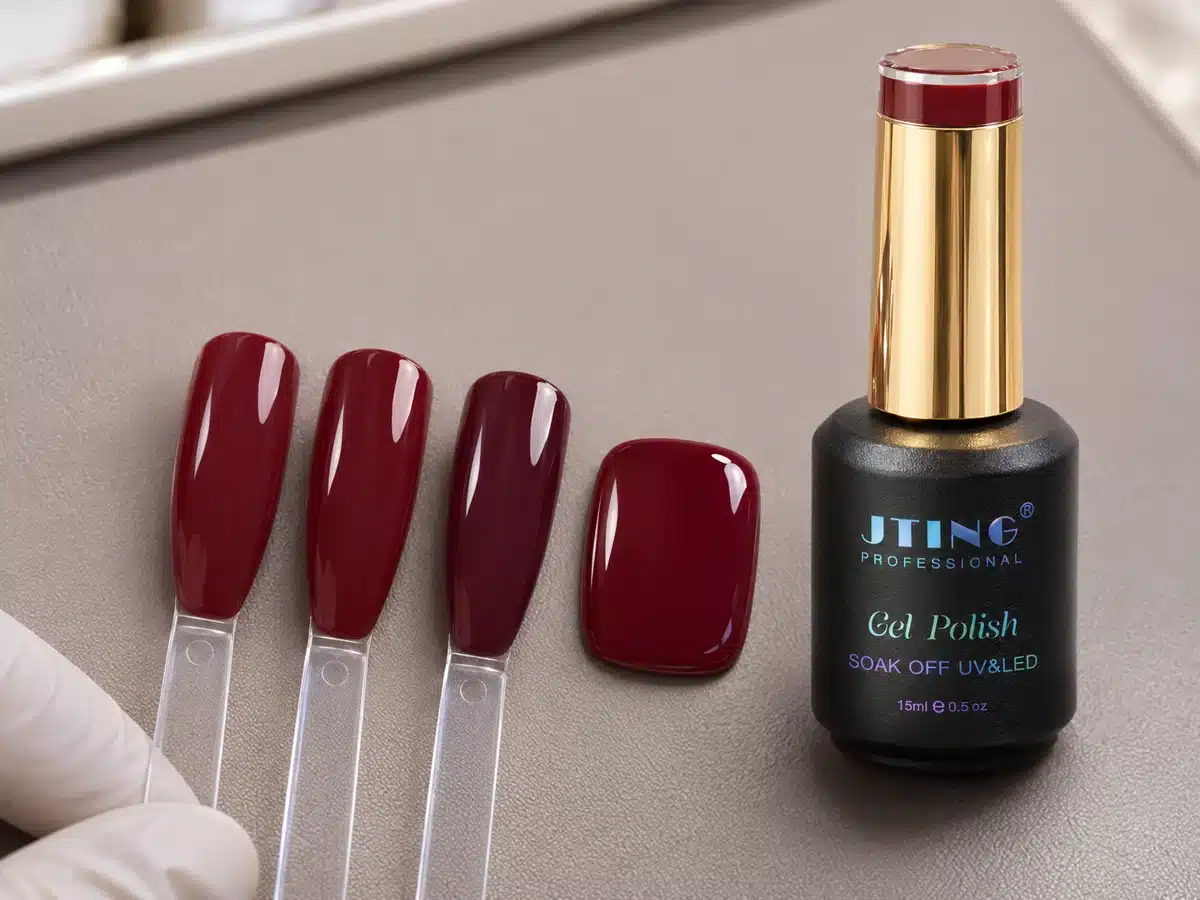
JTING develops custom burgundy shades from physical references or agreed color targets, then uses the approved sample as the reference for repeat orders. JTING develops custom colors in-house and creates around 60 to 100 new colors and effects every week, so matching a precise burgundy is routine work for our color team.
The Development Process
- Send a reference. A physical nail, a swatch, a fabric, a Pantone number or a photo. Physical references give the most accurate match.
- Receive the first sample. We formulate the shade and send painted swatches and bottles for your review.
- Adjust. Tell us what to change, such as more purple, less brown or deeper coverage. JTING makes color adjustments at no additional charge.
- Approve and seal the standard. The approved shade becomes your master standard. We keep a sealed reference sample and record the formula for every future batch.
Custom color development typically takes 2 to 4 weeks, depending on the number of shades and revision rounds. Standard samples from existing ranges ship in 7 to 10 business days.
26. How to Compare Burgundy Gel Polish Samples
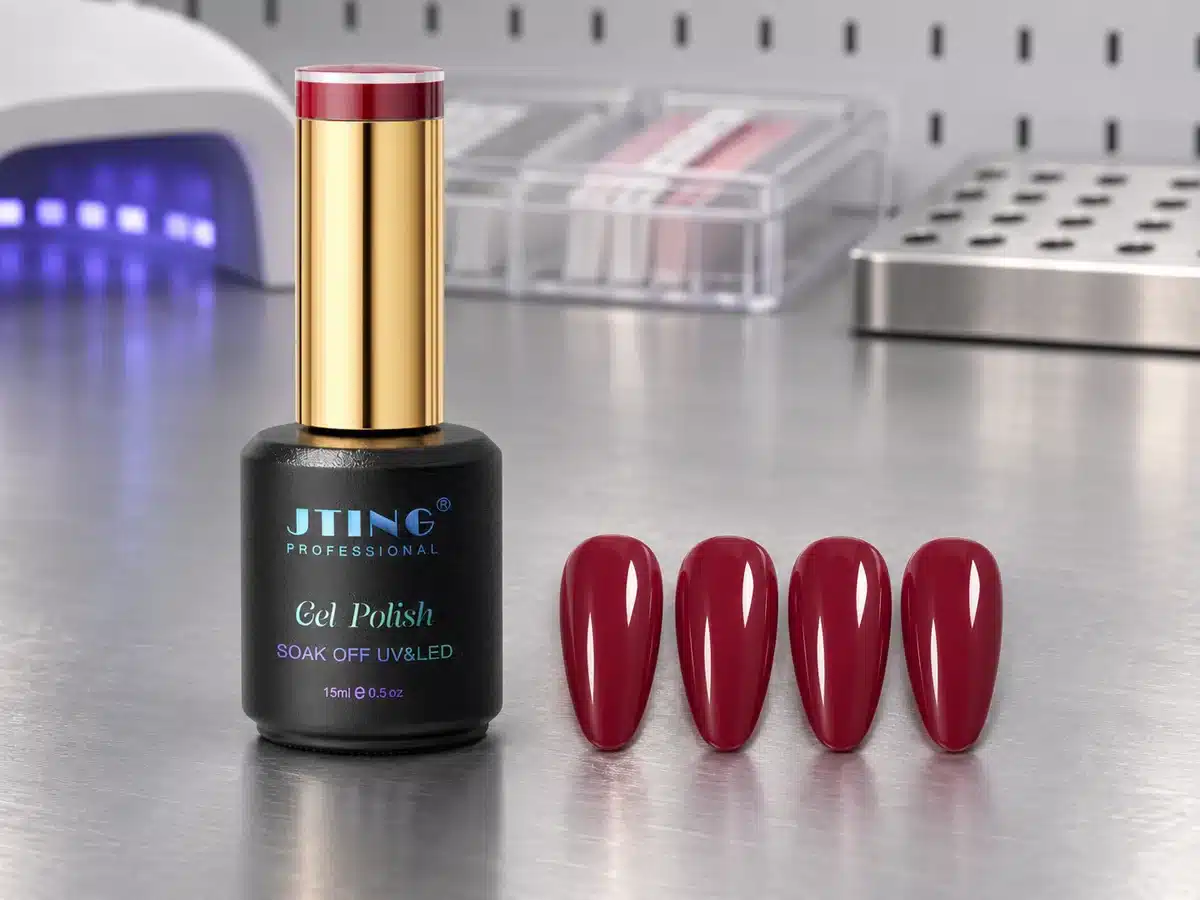
A fair comparison needs identical conditions. Deep colors exaggerate small differences in thickness, light and base color, so control these before judging any sample.
Set Up the Comparison
- Use the same tip shape and color for every sample, preferably clear or natural tips
- Apply the same base coat, the same number of coats and the same top coat
- Cure with the same lamp for the same time
- Review in daylight or under a daylight lamp, then under warm light
Dark-Shade Checks
For every burgundy, check coverage after two coats, brush marks on the surface, color pooling at the edges and how clean the cuticle line is. Note how the brush picks up and releases product, since thick dark formulas reveal brush quality quickly.
| Check | What to Record | Score 1–5 |
|---|---|---|
| Color and undertone | Matches the target direction in daylight | |
| Coverage | Even after two coats | |
| Self-leveling | No visible brush marks after settling | |
| Edges | No pooling at sidewalls or cuticle | |
| Brush | Controlled pickup and clean release | |
| Effect | Jelly depth, magnetic line or reflective flash as intended | |
| Cure and finish | Smooth, hard surface with no wrinkles | |
| Wear test | Condition after 14–21 days on a tester |
First, compare color, coverage and brush control on nail tips. Before any on-nail wear trial, verify the selected product’s compatible lamp, cure cycle and layer instructions. Our curing guide explains what to check. Once the system is confirmed, assess wear separately; wear results do not verify cure.
27. How to Photograph Burgundy Without Shifting the Color
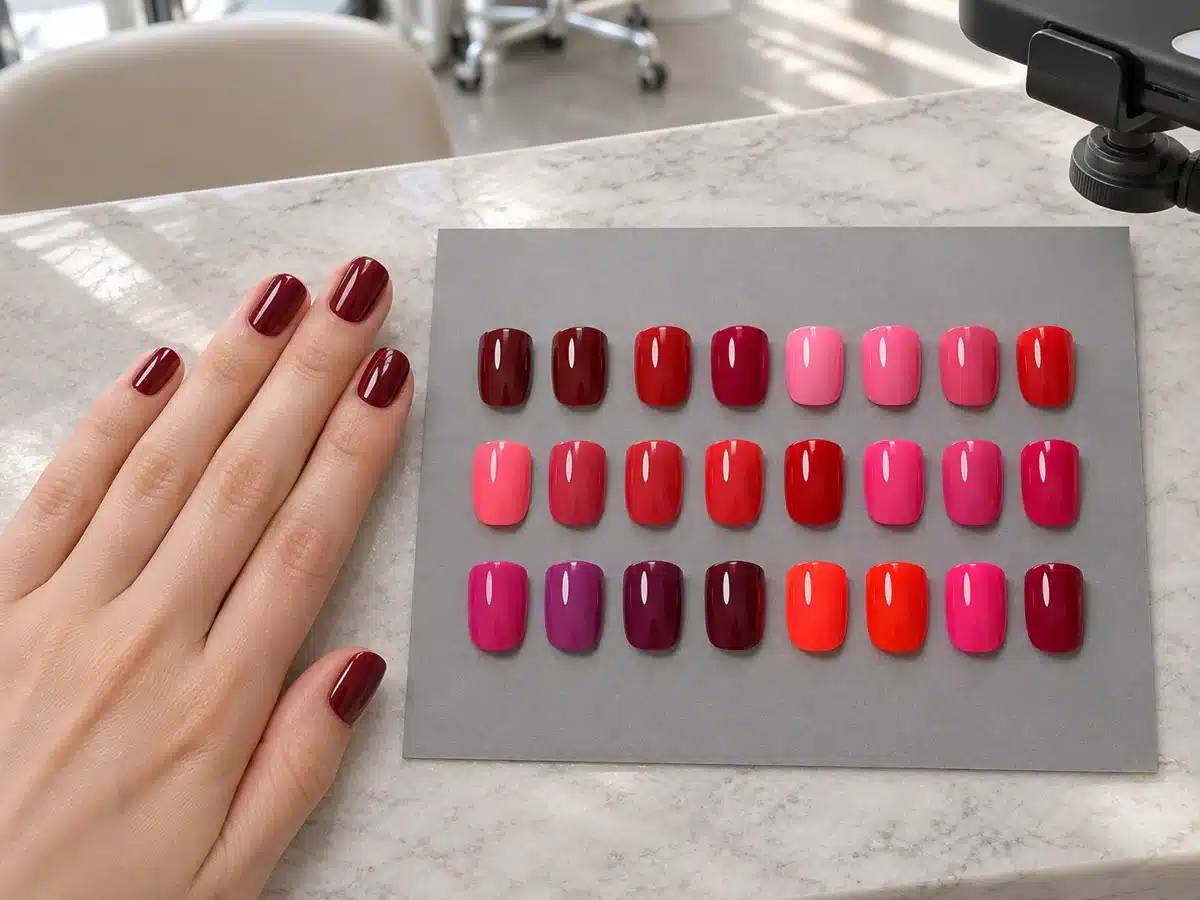
Burgundy is one of the hardest colors to photograph accurately. Cameras often push it toward bright red or flatten it into black. Accurate photos matter for product listings, social media, approvals with suppliers and communication between stores.
- Use the same light every time. Daylight from a window or a daylight lamp, never mixed with warm room light.
- Include a neutral reference. A white or gray card in the frame lets you correct color later.
- Turn off filters and beauty modes. They change hue and saturation.
- Film cat eye shades. A short video tilting the nail shows the moving light better than any still photo.
- Shoot reflective gels twice. Once in room light and once with flash, so buyers see both effects.
JTING photographs and films products under controlled lighting for collection and private label orders, so your listings show the shade the customer will receive.
28. Keeping Shades Consistent from Approval to Reorder
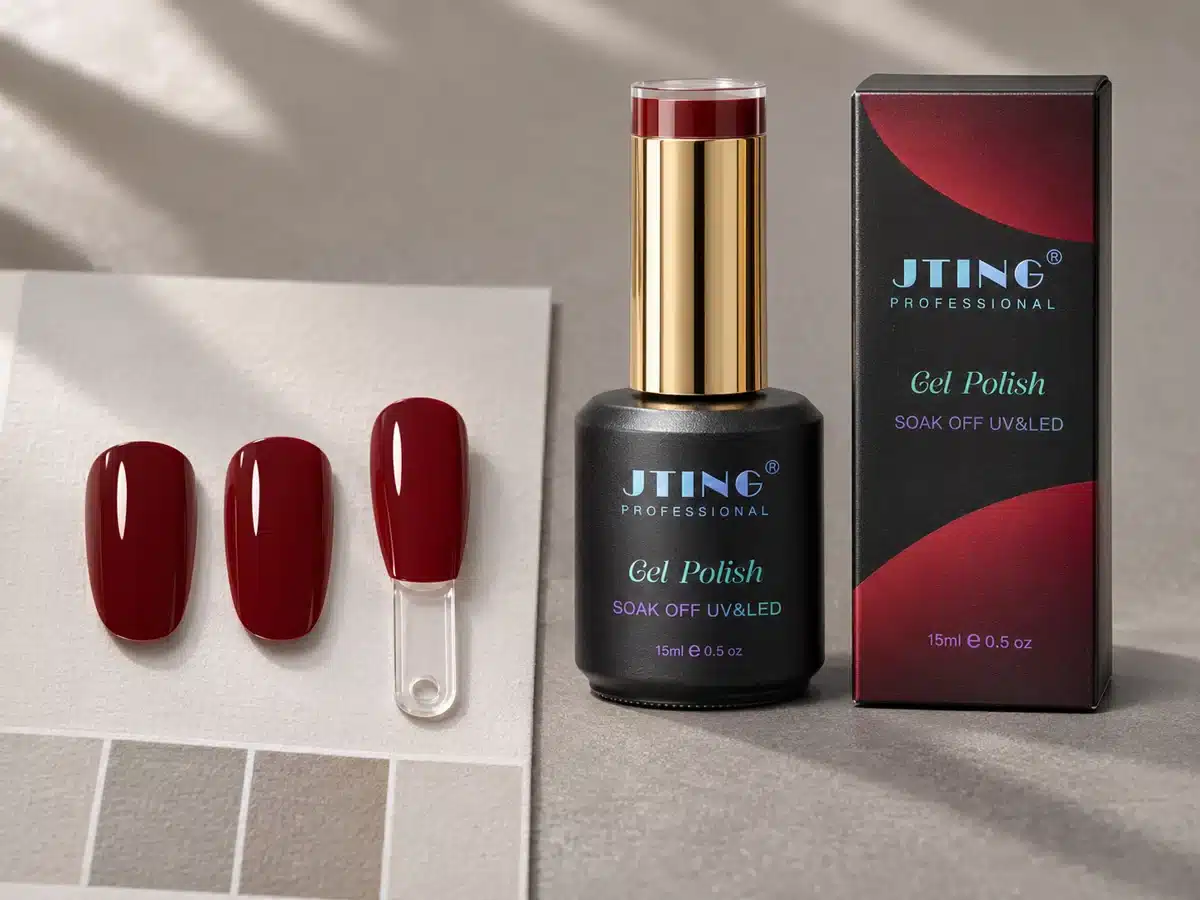
For buyers, the real test of a supplier is the second order. The burgundy that arrives with a reorder must match the burgundy approved months earlier, and every bottle, card and carton must be easy to identify.
Link Every Document to One Shade Number
The approved sample, the bottle label, the color card, the order line and the outer carton should all carry the same shade number. When these match, warehouse staff, salon managers and customers can check a product in seconds.
How JTING Controls Batch Consistency
- A sealed master sample is kept for every approved shade
- Compare the batch with the approved master under the viewing conditions specified for the order
- Record the measurement method and agreed tolerance against the master sample
- Agree where batch identifiers appear and which orders require a batch-specific COA
Your Own Check on Arrival
Keep a painted swatch from your approved sample. When a reorder arrives, paint a tip from the new batch under the same conditions and compare the two side by side in daylight. Photos and shade names help with communication, but the physical side-by-side comparison is the most reliable check.
29. How to Compare Wholesale Quotes and First-Order Quantities
Comparing suppliers by unit price alone often leads to surprises. Two quotes for wholesale gel nail polish can look similar until you break down what each includes.
| Cost Item | What to Confirm |
|---|---|
| Gel per bottle | Volume, formula type, effect (opaque, jelly, cat eye) |
| Quantity per shade | Minimum per shade and whether shades can be mixed |
| Bottle, cap and brush | Standard or custom, and any mold or setup costs |
| Label and printing | Printing method, finishes such as hot stamping |
| Packaging box and inserts | Single box, set box, color card |
| Samples | Number of samples and revision rounds included |
| Delivery terms | Incoterm, shipping method, documents included |
JTING First-Order Quantities
Private label gel nail polish orders start from 10 pieces per shade. JTING house-brand mixed-color orders start from 100 pieces. Final quantities depend on product type, packaging style, formula requests and level of customization. These low starting quantities let you test a six-shade burgundy capsule without overstocking.
30. A Seasonal Launch Timeline
Burgundy peaks from October to December. To sell into that peak, work backward from the date the product needs to be on shelves or on the salon menu.
| When | Step | Typical Duration |
|---|---|---|
| May–June | Select directions and request standard samples | Samples in 7–10 business days |
| June | Custom shade development, if needed | 2–4 weeks |
| Late June–July | Approve shades, packaging and artwork | 1–2 weeks |
| July | Bulk production | 15–20 days after approval |
| August | Shipping and customs | Depends on method and destination |
| Late August–September | Stock in warehouse, staff training, content ready | Before the fall peak |
For a Valentine’s Day launch, move the same plan forward to start in October. Starting early also leaves time for a reorder before the holiday peak if the first batch sells faster than expected.
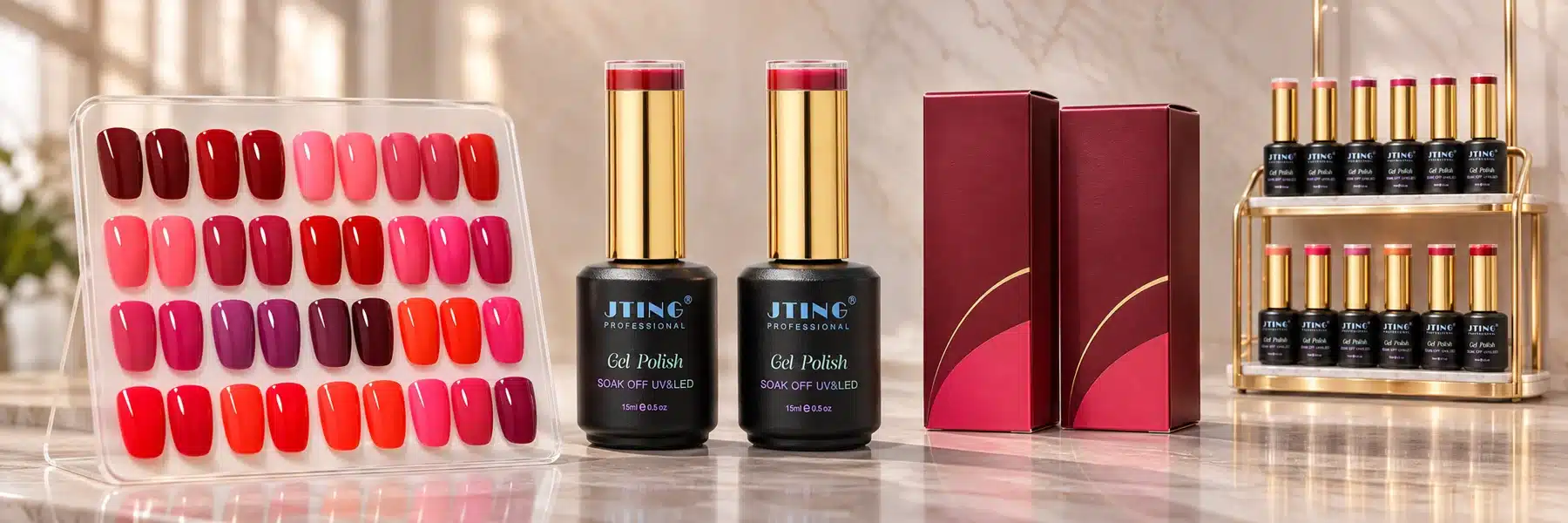
31. Plan Reorders Before the Seasonal Launch
Core shades and seasonal shades need different reorder rules.
- Core shades: set a minimum stock level based on monthly sales and production lead time. Reorder when stock reaches that level, all year round.
- Seasonal effect shades: place one main order before the season and decide on a single top-up order by mid-season. Avoid late reorders that arrive after demand falls.
Review sell-through every month. Shades that sell steadily move into the core list; shades that stall can be replaced with a new undertone or effect next season. Set the reorder point for each core shade using its sales rate and the quoted replenishment lead time, including transit. Keep seasonal effects on a separate reorder list so a mixed-set minimum does not drive stock decisions.
32. Common Burgundy Buying Mistakes
- Too many look-alike shades. Five deep wines that match in room light confuse clients and split sales.
- Ordering from photos. Screen images shift burgundy dramatically. Always approve from physical swatches.
- Skipping coverage checks. A shade that needs three coats costs time on every appointment.
- Overstocking seasonal effects. Holiday glitters and reflectives sell fast for a few weeks, then stop.
- Buying only in mixed sets. Best-selling shades cannot be restocked on their own.
- No approved standard. Without a kept swatch, there is nothing to compare reorders against.
- Ordering too late. Stock that arrives in November misses most of the fall season.
33. A Burgundy Gel Polish Buying Checklist
- Shade numbers and undertone direction for each burgundy
- Approved painted swatches kept for every shade
- Target effect for each shade: opaque, jelly, cat eye, reflective or glitter
- Coverage, leveling and edge checks recorded
- Matching base coat, builder gel and top coat selected
- Shade numbers aligned on bottle, color card, order line and carton
- Batch numbers and COA confirmed with the supplier
- First-order quantity per shade and packaging confirmed
- Launch date and production timeline agreed
- Reorder method set for core and seasonal shades
34. Burgundy Gel Polish Glossary
- Undertone
- The underlying hue in a color, such as purple, brown or pink in a burgundy.
- Opacity
- How fully a color hides the nail. Opaque shades cover in one or two coats.
- Jelly gel polish
- A sheer, glossy gel that builds color depth layer by layer.
- Self-leveling
- The ability of a gel to flow smooth after application, removing brush marks.
- Cat eye gel
- A gel containing magnetic particles that form a moving line or glow when a magnet is applied.
- Reflective gel
- A gel with fine reflective particles that flash brightly under direct light.
- Standard sample
- The approved reference shade used to check every production batch.
- ΔE (Delta E)
- A measured value of color difference. Interpret the value using the agreed formula and measurement conditions.
- HEMA-free
- Formulated without HEMA (2-hydroxyethyl methacrylate), a common gel ingredient associated with sensitivity.
35. Frequently Asked Questions
What Is the Difference Between Burgundy and Wine Red Gel Polish?
Burgundy is usually deeper and cooler, with more purple. Wine red is slightly brighter and more neutral. Because suppliers use the names differently, compare the actual swatches rather than the labels.
How Many Burgundy Shades Should a Salon Stock?
Most salons do well with two or three opaque burgundies in different undertones, plus one jelly and one cat eye. That covers regular services and upgrades without duplicate colors.
Two Burgundy Samples Look the Same in Daylight. Which Should I Keep?
Keep the one with better coverage, smoother leveling and cleaner edges, or the one that fits your other shades better. Two shades that look identical in daylight only need one place in your range.
Why Does Dark Burgundy Stain Natural Nails?
Deep pigments can stain when they touch the nail plate. A compatible base coat separates the color layer from the nail plate and can help reduce staining. Follow the system’s application and removal instructions.
How Many Coats Does an Opaque Burgundy Need?
Two thin coats are a useful coverage benchmark for opaque shades. Jelly shades build depth differently; follow the selected product’s layer and curing instructions.
What Is the MOQ for Private Label Burgundy Gel Nail Polish?
JTING private label gel nail polish orders start from 10 pieces per shade. House-brand mixed-color orders start from 100 pieces. Final quantities depend on the product, packaging and customization.
Can JTING Match a Specific Burgundy Shade?
Yes. Send a physical reference, a Pantone number or a photo. JTING develops the shade, revises it until you approve it and keeps a sealed master sample for all future batches. Custom development typically takes 2 to 4 weeks.
How Does JTING Keep Reorders the Same Color?
Use the approved master sample as the reorder reference. Specify the viewing conditions, color tolerance, batch identification and COA requirements on the order.
Can I Order Samples of Just One Effect, Such as Burgundy Cat Eye?
Yes. Tell us the effect and the undertone direction you want, and we will prepare a focused set of burgundy cat eye samples, with matching base and top coat if needed.
Are JTING Burgundy Gel Polishes HEMA-Free?
Yes. All JTING products are HEMA-free, including every burgundy shade, base coat and top coat.
36. Prepare Your Burgundy Gel Polish Sample Request
A clear sample request gets you the right shades faster. Share the information that fits your business, and JTING will prepare a focused burgundy sample set.
| Buyer | Information to Share | Suggested Sample Set |
|---|---|---|
| Salons and salon chains | Number of locations, services offered, preferred undertones, nail lengths | Three opaque burgundies, one jelly, one cat eye, base and top coat |
| Distributors and wholesalers | Markets served, best-selling reds today, single-shade and set plans | Six-shade capsule plus seasonal set options |
| Private label brands | Target customer, hero shade idea, references, packaging style, launch date | Custom shade samples, bottle and brush options, label concepts |
Standard samples ship in 7 to 10 business days. Once you approve the shades and packaging, bulk production typically takes 15 to 20 days. JTING, founded in 2015 in Guangzhou, produces more than 10 million bottles a year for brands, distributors and salons in more than 30 countries.
Ready to build your burgundy range? Tell us your business type and the shades you have in mind, and our team will prepare a burgundy sample set for you.